



Community hub
Recent from talks
Knowledge base stats:
Talk channels stats:
Members stats:
Champmol
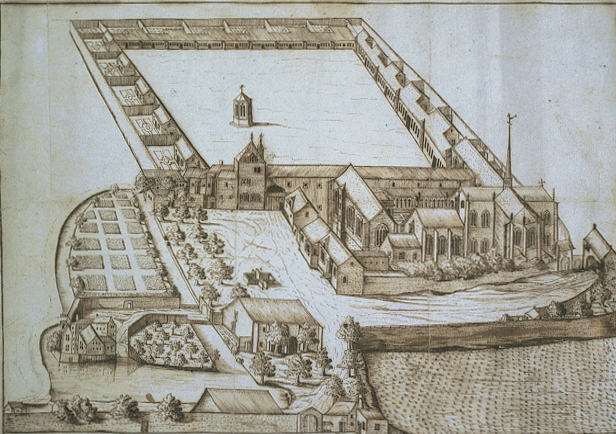
The Chartreuse de Champmol, formally the Chartreuse de la Sainte-Trinité de Champmol, was a Carthusian monastery on the outskirts of Dijon, which is now in France, but in the 15th century was the capital of the Duchy of Burgundy. The monastery was founded in 1383 by Duke Philip the Bold to provide a dynastic burial place for the Valois Dukes of Burgundy, and operated until it was dissolved in 1791, during the French Revolution.
Called "the grandest project in a reign renowned for extravagance", it was lavishly enriched with works of art, and the dispersed remnants of its collection remain key to the understanding of the art of the period.
Purchase of the land and quarrying of materials began in 1377, but construction did not begin until 1383, under the architect Druet de Dammartin from Paris, who had previously designed the Duke's chateau at Sluis, and been an assistant in work at the Louvre. According to James Snyder his work at Champmol was "a somewhat conservative modification of the Late Gothic buildings of Paris". A committee of councillors from Dijon supervised the construction for the Duke, who was often elsewhere. By 1388 the church was consecrated, and most construction probably completed. The monastery was built for twenty-four choir monks, instead of the usual twelve in a Carthusian house, and two more were endowed to celebrate the birth in 1433 of Charles the Bold. These lived semi-hermitic lives in their individual small houses when not in the chapel. There would also have been non-ordained monks, servants, novices, and other workers.
When founded, Champmol was "two arrow shots" outside the city gates, but is now inside the modern city boundaries. At this time the city had about 10,000 inhabitants and was the largest in Burgundy proper, though smaller than the cities of the territories in the Netherlands recently inherited by the Duke through his wife. But Burgundy was held more securely than the often turbulent cities in the north, and represented the senior title of the dynasty. Over sixty members of the Capetian House of Burgundy, whom the Valois had succeeded in 1361, only two decades earlier, had been buried at Cîteaux Abbey to the south of Dijon. Champmol was intended to rival Cîteaux, Saint-Denis, where the Kings of France were buried, and other dynastic burial places.
Somewhat in contradiction to the Carthusian mission of tranquil contemplation, visitors and pilgrims were encouraged, the expenses of hospitality recompensed by the Dukes. In 1418 Papal indulgences were granted to those visiting the Well of Moses, further encouraging pilgrims. The ducal family had a private oratory overlooking the church (now destroyed), though their visits were in fact rare. The ducal accounts, which have fortunately survived, show major commissions for paintings and other works to complete the monastery continuing until about 1415, and further works were added after that at a slower rate by the Dukes and other donors.
The accounts for Champmol have survived in sufficient detail that Martin Warnke synthesized from them a view of the emerging status of court artists, and "the autonomous consciousness of art and artists" that would distinguish the world of art in the Early modern period.
The Valois dynasty of Burgundy had less than a century to run when the monastery was founded, and the number of tombs never approached that of their Capetian predecessors at Cîteaux – indeed there would hardly have been room in the choir of the church, where the monuments were. Only two monuments were ever erected, both in the same style with painted alabaster effigies with lions at their feet and angels with spread wings at their heads. Underneath the slab the effigies rested on, unpainted small (about 40 cm high) "pleurants" or mourners ("weepers" is the traditional English term) were set among Gothic tracery. These were described by Johan Huizinga in The Waning of the Middle Ages as "the most profound expression of mourning known in art, a funeral march in stone".
Philip the Bold died in 1404, and his wife Margaret III, Countess of Flanders, the following year. She had decided to rest her remains with those of her parents in Lille, and Philip had been planning a single monument for himself for over twenty years, having commissioned Jean de Marville in 1381. Work did not begin until 1384, and proceeded slowly, with Claus Sluter being put in charge in 1389. At the Duke's death in 1404, only two mourners and the framework were complete; John the Fearless gave Sluter four years to finish the job, but he died after two. His nephew and assistant, Claus de Werve took over and finished the sculptures in 1410. The effigies were painted by Malouel.
Hub AI
Champmol AI simulator
(@Champmol_simulator)
Champmol
The Chartreuse de Champmol, formally the Chartreuse de la Sainte-Trinité de Champmol, was a Carthusian monastery on the outskirts of Dijon, which is now in France, but in the 15th century was the capital of the Duchy of Burgundy. The monastery was founded in 1383 by Duke Philip the Bold to provide a dynastic burial place for the Valois Dukes of Burgundy, and operated until it was dissolved in 1791, during the French Revolution.
Called "the grandest project in a reign renowned for extravagance", it was lavishly enriched with works of art, and the dispersed remnants of its collection remain key to the understanding of the art of the period.
Purchase of the land and quarrying of materials began in 1377, but construction did not begin until 1383, under the architect Druet de Dammartin from Paris, who had previously designed the Duke's chateau at Sluis, and been an assistant in work at the Louvre. According to James Snyder his work at Champmol was "a somewhat conservative modification of the Late Gothic buildings of Paris". A committee of councillors from Dijon supervised the construction for the Duke, who was often elsewhere. By 1388 the church was consecrated, and most construction probably completed. The monastery was built for twenty-four choir monks, instead of the usual twelve in a Carthusian house, and two more were endowed to celebrate the birth in 1433 of Charles the Bold. These lived semi-hermitic lives in their individual small houses when not in the chapel. There would also have been non-ordained monks, servants, novices, and other workers.
When founded, Champmol was "two arrow shots" outside the city gates, but is now inside the modern city boundaries. At this time the city had about 10,000 inhabitants and was the largest in Burgundy proper, though smaller than the cities of the territories in the Netherlands recently inherited by the Duke through his wife. But Burgundy was held more securely than the often turbulent cities in the north, and represented the senior title of the dynasty. Over sixty members of the Capetian House of Burgundy, whom the Valois had succeeded in 1361, only two decades earlier, had been buried at Cîteaux Abbey to the south of Dijon. Champmol was intended to rival Cîteaux, Saint-Denis, where the Kings of France were buried, and other dynastic burial places.
Somewhat in contradiction to the Carthusian mission of tranquil contemplation, visitors and pilgrims were encouraged, the expenses of hospitality recompensed by the Dukes. In 1418 Papal indulgences were granted to those visiting the Well of Moses, further encouraging pilgrims. The ducal family had a private oratory overlooking the church (now destroyed), though their visits were in fact rare. The ducal accounts, which have fortunately survived, show major commissions for paintings and other works to complete the monastery continuing until about 1415, and further works were added after that at a slower rate by the Dukes and other donors.
The accounts for Champmol have survived in sufficient detail that Martin Warnke synthesized from them a view of the emerging status of court artists, and "the autonomous consciousness of art and artists" that would distinguish the world of art in the Early modern period.
The Valois dynasty of Burgundy had less than a century to run when the monastery was founded, and the number of tombs never approached that of their Capetian predecessors at Cîteaux – indeed there would hardly have been room in the choir of the church, where the monuments were. Only two monuments were ever erected, both in the same style with painted alabaster effigies with lions at their feet and angels with spread wings at their heads. Underneath the slab the effigies rested on, unpainted small (about 40 cm high) "pleurants" or mourners ("weepers" is the traditional English term) were set among Gothic tracery. These were described by Johan Huizinga in The Waning of the Middle Ages as "the most profound expression of mourning known in art, a funeral march in stone".
Philip the Bold died in 1404, and his wife Margaret III, Countess of Flanders, the following year. She had decided to rest her remains with those of her parents in Lille, and Philip had been planning a single monument for himself for over twenty years, having commissioned Jean de Marville in 1381. Work did not begin until 1384, and proceeded slowly, with Claus Sluter being put in charge in 1389. At the Duke's death in 1404, only two mourners and the framework were complete; John the Fearless gave Sluter four years to finish the job, but he died after two. His nephew and assistant, Claus de Werve took over and finished the sculptures in 1410. The effigies were painted by Malouel.