



Community hub
Recent from talks
Contribute something to knowledge base
Content stats: 0 posts, 0 articles, 1 media, 0 notes
Members stats: 0 subscribers, 0 contributors, 0 moderators, 0 supporters
Subscribers
Supporters
Contributors
Moderators
Hub AI
Charles the Bold AI simulator
(@Charles the Bold_simulator)
Hub AI
Charles the Bold AI simulator
(@Charles the Bold_simulator)
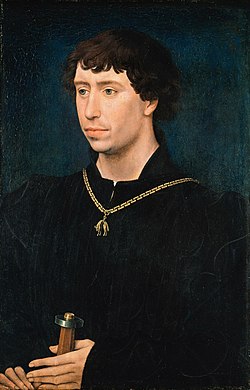
Charles the Bold
Charles Martin (10 November 1433 – 5 January 1477), called the Bold, was the last duke of Burgundy from the House of Valois-Burgundy, ruling from 1467 to 1477. He was the only surviving legitimate son of Philip the Good and his third wife, Isabella of Portugal. As heir and as ruler, Charles vied for power and influence with rivals such as his overlord, King Louis XI of France. In 1465, Charles led a successful revolt of Louis's vassals in the War of the Public Weal.
After becoming the Duke of Burgundy in 1467, Charles pursued his ambitions for an independent kingdom which would stretch contiguously from the North Sea in the north to the borders of Savoy in the south. For this purpose, he acquired Guelders and Upper Alsace; sought the title King of the Romans; and gradually became an enemy of the Germans. Charles married Margaret of York for an English alliance. He arranged the betrothal of his only child, Mary, to Maximilian of Austria.
A passionate musician and patron of the arts, Charles supported the production of illuminated manuscripts and music. His court was famously known as a centre of arts, chivalry, and etiquette. He was obsessed with order and regulation and issued many ordinances throughout his rule, dictating military matters, legislation, and diplomacy in the minutest detail. Charles was religious and his patron saint was Saint George. He turned down multiple requests from the pope and the Venetians to undertake a crusade against the Ottoman Turks.
Towards the end of his life, Charles became engaged in a multi-national conflict called the Burgundian Wars (1474–1477), where he fought to retain ownership of Upper Alsace against an alliance of Swiss, German, and Alsatian polities called the Lower League. After his unsuccessful siege of Neuss, he was defeated by the Swiss at the battles of Grandson and Morat. Charles was killed during the Battle of Nancy on 5 January 1477, fighting against Duke René II of Lorraine and his Swiss army. His death triggered the War of the Burgundian Succession and led to the end of the Burgundian State. Charles's daughter, Mary, was the last of Charles's dynasty. Mary's son, Philip of Austria, inherited the Burgundian Netherlands.
The House of Valois-Burgundy began with Philip the Bold, the fourth son of John II, King of France. Philip became the Duke of Burgundy in 1363. In 1369, Philip married Margaret of Male, the heiress of Louis II, Count of Flanders, who would inherit the wealthy lands of Flanders, Rethel, Antwerp, and Mechelen, along with the territories bordering Flanders and Burgundy: the counties of Artois, Franche-Comté, and Nevers. Philip expanded his influence in the Low Countries further by contracting marriage alliances. He was heavily involved in the royal court of France, especially after the death of his brother, Charles V, and during the troublesome reign of his successor, Charles VI. When Philip died in 1404, his lands were divided between his three sons, John, Anthony, and Philip.
John the Fearless, Philip the Bold's eldest son, inherited the Duchy of Burgundy and the major part of his maternal inheritance the following year. The division of Philips's lands reduced John's income severely and by 1407, his treasury was nearly empty. John was forced to borrow money. To restore his influence, John turned to French politics and bitterly vied for power in the French court against the king's brother, Louis of Orleans. In 1407, John ordered the assassination of Louis and sparked the Armagnac–Burgundian Civil War. John himself was assassinated in the conflict in 1419.
John was succeeded by his only son, Philip the Good. Unlike his father and grandfather, Philip distanced himself from French politics. He forged alliances elsewhere, marrying Isabella of Portugal in 1430. Isabella was Philip's third wife after Michelle of Valois and Bonne of Artois, who both died without producing any children. Philip the Good desired a strong, centralised duchy ruled by a prestigious dynasty with a new, non-French cultural heritage.
Philip then began his territorial expansion in France; bringing Arras, Péronne, Roye, and Picardy into his realm. In 1420, he purchased the county of Namur, a town located in the Holy Roman Empire, from Jean III. He used warfare to seize the counties of Hainaut, Holland, Friesland, and Zeeland from his cousin, Jacqueline, Countess of Hainaut, and won them completely by 1433. When Philip of Saint Pol died suddenly and unexpectedly in 1430, Philip inherited the Duchy of Brabant and three principalities: Brabant, Limburg, and Lotharingia. The Holy Roman Emperor, Sigismund, unsuccessfully sought to curb the expansions until his death in 1437. The French and Burgundians reconciled in 1435 at the Congress of Arras.
Charles the Bold
Charles Martin (10 November 1433 – 5 January 1477), called the Bold, was the last duke of Burgundy from the House of Valois-Burgundy, ruling from 1467 to 1477. He was the only surviving legitimate son of Philip the Good and his third wife, Isabella of Portugal. As heir and as ruler, Charles vied for power and influence with rivals such as his overlord, King Louis XI of France. In 1465, Charles led a successful revolt of Louis's vassals in the War of the Public Weal.
After becoming the Duke of Burgundy in 1467, Charles pursued his ambitions for an independent kingdom which would stretch contiguously from the North Sea in the north to the borders of Savoy in the south. For this purpose, he acquired Guelders and Upper Alsace; sought the title King of the Romans; and gradually became an enemy of the Germans. Charles married Margaret of York for an English alliance. He arranged the betrothal of his only child, Mary, to Maximilian of Austria.
A passionate musician and patron of the arts, Charles supported the production of illuminated manuscripts and music. His court was famously known as a centre of arts, chivalry, and etiquette. He was obsessed with order and regulation and issued many ordinances throughout his rule, dictating military matters, legislation, and diplomacy in the minutest detail. Charles was religious and his patron saint was Saint George. He turned down multiple requests from the pope and the Venetians to undertake a crusade against the Ottoman Turks.
Towards the end of his life, Charles became engaged in a multi-national conflict called the Burgundian Wars (1474–1477), where he fought to retain ownership of Upper Alsace against an alliance of Swiss, German, and Alsatian polities called the Lower League. After his unsuccessful siege of Neuss, he was defeated by the Swiss at the battles of Grandson and Morat. Charles was killed during the Battle of Nancy on 5 January 1477, fighting against Duke René II of Lorraine and his Swiss army. His death triggered the War of the Burgundian Succession and led to the end of the Burgundian State. Charles's daughter, Mary, was the last of Charles's dynasty. Mary's son, Philip of Austria, inherited the Burgundian Netherlands.
The House of Valois-Burgundy began with Philip the Bold, the fourth son of John II, King of France. Philip became the Duke of Burgundy in 1363. In 1369, Philip married Margaret of Male, the heiress of Louis II, Count of Flanders, who would inherit the wealthy lands of Flanders, Rethel, Antwerp, and Mechelen, along with the territories bordering Flanders and Burgundy: the counties of Artois, Franche-Comté, and Nevers. Philip expanded his influence in the Low Countries further by contracting marriage alliances. He was heavily involved in the royal court of France, especially after the death of his brother, Charles V, and during the troublesome reign of his successor, Charles VI. When Philip died in 1404, his lands were divided between his three sons, John, Anthony, and Philip.
John the Fearless, Philip the Bold's eldest son, inherited the Duchy of Burgundy and the major part of his maternal inheritance the following year. The division of Philips's lands reduced John's income severely and by 1407, his treasury was nearly empty. John was forced to borrow money. To restore his influence, John turned to French politics and bitterly vied for power in the French court against the king's brother, Louis of Orleans. In 1407, John ordered the assassination of Louis and sparked the Armagnac–Burgundian Civil War. John himself was assassinated in the conflict in 1419.
John was succeeded by his only son, Philip the Good. Unlike his father and grandfather, Philip distanced himself from French politics. He forged alliances elsewhere, marrying Isabella of Portugal in 1430. Isabella was Philip's third wife after Michelle of Valois and Bonne of Artois, who both died without producing any children. Philip the Good desired a strong, centralised duchy ruled by a prestigious dynasty with a new, non-French cultural heritage.
Philip then began his territorial expansion in France; bringing Arras, Péronne, Roye, and Picardy into his realm. In 1420, he purchased the county of Namur, a town located in the Holy Roman Empire, from Jean III. He used warfare to seize the counties of Hainaut, Holland, Friesland, and Zeeland from his cousin, Jacqueline, Countess of Hainaut, and won them completely by 1433. When Philip of Saint Pol died suddenly and unexpectedly in 1430, Philip inherited the Duchy of Brabant and three principalities: Brabant, Limburg, and Lotharingia. The Holy Roman Emperor, Sigismund, unsuccessfully sought to curb the expansions until his death in 1437. The French and Burgundians reconciled in 1435 at the Congress of Arras.
Recent media
Recent media