
Recent from talks
Chandrashekhara Kambara
Knowledge base stats:
Talk channels stats:
Members stats:
Chandrashekhara Kambara
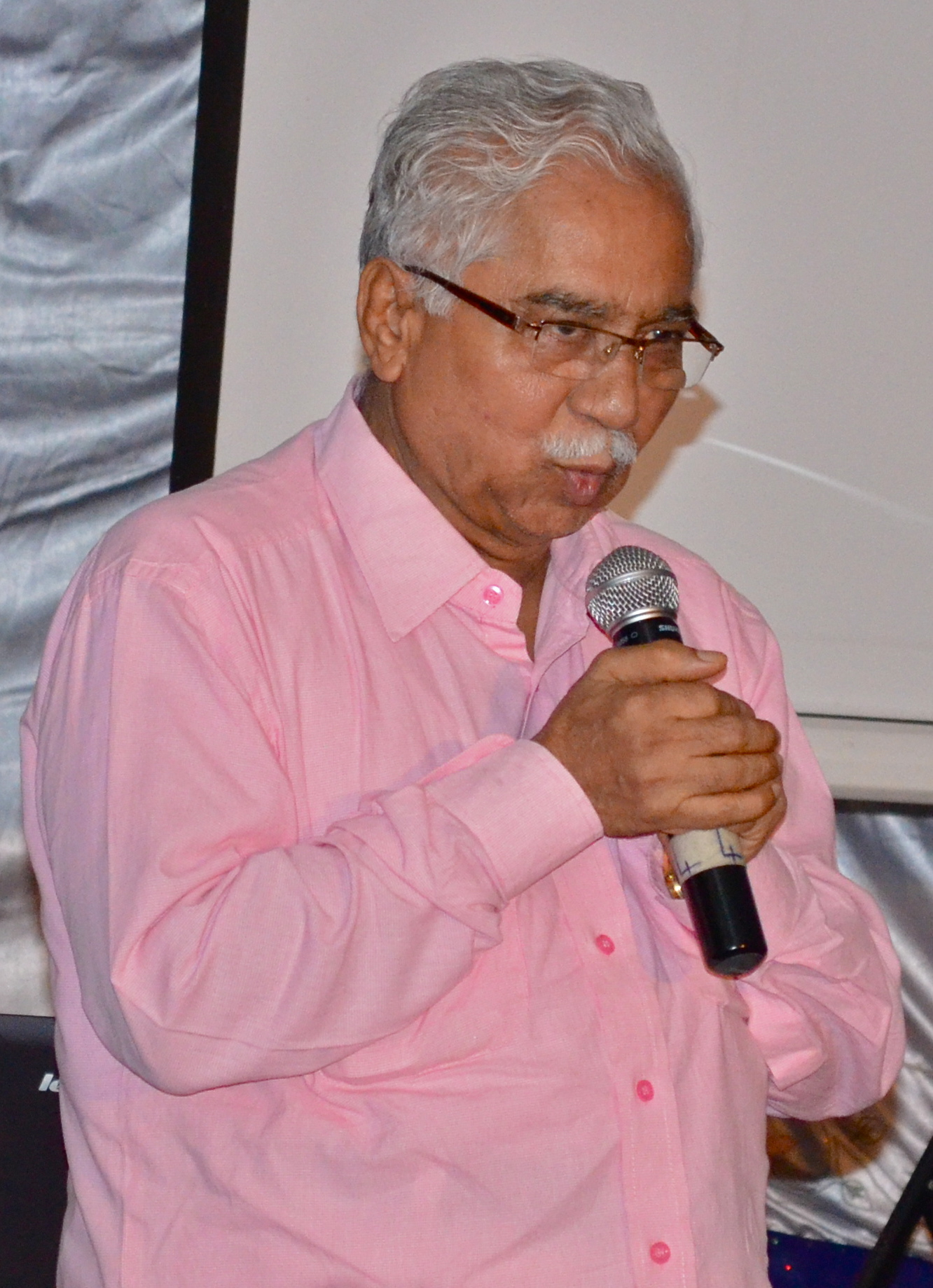
Chandrashekhara Basavanneppa Kambara (born 2 January 1937) is a prominent Indian poet, playwright, folklorist, film director in Kannada language and the founder-vice-chancellor of Kannada University in Hampi also president of the Sahitya Akademi, country's premier literary institution, after Vinayak Krishna Gokak (1983) and U.R. Ananthamurthy (1993). He is known for effective adaptation of the North Karnataka dialect of the Kannada language in his plays, and poems, in a similar style as in the works of D.R. Bendre.
Kambara's plays mainly revolve around folk or mythology interlinked with contemporary issues, inculcating modern lifestyle with his hard-hitting poems. He has become a pioneer of such literature. His contribution as a playwright is significant not only to Kannada theatre but also to the Indian theatre in general as he achieved a blend of the folk and the modern theatrical forms.
He has been conferred with many prestigious awards including the Padma Bhushan in 2021, Jnanpith Award in 2011 for the year 2010, Sahitya Akademi Award, the Padma Shri by Government of India, Kabir Samman, Kalidas Samman and Pampa Award. After his retirement, Kambara was nominated as the Member of Karnataka Legislative Council, to which he made significant contributions through his interventions.
Chandrashekhara Kambara was born in kannada-speaking family in Ghodageri, a village in Belgaum district of Bombay Presidency (today in Karnataka). He was the third son in the family, with brothers Parasappa and Yallappa who still reside in the small house belonging to the Kambara family in the village. From an early age, Kambara was interested in folk arts, local culture and ritual. His favorite Kannada writers include Kumara Vyasa, Basava, Kuvempu and Gopalakrishna Adiga and among English writers, it is W. B. Yeats, William Shakespeare and Federico García Lorca.
Popularly known as Shivapur Kambar Master in his native district, Kambara had his schooling in Gokak and returned to Belagavi for higher education at Lingaraj College. Owing to poverty, he had to drop out of school but Jagadguru Siddaram Swamiji of Savalagi Matha blessed Kambara and took care of all his primary and high school educational expenses which is why Kambara honours the seer in many of his writings. After his post-graduation, he did his PhD thesis on Uttara Karnatakada Janapad Rangbhumi ("The Folk Theatre of North Karnataka") from Karnataka University, Dharwad.
After a brief stint in teaching in the University of Chicago, he taught in Bangalore University for over two decades and was a Fulbright scholar.
He has been elected as the chairman of Sahitya Academy on 12 February 2018.
He served as the chairman of National School of Drama Society, New Delhi from 1996 to 2000 and as the president of Karnataka Nataka Academy from 1980 to 1983. He started using north Karnataka dialect of Kannada in his poems and plays which is not very common in Kannada literature.
Hub AI
Chandrashekhara Kambara AI simulator
(@Chandrashekhara Kambara_simulator)
Chandrashekhara Kambara
Chandrashekhara Basavanneppa Kambara (born 2 January 1937) is a prominent Indian poet, playwright, folklorist, film director in Kannada language and the founder-vice-chancellor of Kannada University in Hampi also president of the Sahitya Akademi, country's premier literary institution, after Vinayak Krishna Gokak (1983) and U.R. Ananthamurthy (1993). He is known for effective adaptation of the North Karnataka dialect of the Kannada language in his plays, and poems, in a similar style as in the works of D.R. Bendre.
Kambara's plays mainly revolve around folk or mythology interlinked with contemporary issues, inculcating modern lifestyle with his hard-hitting poems. He has become a pioneer of such literature. His contribution as a playwright is significant not only to Kannada theatre but also to the Indian theatre in general as he achieved a blend of the folk and the modern theatrical forms.
He has been conferred with many prestigious awards including the Padma Bhushan in 2021, Jnanpith Award in 2011 for the year 2010, Sahitya Akademi Award, the Padma Shri by Government of India, Kabir Samman, Kalidas Samman and Pampa Award. After his retirement, Kambara was nominated as the Member of Karnataka Legislative Council, to which he made significant contributions through his interventions.
Chandrashekhara Kambara was born in kannada-speaking family in Ghodageri, a village in Belgaum district of Bombay Presidency (today in Karnataka). He was the third son in the family, with brothers Parasappa and Yallappa who still reside in the small house belonging to the Kambara family in the village. From an early age, Kambara was interested in folk arts, local culture and ritual. His favorite Kannada writers include Kumara Vyasa, Basava, Kuvempu and Gopalakrishna Adiga and among English writers, it is W. B. Yeats, William Shakespeare and Federico García Lorca.
Popularly known as Shivapur Kambar Master in his native district, Kambara had his schooling in Gokak and returned to Belagavi for higher education at Lingaraj College. Owing to poverty, he had to drop out of school but Jagadguru Siddaram Swamiji of Savalagi Matha blessed Kambara and took care of all his primary and high school educational expenses which is why Kambara honours the seer in many of his writings. After his post-graduation, he did his PhD thesis on Uttara Karnatakada Janapad Rangbhumi ("The Folk Theatre of North Karnataka") from Karnataka University, Dharwad.
After a brief stint in teaching in the University of Chicago, he taught in Bangalore University for over two decades and was a Fulbright scholar.
He has been elected as the chairman of Sahitya Academy on 12 February 2018.
He served as the chairman of National School of Drama Society, New Delhi from 1996 to 2000 and as the president of Karnataka Nataka Academy from 1980 to 1983. He started using north Karnataka dialect of Kannada in his poems and plays which is not very common in Kannada literature.
Recent media