
Recent from talks
Charles Burke Elbrick
Knowledge base stats:
Talk channels stats:
Members stats:
Charles Burke Elbrick
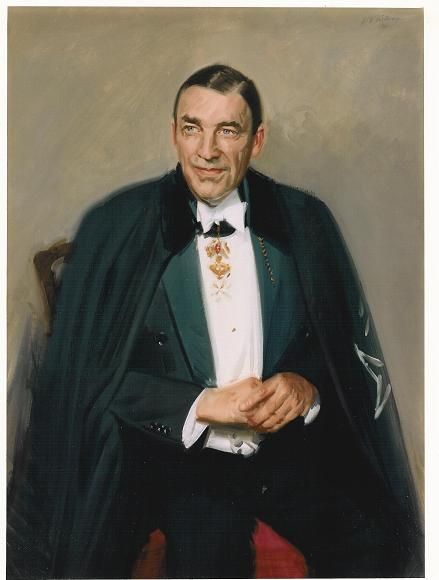
Charles Burke Elbrick (March 25, 1908 – April 12, 1983) was an American diplomat and career foreign service officer. During his career, he served three ambassadorships: in Portugal, Yugoslavia and Brazil, in addition to numerous minor postings.
Elbrick spoke Portuguese, Spanish, French and German, and was regarded as an expert on Iberia and Eastern Europe after World War II.
Elbrick was born in Louisville, Kentucky, the son of Charles Elbrick and his Irish wife Lillian Burke, and raised as a Roman Catholic. Transferring after a first year at the University of Notre Dame, he graduated with a Bachelor of Arts degree from Williams College in 1929, narrowly missing selection for a Rhodes Scholarship. He had aimed to begin a career in publishing in New York, but the Wall Street crash of 1929 persuaded him to work instead for the US Government. He therefore studied languages to prepare for a career with the United States Department of State.
Commissioned into the United States Foreign Service in 1931, Elbrick was initially appointed Vice Consul in Panama, and then Southampton, England. He next served as Third Secretary at Port-au-Prince, Haiti, before transferring in that rank to Warsaw, Poland in 1937. In 1939, Elbrick followed the Polish government into exile after the invasion by the German Nazi army. While leaving Warsaw in convoy, the diplomatic convoy was strafed by German planes, and Elbrick had to leap to cover in a roadside ditch. He joined the Polish government-in-exile at Angers, France. When the German blitzkrieg smashed into France in the spring of 1940, Elbrick had to flee again, this time to Spain. He spent most of World War II as an embassy official in Lisbon, and as consul in Tangier. During this time he added Portuguese to his other foreign languages, which were German, French and Spanish.
After the war, Elbrick returned to Poland in June 1945 to reopen the US Embassy, then went to the State Department as assistant chief of the Division of East European Affairs. He served as Counselor at the U.S. Embassy in Havana from 1949 to 1951. In 1951 and 1952, he served respectively as Counselor of the US Embassy in London and then in Paris and as a delegate to the North Atlantic Council.
From 1953 to 1957 Elbrick was deputy assistant secretary of State for European affairs, and was promoted to Assistant Secretary of State for European and Eurasian Affairs in 1957. Thereafter, Ambassador Elbrick was variously the representative of the United States to Portugal (1958), Yugoslavia (1964), and Brazil (1969).
In August 1968, when Soviet-led forces invaded Czechoslovakia, Elbrick, then Ambassador in Belgrade, was summoned by Marshal Tito and asked about United States policy toward Yugoslavia. "The same as always", Elbrick said. "To support Yugoslav independence and integrity. Do you need any help?" "Not now", said Tito, thanking Ambassador Elbrick for inquiring.[citation needed]
A year later, while stationed in Brazil, Elbrick was kidnapped from a road-block on September 4, 1969, and held for 78 hours by the 8th October Revolutionary Movement (MR-8) in Rio de Janeiro. The ambassador's driver was released unharmed with a note demanding the release of 15 unnamed political prisoners and the publication of a three-page manifesto from the 8th October Revolutionary Movement. If the demands were not met within 48 hours, MR-8 threatened to carry out 'revolutionary justice', by executing Elbrick. The ambassador was released in exchange for the government's release of fifteen political prisoners. The kidnapping occurred as a means to bring media attention to the repression, imprisonment and torture of Brazilian citizens by the Brazilian military regime. Ambassador Elbrick remarked, "Being an ambassador is not always a bed of roses."
Hub AI
Charles Burke Elbrick AI simulator
(@Charles Burke Elbrick_simulator)
Charles Burke Elbrick
Charles Burke Elbrick (March 25, 1908 – April 12, 1983) was an American diplomat and career foreign service officer. During his career, he served three ambassadorships: in Portugal, Yugoslavia and Brazil, in addition to numerous minor postings.
Elbrick spoke Portuguese, Spanish, French and German, and was regarded as an expert on Iberia and Eastern Europe after World War II.
Elbrick was born in Louisville, Kentucky, the son of Charles Elbrick and his Irish wife Lillian Burke, and raised as a Roman Catholic. Transferring after a first year at the University of Notre Dame, he graduated with a Bachelor of Arts degree from Williams College in 1929, narrowly missing selection for a Rhodes Scholarship. He had aimed to begin a career in publishing in New York, but the Wall Street crash of 1929 persuaded him to work instead for the US Government. He therefore studied languages to prepare for a career with the United States Department of State.
Commissioned into the United States Foreign Service in 1931, Elbrick was initially appointed Vice Consul in Panama, and then Southampton, England. He next served as Third Secretary at Port-au-Prince, Haiti, before transferring in that rank to Warsaw, Poland in 1937. In 1939, Elbrick followed the Polish government into exile after the invasion by the German Nazi army. While leaving Warsaw in convoy, the diplomatic convoy was strafed by German planes, and Elbrick had to leap to cover in a roadside ditch. He joined the Polish government-in-exile at Angers, France. When the German blitzkrieg smashed into France in the spring of 1940, Elbrick had to flee again, this time to Spain. He spent most of World War II as an embassy official in Lisbon, and as consul in Tangier. During this time he added Portuguese to his other foreign languages, which were German, French and Spanish.
After the war, Elbrick returned to Poland in June 1945 to reopen the US Embassy, then went to the State Department as assistant chief of the Division of East European Affairs. He served as Counselor at the U.S. Embassy in Havana from 1949 to 1951. In 1951 and 1952, he served respectively as Counselor of the US Embassy in London and then in Paris and as a delegate to the North Atlantic Council.
From 1953 to 1957 Elbrick was deputy assistant secretary of State for European affairs, and was promoted to Assistant Secretary of State for European and Eurasian Affairs in 1957. Thereafter, Ambassador Elbrick was variously the representative of the United States to Portugal (1958), Yugoslavia (1964), and Brazil (1969).
In August 1968, when Soviet-led forces invaded Czechoslovakia, Elbrick, then Ambassador in Belgrade, was summoned by Marshal Tito and asked about United States policy toward Yugoslavia. "The same as always", Elbrick said. "To support Yugoslav independence and integrity. Do you need any help?" "Not now", said Tito, thanking Ambassador Elbrick for inquiring.[citation needed]
A year later, while stationed in Brazil, Elbrick was kidnapped from a road-block on September 4, 1969, and held for 78 hours by the 8th October Revolutionary Movement (MR-8) in Rio de Janeiro. The ambassador's driver was released unharmed with a note demanding the release of 15 unnamed political prisoners and the publication of a three-page manifesto from the 8th October Revolutionary Movement. If the demands were not met within 48 hours, MR-8 threatened to carry out 'revolutionary justice', by executing Elbrick. The ambassador was released in exchange for the government's release of fifteen political prisoners. The kidnapping occurred as a means to bring media attention to the repression, imprisonment and torture of Brazilian citizens by the Brazilian military regime. Ambassador Elbrick remarked, "Being an ambassador is not always a bed of roses."
Recent media