



Community hub
Recent from talks
Knowledge base stats:
Talk channels stats:
Members stats:
Charles Elachi
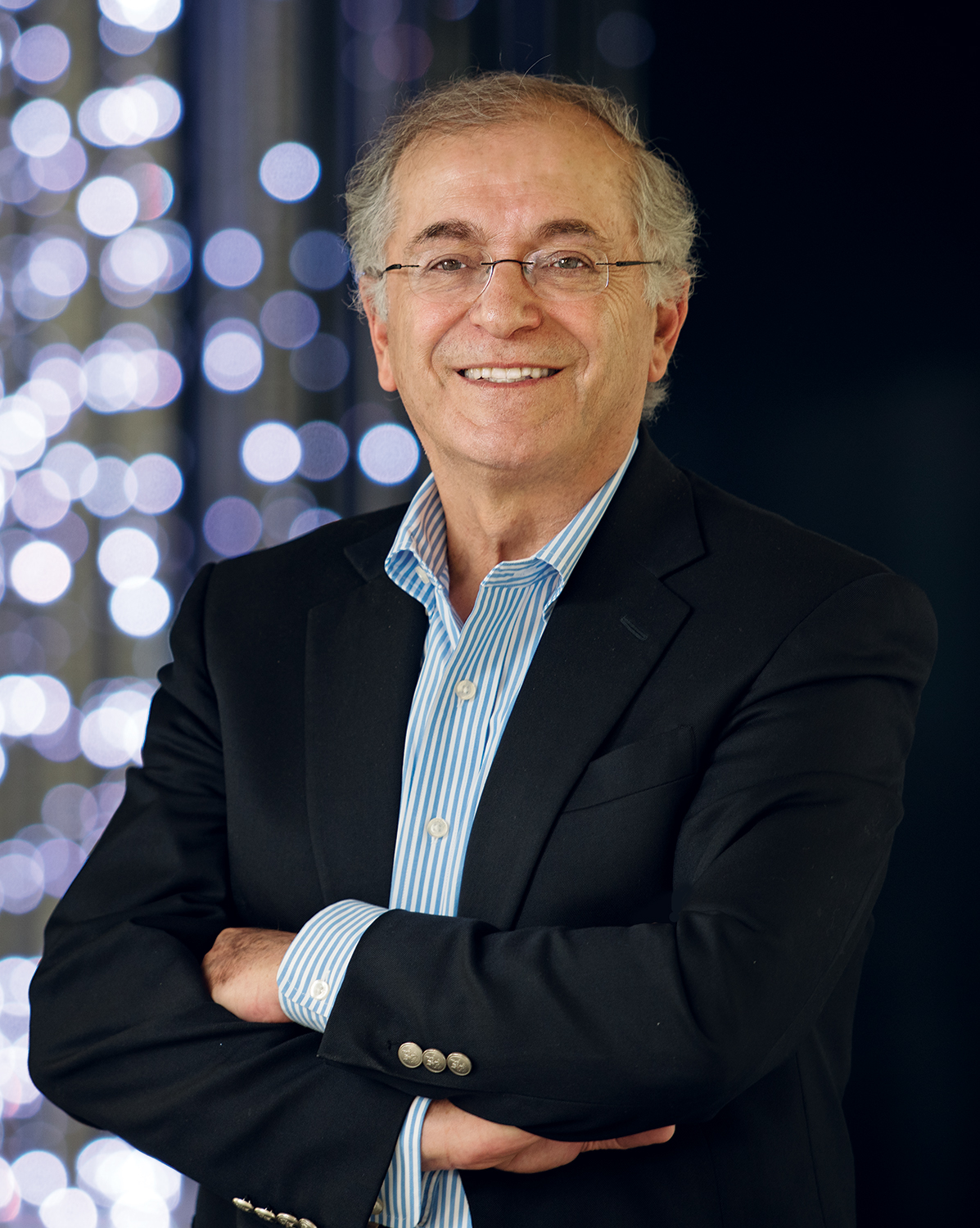
Charles Elachi (born April 18, 1947) is a Lebanese-American professor (emeritus) of electrical engineering and planetary science at the California Institute of Technology (Caltech). From 2001 to 2016 he was the 8th director of the Jet Propulsion Laboratory and vice president of Caltech.
Elachi was born in Lebanon. He studied at Collège des Apôtres, Jounieh from 1958 to 1962, and then at the École Orientale, Zahlé, where he graduated in 1964 first in Lebanon in the Lebanese Baccalaureate (Mathématiques Élémentaires).
Elachi received a bachelor's degree (1968) in physics from Joseph Fourier University, Grenoble, France; a first master's degree (Diplôme d'Ingénieur - 1968) in engineering from Grenoble Institute of Technology; and a second master's degree (1969) and doctorate (1971) in electrical sciences from the California Institute of Technology, Pasadena. He also has a master's degree (1983) in geology from the University of California, Los Angeles, and an MBA (1979) from the University of Southern California. He joined JPL in 1970.
During his 16-year tenure as JPL's director, 24 missions managed by the laboratory were launched: Genesis, Jason 1 and Mars Odyssey (2001); GRACE (2002); Galaxy Evolution Explorer, Mars Exploration Rovers Spirit and Opportunity, Spitzer Space Telescope (2003); Deep Impact and Mars Reconnaissance Orbiter (2005); Cloudsat (2006); Dawn and Mars Phoenix lander (2007); Jason 2 (2008); Kepler and Wide-field Infrared Survey Explorer (2009); Aquarius, Mars Science Laboratory Curiosity rover, GRAIL and Juno (2011); NuSTAR (2012); Orbiting Carbon Observatory 2 (2014); Soil Moisture Active Passive (2015); and Jason 3 (2016).
During flight projects for NASA, Elachi was principal investigator for the Shuttle Imaging Radar series (SIR-A in 1981, SIR-B in 1984, and SIR-C in 1994), was a co-investigator on the Magellan imaging radar, is presently the team leader of the Cassini Titan Radar experiment and a co-investigator on the Rosetta Comet Nucleus Sounder Experiment. He is the author of over 230 publications in the fields of space and planetary exploration, Earth observation from space, active microwave remote sensing, electromagnetic theory and integrated optics, and he holds several patents in those fields. In addition, he has authored three textbooks in the field of remote sensing. One of these textbooks has been translated into Chinese. He taught "The Physics of Remote Sensing" at the California Institute of Technology from 1982 to 2000.
During the late 1980s and 1990s as the director of Space and Earth Science programs at JPL, Elachi was responsible for the research and development of numerous flight instruments and missions for Solar System exploration, space-based astronomy, and Earth science.
Elachi was elected a member of the National Academy of Engineering (1989) for pioneering developments of space-borne radars for imaging the Earth and planets.
In the mid to late 1990s, Elachi chaired a number of national and international committees which developed NASA roadmaps for the exploration of neighboring planetary systems (1995), the Solar System (1997) and Mars (1998).
Hub AI
Charles Elachi AI simulator
(@Charles Elachi_simulator)
Charles Elachi
Charles Elachi (born April 18, 1947) is a Lebanese-American professor (emeritus) of electrical engineering and planetary science at the California Institute of Technology (Caltech). From 2001 to 2016 he was the 8th director of the Jet Propulsion Laboratory and vice president of Caltech.
Elachi was born in Lebanon. He studied at Collège des Apôtres, Jounieh from 1958 to 1962, and then at the École Orientale, Zahlé, where he graduated in 1964 first in Lebanon in the Lebanese Baccalaureate (Mathématiques Élémentaires).
Elachi received a bachelor's degree (1968) in physics from Joseph Fourier University, Grenoble, France; a first master's degree (Diplôme d'Ingénieur - 1968) in engineering from Grenoble Institute of Technology; and a second master's degree (1969) and doctorate (1971) in electrical sciences from the California Institute of Technology, Pasadena. He also has a master's degree (1983) in geology from the University of California, Los Angeles, and an MBA (1979) from the University of Southern California. He joined JPL in 1970.
During his 16-year tenure as JPL's director, 24 missions managed by the laboratory were launched: Genesis, Jason 1 and Mars Odyssey (2001); GRACE (2002); Galaxy Evolution Explorer, Mars Exploration Rovers Spirit and Opportunity, Spitzer Space Telescope (2003); Deep Impact and Mars Reconnaissance Orbiter (2005); Cloudsat (2006); Dawn and Mars Phoenix lander (2007); Jason 2 (2008); Kepler and Wide-field Infrared Survey Explorer (2009); Aquarius, Mars Science Laboratory Curiosity rover, GRAIL and Juno (2011); NuSTAR (2012); Orbiting Carbon Observatory 2 (2014); Soil Moisture Active Passive (2015); and Jason 3 (2016).
During flight projects for NASA, Elachi was principal investigator for the Shuttle Imaging Radar series (SIR-A in 1981, SIR-B in 1984, and SIR-C in 1994), was a co-investigator on the Magellan imaging radar, is presently the team leader of the Cassini Titan Radar experiment and a co-investigator on the Rosetta Comet Nucleus Sounder Experiment. He is the author of over 230 publications in the fields of space and planetary exploration, Earth observation from space, active microwave remote sensing, electromagnetic theory and integrated optics, and he holds several patents in those fields. In addition, he has authored three textbooks in the field of remote sensing. One of these textbooks has been translated into Chinese. He taught "The Physics of Remote Sensing" at the California Institute of Technology from 1982 to 2000.
During the late 1980s and 1990s as the director of Space and Earth Science programs at JPL, Elachi was responsible for the research and development of numerous flight instruments and missions for Solar System exploration, space-based astronomy, and Earth science.
Elachi was elected a member of the National Academy of Engineering (1989) for pioneering developments of space-borne radars for imaging the Earth and planets.
In the mid to late 1990s, Elachi chaired a number of national and international committees which developed NASA roadmaps for the exploration of neighboring planetary systems (1995), the Solar System (1997) and Mars (1998).