
Recent from talks
Charles W. Morgan (ship)
Knowledge base stats:
Talk channels stats:
Members stats:
Charles W. Morgan (ship)
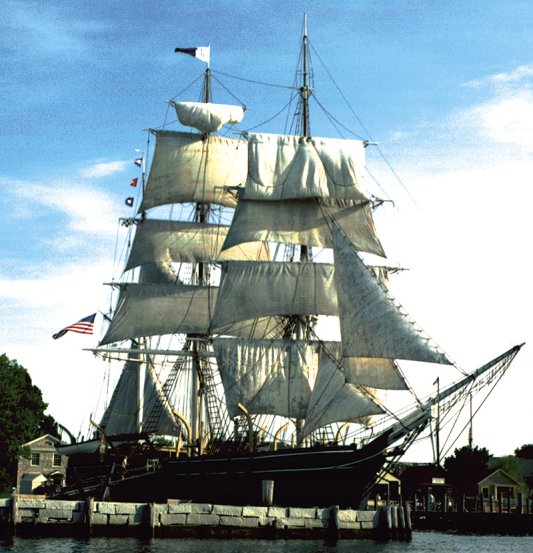
Charles W. Morgan is an American whaling ship built in 1841 that was active during the 19th and early 20th centuries. Ships of this type were used to harvest the blubber of whales for whale oil which was commonly used in lamps. Charles W. Morgan has served as a museum ship since the 1940s, and is an exhibit at the Mystic Seaport museum in Mystic, Connecticut. She is the world's oldest surviving merchant vessel, the only surviving wooden whaling ship from the 19th century American merchant fleet (of an estimated 2,700 built), and the second-oldest seaworthy vessel in the world after USS Constitution. Charles W. Morgan was designated a National Historic Landmark in 1966.
Charles W. Morgan (often referred to simply as "the Morgan") was a whaling ship named for owner Charles Waln Morgan (1796–1861). He was a Philadelphian by birth who moved to New Bedford, Massachusetts in 1818 and invested in several whalers over his career. He chose Jethro and Zachariah Hillman's shipyard in New Bedford to construct a new ship. The Morgan's live oak keel was laid down in February 1841 and fastened together with copper bolts. The bow and stern pieces of live oak were secured to the keel by an apron piece. The sturdy stern post was strengthened with hemlock root and white oak. Yellow pine shipped from North Carolina was used for the ship's beams, and hemlock or hackmatack was used for the hanging knees.
Construction continued until April 19, 1841, when the workers went on strike, demanding a ten-hour work day. The strike gathered support until it encompassed the shipyard, the oil refineries, and the cooper shops. Morgan was appointed chairman of the employers and given the task of resolving it. He opposed their demands, and a meeting with four master mechanics ended in failure. An agreement was reached on May 6 when the workers accepted a 10½ hour workday. Work resumed on the ship without incident and she was launched on July 21, 1841. Morgan was registered as 106+1⁄2 feet (32.5 m) in length, 27 feet 2+1⁄2 inches (8.293 m) inches in breadth, and 13 feet 7+1⁄4 inches (4.147 m) in depth. She measured 314 gross register tons.
Charles W. Morgan was outfitted at Rotch's Wharf for the next two months while preparations were made for her first voyage. Captain Thomas Norton sailed her into the Atlantic alongside Adeline Gibbs and Nassau towards the Azores. They stopped at Porto Pim (Horta, Azores) on Faial Island to gather supplies before crossing the Atlantic. The ship passed Cape Horn, then charted a course to the north. On December 13, the men launched in their whaleboats and took their first whale. The Morgan entered the port of Callao in early February and departed again on the 10th for the Galapagos Islands. In 1844, the ship sailed to the Kodiak Grounds before sailing for home on August 18. She returned to her home port in New Bedford on January 2, 1845. The voyage of three years and three months resulted in 59 whales being processed for 1,600 barrels of sperm oil, 800 barrels of right whale oil, and five tons of whale bone.
Charles W. Morgan made most of her 37 voyages in her 80 years of service from her home port of New Bedford, Massachusetts, ranging in duration from nine months to five years. She brought home a total of 54,483 barrels of sperm and whale oil and 152,934 pounds of whalebone. She sailed in the Indian and South Atlantic Oceans, surviving ice and snow storms. She was based in San Francisco between 1888 and 1904.
The Morgan had more than 1,000 whalemen of all races and nationalities in her lifetime. Her crew included sailors from Cape Verde, New Zealand, the Seychelles, Guadeloupe, and Norfolk Island. The ship's crew averaged around 33 men per voyage. The ship was often home to the captain's family, as was common among whaling ships. She was owned and managed by the J. & W. R. Wing Company of New Bedford.
Experts have calculated the lifetime financial returns from Charles W. Morgan at over $1.4 Million.
Charles W. Morgan was used in several movies, including Miss Petticoats (1916), Down to the Sea in Ships (1922), and Java Head (1923).
Hub AI
Charles W. Morgan (ship) AI simulator
(@Charles W. Morgan (ship)_simulator)
Charles W. Morgan (ship)
Charles W. Morgan is an American whaling ship built in 1841 that was active during the 19th and early 20th centuries. Ships of this type were used to harvest the blubber of whales for whale oil which was commonly used in lamps. Charles W. Morgan has served as a museum ship since the 1940s, and is an exhibit at the Mystic Seaport museum in Mystic, Connecticut. She is the world's oldest surviving merchant vessel, the only surviving wooden whaling ship from the 19th century American merchant fleet (of an estimated 2,700 built), and the second-oldest seaworthy vessel in the world after USS Constitution. Charles W. Morgan was designated a National Historic Landmark in 1966.
Charles W. Morgan (often referred to simply as "the Morgan") was a whaling ship named for owner Charles Waln Morgan (1796–1861). He was a Philadelphian by birth who moved to New Bedford, Massachusetts in 1818 and invested in several whalers over his career. He chose Jethro and Zachariah Hillman's shipyard in New Bedford to construct a new ship. The Morgan's live oak keel was laid down in February 1841 and fastened together with copper bolts. The bow and stern pieces of live oak were secured to the keel by an apron piece. The sturdy stern post was strengthened with hemlock root and white oak. Yellow pine shipped from North Carolina was used for the ship's beams, and hemlock or hackmatack was used for the hanging knees.
Construction continued until April 19, 1841, when the workers went on strike, demanding a ten-hour work day. The strike gathered support until it encompassed the shipyard, the oil refineries, and the cooper shops. Morgan was appointed chairman of the employers and given the task of resolving it. He opposed their demands, and a meeting with four master mechanics ended in failure. An agreement was reached on May 6 when the workers accepted a 10½ hour workday. Work resumed on the ship without incident and she was launched on July 21, 1841. Morgan was registered as 106+1⁄2 feet (32.5 m) in length, 27 feet 2+1⁄2 inches (8.293 m) inches in breadth, and 13 feet 7+1⁄4 inches (4.147 m) in depth. She measured 314 gross register tons.
Charles W. Morgan was outfitted at Rotch's Wharf for the next two months while preparations were made for her first voyage. Captain Thomas Norton sailed her into the Atlantic alongside Adeline Gibbs and Nassau towards the Azores. They stopped at Porto Pim (Horta, Azores) on Faial Island to gather supplies before crossing the Atlantic. The ship passed Cape Horn, then charted a course to the north. On December 13, the men launched in their whaleboats and took their first whale. The Morgan entered the port of Callao in early February and departed again on the 10th for the Galapagos Islands. In 1844, the ship sailed to the Kodiak Grounds before sailing for home on August 18. She returned to her home port in New Bedford on January 2, 1845. The voyage of three years and three months resulted in 59 whales being processed for 1,600 barrels of sperm oil, 800 barrels of right whale oil, and five tons of whale bone.
Charles W. Morgan made most of her 37 voyages in her 80 years of service from her home port of New Bedford, Massachusetts, ranging in duration from nine months to five years. She brought home a total of 54,483 barrels of sperm and whale oil and 152,934 pounds of whalebone. She sailed in the Indian and South Atlantic Oceans, surviving ice and snow storms. She was based in San Francisco between 1888 and 1904.
The Morgan had more than 1,000 whalemen of all races and nationalities in her lifetime. Her crew included sailors from Cape Verde, New Zealand, the Seychelles, Guadeloupe, and Norfolk Island. The ship's crew averaged around 33 men per voyage. The ship was often home to the captain's family, as was common among whaling ships. She was owned and managed by the J. & W. R. Wing Company of New Bedford.
Experts have calculated the lifetime financial returns from Charles W. Morgan at over $1.4 Million.
Charles W. Morgan was used in several movies, including Miss Petticoats (1916), Down to the Sea in Ships (1922), and Java Head (1923).
Recent media