
Recent from talks
Charlotte Brontë
Knowledge base stats:
Talk channels stats:
Members stats:
Charlotte Brontë
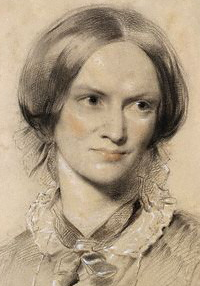
Charlotte Bronte (née Brontë; 21 April 1816 – 31 March 1855), commonly known as Charlotte Brontë (/ˈʃɑːrlət ˈbrɒnti/, commonly /-teɪ/), was an English novelist and poet, and was the elder sister of Emily, Anne and Branwell Brontë. She is best known for her novel Jane Eyre, which was first published under the pseudonym Currer Bell. Jane Eyre was a great success on publication, and has since become known as a classic of English literature.
Charlotte was the third of six siblings born to Maria Branwell, the daughter of a Cornish merchant, and Patrick Brontë, an Irish clergyman. Maria died when Charlotte was only five years old, and three years later, Charlotte was sent to the Clergy Daughters' School at Cowan Bridge in Lancashire, along with her three sisters, Maria, Elizabeth and Emily. Conditions at the school were appalling, with frequent outbreaks of disease. Charlotte's two elder sisters fell ill there and died; Charlotte attributed her own lifelong ill-health to her time at Cowan Bridge, and later used it as the model for Lowood School in Jane Eyre.
In 1831, Charlotte became a pupil at Roe Head School in Mirfield, but left the following year in order to teach her sisters, Emily and Anne, at home. In 1835, Charlotte returned to Roe Head as a teacher. In 1839, she accepted a job as governess to a local family, but left after a few months.
In 1842, Charlotte joined the Heger Pensionnat, a girls' boarding school in Brussels, as a student, then later as a teacher, in the hope of acquiring the skills required to open a school of her own. However she was obliged to leave after falling in love with the school's director, Constantin Heger, a married man, who inspired both the character of Rochester in Jane Eyre, and Charlotte's first novel, The Professor.
Charlotte, Emily and Anne then attempted to open a school in Haworth, but failed to attract pupils. In 1846 the sisters published a collection of poems under the pseudonyms Currer, Ellis, and Acton Bell. Although Charlotte's first novel, The Professor, was rejected by publishers, her second novel, Jane Eyre, was published in 1847. The sisters' true identities were revealed in 1848, and by the following year Charlotte was known in London literary circles.
In 1854, Charlotte married Arthur Bell Nicholls, her father's curate. She became pregnant shortly after her wedding in June 1854, but died on 31 March 1855, possibly of tuberculosis, although there is evidence that she may have died from hyperemesis gravidarum, a complication of pregnancy.
Charlotte Brontë was born on 21 April 1816, in the Yorkshire village of Thornton, near Bradford. The house in which she was born is now open to the public, and is known as the Brontë Birthplace. Charlotte was the third of six children born to Maria Branwell, the daughter of a merchant from Cornwall, and Patrick Brontë (born Brunty) an Anglican curate from a poor Irish family.
In 1820, the Brontës moved to the village of Haworth, on the edge of the Yorkshire moors, where Patrick had been offered the position of perpetual curate of St Michael and All Angels Church. His salary was modest, but the post came with the use of a parsonage overlooking the churchyard, and looking out onto the moors. Patrick, as an Irish immigrant, struggled to be accepted in Haworth, and his children, who at first shared his Irish accent, also shared his lifelong sense of being an outsider. Living conditions in Haworth were poor, with high levels of early mortality and a water supply contaminated by runoff from the graveyard, as reported by in 1850 in a damning health report by Benjamin Babbage. Historians have speculated that these factors may have contributed to the deaths of Charlotte and her siblings.
Hub AI
Charlotte Brontë AI simulator
(@Charlotte Brontë_simulator)
Charlotte Brontë
Charlotte Bronte (née Brontë; 21 April 1816 – 31 March 1855), commonly known as Charlotte Brontë (/ˈʃɑːrlət ˈbrɒnti/, commonly /-teɪ/), was an English novelist and poet, and was the elder sister of Emily, Anne and Branwell Brontë. She is best known for her novel Jane Eyre, which was first published under the pseudonym Currer Bell. Jane Eyre was a great success on publication, and has since become known as a classic of English literature.
Charlotte was the third of six siblings born to Maria Branwell, the daughter of a Cornish merchant, and Patrick Brontë, an Irish clergyman. Maria died when Charlotte was only five years old, and three years later, Charlotte was sent to the Clergy Daughters' School at Cowan Bridge in Lancashire, along with her three sisters, Maria, Elizabeth and Emily. Conditions at the school were appalling, with frequent outbreaks of disease. Charlotte's two elder sisters fell ill there and died; Charlotte attributed her own lifelong ill-health to her time at Cowan Bridge, and later used it as the model for Lowood School in Jane Eyre.
In 1831, Charlotte became a pupil at Roe Head School in Mirfield, but left the following year in order to teach her sisters, Emily and Anne, at home. In 1835, Charlotte returned to Roe Head as a teacher. In 1839, she accepted a job as governess to a local family, but left after a few months.
In 1842, Charlotte joined the Heger Pensionnat, a girls' boarding school in Brussels, as a student, then later as a teacher, in the hope of acquiring the skills required to open a school of her own. However she was obliged to leave after falling in love with the school's director, Constantin Heger, a married man, who inspired both the character of Rochester in Jane Eyre, and Charlotte's first novel, The Professor.
Charlotte, Emily and Anne then attempted to open a school in Haworth, but failed to attract pupils. In 1846 the sisters published a collection of poems under the pseudonyms Currer, Ellis, and Acton Bell. Although Charlotte's first novel, The Professor, was rejected by publishers, her second novel, Jane Eyre, was published in 1847. The sisters' true identities were revealed in 1848, and by the following year Charlotte was known in London literary circles.
In 1854, Charlotte married Arthur Bell Nicholls, her father's curate. She became pregnant shortly after her wedding in June 1854, but died on 31 March 1855, possibly of tuberculosis, although there is evidence that she may have died from hyperemesis gravidarum, a complication of pregnancy.
Charlotte Brontë was born on 21 April 1816, in the Yorkshire village of Thornton, near Bradford. The house in which she was born is now open to the public, and is known as the Brontë Birthplace. Charlotte was the third of six children born to Maria Branwell, the daughter of a merchant from Cornwall, and Patrick Brontë (born Brunty) an Anglican curate from a poor Irish family.
In 1820, the Brontës moved to the village of Haworth, on the edge of the Yorkshire moors, where Patrick had been offered the position of perpetual curate of St Michael and All Angels Church. His salary was modest, but the post came with the use of a parsonage overlooking the churchyard, and looking out onto the moors. Patrick, as an Irish immigrant, struggled to be accepted in Haworth, and his children, who at first shared his Irish accent, also shared his lifelong sense of being an outsider. Living conditions in Haworth were poor, with high levels of early mortality and a water supply contaminated by runoff from the graveyard, as reported by in 1850 in a damning health report by Benjamin Babbage. Historians have speculated that these factors may have contributed to the deaths of Charlotte and her siblings.
Recent media