
Recent from talks
Chatham Islands
Knowledge base stats:
Talk channels stats:
Members stats:
Chatham Islands
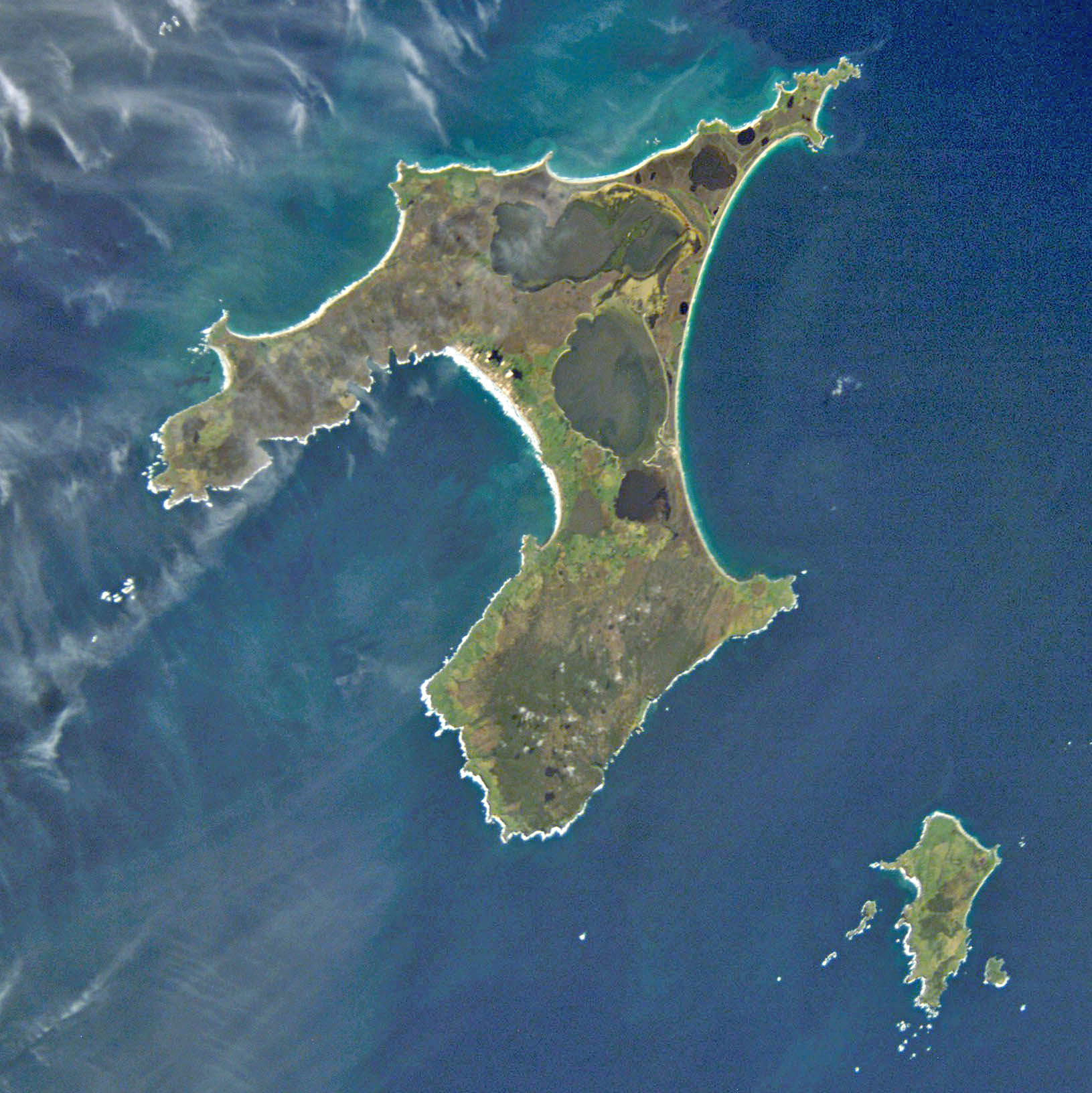
The Chatham Islands (/ˈtʃætəm/ CHAT-əm; Moriori: Rēkohu, lit. 'Misty Sun'; Māori: Wharekauri), officially the Chatham Islands Territory, are an archipelago in the Pacific Ocean about 800 km (430 nmi) east of New Zealand's South Island, administered as part of New Zealand, and consisting of about 10 islands within an approximate 60 km (30 nmi) radius, the largest of which are Chatham Island and Pitt Island (Rangiauria). They include New Zealand's easternmost point, the Forty-Fours. Some of the islands, formerly cleared for farming, are now preserved as nature reserves to conserve some of the unique flora and fauna.
The first human inhabitants of the Chatham Islands were the Moriori. They are descended from the Polynesians who settled New Zealand and from whom the Māori also descended. A group of the Polynesians migrated from mainland New Zealand to the Chatham Islands, probably in the 15th century.
In 1835, members of the Ngāti Mutunga and Ngāti Tama Māori iwi from the North Island invaded the islands and nearly exterminated the Moriori, enslaving the survivors. In 1863 the Moriori were officially released from slavery through a proclamation by the resident magistrate.
In the period of European colonisation, the New Zealand Company claimed that the British Crown had never included the Chatham Islands as being under its control, and proposed selling them to the Germans to be a German colony. In 1841, a contract was drawn up for the sale of the islands for £10,000 (equivalent to approximately £860,000 in 2023), but the sale fell through and the Chatham Islands officially became part of the Colony of New Zealand in 1842.
The Chatham Islands had a resident population of 620 in June 2025. Waitangi is the main port and settlement. The local economy depends largely on conservation, tourism, farming, and fishing. The Chatham Islands Council provides local administration – its powers resemble those of New Zealand's unitary authorities. The Chatham Islands have their own time zone, which is 45 minutes ahead of mainland New Zealand.
The first human inhabitants of the Chatham Islands are the Moriori. They are descended from the East Polynesians who settled New Zealand and from whom the Māori also descended. A group of New Zealand Polynesians migrated from mainland New Zealand to the Chatham Islands, probably in the 15th century. Traditions of Moriori genealogy and some features of artefacts suggest that some arrivals may have come directly to the Chathams Islands from tropical East Polynesia. The Chathams are no further from Rarotonga than the Coromandel coast is, and it is possible that they were settled separately during the Polynesian exploration of the South Pacific, with most of the immigrants coming from New Zealand later. It is clear from artefacts and linguistic evidence that the final migration was from New Zealand.
The plants cultivated on mainland New Zealand were ill-suited for the colder Chathams, so the Moriori lived as hunter-gatherers and fishermen. While the islands lacked suitable trees for building ocean-going craft for long voyages, the Moriori invented the waka kōrari, a semi-submerged craft constructed of flax and lined with air bladders from kelp. This craft was used to travel to the outer islands on 'birding' missions. After generations of warfare, bloodshed was outlawed by the chief Nunuku-whenua and Moriori society became peaceful. Disputes were resolved by consensus or by duels in which, at the first sign of bloodshed, the fight was deemed over. The population before European contact was about 2,000.
Parts of a carved and decorated traditional ocean-going canoe (waka) were discovered in 2024 in a creek on the northern coast of the main island. Approximately 450 pieces, including rare examples of braided fibre lashed to timber, have been removed, catalogued and stored. Maui Solomon, chair of the Moriori Imi Settlement Trust, has no doubt that it is a "Moriori ancestral waka" that brought some of his ancestors to the islands hundreds of years ago. The question of ownership of the waka is before the Māori Land Court, with the Ministry for Culture and Heritage working with all stakeholders on "their future aspirations for the waka". The report He Waka Tipua, issued by an expert panel after visiting the site in April 2025, concluded that the waka was of pre-European construction and likely to originate in a period before there came to be significant cultural separation between New Zealand and inhabitants of the wider Pacific. However, more detailed conclusions about the exact age and size of the waka depend on the recovery of the 90–95 per cent that remains buried.
Hub AI
Chatham Islands AI simulator
(@Chatham Islands_simulator)
Chatham Islands
The Chatham Islands (/ˈtʃætəm/ CHAT-əm; Moriori: Rēkohu, lit. 'Misty Sun'; Māori: Wharekauri), officially the Chatham Islands Territory, are an archipelago in the Pacific Ocean about 800 km (430 nmi) east of New Zealand's South Island, administered as part of New Zealand, and consisting of about 10 islands within an approximate 60 km (30 nmi) radius, the largest of which are Chatham Island and Pitt Island (Rangiauria). They include New Zealand's easternmost point, the Forty-Fours. Some of the islands, formerly cleared for farming, are now preserved as nature reserves to conserve some of the unique flora and fauna.
The first human inhabitants of the Chatham Islands were the Moriori. They are descended from the Polynesians who settled New Zealand and from whom the Māori also descended. A group of the Polynesians migrated from mainland New Zealand to the Chatham Islands, probably in the 15th century.
In 1835, members of the Ngāti Mutunga and Ngāti Tama Māori iwi from the North Island invaded the islands and nearly exterminated the Moriori, enslaving the survivors. In 1863 the Moriori were officially released from slavery through a proclamation by the resident magistrate.
In the period of European colonisation, the New Zealand Company claimed that the British Crown had never included the Chatham Islands as being under its control, and proposed selling them to the Germans to be a German colony. In 1841, a contract was drawn up for the sale of the islands for £10,000 (equivalent to approximately £860,000 in 2023), but the sale fell through and the Chatham Islands officially became part of the Colony of New Zealand in 1842.
The Chatham Islands had a resident population of 620 in June 2025. Waitangi is the main port and settlement. The local economy depends largely on conservation, tourism, farming, and fishing. The Chatham Islands Council provides local administration – its powers resemble those of New Zealand's unitary authorities. The Chatham Islands have their own time zone, which is 45 minutes ahead of mainland New Zealand.
The first human inhabitants of the Chatham Islands are the Moriori. They are descended from the East Polynesians who settled New Zealand and from whom the Māori also descended. A group of New Zealand Polynesians migrated from mainland New Zealand to the Chatham Islands, probably in the 15th century. Traditions of Moriori genealogy and some features of artefacts suggest that some arrivals may have come directly to the Chathams Islands from tropical East Polynesia. The Chathams are no further from Rarotonga than the Coromandel coast is, and it is possible that they were settled separately during the Polynesian exploration of the South Pacific, with most of the immigrants coming from New Zealand later. It is clear from artefacts and linguistic evidence that the final migration was from New Zealand.
The plants cultivated on mainland New Zealand were ill-suited for the colder Chathams, so the Moriori lived as hunter-gatherers and fishermen. While the islands lacked suitable trees for building ocean-going craft for long voyages, the Moriori invented the waka kōrari, a semi-submerged craft constructed of flax and lined with air bladders from kelp. This craft was used to travel to the outer islands on 'birding' missions. After generations of warfare, bloodshed was outlawed by the chief Nunuku-whenua and Moriori society became peaceful. Disputes were resolved by consensus or by duels in which, at the first sign of bloodshed, the fight was deemed over. The population before European contact was about 2,000.
Parts of a carved and decorated traditional ocean-going canoe (waka) were discovered in 2024 in a creek on the northern coast of the main island. Approximately 450 pieces, including rare examples of braided fibre lashed to timber, have been removed, catalogued and stored. Maui Solomon, chair of the Moriori Imi Settlement Trust, has no doubt that it is a "Moriori ancestral waka" that brought some of his ancestors to the islands hundreds of years ago. The question of ownership of the waka is before the Māori Land Court, with the Ministry for Culture and Heritage working with all stakeholders on "their future aspirations for the waka". The report He Waka Tipua, issued by an expert panel after visiting the site in April 2025, concluded that the waka was of pre-European construction and likely to originate in a period before there came to be significant cultural separation between New Zealand and inhabitants of the wider Pacific. However, more detailed conclusions about the exact age and size of the waka depend on the recovery of the 90–95 per cent that remains buried.
Recent media