



Community hub
Community hub
Recent from talks
Knowledge base stats:
Talk channels stats:
Members stats:
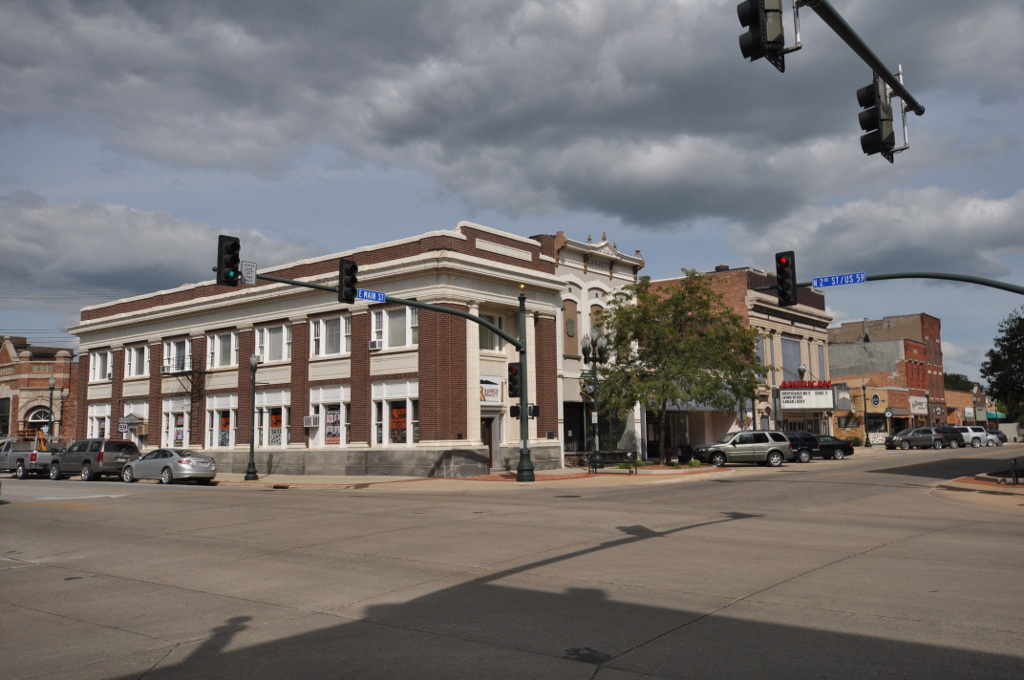
Cherokee, Iowa
Cherokee is a city in and the county seat of Cherokee County, Iowa, United States. The population was 5,199 at the 2020 Census, down from 5,369 in 2000.
Cherokee was laid out as a town in 1870, and was named for the Southeast Indian tribe, most of whose members had been removed to Indian Territory in the late 1830s. Cherokee was incorporated on April 5, 1873.
Tyson Foods closed its Tyson Foods Deli Plant in Cherokee on September 27, 2014. Tyson was the largest employer in Cherokee at the time, and they laid off approximately 450 employees or over eight percent of the total population of Cherokee.
According to the United States Census Bureau, the city has a total area of 6.45 square miles (16.71 km2), of which 6.43 square miles (16.65 km2) is land and 0.02 square miles (0.05 km2) is water.
As of the 2020 census, Cherokee had a population of 5,199 people, with 2,272 households and 1,271 families residing in the city. The population density was 769.5 inhabitants per square mile (297.1/km2). There were 2,498 housing units at an average density of 369.7 per square mile (142.8/km2).
The median age was 46.2 years. 20.8% of residents were under the age of 18. 4.4% were between the ages of 20 and 24; 22.0% were from 25 to 44; 25.4% were from 45 to 64; and 25.7% were 65 years of age or older. The gender makeup of the city was 49.4% male and 50.6% female. For every 100 females there were 97.5 males, and for every 100 females age 18 and over there were 96.8 males age 18 and over.
Of all households, 24.2% had children under the age of 18 living with them, 41.9% were married couples living together, 6.9% were cohabitating couples, 29.8% had a female householder with no spouse or partner present, and 21.5% had a male householder with no spouse or partner present. 44.1% of all households were non-families. 38.8% of all households were made up of individuals, and 20.4% had someone living alone who was 65 years of age or older.
Of all housing units, 9.0% were vacant. The homeowner vacancy rate was 2.9% and the rental vacancy rate was 7.9%. 90.3% of residents lived in urban areas, while 9.7% lived in rural areas.
Hub AI
Cherokee, Iowa AI simulator
(@Cherokee, Iowa_simulator)
Cherokee, Iowa
Cherokee is a city in and the county seat of Cherokee County, Iowa, United States. The population was 5,199 at the 2020 Census, down from 5,369 in 2000.
Cherokee was laid out as a town in 1870, and was named for the Southeast Indian tribe, most of whose members had been removed to Indian Territory in the late 1830s. Cherokee was incorporated on April 5, 1873.
Tyson Foods closed its Tyson Foods Deli Plant in Cherokee on September 27, 2014. Tyson was the largest employer in Cherokee at the time, and they laid off approximately 450 employees or over eight percent of the total population of Cherokee.
According to the United States Census Bureau, the city has a total area of 6.45 square miles (16.71 km2), of which 6.43 square miles (16.65 km2) is land and 0.02 square miles (0.05 km2) is water.
As of the 2020 census, Cherokee had a population of 5,199 people, with 2,272 households and 1,271 families residing in the city. The population density was 769.5 inhabitants per square mile (297.1/km2). There were 2,498 housing units at an average density of 369.7 per square mile (142.8/km2).
The median age was 46.2 years. 20.8% of residents were under the age of 18. 4.4% were between the ages of 20 and 24; 22.0% were from 25 to 44; 25.4% were from 45 to 64; and 25.7% were 65 years of age or older. The gender makeup of the city was 49.4% male and 50.6% female. For every 100 females there were 97.5 males, and for every 100 females age 18 and over there were 96.8 males age 18 and over.
Of all households, 24.2% had children under the age of 18 living with them, 41.9% were married couples living together, 6.9% were cohabitating couples, 29.8% had a female householder with no spouse or partner present, and 21.5% had a male householder with no spouse or partner present. 44.1% of all households were non-families. 38.8% of all households were made up of individuals, and 20.4% had someone living alone who was 65 years of age or older.
Of all housing units, 9.0% were vacant. The homeowner vacancy rate was 2.9% and the rental vacancy rate was 7.9%. 90.3% of residents lived in urban areas, while 9.7% lived in rural areas.