Hubbry Logo
Chick HearnChick HearnMain
Open search
Chick Hearn
Community hub
Chick Hearn
logo
8 pages, 0 posts
0 subscribers
Be the first to start a discussion here.
Chick Hearn
Chick Hearn
from Wikipedia

Francis Dayle "Chick" Hearn (November 27, 1916 – August 5, 2002) was an American sportscaster who was the play-by-play announcer for the Los Angeles Lakers of the National Basketball Association for 41 years, as well as the team's assistant general manager for seven years beginning in 1972. Hearn was the first broadcaster named to the Naismith Basketball Hall of Fame. Hearn is remembered for his rapid fire, staccato broadcasting style, associated with colorful phrases such as slam dunk, air ball, and no harm, no foul that have become common basketball vernacular. Hearn broadcast 3,338 consecutive Lakers games starting on November 21, 1965.[1] Most of Hearn's games in the television era were simulcast on both radio and television, even after most teams chose to use different announcers for the different media.

Key Information

Life and career

[edit]

Early life and nickname

[edit]

Hearn was born in Buda, Illinois and raised in Aurora, Illinois, in west suburban Chicago, and attended high school at Marmion Academy and college at Bradley University. He earned the nickname "Chick" while an Amateur Athletic Union basketball player at Bradley, when teammates played a prank on him: giving him a shoebox to see his surprised reaction when he opened it and found not sneakers inside, but instead a dead chicken.[1]

He and his wife Marge were married August 13, 1938. They had two children, a son, Gary, and a daughter, Samantha aka Janice, both of whom predeceased Hearn.[1] His granddaughter is Shannon. Marge Hearn died January 30, 2016, at the age of 98.[2]

Broadcasting streak

[edit]

Hearn's broadcasting streak began on November 21, 1965. Hearn missed the Lakers' game the previous night after having been stranded in Fayetteville, Arkansas, by inclement weather after having announced a game between Arkansas and Texas Tech. Even that was only Hearn's second missed assignment for the Lakers since he had become the team's broadcaster in March 1961. He would not miss another until December 16, 2001. Over the course of the streak, Hearn was paired with several different color commentators, including ”Hot” Rod Hundley, Pat Riley, Keith Erickson, Dick Schad, Lynn Shackelford and Stu Lantz.

Hearn's streak of 3,338 consecutive Lakers games came to an end on December 16, 2001, in order to undergo scheduled cardiac bypass surgery. Hearn recovered from his surgery, but in February 2002, he suffered a broken hip after falling at a gas station,[3] which further delayed his expected return to the Lakers broadcast booth. Hearn recovered from both issues and resumed broadcasting on April 9, 2002, receiving a standing ovation from the Staples Center crowd upon his return.[4] His final broadcast was for the Lakers' radio feed of Game 4 of the 2002 NBA Finals where the Lakers defeated the New Jersey Nets to win their third consecutive NBA championship. His final Lakers-affiliated appearance was as the emcee of the team's 2002 championship parade in June.[5]

Assistant general manager

[edit]

Hearn became assistant general manager of the Lakers in 1972, hired by Jack Kent Cooke, the team's owner at the time. Hearn advised management on personnel and trades, and helped negotiate player contracts as part of the role which he held for seven years.[6][7] Hearn advised team owner Cooke to draft future hall of fame player Magic Johnson in 1979.[8]

Non-Lakers work

[edit]

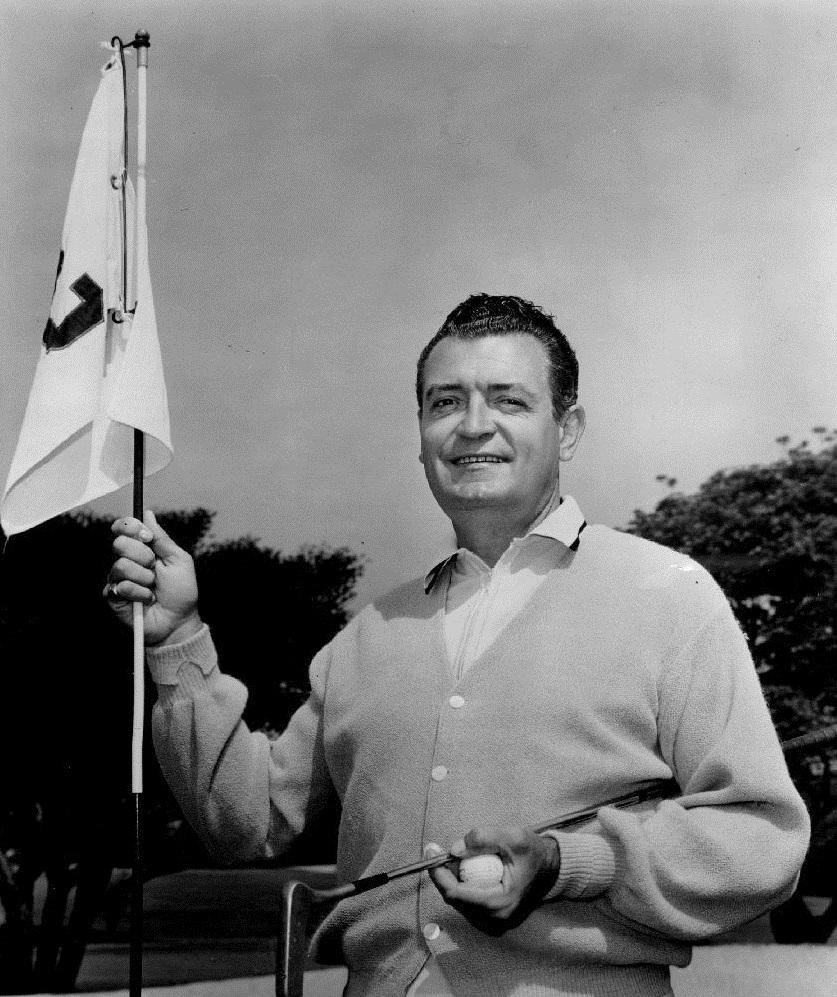
Hearn was the long-time host of Bowling for Dollars on KTLA (1972–1976); KHJ-TV (now KCAL-TV) (1978). He called the closed-circuit television broadcast of the first Ali-Frazier fight in 1971. He also did boxing commentary for Forum boxing fights in Inglewood in the 1980s, usually appearing alongside former featherweight contender Ruben Castillo.[9] Hearn also contributed to KCAL-TV's coverage of the U.S. Open golf tournament from 1957 to 1964. At the time, Hearn handled the sports desk of the local news program on Los Angeles' NBC affiliate, KRCA (now KNBC). Hearn announced USC football and basketball games from 1956 to 1961,[10] and also served as the play-by-play broadcaster for USC football games on tape-delayed, syndicated telecasts during the 1973 season. Hearn called UNLV Runnin' Rebels basketball games on KHJ/KCAL with Ross Porter from 1986 to 1990.[11] During the 1992 Summer Olympics in Barcelona, Spain, Hearn called the play-by-play for USA Men's Basketball games on the pay per view Olympics Triplecast "Red" channel.[9]

Television and movie work

[edit]
  • The Fish That Saved Pittsburgh: Played a basketball announcer in a basketball version of The Bad News Bears though the players in the story were adults. The movie provided an acting turn for Julius Erving.
  • Fletch: Plays himself interviewing Kareem Abdul-Jabbar and while describing Fletch (Chevy Chase) in a dream points out "(Fletch) is actually 6'5" but with the afro 6'9", pretty good dribbler......this gritty kid from the streets of Harlem really creates excitement. $4 million a year, that's true, but he earns every nickel of it. Look how he shakes off four, five players with ease!"
  • Garfield and Friends: Voiced an announcer in the episode Basket Brawl (season 2 episode 14). The episode involved Jon, Nermal, and Odie trying to get picnic food past Garfield. Hearn voiced a mouse announcer named "Chick Mouse" while the game's audience was mice.
  • Gilligan's Island
    • "Splashdown": The episode involved Hearn as a news commentator as an American crewed spacecraft was scheduled to splashdown near the island.
    • "It's a Bird, It's a Plane": Hearn's voice is heard on the radio in this episode.
  • The Harlem Globetrotters on Gilligan's Island: He was the play-by-play for the game between the Globetrotters and the robot team they were playing.
  • The Love Bug: Played a reporter during and following a race.
  • Matlock: Played a professional wrestling announcer in the second-season episode "The Annihilator".
  • Rugrats: Hearn voiced himself in the episode "Touchdown Tommy" while the Dallas Cowboys and Houston Oilers contest the Ultra Bowl.
  • The Simpsons: Voiced himself in the episode "Homer Defined" while calling a Lakers game. In the game, Magic Johnson pulls a "Homer" when he slips on the basketball court yet the ball ends up going into the basket.
  • My Three Sons: Appeared as the announcer of a model airplane flight competition in the 1962 episode "Air Derby".
  • The Fugitive: Season one, episode 30 Appeared as TV Newscaster
  • Heaven Can Wait: Uncredited role as a radio announcer for the Rams-Steelers game.
  • Sport Goofy in Soccermania: Voiced the announcer of the soccer game.

Music

[edit]

Hearn can be heard on the Pink Floyd album The Wall (at the 4:07 mark of the song "Don't Leave Me Now" as "Pink" flips through television channels just before destroying his television set leading into the song "Another Brick in the Wall Pt. 3"). This clip of Hearn appears to have been taken from an actual game between the Lakers and Bulls which was probably recorded during the 1978–79 season. Before the playoffs in the 1986 season, Hearn released a 12-inch rap single "Rap-Around".[12] The song features Hearn in the studio re-creating many of his most famous 'Chickisms' and was distributed by Macola Records (who distributed an early Dr. Dre/Ice Cube group "World Class Wreckin' Cru").[13] The song was played on Los Angeles television and radio stations, including the Lakers' televised games.[12]

Death

[edit]

During the summer of 2002, Hearn suffered a fall at his home in Encino, California, and struck his head causing serious injury. Three days later, on August 5, 2002, he died of his injury. He was 85. He was interred in the Holy Cross Cemetery in Culver City, California, next to his son Gary and his daughter Samantha.[1] Chick and Marge would have celebrated their 64th wedding anniversary on August 13, 2002.[1]

Honors

[edit]
Statue of Chick Hearn, 2018-07-20, at Staples Center

On May 9, 1991, Hearn became the third broadcaster to win the Gowdy Award from the Naismith Memorial Basketball Hall of Fame in Springfield, Massachusetts. He later became the first broadcaster inducted into the Hall in 2003.[14] In 1995, he was voted to be the 20th member of the American Sportscaster Hall of Fame by his fellow sportscasters. He was inducted by the National Sportscasters and Sportswriters Association Hall of Fame in 1997.

In honor of his contributions to the Los Angeles Lakers, both the Lakers and the city of Los Angeles renamed a portion of West 11th Street between Figueroa Street and Georgia Street (now L.A. Live Way) to Chick Hearn Court. This street currently runs alongside Crypto.com Arena's main entrance. The Los Angeles County Metropolitan Transportation Authority further honored the broadcaster by changing the name of the nearby A and E line station to "Pico/Chick Hearn". His name was later hung from the rafters of the Staples Center, alongside the retired numbers of past Lakers players, though with a microphone in place of a number.

Hearn also has a star on the Hollywood Walk of Fame, in radio. Hearn's star is located at 6755 Hollywood Blvd.

On April 27, 2010, Hearn was honored with a bronze statue at Star Plaza outside Staples Center.[15] A chair next to Hearn's statue behind the desk with the Lakers' logo is a part of the statue so his fans can sit down to have their pictures taken.

On-air style and demeanor

[edit]

Hearn was notable for his focus on calling play-by-play. He did not chitchat while the game was in motion. He was able to report clearly and rapidly, which he considered a gift. This style was especially well-suited for his notable simulcasts of Lakers games on television and radio, which were a tradition during his 40-plus year tenure. He was especially appreciated on radio because listening to the broadcast was almost like watching the game. Shortly after Hearn's departure, the simulcasts were ended, with some listeners complaining that his successor, Paul Sunderland, was difficult to follow for radio listeners.[16] Sometimes this style made it difficult for his partners to get a word in edgewise; his seven-year color commentator, Keith Erickson, fondly reminisced at a ceremony commemorating Hearn: "Not being able to talk for eight years [as his partner], I thought this was a great opportunity to share a bit".[15] He was formal, always referring to the Lakers' former owner as "Mr. Cooke" and the owner for much of his tenure, Jerry Buss by his full title – Dr. Jerry Buss or Dr. Buss.

Chickisms

[edit]

The particular phrases that Hearn used during his broadcasts were labeled "Chickisms". Many are staples of basketball.[17] When a book of his memoirs was published in 2004, it included an audio CD with the calls as well as a Chick Hearn Rap-Around rap song created with the samples.[18]

  • 20 foot lay-up: A jump shot by Jamaal Wilkes.
  • And that one came down wet: A very high arch "rainbow" shot is made, like the ball went through the clouds.
  • (The) Bank is open: A poorly guarded bank shot from the side.
  • (He sent that one back) Air-mail Special!: A strongly blocked shot, often sent high into the stands.
  • Bloooows the layup! : Missed a very easy layup.
  • Bloooows a cripple!: Missed an easy shot.
  • Boo-birds: Fans who boo their own team when they play badly.
  • (He did the) bunny hop in the pea patch: He was called for traveling.
  • (You could) call it with Braille: An easy call for an official, e.g. a blatant foul.
  • (He got) caught with his hand in the cookie jar: A reaching foul.
  • (The) charity stripe: The free throw line.
  • (That player is in) civilians: The player is not in uniform.
  • (He's got 'em) covered like the rug on your floor: Really good one-on-one defense.
  • (They) couldn't beat the Sisters of Mercy: The team is getting beat badly.
  • (They) couldn't throw a pea into the ocean: The team's shooting is really awful.
  • (It'll) count if it goes ...: A player that is fouled in the act of shooting, or alternatively gets off a shot just before the buzzer sounded. It go-o-o-oes!: The shot is successful.
  • ...decides to join the party: a player coming up the floor late on offense.
  • (That shot) didn't draw iron: A shot which misses the rim, but hits the backboard. Sometimes he would add but it drew a lot of flies.
  • Dime store score: A 10–5 score.
  • Dribble-drive: A player drives the basket while dribbling.
  • Finger roll: A shot where the ball rolls off the shooter's fingers.
  • First lead since they got off the bus: First lead of the game.
  • (He) fly-swatted (that one): A shot blocked with force and authority.
  • Football score: A score resembling one often seen in a football game (e.g., 21–14).
  • (He threw up a) frozen rope: A shot with a very flat trajectory.
  • (We're) high above the western sideline: Chick's perch at the Forum, from which he called his "word's eye view" of the game.
  • Hippity-hops the dribble: A player dribbling the ball does a little hop step.
  • I'll bet you an ice cream: Hearn and Keith Erickson (his one-time color commentator) often bet ice creams on the outcome of a shot or game.
  • (He's got) ice-water in his veins: When a player hits a clutch free throw.
  • (It's) First and ten: Multiple players are sprawled on the floor after a physical play or diving for the ball.
  • (It's) garbage time: The (often sloppily played) final minutes when reserve players get a chance to play in a game that's out of reach (after it is in the refrigerator).
  • (In & out,) heart-brrrreak!: A shot that appears to go in, but rattles off the rim and misses. Sometimes it went in so far you could read the Commissioner's name from below.
  • He has two chances, slim and none, and slim just left the building: The player has no chance of success with this play.
  • If that goes in, I'm walking home: Similar to a prayer, when the opponent shoots a shot that is a prayer, a streak, or some amazing shot. (Usually on the road)
  • Leapin' Lena: A shot made while the player is in the air and off balance.
  • Marge could have made that shot: A missed shot that was so easy, Hearn's wife Marge could have made it. Marge was often referred to when a player messed up something that was easy.
  • Matador Defense: Poor defense that allows their opponent to drive uncontested through the lane to the basket.
  • (There are) lots of referees in the building, only 3 getting paid: The entire crowd acts as though they are the officials by disagreeing with a call.
  • (Like a) motorcycle in a motordrome: Ball spins several times around the inside of the rim, then drops through or goes "in & out".
  • Too much mustard on the hot dog: Describing a player attempting an unnecessarily showy, flashy play.
  • The mustard's off the hot dog: A player attempts an unnecessarily showy, flashy play which ends up in a turnover or otherwise unsuccessful, such as a missed dunk.
  • My grandmother could guard him, and she can't go to her left!: Said of a slow, out of shape, or hurt player.
  • Nervous time: When the final moments of a game are pressure-packed.
  • 94-by-50 hunk of wood: The basketball court, based on the floor's dimensions. (Attacking 47 feet: The front court.)
  • No harm, no foul (no blood, no ambulance, no stitches): A no-call by an official when varying degrees of contact have occurred. (More adjectives means the non-call was more questionable.)
  • Not Phi Beta Kappa: Not a smart play.
  • ...Since Hector was a pup A very long time (e.g., the Lakers haven't had the lead since Hector was a pup.)
  • He's in the Popcorn Machine (with butter and salt all over him): Meaning that a defender got faked into the air (and out of play) by an offensive player's pump fake. ("Popcorn Machine" is a reference to an actual popcorn machine in the old Los Angeles Sports Arena, which was near the basket, but far from the court. Thus, if the player went far out of play, he was in the "popcorn machine.") When Hearn guest starred as a mouse in the Garfield and Friends episode Basket Brawl, Odie literally runs into a popcorn machine.
  • (He's) on him like a postage stamp: Very tight defense.
  • Picks up the garbage and takes it to the dump: Picks up a loose ball and scores.
  • Pulling a Larson: A particularly inelegant play.
  • Rock the baby: An amazing slam dunk, in a regular season game in 1983, that Julius Erving scored over Michael Cooper.
  • Somebody left the window open: Somebody misses an outside shot, badly.
  • Seventeen five-oh-five, standing at the Forum: When a play drew universal acclaim (17,505 was the seating capacity for the Inglewood Forum)
  • Slam dunk!: Hearn's most famous phrase; a powerful shot where a player forces the ball through the rim with one or both hands.
  • (He was) standing there, combing his hair: When a player uninvolved with the action comes up with the ball and gets an easy shot.
  • (He) takes him to the third floor and leaves him at the mezzanine: A move where an offensive player pump-fakes a defender and draws a foul from the leaping player.
  • Tattoo dribble: A player dribbling the ball while not moving, as though tattooing the floor with the ball, as he waits for the play to develop.
  • This game's in the refrigerator: the door is closed, the lights are out, the eggs are cooling, the butter's getting hard and the Jell-O's jigglin'!: The game's outcome is set; only the final score is in question. Chick's variation on "the game's on ice." (Reportedly, he set a record for the earliest he's ever said this during the February 4, 1987 game against the Sacramento Kings, who were down 40–4 after the first quarter.)
  • Throws up a 5 footer, misses by 3: When a player throws up a close shot and misses by a lot.
  • Throws up a brick: When a player tosses up a particularly errant shot, particularly one that bounces off the front of the rim.
  • Throws up a prayer (...it's (or isn't) answered!!!): A wild shot that will need a miracle to score (and does or doesn't).
  • Ticky-tack: A foul called when very little contact has been made.
  • (On his) wallet: A player fell on his rear end. When Lynn Shackleford, color man 1970–77, who liked to sass his rather straitlaced senior partner, remarked once that a player had landed on his backside, Hearn admonished him in all seriousness, "That's his wallet."
  • Words-eye view: What listeners received while listening to Hearn call the game on the radio.
  • (He's) working on his Wrigleys. A player is chewing gum.
  • (Passes over to) Wouldn't You?: A player passes the ball over to a player who's very hot at the time.
  • (He's) yo-yo-ing up and down: A player dribbles in one place as if he were playing with a yo-yo on a string.
  • (He's dribbling) left to right (or right to left) across your dial: To let people who were listening to radio know which direction the ball was going up the court.
  • (He's) alone, he sets, he fires, he gets!: Player not defended who stops, sets and shoots.
  • Fall Back Baby, she's in there!: Said of a made shot by Lakers player Dick Barnett whose nickname was 'Fall Back Baby'.

Nicknames for Lakers players

[edit]

Memorable calls

[edit]

And the crowd stands for Kareem to get the ball. Everybody's waving their arms...it's in to Kareem. Kareem swing left...right-hand twelve-footer...GOOD!

— -calling Kareem Abdul-Jabbar's NBA record 31,420th point, pushing him past Wilt Chamberlain as the league's all-time leading scorer.

The new king of scoring has ascended his throne.

— -Shortly after Kareem's record-breaking basket.

37–2, ladies and gentlemen. If you're just tuning in, no, I haven't been using any of the squeezing of the grape.

— -referring to the Lakers' colossal lead on the Sacramento Kings during the first quarter of a game between the teams on February 4, 1987.

To the left goes Magic...he's got it. He didn't shoot it...five seconds left. Magic down the middle, just what I thought. A hook shot at twelve, GOOD! Two seconds left! The Lakers take the lead on Magic Johnson's running sky-hook! Hooie!

— -calling Magic Johnson's "junior sky-hook" in Game 4 of the 1987 NBA Finals.

Kobe's down the middle, he's in deep. Throws to Shaq... SLA-A-AM DUNK! Portland can put the champagne away and get out the bottled water, 'cause that's all they're gonna drink on their way home!

— -calling the Lakers' comeback against the Portland Trail Blazers in Game 7 of the 2000 Western Conference Finals.

References

[edit]
[edit]
Revisions and contributorsEdit on WikipediaRead on Wikipedia
from Grokipedia
Francis Dayle "Chick" Hearn (November 27, 1916 – August 5, 2002) was an American sportscaster renowned for his role as the play-by-play announcer for the of the (NBA) from 1961 until his death. Born in , and raised in nearby Aurora, Hearn earned his nickname during his days at Bradley University before serving in and beginning his broadcasting career on the Armed Forces Network in . Joining the Lakers shortly after their relocation from to in 1961, Hearn became the defining voice of the franchise, delivering fast-paced, enthusiastic commentary that captured the excitement of the game through his signature "words-eye-view" style. Over his 42-year tenure, he broadcast a record 3,338 consecutive Lakers games from November 21, 1965, to December 16, 2001, and returned after heart surgery in 2002 to call the team's final five regular-season games and all 19 playoff contests, including their third consecutive NBA championship on June 12, 2002. Hearn's innovative contributions to sports broadcasting included coining dozens of enduring basketball phrases, known as Chickisms, such as "slam dunk," "air ball," "no harm, no foul," and "the mustard's off the ," which entered the sport's lexicon and enhanced fan engagement. His accolades include three National Sportscaster of the Year awards (1959, 1965, 1987), nine California Sportscaster of the Year honors, the Media Award in 1992, and induction as the first play-by-play announcer into the Naismith Memorial Hall of Fame in 2003; he also received a star on the in 1986. Hearn's partnership with Stu Lantz lasted 15 years, and his work helped elevate the Lakers to national prominence while covering nine NBA championships during the Showtime era and beyond. He passed away in Northridge, , from injuries sustained in a fall at his home.

Early Life and Career Beginnings

Birth and Childhood

Francis Dayle Hearn was born on November 27, 1916, in , a small rural town in . He was one of two sons in his family, with his father, an Irishman employed by the railroad, supporting the household through steady labor in the transportation industry. Hearn spent the first several years of his childhood in the modest Midwestern farming community of , where life revolved around local traditions and simple outdoor pursuits. In 1925, when he was about nine years old, his family relocated to , a larger west of , seeking better opportunities amid the economic shifts of the . This move marked the transition from rural isolation to a more urban environment, though the family's working-class roots remained influential. In Aurora, Hearn's early exposure to sports came through community games and school activities, fostering his interest in athletics during his formative years. He particularly embraced , participating actively in the sport during high school at Marmion Academy, where his involvement on the court ignited a enduring passion for the game that would shape his future.

Origin of Nickname and Education

Hearn acquired his nickname "Chick" while playing for the team at Bradley University, when his teammates pranked him by presenting a shoebox he believed contained a pair of sneakers; instead, it held a box of baby chicks, and the name stuck thereafter. Born Francis Dayle Hearn in 1916, he graduated from Marmion Academy, a Roman Catholic high school for boys in , around 1934. He then enrolled at Bradley University in , where he played for the team and began exploring interests in sports and communication that would later define his career. One account indicates Hearn completed his studies at Bradley in 1938 before pursuing opportunities in broadcasting and journalism amid the economic challenges of the era.

Initial Broadcasting Roles

After his in 1946, Hearn returned to civilian broadcasting, initially selling pharmaceuticals while pursuing radio opportunities. He soon relocated to , where he announced games for the Peoria Caterpillars, an AAU basketball team that won national championships in the late 1940s. By 1950, he was covering Bradley University basketball for WEEK radio in Peoria, a role he held for several seasons during one of the school's most successful eras. In the early 1950s, Hearn moved to to join KNX, the affiliate, handling various sports assignments. His first radio job was at WBNU in Aurora, where he covered high school broadcasts. During , Hearn served in the U.S. Army Air Forces from 1942 to 1945, stationed in the South Pacific, including the . There, he refined his announcing abilities through work on Armed Forces Radio, delivering play-by-play for military events and a touring team. His first broadcast words were spoken in , marking a pivotal step in his professional development amid wartime duties. Hearn's transition to television came in the mid-1950s, as he began broadcasting and games starting in 1956, serving as the play-by-play voice for both sports through 1961. These roles on radio and TV in established him in the West Coast market, blending his rapid-fire style with coverage of college athletics before his long association with professional .

Los Angeles Lakers Career

Hiring as Lakers Announcer

Following the ' relocation from to in 1960, Chick Hearn was hired as the team's play-by-play announcer in 1961, becoming the franchise's sole voice in that role for over four decades. His first broadcast occurred on March 21, 1961, during Game 5 of the Lakers' playoff series against the Hawks. Prior to Hearn's arrival, the team's broadcasts had been handled by announcers such as Bud Blattner on television during the 1960-61 season. Drawing briefly on his prior radio experience in markets like Peoria and , Hearn transitioned seamlessly to professional coverage, filling a key role as the NBA sought to establish a foothold on the West Coast. Hearn faced initial challenges in adapting to the league's nascent popularity in , where lagged behind established sports like and football, often drawing sparse crowds and limited media attention. He worked to build audience rapport through energetic calls that highlighted the team's potential, particularly amid the excitement of stars like and , who had propelled the Lakers to contention shortly after the move. Early broadcasts shifted to formats combining radio and television, with Hearn paired alongside color commentators such as Bill Brundige for TV elements in the 1961-62 season. This setup allowed broader reach, though Hearn's rapid-fire style sometimes overwhelmed partners, leading to pairings where they offered minimal input beyond affirmations. A notable early partnership developed later in the decade with former Lakers player as from 1967 to 1969, though Hearn's foundational work in the first years laid the groundwork for such collaborations. His coverage captured the dynamism of Baylor and West, including pivotal moments in the against the , where Baylor scored a then-record 61 points in Game 5 despite the Lakers' eventual 4-3 series defeat. These broadcasts helped elevate the Lakers' profile in a new market, marking the onset of Hearn's enduring influence on the franchise's narrative.

Broadcasting Streak and Longevity

Chick Hearn commenced his legendary broadcasting streak on November 20, 1965, calling the ' game against the Warriors in , a 133-117 victory for the home team. This marked the beginning of an uninterrupted run that lasted until December 16, 2001, when he broadcast the Lakers' 101-85 victory over the at Staples Center, totaling 3,338 consecutive regular-season, playoff, and preseason games without missing a single one due to illness, injury, or travel complications. To sustain this extraordinary feat, Hearn exhibited unwavering commitment , routinely traveling with the Lakers on all road trips to eliminate any risk of delay and meticulously preparing his commentary even during profound personal hardships, including the tragic of his Gary from a in 1972, after which he returned to the the very next game. His routine involved coordinating with team schedules years in advance and maintaining peak physical condition to handle the rigors of a full NBA slate, spanning 36 seasons of grueling travel and late-night broadcasts. Recognized as the longest consecutive play-by-play announcing streak in NBA , Hearn's endurance became synonymous with the franchise's identity, fostering deep fan loyalty and amplifying the excitement of the Lakers' Showtime dynasty in the 1980s, where his calls narrated five championships led by and . This run not only showcased his professionalism but also elevated Lakers broadcasts as a cultural staple in , drawing generations of listeners through radio and television simulcasts. The streak concluded abruptly due to the necessity of aortic valve replacement surgery on December 18, 2001, prompting Hearn to sit out the following game against the on December 20, where Paul Sunderland served as the interim play-by-play announcer. Hearn recovered sufficiently to return for the final five regular-season games and all 19 playoff contests that spring, though his health issues foreshadowed further challenges.

Assistant General Manager Duties

In 1972, Lakers owner appointed Chick Hearn as the team's assistant general manager, a role he held until 1979 while simultaneously continuing his broadcasting duties. Serving under Fred Schaus, Hearn contributed to front-office operations by advising on personnel matters, trades, and player contract negotiations. Hearn's advisory role extended to key scouting and strategic decisions during a transitional period for the Lakers, following their 1972 NBA championship victory led by . He recommended bringing in as in 1977 after his , who later became a pivotal figure in the franchise's success. These contributions helped guide the team toward building a younger roster, including the acquisition of in 1975, setting the stage for future contention. One of Hearn's most influential actions came in the , where he held one of five votes in management and strongly advocated for selecting with the first overall pick—a decision that proved instrumental in launching the Lakers' dynasty of the . His firsthand observations from courtside during broadcasts provided unique insights into player potential, enhancing his effectiveness in personnel evaluations. Throughout his tenure, Hearn balanced these administrative responsibilities with his play-by-play announcing, leveraging his close proximity to the team to inform both roles without conflict. This dual involvement underscored his deep commitment to the Lakers' overall success, bridging on-court performance with off-court strategy.

Other Professional Work

Non-Lakers Broadcasting Assignments

Hearn's broadcasting career extended beyond the Lakers to include significant roles in , where he served as the play-by-play announcer for and games from 1956 to 1961. This period overlapped with his early Lakers duties after joining the team in 1961, allowing him to balance multiple high-profile assignments in sports media. His work with USC helped establish his reputation for energetic and detailed commentary in the local market. In the late 1980s, Hearn expanded his portfolio by calling ( games on television alongside analyst Ross Porter, a role he held through the 1989-90 season. This assignment covered UNLV's dominant era under coach , including their undefeated regular season and in 1990, during which Hearn's broadcasts reached a wide audience on in . The coverage highlighted his versatility in adapting his fast-paced style to different teams and venues. Hearn also contributed to international events, serving as a play-by-play announcer for NBC's coverage of the men's basketball tournament in , where he called games featuring the ' "Dream Team." Paired with analyst Steve Jones, Hearn narrated the team's dominant performances, including their run against international competition, reaching millions of viewers worldwide. This Olympic stint underscored his national prominence beyond domestic leagues. Throughout his career, Hearn took on occasional assignments in football broadcasting, including games for in the 1950s and 1960s, such as color commentary for the 1960 Rose Bowl between Washington and . He also handled play-by-play for the 1962 Rose Bowl matchup between and UCLA, contributing to 's national telecasts of these marquee bowl games. These gigs demonstrated his broad expertise across sports.

Entertainment and Media Appearances

Hearn expanded his distinctive broadcasting persona into various entertainment formats, including television guest appearances where his energetic voice added authenticity to sports-related scenes. He voiced himself in the 1991 episode "" of the animated series , appearing as a Lakers announcer during a sequence involving a nuclear plant crisis. Similarly, in the 1991 episode "Oldies But Young 'Uns" of , Hearn provided the play-by-play narration for a comedic game played before an audience of mice, enhancing the show's satirical take on family dynamics. In film, Hearn made several cameo appearances as an announcer, leveraging his rapid-fire delivery to heighten dramatic or humorous moments in sports-themed stories. He portrayed Sportscaster #2 in the 1981 made-for-TV movie The on , calling the play-by-play for the climactic showdown between the Globetrotters and a team of robots. Earlier, in the 1968 comedy The , Hearn served as the announcer for race scenes, bringing his sports commentary style to the film's vehicular antics. Other notable roles included himself in the 1985 comedy Fletch, where he commented on a Lakers game, and a radio announcer in the 1978 Heaven Can Wait. Hearn's contributions to music highlighted his playful side, particularly through Lakers-related productions that incorporated his signature phrases, known as "Chickisms." In the , he narrated the team's iconic pre-game introduction sequence, delivering highlights of the "Showtime" era with lines like "the roof is going to come off of the Forum" to build excitement for broadcasts. Later, he recorded the novelty rap single "Chick Hearn Rap Around," where he recreated numerous Chickisms in a studio session, blending his broadcasting flair with hip-hop beats; the track was released by Macola Records and distributed as a promotional item. This effort captured his humorous on-air style in a non-sports context, appealing to fans beyond . Beyond scripted media, Hearn lent his voice to commercials and hosted game shows, further embedding his persona in . In the , he featured in advertisements for brands like , using his lively narration to promote Los Angeles-area eateries. He also hosted the Los Angeles edition of the syndicated Bowling for Dollars from 1972 to 1977 on and in 1978 on KHJ-TV (now ), engaging viewers with his charismatic hosting amid bowling challenges and prize giveaways.

Personal Life and Death

Marriage and Family

Chick Hearn married his high school sweetheart, Margaret "Marge" Jeffers, in 1938, in a union that lasted nearly 64 years until his death in 2002. The couple had two children: a son, Gary, born around 1943, and a daughter, Samantha, born around 1947. Gary died on June 1, 1972, at age 29 from a . Samantha passed away on May 24, 1990, at age 43 from following a battle with anorexia. Hearn and his family settled in the Los Angeles area, where they built a life centered on close-knit support amid his demanding broadcasting schedule, including frequent travels for Lakers games and other assignments. Marge provided steadfast companionship, often accompanying Hearn to arenas and becoming a familiar presence courtside, earning her the affectionate title of "First Lady of the Lakers" from team owner . The family shared a passion for sports, with Marge actively engaging in Lakers events and the couple later enjoying time as grandparents and great-grandparents to their descendants. Marge Hearn died of natural causes on January 30, 2016, at the age of 98 in Encino, .

Health Decline and Passing

In the summer of 2002, Chick Hearn suffered a fall at his home in Encino, , on August 2, striking the back of his head and causing a brain hemorrhage. He was rushed to Northridge Hospital Medical Center, where he underwent on August 4 to address the injury. Despite medical efforts, Hearn's condition deteriorated rapidly, and he passed away on August 5, 2002, at the age of 85. Hearn's death prompted an outpouring of grief from the sports community and fans worldwide, with tributes highlighting his enduring impact on . radio stations provided constant updates on his condition, and hundreds gathered at his star on the to leave flowers and messages of condolence. The organized memorial events, including a public viewing at the Staples Center where thousands filed past his empty broadcast booth, evoking a sense of collective mourning for the voice that had defined the franchise for over four decades. Hearn's funeral Mass was held on August 9, 2002, at St. Martin of Tours Roman Catholic Church in , drawing a crowd of over 1,000, including prominent NBA figures such as , who delivered a eulogy praising Hearn's passion and warmth. Other attendees included , , , , and Lakers fan , underscoring Hearn's deep connections within the world. The service featured heartfelt remembrances of his energetic style and lifelong dedication to the game.

Broadcasting Style and Innovations

On-Air Demeanor and Delivery

Chick Hearn's on-air delivery was renowned for its fast-paced, enthusiastic "rapid-fire" style, which enabled him to provide real-time descriptions of fast-breaking action without unnecessary pauses or delays. This approach, often so swift that he would announce a basket before the ball fully swished through the net, kept broadcasts dynamic and immersive for listeners. His clear, precise articulation ensured that plays were conveyed with immediacy and accuracy, reflecting a deep passion for the game that energized audiences across radio and television. Hearn's demeanor was distinctly humorous and folksy, infusing broadcasts with a relatable warmth that simplified intricate plays for everyday fans. He employed an engaging, light-hearted tone, often drawing on spontaneous wit to connect with viewers, while his self-deprecating jokes—such as chuckling about losing his when asked about his age in later years—added a personal, endearing touch without detracting from the action. This approachable style made him a beloved figure, blending with an authentic, down-to-earth charm that humanized the high-stakes world of professional basketball. A key aspect of Hearn's delivery was his adaptation to simulcast broadcasts, where he served as the play-by-play announcer for both radio and television audiences simultaneously—a pioneering practice he helped popularize. To accommodate radio listeners reliant on audio alone, he emphasized vivid, descriptive imagery, crafting a "words'-eye view" that painted clear mental pictures of the , much like speaking directly to visually impaired fans who praised his . This nuanced technique balanced the visual demands of TV with the narrative needs of radio, ensuring broad appeal without compromising the integrity of his calls. Over four decades, Hearn exhibited unwavering consistency in his professional demeanor, calling 3,338 consecutive Lakers games from 1965 onward while maintaining a focused, objective play-by-play style that rarely veered into overt bias despite his close personal and professional ties to the team. His dedication to straightforward reporting, free from excessive commentary or favoritism during live action, underscored a commitment to the sport's integrity, allowing his enthusiasm for the to shine through in a measured, credible manner. This reliability solidified his reputation as a broadcaster who elevated the game without overshadowing it.

Chickisms and Coined Terms

Chick Hearn's broadcasting career was marked by his creation of colorful, descriptive phrases known as "Chickisms," which provided a vivid "word's-eye view" of basketball action and became integral to the sport's vernacular. These inventions emerged spontaneously during his play-by-play calls for games, enhancing listener engagement through concise, imagery-rich language. Hearn is credited with coining several enduring terms, including "" to describe a powerful, authoritative shot jammed through the hoop; "air ball," referring to a missed shot that fails to touch the rim or backboard; "no harm, no foul," indicating incidental contact not warranting a whistle; and "the charity stripe," a playful nod to the free-throw line where uncontested shots are awarded. These phrases were drawn directly from Hearn's on-air improvisations, often inspired by everyday expressions or visual analogies to make complex plays accessible and entertaining. For instance, "" evoked the forceful slamming of a door, while "air ball" highlighted the shot's complete miss of the basket hardware. Hearn's Chickisms were frequently compiled and referenced in media tributes and Lakers archives, preserving his linguistic legacy for fans and broadcasters. The widespread adoption of these terms by NBA announcers globally underscores Hearn's profound influence, transforming his personal flair into standard basketball lexicon and elevating the descriptive quality of sports commentary.

Nicknames for Lakers Players

Chick Hearn's inventive nicknames for Lakers players captured their unique attributes, from physical prowess to performances, and became integral to how fans perceived the team's stars during his broadcasts. These monikers, delivered with Hearn's signature flair, often drew from a player's on-court traits or qualities, helping to build enduring personas that resonated beyond the arena. By weaving these nicknames into play-by-play calls, Hearn made the game more engaging and memorable, fostering fan loyalty and player legacies. One of Hearn's most iconic creations was "Big Game James" for forward , reflecting his penchant for elevating his game in playoff pressure cookers, where he averaged 21.1 across 143 postseason contests compared to 17.6 in the regular season. For center , Hearn used "The Captain" to honor his role as the team's steady leader and skyhook maestro during the 1980s championship runs. Similarly, guard earned "Mr. Clutch" from Hearn for his reputation as a late-game hero, exemplified by his 1969 MVP despite the Lakers' loss. Hearn also nicknamed center "The Diesel," evoking his dominant, unstoppable force in the paint during the early 2000s dynasty. Forward was dubbed "Silk" for his silky-smooth mid-range game, with Hearn famously calling his reliable jumper a "20-foot ." For young guard , Hearn affectionately referred to him as "The ," highlighting his precocious talent and rapid rise in the late . These nicknames, along with Hearn's popularization of "" for Earvin Johnson—stemming from his high school days but amplified through countless broadcasts—not only entertained but also solidified player identities within Lakers lore. Fans embraced them, often chanting or referencing the terms, which amplified the excitement of the "Showtime" era's fast-paced play.

Memorable Broadcasts

Iconic Lakers Game Calls

One of Chick Hearn's most celebrated broadcasts occurred on , 1984, when he called Kareem Abdul-Jabbar's record-breaking skyhook against the in , giving Abdul-Jabbar 31,420 career points and surpassing Wilt Chamberlain's mark of 31,419. Hearn's voice conveyed the magnitude of the achievement as the shot fell, emphasizing that the record would likely never be broken—a prediction that held true until surpassed it on February 7, 2023. The call encapsulated Hearn's ability to elevate historical drama through precise, enthusiastic narration. In Game 4 of the versus the , Hearn delivered an electrifying account of Magic Johnson's "baby skyhook"—a running, underhand —with two seconds remaining, securing a 107-106 victory and a 3-1 series lead for the Lakers. As the ball swished through the net, Hearn exclaimed "Good!", his exclamation amplifying the tension and triumph of the moment that shifted momentum toward ' eventual championship. This play-by-play remains a hallmark of Hearn's knack for infusing urgency into clutch plays. Hearn's radio broadcast of Game 6 in the captured the Lakers' decisive 116-111 win over the , clinching their first title in 10 years and featuring Kobe Bryant's 26 points alongside Shaquille O'Neal's dominant 41-point, 12-rebound performance. His steady yet exuberant delivery highlighted Bryant's mid-range jumpers and drives, underscoring the young star's emergence in the series-clinching effort. Hearn's emotional calls during championship clinchers defined his legacy, particularly in 1972 and . In Game 5 of the 1972 Finals, he narrated the Lakers' 114-100 victory over the from radio, ending Los Angeles' 0-8 Finals record and marking their first title since moving to , with Wilt Chamberlain's 24 points and 29 rebounds central to the win. For the Finals Game 6, Hearn's play-by-play chronicled rookie Magic Johnson's extraordinary 42-point, 15-rebound performance at center in a 123-107 rout of the , birthing the "Showtime" era and securing the franchise's seventh banner. These broadcasts, rich with Hearn's rhythmic cadence, turned pivotal victories into enduring audio memories for fans.

Coverage of Milestone Achievements

Chick Hearn served as the play-by-play announcer for nine NBA championships during his tenure from 1961 to 2002, providing vivid narration that captured the team's triumphs and elevated their national prominence. These victories included the Lakers' first title in franchise history on May 7, 1972, against the , ending a drought that dated back to their era; the 1980 series win over the , featuring rookie Johnson's iconic performance in ; back-to-back titles in 1982 against the and 1985 against the ; repeat championships in 1987 and 1988 against the ; and the three-peat concluded with victories in 2000, 2001 over the , and 2002 against the Nets. Beyond championships, Hearn's broadcasts chronicled key Lakers franchise milestones, such as the team's record-setting 33-game from late 1971 into early 1972, which propelled them to their first title and showcased the synergy of , , and under coach . His coverage extended to reflections on the Lakers' storied history, including the legacy of 's earlier exploits, though Hearn often tied these to the team's post-1968 resurgence after Chamberlain joined the roster. Hearn's unbroken streak of 3,338 consecutive games from 1965 to 2001 allowed him to narrate these achievements in real time, fostering a sense of continuity for fans. Hearn also provided insights into broader NBA milestones through his work on All-Star Games and international events, highlighting Lakers players' contributions to the league's prestige. He broadcast multiple NBA Games, including the 1988 event in alongside Boston's , where Lakers stars like and shone, underscoring the franchise's dominance in the 1980s. Additionally, Hearn covered the 1992 U.S. Olympic "Dream Team" as part of NBC's triple-cast, narrating gold-medal performances by Lakers alumni and , which amplified the NBA's global impact during . Throughout his career, Hearn's voice documented the Lakers' transformation from perennial contenders in the era to a full-fledged dynasty under Johnson and Abdul-Jabbar, and later and , emphasizing tactical evolutions like the Showtime and that defined their success. His narrations not only reported victories but contextualized them within the NBA's growth, from regional appeal to worldwide phenomenon.

Honors and Legacy

Awards and Inductions

Chick Hearn received numerous accolades for his contributions to sports broadcasting, particularly in . He was named National Sportscaster of the Year three times, in 1959, 1965, and 1987, and Sportscaster of the Year nine times. In 1986, he was awarded a star on the in the radio category, recognizing his pioneering work as a play-by-play . The took place on September 24, 1986, at 6755 , honoring his innovative style and decades of service to the . In 1992, Hearn was presented with the Media Award by the Naismith Memorial Hall of Fame, acknowledging his outstanding contributions to coverage in the electronic media category. This prestigious honor, named after legendary broadcaster , highlighted Hearn's role in elevating the sport's popularity through his distinctive radio and television broadcasts. Hearn was inducted into the National Sportscasters and Sportswriters Hall of Fame in 1997. Following his death in 2002, Hearn's legacy was further cemented in 2003 when he became the first broadcaster inducted into the Naismith Memorial Basketball Hall of Fame as a contributor. The enshrinement on September 5, 2003, celebrated his 42-year tenure with the Lakers and his record of calling 3,338 consecutive games without missing one. In 2022, he was posthumously inducted into the as a legend.

Posthumous Tributes and Memorials

Following Chick Hearn's death in 2002, the Los Angeles Lakers and the city honored his legacy through several enduring physical memorials. In December 2002, the City of Los Angeles renamed a portion of West 11th Street adjacent to Staples Center (now Crypto.com Arena) as Chick Hearn Court, recognizing his contributions to the team and the community. More than seven years later, on April 20, 2010, a bronze statue of Hearn was unveiled outside Staples Center in Star Plaza, depicting him seated courtside with a microphone in hand, weighing approximately 5,000 pounds and standing nearly 16 feet tall. The ceremony, attended by family, former players, and Lakers executives, underscored Hearn's role as the voice of the franchise for over four decades. The Lakers organization has maintained annual observances to celebrate Hearn's broadcasting style and innovations, beginning shortly after his passing. Since 2003, the team has held "Chick Hearn Night" typically around his November 27 birthday, featuring special broadcasts, highlight reels of his iconic calls, and presentations of the Chick Hearn Memorial Scholarship to deserving students, a program that supports education in his name. This event continued into the 2020s, with the 2024 observance occurring on November 23 during a home game against the , including tributes from current broadcasters emulating his "Chickisms." In the 2020s, Hearn's influence has been revisited through media projects that highlight his memorable game calls and coined terminology. The Los Angeles Lakers produced a 2022 video tribute titled "Lakers Shrine: Chick Hearn," which aired on NBA platforms and featured archival audio of his broadcasts from championship eras. Additionally, episodes in Lakers-focused podcasts, such as those discussing the team's history, have dedicated segments to Hearn's legacy, analyzing his play-by-play during key moments like the Showtime dynasty. The passing of his wife, Marge Hearn, on January 30, 2016, at age 98, prompted renewed family and team reflections, with the Lakers issuing a statement honoring her as a steadfast supporter of Hearn's career and presenting the annual scholarship in her memory during the subsequent game.

References

Add your contribution
Related Hubs
User Avatar
No comments yet.