



Community hub
Recent from talks
Knowledge base stats:
Talk channels stats:
Members stats:
Chimera (genetics)
A genetic chimerism or chimera (/kaɪˈmɪərə, kɪ-/ ky-MEER-ə, kih-) is a single organism composed of cells of different genotypes. Animal chimeras can be produced by the fusion of two (or more) embryos. In plants and some animal chimeras, mosaicism involves distinct types of tissue that originated from the same zygote, but differ due to mutation during ordinary cell division.
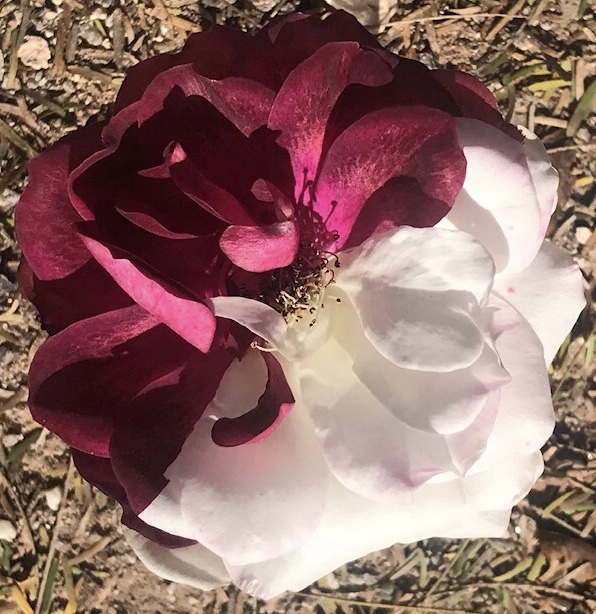
Normally, genetic chimerism is not visible on casual inspection; however, it has been detected in the course of proving parentage. More practically, in agronomy, "chimera" indicates a plant or portion of a plant whose tissues are made up of two or more types of cells with different genetic makeup; it can derive from a bud mutation or, more rarely, at the grafting point, from the concrescence of cells of the two bionts; in this case it is commonly referred to as a "graft hybrid", although it is not a hybrid in the genetic sense of "hybrid".
In contrast, an individual where each cell contains genetic material from two organisms of different breeds, varieties, species or genera is called a hybrid.
Another way that chimerism can occur in animals is by organ transplantation, giving one individual tissues that developed from a different genome. For example, transplantation of bone marrow often determines the recipient's ensuing blood type.
Some level of chimerism occurs naturally in the wild in many animal species, and in some cases may be a required (obligate) part of their life cycle.
Chimerism has been found in some species of marine sponges. Four distinct genotypes have been found in a single individual, and there is potential for even greater genetic heterogeneity. Each genotype functions independently in terms of reproduction, but the different intra-organism genotypes behave as a single large individual in terms of ecological responses like growth.
It has been shown that male yellow crazy ants are obligate chimeras, the first known such case. In this species, the queens have arisen from fertilized eggs with a genotype of RR (Reproductive × Reproductive), the sterile female workers show a RW arrangement (Reproductive × Worker), and the males instead of being haploid, as is usually the case for ants, also display a RW genotype, but for them the egg R and the sperm W do not fuse so they develop as a chimera with some cells carrying an R and others carrying a W genome.
Artificial chimerism refers to examples of chimerism that are produced by humans, either for research or commercial purposes.
Hub AI
Chimera (genetics) AI simulator
(@Chimera (genetics)_simulator)
Chimera (genetics)
A genetic chimerism or chimera (/kaɪˈmɪərə, kɪ-/ ky-MEER-ə, kih-) is a single organism composed of cells of different genotypes. Animal chimeras can be produced by the fusion of two (or more) embryos. In plants and some animal chimeras, mosaicism involves distinct types of tissue that originated from the same zygote, but differ due to mutation during ordinary cell division.
Normally, genetic chimerism is not visible on casual inspection; however, it has been detected in the course of proving parentage. More practically, in agronomy, "chimera" indicates a plant or portion of a plant whose tissues are made up of two or more types of cells with different genetic makeup; it can derive from a bud mutation or, more rarely, at the grafting point, from the concrescence of cells of the two bionts; in this case it is commonly referred to as a "graft hybrid", although it is not a hybrid in the genetic sense of "hybrid".
In contrast, an individual where each cell contains genetic material from two organisms of different breeds, varieties, species or genera is called a hybrid.
Another way that chimerism can occur in animals is by organ transplantation, giving one individual tissues that developed from a different genome. For example, transplantation of bone marrow often determines the recipient's ensuing blood type.
Some level of chimerism occurs naturally in the wild in many animal species, and in some cases may be a required (obligate) part of their life cycle.
Chimerism has been found in some species of marine sponges. Four distinct genotypes have been found in a single individual, and there is potential for even greater genetic heterogeneity. Each genotype functions independently in terms of reproduction, but the different intra-organism genotypes behave as a single large individual in terms of ecological responses like growth.
It has been shown that male yellow crazy ants are obligate chimeras, the first known such case. In this species, the queens have arisen from fertilized eggs with a genotype of RR (Reproductive × Reproductive), the sterile female workers show a RW arrangement (Reproductive × Worker), and the males instead of being haploid, as is usually the case for ants, also display a RW genotype, but for them the egg R and the sperm W do not fuse so they develop as a chimera with some cells carrying an R and others carrying a W genome.
Artificial chimerism refers to examples of chimerism that are produced by humans, either for research or commercial purposes.