Hubbry Logo
Cell divisionCell divisionMain
Open search
Cell division
Community hub
Cell division
logo
8 pages, 0 posts
0 subscribers
Be the first to start a discussion here.
Cell division
Cell division
from Wikipedia
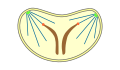
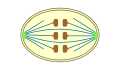
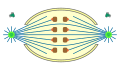
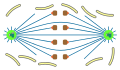
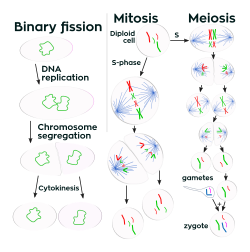
Cell division in prokaryotes (binary fission) and eukaryotes (mitosis and meiosis). The thick lines are chromosomes, and the thin blue lines are fibers pulling on the chromosomes and pushing the ends of the cell apart.
The cell cycle in eukaryotes: I = Interphase, M = Mitosis, G0 = Gap 0, G1 = Gap 1, G2 = Gap 2, S = Synthesis, G3 = Gap 3.

Cell division is the process by which a parent cell divides into two daughter cells.[1] Cell division usually occurs as part of a larger cell cycle in which the cell grows and replicates its chromosome(s) before dividing. In eukaryotes, there are two distinct types of cell division: a vegetative division (mitosis), producing daughter cells genetically identical to the parent cell, and a cell division that produces haploid gametes for sexual reproduction (meiosis), reducing the number of chromosomes from two of each type in the diploid parent cell to one of each type in the daughter cells.[2] Mitosis is a part of the cell cycle, in which, replicated chromosomes are separated into two new nuclei. Cell division gives rise to genetically identical cells in which the total number of chromosomes is maintained. In general, mitosis (division of the nucleus) is preceded by the S stage of interphase (during which the DNA replication occurs) and is followed by telophase and cytokinesis; which divides the cytoplasm, organelles, and cell membrane of one cell into two new cells containing roughly equal shares of these cellular components. The different stages of mitosis all together define the M phase of an animal cell cycle—the division of the mother cell into two genetically identical daughter cells.[3]

To ensure proper progression through the cell cycle, DNA damage is detected and repaired at various cell cycle checkpoints. These checkpoints can halt progression through the cell cycle by inhibiting certain cyclin-CDK complexes. Meiosis undergoes two divisions resulting in four haploid daughter cells. Homologous chromosomes are separated in the first division of meiosis, such that each daughter cell has one copy of each chromosome. These chromosomes have already been replicated and have two sister chromatids which are then separated during the second division of meiosis.[4] Both of these cell division cycles are used in the process of sexual reproduction at some point in their life cycle. Both are believed to be present in the last eukaryotic common ancestor.

Prokaryotes (bacteria and archaea) usually undergo a vegetative cell division known as binary fission, where their genetic material is segregated equally into two daughter cells, but there are alternative manners of division, such as budding, that have been observed. All cell divisions, regardless of organism, are preceded by a single round of DNA replication.

For simple unicellular microorganisms such as the amoeba, one cell division is equivalent to reproduction – an entire new organism is created. On a larger scale, mitotic cell division can create progeny from multicellular organisms, such as plants that grow from cuttings. Mitotic cell division enables sexually reproducing organisms to develop from the one-celled zygote, which itself is produced by fusion of two gametes, each having been produced by meiotic cell division.[5][6] After growth from the zygote to the adult, cell division by mitosis allows for continual construction and repair of the organism.[7] The human body experiences about 10 quadrillion cell divisions in a lifetime.[8]

The primary concern of cell division is the maintenance of the original cell's genome. Before division can occur, the genomic information that is stored in chromosomes must be replicated, and the duplicated genome must be cleanly divided between progeny cells.[9] A great deal of cellular infrastructure is involved in ensuring consistency of genomic information among generations.[10][11][12]

In bacteria

[edit]
Divisome and elongasome complexes responsible for peptidoglycan synthesis during lateral cell-wall growth and division.[13]

Bacterial cell division happens through binary fission or through budding. The divisome is a protein complex in bacteria that is responsible for cell division, constriction of inner and outer membranes during division, and remodeling of the peptidoglycan cell wall at the division site. A tubulin-like protein, FtsZ plays a critical role in formation of a contractile ring for the cell division.[14]

In eukaryotes

[edit]

Cell division in eukaryotes is more complicated than in prokaryotes. If the chromosomal number is reduced, eukaryotic cell division is classified as meiosis (reductional division). If the chromosomal number is not reduced, eukaryotic cell division is classified as mitosis (equational division). A primitive form of cell division, called amitosis, also exists. The amitotic or mitotic cell divisions are more atypical and diverse among the various groups of organisms, such as protists (namely diatoms, dinoflagellates, etc.) and fungi.[citation needed]

In the mitotic metaphase (see below), typically the chromosomes (each containing 2 sister chromatids that developed during replication in the S phase of interphase) align themselves on the metaphase plate. Then, the sister chromatids split and are distributed between two daughter cells.[citation needed]

In meiosis I, the homologous chromosomes are paired before being separated and distributed between two daughter cells. On the other hand, meiosis II is similar to mitosis. The chromatids are separated and distributed in the same way. In humans, other higher animals, and many other organisms, the process of meiosis is called gametic meiosis, during which meiosis produces four gametes. Whereas, in several other groups of organisms, especially in plants (observable during meiosis in lower plants, but during the vestigial stage in higher plants), meiosis gives rise to spores that germinate into the haploid vegetative phase (gametophyte). This kind of meiosis is called "sporic meiosis."[citation needed]

Phases of eukaryotic cell division

[edit]
The phases (ordered counter-clockwise) of cell division (mitosis) and the cell cycle in animal cells.

Interphase

[edit]

Interphase is the process through which a cell must go before mitosis, meiosis, and cytokinesis.[15] Interphase consists of three main phases: G1, S, and G2. G1 is a time of growth for the cell where specialized cellular functions occur in order to prepare the cell for DNA replication.[16] There are checkpoints during interphase that allow the cell to either advance or halt further development. One of the checkpoint is between G1 and S, the purpose for this checkpoint is to check for appropriate cell size and any DNA damage . The second check point is in the G2 phase, this checkpoint also checks for cell size but also the DNA replication. The last check point is located at the site of metaphase, where it checks that the chromosomes are correctly connected to the mitotic spindles.[17] In S phase, the chromosomes are replicated in order for the genetic content to be maintained.[18] During G2, the cell undergoes the final stages of growth before it enters the M phase, where spindles are synthesized. The M phase can be either mitosis or meiosis depending on the type of cell. Germ cells, or gametes, undergo meiosis, while somatic cells will undergo mitosis. After the cell proceeds successfully through the M phase, it may then undergo cell division through cytokinesis. The control of each checkpoint is controlled by cyclin and cyclin-dependent kinases. The progression of interphase is the result of the increased amount of cyclin. As the amount of cyclin increases, more and more cyclin dependent kinases attach to cyclin signaling the cell further into interphase. At the peak of the cyclin, attached to the cyclin dependent kinases this system pushes the cell out of interphase and into the M phase, where mitosis, meiosis, and cytokinesis occur.[19] There are three transition checkpoints the cell has to go through before entering the M phase. The most important being the G1-S transition checkpoint. If the cell does not pass this checkpoint, it results in the cell exiting the cell cycle.[20]

Prophase

[edit]

Prophase is the first stage of division. The nuclear envelope begins to be broken down in this stage, long strands of chromatin condense to form shorter more visible strands called chromosomes, the nucleolus disappears, and the mitotic spindle begins to assemble from the two centrosomes.[21] Microtubules associated with the alignment and separation of chromosomes are referred to as the spindle and spindle fibers. Chromosomes will also be visible under a microscope and will be connected at the centromere. During this condensation and alignment period in meiosis, the homologous chromosomes undergo a break in their double-stranded DNA at the same locations, followed by a recombination of the now fragmented parental DNA strands into non-parental combinations, known as crossing over.[22] This process is evidenced to be caused in a large part by the highly conserved Spo11 protein through a mechanism similar to that seen with topoisomerase in DNA replication and transcription.[23]

Prometaphase

[edit]

Prometaphase is the second stage of cell division. This stage begins with the complete breakdown of the nuclear envelope which exposes various structures to the cytoplasm. This breakdown then allows the spindle apparatus growing from the centrosome to attach to the kinetochores on the sister chromatids. Stable attachment of the spindle apparatus to the kinetochores on the sister chromatids will ensure error-free chromosome segregation during anaphase.[24] Prometaphase follows prophase and precedes metaphase.

Metaphase

[edit]

In metaphase, the centromeres of the chromosomes align themselves on the metaphase plate (or equatorial plate), an imaginary line that is at equal distances from the two centrosome poles and held together by complexes known as cohesins. Chromosomes line up in the middle of the cell by microtubule organizing centers (MTOCs) pushing and pulling on centromeres of both chromatids thereby causing the chromosome to move to the center. At this point the chromosomes are still condensing and are currently one step away from being the most coiled and condensed they will be, and the spindle fibers have already connected to the kinetochores.[25] During this phase all the microtubules, with the exception of the kinetochores, are in a state of instability promoting their progression toward anaphase.[26] At this point, the chromosomes are ready to split into opposite poles of the cell toward the spindle to which they are connected.[27]

Anaphase

[edit]

Anaphase is a very short stage of the cell cycle and it occurs after the chromosomes align at the mitotic plate. Kinetochores emit anaphase-inhibition signals until their attachment to the mitotic spindle. Once the final chromosome is properly aligned and attached the final signal dissipates and triggers the abrupt shift to anaphase.[26] This abrupt shift is caused by the activation of the anaphase-promoting complex and its function of tagging degradation of proteins important toward the metaphase-anaphase transition. One of these proteins that is broken down is securin which through its breakdown releases the enzyme separase that cleaves the cohesin rings holding together the sister chromatids thereby leading to the chromosomes separating.[28] After the chromosomes line up in the middle of the cell, the spindle fibers will pull them apart. The chromosomes are split apart while the sister chromatids move to opposite sides of the cell.[29] As the sister chromatids are being pulled apart, the cell and plasma are elongated by non-kinetochore microtubules.[30] Additionally, in this phase, the activation of the anaphase promoting complex through the association with Cdh-1 begins the degradation of mitotic cyclins.[31]

Telophase

[edit]

Telophase is the last stage of the cell cycle in which a cleavage furrow splits the cells cytoplasm (cytokinesis) and chromatin. This occurs through the synthesis of a new nuclear envelope that forms around the chromatin gathered at each pole. The nucleolus reforms as the chromatin reverts back to the loose state it possessed during interphase.[32][33] The division of the cellular contents is not always equal and can vary by cell type as seen with oocyte formation where one of the four daughter cells possess the majority of the duckling.[34]

Cytokinesis

[edit]

The last stage of the cell division process is cytokinesis. In this stage there is a cytoplasmic division that occurs at the end of either mitosis or meiosis. At this stage there is a resulting irreversible separation leading to two daughter cells. Cell division plays an important role in determining the fate of the cell. This is due to there being the possibility of an asymmetric division. This as a result leads to cytokinesis producing unequal daughter cells containing completely different amounts or concentrations of fate-determining molecules.[35]

In animals the cytokinesis ends with formation of a contractile ring and thereafter a cleavage. But in plants it happen differently. At first a cell plate is formed and then a cell wall develops between the two daughter cells.[36]

In Fission yeast (S. pombe) the cytokinesis happens in G1 phase.[37]

Variants

[edit]
Image of the mitotic spindle in a human cell showing microtubules in green, chromosomes (DNA) in blue, and kinetochores in red. [citation needed]

Cells are broadly classified into two main categories: simple non-nucleated prokaryotic cells and complex nucleated eukaryotic cells. Due to their structural differences, eukaryotic and prokaryotic cells do not divide in the same way. Also, the pattern of cell division that transforms eukaryotic stem cells into gametes (sperm cells in males or egg cells in females), termed meiosis, is different from that of the division of somatic cells in the body.

Cell division over 42 hours. The cells were directly imaged in the cell culture vessel, using non-invasive quantitative phase contrast time-lapse microscopy.[38]

In 2022, scientists discovered a new type of cell division called asynthetic fission found in the squamous epithelial cells in the epidermis of juvenile zebrafish. When juvenile zebrafish are growing, skin cells must quickly cover the rapidly increasing surface area of the zebrafish. These skin cells divide without duplicating their DNA (the S phase of mitosis) causing up to 50% of the cells to have a reduced genome size. These cells are later replaced by cells with a standard amount of DNA. Scientists expect to find this type of division in other vertebrates.[39]

DNA damage repair in the cell cycle

[edit]

DNA damage is detected and repaired at various points in the cell cycle. The G1/S checkpoint, G2/M checkpoint, and the checkpoint between metaphase and anaphase all monitor for DNA damage and halt cell division by inhibiting different cyclin-CDK complexes. The p53 tumor-suppressor protein plays a crucial role at the G1/S checkpoint and the G2/M checkpoint. Activated p53 proteins result in the expression of many proteins that are important in cell cycle arrest, repair, and apoptosis. At the G1/S checkpoint, p53 acts to ensure that the cell is ready for DNA replication, while at the G2/M checkpoint p53 acts to ensure that the cells have properly duplicated their content before entering mitosis.[40]

Specifically, when DNA damage is present, ATM and ATR kinases are activated, activating various checkpoint kinases.[41] These checkpoint kinases phosphorylate p53, which stimulates the production of different enzymes associated with DNA repair.[42] Activated p53 also upregulates p21, which inhibits various cyclin-cdk complexes. These cyclin-cdk complexes phosphorylate the Retinoblastoma (Rb) protein, a tumor suppressor bound with the E2F family of transcription factors. The binding of this Rb protein ensures that cells do not enter the S phase prematurely; however, if it is not able to be phosphorylated by these cyclin-cdk complexes, the protein will remain, and the cell will be halted in the G1 phase of the cell cycle.[43]

If DNA is damaged, the cell can also alter the Akt pathway in which BAD is phosphorylated and dissociated from Bcl2, thus inhibiting apoptosis. If this pathway is altered by a loss of function mutation in Akt or Bcl2, then the cell with damaged DNA will be forced to undergo apoptosis.[44] If the DNA damage cannot be repaired, activated p53 can induce cell death by apoptosis. It can do so by activating the p53 upregulated modulator of apoptosis (PUMA). PUMA is a pro-apoptotic protein that rapidly induces apoptosis by inhibiting the anti-apoptotic Bcl-2 family members.[45]

Degradation

[edit]

Multicellular organisms replace worn-out cells through cell division. In some animals, however, cell division eventually halts. In humans this occurs, on average, after 52 divisions, known as the Hayflick limit. The cell is then referred to as senescent. With each division the cells telomeres, protective sequences of DNA on the end of a chromosome that prevent degradation of the chromosomal DNA, shorten. This shortening has been correlated to negative effects such as age-related diseases and shortened lifespans in humans.[46][47] Cancer cells, on the other hand, are not thought to degrade in this way, if at all. An enzyme complex called telomerase, present in large quantities in cancerous cells, rebuilds the telomeres through synthesis of telomeric DNA repeats, allowing division to continue indefinitely.[48]

History

[edit]
Kurt Michel with his phase-contrast microscope

At the beginning of the 19th century, various hypotheses circulated about cell proliferation, which became observable in plant and animal organisms as a result of advances in microscopy. While the proliferation of cells on the inner side of old cells,[49][50] the attachment of vesicles to existing cells,[51] or crystallization in the intercellular space[52] were postulated as mechanisms of cell proliferation, proponents of cell division itself had to fight for its acceptance for decades.

The Belgian botanist Barthélemy Charles Joseph Dumortier must be regarded as the first discoverer of cell division. In 1832, he described cell division in simple aquatic plants (French 'conferve') as follows (translated from French to English):

"The development of the conferve is as simple as its structure; it takes place by the attachment of new cells to the old, and this attachment always takes place from the end. The terminal cell elongates more than the deeper cells; then the production of a lateral bisector takes place in the inner fluid, which tends to divide the cell into two parts, of which the deeper one remains stationary, while the terminal part elongates again, forms a new inner partition, and so on. Is the production of the middle partition originally double or single? It is impossible to determine this, but it is always true that it later appears double when united, and that when two cells naturally separate, each of them is closed at both ends."[53]

In 1835, the German botanist and physician Hugo von Mohl described plant cell division in much greater detail in his dissertation on freshwater and seawater algae for his PhD thesis in medicine and surgery:[54]

"Among the most obscure phenomena of plant life is the manner in which the newly developing cells are formed. [...] and so there is no lack of manifold descriptions and explanations of this process. [...] and that gaps that were found in the observations were filled in by overly bold conclusions and assumptions." (translated from German to English)

In 1838, the German physician and botanist Franz Julius Ferdinand Meyen confirmed the mechanism of cell division at the root tips of plants.[55] The German-Polish physician Robert Remak suspected that he had already discovered animal cell division in the blood of chicken embryos in 1841,[56] but it was not until 1852 that he was able to confirm animal cell division for the first time in bird embryos, frog larvae and mammals.[57]

In 1943, cell division was filmed for the first time[58] by Kurt Michel using a phase-contrast microscope.[59]

See also

[edit]

References

[edit]

Further reading

[edit]
Revisions and contributorsEdit on WikipediaRead on Wikipedia
from Grokipedia
Cell division is the process by which a parent cell divides into two or more daughter cells, enabling growth, tissue repair, development, and across all living organisms. In prokaryotes, such as , this occurs primarily through binary fission, a rapid and simplified mechanism where the single circular replicates, the cell elongates, and a forms to separate the , producing two genetically identical daughter cells. This asexual process is the sole means of for unicellular prokaryotes, allowing rapid population expansion under favorable conditions. In eukaryotes, cell division is more complex and typically involves the cell cycle, which includes interphase (growth and DNA replication) followed by the mitotic phase (nuclear division and cytokinesis). There are two main types: mitosis, which produces two genetically identical diploid daughter cells for somatic growth and maintenance, and meiosis, which generates four genetically diverse haploid gametes (sperm and eggs) through two sequential divisions, halving the chromosome number to ensure genetic stability across generations. Mitosis consists of four phases—prophase, metaphase, anaphase, and telophase—coordinated by regulatory proteins like cyclin-dependent kinases to accurately segregate chromosomes, while cytokinesis physically divides the cytoplasm. Errors in these processes can lead to uncontrolled division, as seen in cancer, or genetic disorders from improper chromosome distribution. Overall, cell division maintains genomic integrity and drives multicellular organization, with its mechanisms conserved yet adapted across evolutionary lineages.

Overview

Definition and types

Cell division is the process by which a single parent cell divides to produce two or more daughter cells, distributing genetic material to ensure continuity across generations while facilitating organismal growth, development, and repair. This fundamental biological mechanism allows cells to replicate their contents, including DNA, and partition them accurately into the progeny cells. Cell division occurs in two primary modes based on reproductive strategy: asexual and sexual. Asexual division produces genetically identical daughter cells from a single parent, promoting rapid population growth in unicellular organisms or tissue maintenance in multicellular ones; examples include binary fission in prokaryotes and mitosis in eukaryotes. In contrast, sexual reproduction involves meiosis, which generates genetically diverse haploid gametes by halving the chromosome number and introducing variation through crossing over and independent assortment, with subsequent fusion of gametes (fertilization) restoring the diploid state; this is essential for sexual reproduction in eukaryotes. These modes operate differently in unicellular contexts, where division primarily serves reproduction, versus multicellular organisms, where it supports both reproduction and somatic functions like wound healing. A key distinction lies between prokaryotic and eukaryotic cell division. Prokaryotic division, such as binary fission, is a simple and rapid process that duplicates a single circular and splits the cell without a nucleus or complex organelles. Eukaryotic division, however, is more intricate, involving linear s within a membrane-bound nucleus and additional structures like the , often occurring within the broader framework of the .

Biological significance

Cell division plays a pivotal role in the growth and maintenance of multicellular organisms by enabling tissue expansion during development and replacing damaged or senescent cells throughout life. In these organisms, controlled proliferation ensures the renewal of cell populations, such as the continuous replacement of and intestinal epithelial cells, which is essential for organismal and repair after injury. In unicellular organisms, cell division serves as the primary mechanism of reproduction, allowing a single cell to produce genetically identical and thereby sustain in response to environmental pressures. This process facilitates rapid , enabling species like to colonize new habitats and maintain ecological balance. Additionally, in both unicellular and multicellular contexts, cell division underpins and asexual in some multicellular forms. Evolutionarily, cell division represents a highly conserved process across all domains of life, from prokaryotes to eukaryotes, originating over 3 billion years ago as a fundamental mechanism for transmitting genetic material to daughter cells. This universality has allowed organisms to adapt to diverse environments and, through variations like , promote that drives and evolutionary innovation. Dysregulation of cell division can lead to severe pathological conditions; uncontrolled proliferation, often due to mutations in cell cycle regulators like TP53 or RB1, is a hallmark of cancer, resulting in tumor formation and . Conversely, insufficient or aberrant division contributes to developmental disorders, such as neurodevelopmental conditions linked to disruptions in pathways like PI3K/mTOR and MAPK, which impair proper cell differentiation and tissue formation during embryogenesis.

Prokaryotic cell division

Binary fission in bacteria

Binary fission is the primary mechanism of in most , resulting in the division of a single parent cell into two genetically identical daughter cells. This process is simpler and more rapid than eukaryotic , lacking distinct phases or complex checkpoints, and is directly coupled to cellular growth. In model organisms like , binary fission typically occurs every 20-60 minutes under optimal nutrient-rich conditions, allowing rapid population expansion. The process begins with the replication of the bacterial chromosome, a circular DNA molecule, initiated at a specific site called the origin of replication, or oriC. The initiator protein DnaA binds to oriC, unwinding the DNA and recruiting helicase and polymerase enzymes to synthesize two identical copies of the chromosome in a bidirectional manner from the origin toward the terminus. This replication occurs concurrently with cell elongation, ensuring that the duplicated DNA is distributed as the cell grows. Once replication is complete, the newly synthesized chromosomes must be segregated to opposite poles of the cell to prevent unequal distribution. This is mediated by the ParABS partitioning system, consisting of the DNA-binding protein ParB, which loads onto centromere-like parS sites near oriC, and the ATPase ParA, which interacts with ParB to actively transport the chromosomes apart in a DNA-relay mechanism. ParB-ParA complexes generate oscillatory movements that push the origins toward the cell poles, ensuring faithful partitioning even during overlapping replication cycles in fast-growing bacteria. Septum formation follows chromosome segregation, marking the site of cell division at the midcell. The tubulin homolog polymerizes into a contractile ring-like structure, the Z-ring, which anchors to the inner membrane and recruits additional divisome proteins. The Z-ring constricts, guiding the of the cytoplasmic membrane and synthesizing new material via enzymes like FtsI and MurG, ultimately splitting the cell into two daughters. This coordinated constriction ensures precise division without disrupting cellular integrity.

Division in archaea

Archaea, like other prokaryotes, lack a membrane-bound nucleus and undergo division without the complex mitotic apparatus seen in eukaryotes. Cell division in exhibits diversity across phyla, with mechanisms that parallel bacterial processes in some lineages but incorporate unique, eukaryote-like elements in others. While many replicate their circular chromosomes and partition them prior to , the molecular machinery for constriction and scission varies significantly. In euryarchaeota and certain other archaeal groups, cell division relies on an -based system analogous to bacterial binary fission, where polymerizes into a contractile ring at the division site to drive membrane ingression. However, in crenarchaeota and the TACK superphylum, division employs the Cdv (cell division) system, a machinery evolutionarily related to the eukaryotic endosomal sorting complexes required for (ESCRT-III). This system facilitates membrane constriction through protein polymerization and remodeling, bypassing entirely. The core Cdv components include CdvA, a crenarchaea-specific protein that localizes to the division site; CdvB, a homolog of ESCRT-III that assembles into filaments; and CdvC, an AAA+ ATPase akin to Vps4 that disassembles these structures using ATP hydrolysis. A prominent example is the hyperthermophilic crenarchaeon Sulfolobus acidocaldarius, where the cdvABC is expressed during the late stages of the , coinciding with segregation. In synchronized cultures, Cdv proteins form visible band-like structures between segregating chromosomes, which progressively constrict to complete over approximately 50–75 minutes. This process is tightly regulated, with division inhibited under DNA damage from UV irradiation, suggesting a checkpoint mechanism for genome integrity. Chromosome segregation in archaea often involves multiple replication origins per genome, enabling rapid duplication in polyploid states. In Sulfolobus species, three origins initiate replication synchronously early in the cell cycle, with forks progressing bidirectionally at 80–110 base pairs per second until asynchronous termination, ensuring complete genome duplication before division. Partitioning is mediated by dedicated proteins such as SegA, a Walker-type ATPase that forms dynamic filaments, and SegB, a DNA-binding protein that stimulates SegA polymerization at specific centromere-like sites, pulling sister chromosomes apart. Archaeal division rates are generally slower than in mesophilic , with Sulfolobus cell cycles lasting around 240 minutes under optimal conditions, reflecting adaptations to extreme environments like high temperatures (up to 80°C) and acidity. The Cdv system's thermal stability supports reliable in such harsh settings, while the multi-origin replication strategy accommodates slower fork speeds without compromising fidelity. Overexpression of segregation factors like SegAB disrupts partitioning, leading to anucleate cells and growth defects, underscoring their essential role.

Eukaryotic cell division

The cell cycle

The eukaryotic cell cycle is a highly regulated process that governs the growth and division of cells, ensuring accurate replication and distribution of genetic material. It consists of a series of sequential phases that prepare the cell for division and execute the division itself. This cycle is fundamental to eukaryotic cell division, providing the temporal framework for processes like mitosis. The cell cycle is divided into four main phases: G1 (gap 1), S (synthesis), G2 (gap 2), and M (mitotic) phase. During the G1 phase, the cell grows and synthesizes proteins and organelles necessary for DNA replication. The S phase involves the duplication of the cell's DNA, resulting in two identical sets of chromosomes. In the G2 phase, the cell continues to grow and prepares for mitosis by checking DNA integrity and assembling the mitotic machinery. The M phase encompasses mitosis, where the replicated chromosomes are segregated, followed by cytokinesis, which divides the cytoplasm into two daughter cells. Additionally, some cells enter a quiescent state known as G0 phase, where they exit the cycle temporarily or permanently, such as differentiated neurons or resting lymphocytes. The duration of the cell cycle varies significantly depending on the cell type and organism. In many mammalian cells grown under optimal conditions, the cycle typically lasts about 24 hours, with interphase (G1, S, and G2) occupying the majority of this time. However, the cycle is much shorter in rapidly dividing cells, such as those in early embryonic development, where durations can be as brief as a few hours to facilitate rapid proliferation./24%3A_Mitosis/24.03%3A_The_Eukaryotic_Cell_Cycle) Progression through the cell cycle phases is coordinated by (CDK) complexes, which are activated by regulatory proteins called cyclins whose levels oscillate throughout the cycle. Specific cyclin-CDK pairs drive transitions between phases by phosphorylating target proteins that control , chromosome segregation, and other key events. This oscillatory mechanism ensures orderly progression and prevents errors in division.

Mitosis and meiosis overview

is a fundamental process of eukaryotic cell division that produces two genetically identical diploid daughter cells from a single diploid cell, maintaining the chromosome number across generations. This division occurs primarily in somatic (body) cells and serves essential roles in organismal growth, tissue maintenance, and repair, as well as in in certain unicellular eukaryotes. In contrast, meiosis is a specialized eukaryotic cell division process that generates four genetically distinct haploid gametes (such as and eggs) from one diploid parent cell, halving the chromosome number to ensure stable upon fertilization during . Meiosis consists of two sequential divisions—meiosis I and meiosis II—following a single round of , and it occurs exclusively in germ cells within reproductive organs like the testes and ovaries. The primary differences between and lie in their outcomes and mechanisms: involves a single division without , resulting in two identical diploid cells for clonal expansion and genetic stability; , however, features two divisions with recombination through crossing over between homologous chromosomes, yielding four non-identical haploid cells that promote and reduction. Both processes share analogous phases of chromosome condensation, alignment, and segregation, but incorporates unique steps like homologous to facilitate variation.

Phases of eukaryotic cell division

Interphase

is the longest phase of the eukaryotic , comprising approximately 90% of its duration, during which the cell prepares for division without visible changes to chromosome structure under light microscopy. This phase encompasses three subphases—G1, S, and G2—characterized by cellular growth, , and final preparations for , respectively. Unlike the mitotic phases that follow, interphase chromosomes remain decondensed and dispersed within the nucleus, facilitating ongoing and metabolic activities. The , or first gap phase, initiates and focuses on , during which the cell increases in size and synthesizes organelles such as ribosomes and mitochondria to support future replication demands. Protein synthesis and metabolic processes dominate, ensuring the cell reaches a sufficient before proceeding; this phase can vary significantly in length depending on and environmental signals. A critical checkpoint at the , known as the , assesses cell size, nutrient availability, and DNA integrity to permit entry into . During the S phase, or synthesis phase, the cell replicates its DNA in a semi-conservative manner, where each parental strand serves as a template for a new complementary strand, effectively doubling the genetic material from 2n to 4n. Concurrently, new histones are synthesized and assembled onto the daughter DNA strands to maintain chromatin structure, ensuring proper packaging of the replicated genome. This process occurs at multiple origins of replication along each chromosome, coordinated to complete within the phase's timeframe. The , or second gap phase, allows for further cell growth, of any replication errors from , and preparation of the cytoskeletal components, including organization via maturation, for impending . A checkpoint verifies complete and accurate , halting progression if damage persists to prevent propagation of errors. Following successful G2 completion, the cell transitions into of .

Prophase

Prophase is the initial phase of , initiating the process of nuclear division in eukaryotic cells. It follows the of and is characterized by the first visible signs of mitotic activity, including the compaction of and the reorganization of the . Throughout prophase, the remains intact, confining these early events to the nuclear interior. A hallmark of is the of chromosomes, where replicated transitions from a diffuse, thread-like state to more compact, rod-shaped structures. This process is mediated primarily by the II complex, a heterohexameric belonging to the structural of chromosomes (SMC) family, which binds to and promotes the formation of large-scale loops and intra-chromosomal interactions. II localizes to chromosomes within the nucleus during early , triggered by from A-CDK complexes, enabling the initial axial shortening and radial thickening of chromatids. In contrast, I remains cytoplasmic during and only engages chromosomes later. This prevents tangling of and facilitates their resolution for segregation. Concurrently, the duplicated centrosomes—each consisting of a pair of centrioles surrounded by pericentriolar material—undergo separation and migration to opposite sides of the nucleus. Centrosome duplication occurs earlier in the , but their active positioning begins in , driven by the (KIF11/EG5), which cross-links and slides antiparallel between the centrosomes. This migration orients the centrosomes along the spindle axis and is tethered to the via interactions involving and nucleoporin Nup133, ensuring proper bipolarity. As centrosomes mature, they recruit additional γ-tubulin ring complexes (γ-TuRCs), amplifying their capacity to nucleate by over threefold compared to . These centrosomes serve as the primary sites for microtubule nucleation, initiating spindle assembly. Astral microtubules radiate outward from each centrosome toward the cell cortex, aiding in spindle positioning, while interpolar microtubules extend centrally and begin overlapping with those from the opposing centrosome to establish the bipolar framework. Microtubule dynamics shift dramatically, with increased polymerization rates and disassembly of the interphase array, setting up the mitotic spindle. Prophase typically occupies the majority of , lasting 20–60 minutes in mammalian cells, though this varies by cell type and organism; for instance, it can extend longer in larger cells to accommodate extensive compaction. These coordinated events in prepare the cell for breakdown and capture in .

Prometaphase

Prometaphase follows prophase, during which chromosomes have condensed into distinct structures. This phase is characterized by the disassembly of the , which allows the mitotic spindle to interact directly with the chromosomes. The breaks down through of nuclear and pore complexes by kinases such as CDK1, dispersing its components into the and creating an open environment for spindle assembly. In , kinetochores—protein complexes assembled on the centromeres of chromosomes—begin capturing from the forming bipolar spindle through a known as "search-and-capture." dynamically explore the cytoplasmic space, with their plus ends probing for kinetochores; upon attachment, initial end-on or lateral interactions stabilize via recruitment of stabilizing proteins like the KMN network. Captured chromosomes then exhibit rapid, erratic movements as they are pulled toward the spindle equator by microtubule depolymerization and motor proteins such as and kinesin-7 (CENP-E), congressing bi-oriented . This phase is inherently chaotic, marked by frequent microtubule attachments and detachments, reflecting the nature of kinetochore-microtubule encounters. A critical aspect of involves error correction to ensure proper bipolar attachments. The Aurora B , localized at the inner as part of the chromosomal passenger complex, phosphorylates kinetochore substrates like the NDC80 complex when attachments lack tension, reducing microtubule-binding affinity and destabilizing incorrect configurations such as syntelic or merotelic orientations. This tension-dependent mechanism promotes selective stabilization of amphitelic attachments, where sister s bind from opposite spindle poles. Inhibition of Aurora B leads to persistent errors and delays in progression.00848-5) Prometaphase is typically a short but highly dynamic phase in mammalian cells, lasting approximately 20-30 minutes under normal conditions, though it can extend if attachments are suboptimal, activating the spindle assembly checkpoint to prevent premature onset. Its brevity underscores the efficiency of the attachment and correction machinery in achieving initial bipolarity.

Metaphase

is the stage of in which achieve stable alignment at the metaphase plate, ensuring equal distribution to daughter cells. Following the initial attachments established during , congress to the spindle equator through a combination of motility and polar ejection forces exerted by chromosome arms. This alignment positions each chromosome such that its sister kinetochores are oriented toward opposite spindle poles, forming an orderly array visible under microscopy.00455-3) Central to this process is the biorientation of sister chromatids, where microtubules from opposite poles capture and stabilize attachments to the kinetochores, generating inter-kinetochore tension that confirms proper orientation. This tension arises from the pulling forces of spindle microtubules balanced across the centromere, stabilizing end-on attachments while destabilizing syntelic or merotelic errors via Aurora B kinase-mediated phosphorylation. Biorientation not only positions chromosomes at the metaphase plate—an imaginary plane equidistant from the spindle poles—but also serves as the primary signal for checkpoint satisfaction. The spindle assembly checkpoint (SAC) enforces this alignment by inhibiting progression until all chromosomes are bioriented. Unattached or improperly attached kinetochores recruit Mad2, which, in its open conformation, catalyzes the formation of a mitotic checkpoint complex (MCC) that binds and inhibits the anaphase-promoting complex/cyclosome (APC/C) co-activator Cdc20. This inhibition prevents APC/C-mediated ubiquitination of securin and cyclin B, delaying anaphase onset and providing time for error correction. Mad2 also actively contributes to biorientation by destabilizing tensionless attachments, thereby enhancing the rate of chromosome reorientation to opposite poles. Once tension is established across all kinetochores, the SAC signal dissipates, silencing Mad2 recruitment and allowing APC/C activation.

Anaphase

Anaphase is the stage of in which separate and migrate toward opposite spindle poles, ensuring equitable distribution of genetic material to daughter cells. This phase is initiated upon satisfaction of the metaphase-anaphase transition checkpoint, which activates the anaphase-promoting complex (APC/C) to degrade securin, thereby unleashing separase activity. The separation of is triggered by the cleavage of complexes by separase, a that targets the kleisin subunit (Scc1 in or Rad21 in humans) of the ring-shaped structure holding chromatids together. This proteolytic event dissolves centromeric and arm cohesion almost simultaneously in , allowing individual chromatids to disengage and respond to spindle forces. Anaphase proceeds in two overlapping subphases: A, characterized by the shortening of microtubules (kMTs) that pull chromatids poleward, and B, involving spindle pole elongation that further separates the chromatids. In A, kMTs depolymerize primarily at their plus ends near s (via the "" mechanism) and to a lesser extent at minus ends at the poles (via microtubule flux), with proteins like the Dam1 complex in or Ndc80 in humans facilitating the coupling of kinetochore movement to microtubule disassembly. During B, interpolar microtubules slide apart through motor-driven pushing forces (e.g., mediated by kinesins such as Eg5 and KIF4A), while astral microtubules may contribute pulling forces via cortical , resulting in overall spindle elongation. Chromatids typically move toward the poles at a speed of approximately 1 μm/min during Anaphase A, though this varies by cell type and species (e.g., slower in at 0.3 μm/min and faster in at up to 3.6 μm/min). The combined actions of these subphases ensure the equal partitioning of to each spindle pole, setting the stage for nuclear reformation in the subsequent .

Telophase

Telophase follows , marking the final stage of in eukaryotic cells where the separated arrive at opposite poles and the nuclear begins to . During telophase, the reassembles around each set of daughter through the fusion of vesicles derived from the breakdown earlier in ; this process is mediated by the of and integral membrane proteins, which bind to the surfaces and facilitate the formation of a continuous double membrane. Simultaneously, the chromosomes decondense as (Cdk1, formerly Cdc2) is inactivated, leading to the of complexes and the reversal of their compaction, allowing the to relax into a more diffuse, interphase-like state. The nucleoli also at this stage, coinciding with chromosome decondensation and the resumption of (rRNA) gene transcription on the acrocentric chromosomes. The mitotic spindle disassembles as depolymerize, driven by the inactivation of spindle assembly factors and the action of microtubule-depolymerizing kinesins and catastrophi, ensuring the clearance of the from the reforming nuclei. effectively mirrors the events of in reverse, with the duration typically comparable, though variable across cell types, as it unwinds the structural changes initiated at the start of .

Cytokinesis

Cytokinesis is the final stage of cell division in which the physically separates to form two distinct daughter cells, ensuring each receives a complete set of organelles and cytoplasmic components. This process occurs concurrently with the later stages of and is tightly coordinated to prevent unequal distribution of cellular contents. In animal cells, is mediated by the formation of a contractile ring composed primarily of filaments and myosin-II motors at the cell's equator. This actomyosin ring assembles during and begins constricting in , generating contractile forces that ingress the plasma membrane inward to create a cleavage furrow. The ring's contraction, driven by myosin-II's activity sliding filaments past one another, continues until the furrow deepens and pinches the cell into two, with the process completing through at the intercellular bridge. A transient structure called the midbody forms at the bridge's center, composed of bundled and associated proteins, which serves as a scaffold for the final membrane severing and helps coordinate the timing of separation. In contrast, plant cells lack a contractile ring due to their rigid s and instead divide via the formation of a . begins with the organization of the , a array that guides Golgi-derived vesicles carrying precursors toward the division plane. These vesicles fuse at the equatorial plane, initially forming a tubular network that expands centrifugally through continued vesicle fusion and maturation into a flattened disc, the . As the reaches the parental , it fuses with it, depositing new material and completing cytoplasmic separation. Cytokinesis overlaps with , during which nuclear envelopes reform around separated , ensuring cytoplasmic division aligns with nuclear completion to finalize . This coordination is essential for symmetric partitioning and is regulated by conserved signaling pathways that link spindle dynamics to contractile apparatus assembly.

Variants of cell division

is a specialized form of cell division in sexually reproducing eukaryotes that reduces the number by half, producing four haploid gametes from a single diploid . This process is essential for maintaining a constant number across generations during , as it generates cells with half the genetic material of the parent cell. Unlike , which produces identical diploid cells, introduces through unique mechanisms, ensuring diversity in . The meiotic process consists of two successive divisions, Meiosis I and Meiosis II, following a single round of in . In Meiosis I, homologous chromosomes pair and segregate, reducing the diploid (2n) set to haploid (n). During I, homologous chromosomes condense and form synaptonemal complexes, enabling crossing over where non-sister chromatids exchange genetic material at chiasmata, a process mediated by proteins like Spo11 that induce double-strand breaks. This is followed by metaphase I, where tetrads (paired homologs) align at the equator, and anaphase I, where homologs separate to opposite poles, yielding two haploid cells with replicated chromosomes. Meiosis II then resembles : sister separate in anaphase II, resulting in four haploid daughter cells, each with a single copy of each . The outcomes of meiosis are four genetically distinct haploid cells, typically gametes such as or eggs in animals. arises primarily from two mechanisms: independent assortment of chromosomes during I, where maternal and paternal homologs align randomly, potentially yielding over 8 million combinations in humans with 23 chromosome pairs, and crossing over, which shuffles alleles within chromosomes. These processes ensure that each carries a unique combination of genetic material, promoting evolutionary adaptability. Regulation of meiosis involves specific checkpoints to ensure accurate chromosome pairing and segregation, preventing errors that could lead to aneuploidy. A key checkpoint in I monitors , the pairing of homologous chromosomes via the ; defects trigger /ATR kinases to activate downstream effectors like CHK2, halting progression until repair or pairing is resolved. In organisms like and nematodes, proteins such as Mek1 and SUN-1 enforce this surveillance, promoting interhomolog recombination and suppressing improper intersister events. shares some phase nomenclature with but doubles the divisions to achieve reductional segregation.

Asymmetric division

Asymmetric cell division is a process in which a parent cell divides to produce two daughter cells with distinct fates, sizes, or compositions, contrasting with symmetric that yields equivalent daughters. This mechanism is crucial for generating cellular diversity while maintaining progenitor populations, particularly in developmental contexts and under stress conditions.00208-0) Central to asymmetric division are mechanisms that establish cellular polarity and orient the mitotic spindle to ensure unequal partitioning of cellular components. In neuroblasts, for instance, the protein Inscuteable localizes to the apical cortex, recruiting factors like Partner of Inscuteable and Discs-large to orient the spindle along the apical-basal axis, thereby directing basal segregation of cell fate determinants such as and Numb.80142-7) This spindle positioning ensures that one daughter inherits the determinants, promoting differentiation, while the other retains stem-like properties. Unequal segregation of determinants, including proteins, RNAs, and organelles, further reinforces by biasing signaling pathways in the daughters.00598-6) A prominent example occurs in stem cell renewal, where asymmetric division balances self-renewal and differentiation by producing one and one committed . In mammalian neural s, this is achieved through oriented divisions that asymmetrically distribute factors like Numb, inhibiting Notch signaling in the differentiating daughter to promote neuronal fate.00540-1) Similarly, in bacterial sporulation, such as in , an asymmetric forms near one pole after segregation, yielding a smaller forespore and a larger mother cell; the forespore develops into a dormant , while the mother cell nurtures it before lysing.00698-0) The significance of asymmetric division lies in its role in establishing tissue and facilitating specialized differentiation, such as in immune responses. In developing tissues, it contributes to patterned architectures, as seen in sensory organ precursors where oriented divisions generate diverse cell types for mechanosensation.00246-2) In immune cell differentiation, asymmetric divisions in T cells regulate effector versus memory fates; strong signaling triggers , safeguarding memory cell development by unevenly distributing fate determinants like T-bet.00429-3) This process enhances adaptive immunity by producing long-lived memory cells alongside short-term effectors.

Regulation of the cell cycle

Checkpoints

Cell cycle checkpoints are surveillance mechanisms that monitor the integrity and fidelity of cellular processes, halting progression if errors are detected to prevent propagation of genomic instability. These checkpoints primarily operate at key transition points, ensuring is complete and accurate, chromosomes are properly aligned, and damage is addressed before division proceeds. In eukaryotic cells, the main checkpoints include the G1/S, G2/M, and spindle assembly checkpoints, each tailored to specific risks during the . The G1/S checkpoint assesses DNA integrity prior to replication initiation, primarily in response to DNA damage such as double-strand breaks. Activation of this checkpoint stabilizes the tumor suppressor protein , which transcriptionally induces cyclin-dependent kinase inhibitor p21, thereby inhibiting cyclin E-CDK2 complexes and arresting the to allow repair. ATM and ATR kinases play central roles in signaling; is rapidly activated by double-strand breaks to phosphorylate , while ATR responds to single-stranded DNA intermediates, amplifying the response through Chk1 and Chk2 kinases. This checkpoint is crucial in mammalian cells, where its dysfunction, often via mutations, allows damaged cells to enter S phase, contributing to oncogenesis. The /M checkpoint verifies completion of and absence of damage before entry, preventing segregation of unreplicated or broken chromosomes. and ATR kinases again dominate signaling: detects residual double-strand breaks from S phase, while ATR monitors replication fork stalling and unfinished synthesis, leading to phosphorylation of phosphatases and inhibition of B-CDK1 activation. If replication errors persist, cells in to facilitate resolution, with ATR's role being particularly vital during replication stress induced by agents like hydroxyurea. This checkpoint ensures genomic stability by coupling replication fidelity to mitotic commitment. The spindle assembly checkpoint (SAC), active during metaphase, monitors kinetochore-microtubule attachments to ensure bipolar chromosome alignment on the mitotic spindle. Unattached kinetochores generate a diffusible "wait-anaphase" signal via Mad2 and BubR1 proteins, which inhibit the anaphase-promoting complex/cyclosome (APC/C), blocking securin degradation and sister chromatid separation. Satisfaction of attachments silences the SAC, allowing progression to anaphase; defects lead to aneuploidy, a hallmark of cancer. Unlike DNA-focused checkpoints, the SAC operates independently but integrates with overall cell cycle control through cyclin-CDK modulation. Failure to satisfy any checkpoint typically triggers sustained cell cycle arrest, enabling repair, but persistent unresolved issues activate apoptotic pathways to eliminate compromised cells. For instance, prolonged activation at G1/S can shift from arrest to transcription of pro-apoptotic genes like PUMA and BAX, inducing mitochondrial outer membrane permeabilization. Similarly, unchecked SAC activation or G2/M failure can culminate in caspase-mediated , safeguarding organismal integrity against . These consequences underscore the checkpoints' dual role in transient halts versus terminal elimination.

Protein degradation mechanisms

Protein degradation plays a pivotal role in cell division by ensuring the timely removal of regulatory proteins that drive transitions between cell cycle phases. The primary pathway for this regulated degradation is the , where target proteins are marked for destruction through covalent attachment of chains, followed by proteasomal breakdown. This mechanism allows cells to precisely control the levels of cyclins, securin, and other key factors, preventing aberrant progression and maintaining genomic stability during . Central to the UPS in the are , which confer specificity to the ubiquitination process by recognizing and tagging substrates. The anaphase-promoting complex/cyclosome (/C) is a multi-subunit that predominantly functions in , targeting securin and mitotic such as for degradation. /C activity is modulated by co-activators like CDC20 during to and CDH1 post-anaphase, ensuring sequential ubiquitination events. In parallel, the SCF (Skp1-Cullin-F-box) complex, another cullin-RING , operates mainly in G1/S and S phases, ubiquitinating substrates like E and CDK inhibitors (e.g., p27) to facilitate entry into . These work in concert to orchestrate , with /C and SCF representing the major players in mitotic regulation. A critical example of UPS timing occurs at the onset of , where APC/C^{CDC20} ubiquitinates securin, leading to its proteasomal degradation and subsequent of separase for sister separation. Concurrently, is targeted by APC/C, resulting in its rapid degradation, which inactivates CDK1 and promotes mitotic exit through chromosome decondensation and reformation. This destruction is essential for timely progression, as its persistence would sustain high CDK1 activity and halt division. SCF complements this by degrading early cyclins like cyclin A in , preventing premature APC/C . Overall, these degradation events are briefly referenced in checkpoint to ensure they occur only after proper spindle assembly.

DNA damage response

Detection and signaling

Cells detect DNA damage during division through specialized sensor kinases that recognize specific lesions and initiate signaling cascades to halt progression and maintain genomic integrity. The ataxia-telangiectasia mutated () kinase primarily senses double-strand breaks (DSBs), which can arise from , , or replication fork collapse during or . Upon DSB detection, ATM undergoes autophosphorylation at serine 1981, leading to its monomerization and activation, which allows it to phosphorylate numerous downstream targets. In parallel, the ataxia-telangiectasia and Rad3-related (ATR) kinase serves as the primary sensor for replication stress, including single-stranded DNA (ssDNA) regions generated by stalled replication forks or UV-induced damage, which are common during the S phase of the cell cycle. ATR activation involves recruitment to RPA-coated ssDNA via the ATR-interacting protein (ATRIP), followed by autophosphorylation at threonine 1989, which is recognized by TOPBP1 to stimulate ATR activation. These sensors propagate signals through phosphorylation cascades that activate effector kinases Chk1 and Chk2. predominantly phosphorylates Chk2 at 68, promoting its dimerization and full activation, while ATR phosphorylates Chk1 at serine 345 and serine 317, often in conjunction with other modifiers. Activated Chk1 and Chk2 then phosphorylate at multiple sites, stabilizing it and enhancing its transcriptional activity to induce the inhibitor p21 (also known as CDKN1A). Elevated p21 levels inhibit cyclin E/CDK2 and cyclin A/CDK2 complexes, enforcing G1/S arrest, or cyclin B/CDK1 for G2/M arrest, thereby preventing propagation of damaged DNA into daughter cells. These detection pathways briefly trigger broader checkpoint responses and repair initiation to safeguard division fidelity.

Repair during the cell cycle

DNA repair pathways are tightly integrated with the cell cycle to ensure genomic integrity, with specific mechanisms activated during distinct phases to address different types of lesions. Non-homologous end joining (NHEJ) predominates in the G1 phase, where it directly ligates double-strand breaks (DSBs) without requiring a homologous template, making it suitable for the pre-replicative state when sister chromatids are absent. In contrast, homologous recombination (HR) is favored in the S and G2 phases, utilizing the newly synthesized sister chromatid as a template for accurate repair of DSBs, which minimizes error-prone outcomes post-replication. These pathways are activated by upstream damage signaling to coordinate repair with cell cycle progression. Base excision repair (BER) operates throughout the , addressing small base lesions such as those caused by oxidation or alkylation by removing the damaged base and replacing it via short-patch or long-patch synthesis. Mismatch repair (MMR), which corrects replication errors like base-base mismatches and insertion/deletion loops, is most active during , where it couples with to excise and resynthesize the erroneous strand, thereby preventing fixed mutations. This phase-specific integration ensures that HR and MMR leverage the availability of undamaged templates during or immediately after replication, while NHEJ and BER provide flexible, error-tolerant options in non-replicative phases. Failure to repair DNA damage before key transitions can result in persistent lesions that lead to mutations, such as base substitutions from unrepaired single-strand lesions, or chromosomal aberrations causing from unresolved DSBs. For instance, unrepaired DSBs progressing into may trigger chromosome missegregation, contributing to and genomic instability.

History

Early observations

The foundations of understanding cell division were laid in the through microscopic observations that established the . In 1838, proposed that all plant tissues are composed of cells, viewing them as the fundamental units of life. extended this idea in 1839 to animal tissues, asserting that cells are the basic building blocks of both plant and animal structures. This culminated in Rudolf Virchow's 1855 declaration, "omnis cellula e cellula," emphasizing that all cells arise from pre-existing cells, thereby rejecting and highlighting division as the mechanism of cellular reproduction. Advancements in enabled detailed visualization of the division process. In 1879, observed thread-like structures in the epithelial cells of larvae, which he termed "" from the Greek word for thread, describing the equitable distribution of these structures to daughter cells during division. Flemming's staining techniques allowed him to track the continuity of these threads—later identified as chromosomes—across cell generations, providing the first clear evidence of organized nuclear division. Concurrent observations illuminated reproductive cell division. In 1876, Oscar Hertwig studied eggs and noted that fertilization involves the fusion of a single nucleus with the nucleus, forming a diploid nucleus that subsequently undergoes division. This discovery underscored the role of in and implied mechanisms for halving numbers in formation, though the full process of was not yet delineated. These early microscopic insights into cell division paved the way for subsequent molecular investigations into its mechanisms.

Molecular and modern discoveries

The elucidation of DNA's double-helix structure in 1953 by and provided a foundational molecular framework for understanding during cell division, revealing how genetic information is precisely duplicated and distributed to daughter cells. This discovery built upon earlier microscopic observations by integrating biochemical and structural insights, emphasizing base pairing and helical unwinding as key mechanisms in . In the 1970s, Leland Hartwell's genetic screens in budding yeast () identified cell division cycle (CDC) genes, uncovering essential checkpoints that ensure orderly progression through the and prevent errors in division. Building on this, the 1980s saw the discovery of cyclins—proteins that oscillate in concentration to drive phase transitions—by and colleagues using embryos, where they observed a protein synthesized from maternal mRNA that accumulated and was degraded at each cleavage.90420-8) Concurrently, identified cyclin-dependent kinases (CDKs), such as Cdc2 in fission yeast (), as the enzymatic partners of cyclins that phosphorylate targets to trigger entry. These findings established the cyclin-CDK oscillator as the core engine of eukaryotic cell division regulation. The 2001 Nobel Prize in or recognized Hartwell, Hunt, and Nurse for their pivotal contributions to control, highlighting how disruptions in these mechanisms underlie diseases like cancer. Parallel advances in imaging technology, particularly the adaptation of (GFP) as a genetically encoded tag in the mid-1990s, enabled real-time visualization of dynamic processes in living cells, such as localization and movements during . For instance, early GFP fusions to histones allowed high-resolution tracking of condensation and segregation without perturbing cellular function. These tools revealed spatiotemporal coordination of molecular events, transforming the study of cell division from static snapshots to dynamic molecular narratives.

Recent advances

3D genome dynamics

Recent advances in techniques have revealed that the three-dimensional (3D) of the does not fully disassemble during , as previously assumed. A 2025 study from MIT researchers utilized Region-Capture Micro-C (RC-MC), a method providing 100 to 1,000 times higher resolution than traditional , to map interactions in dividing human cells. This approach demonstrated that small-scale 3D loops, forming regulatory microcompartments between enhancers and promoters, persist throughout . These persistent loops challenge the long-held view of a complete 3D genome reset during cell division, where chromosomes were thought to lose all to facilitate equal partitioning. Instead, the microcompartments strengthen during mitotic chromosome , preserving key regulatory contacts that help maintain epigenetic across generations of daughter cells. This continuity ensures more faithful gene expression patterns post-division, influencing cellular identity and function. Further insights into 2025 chromosome compaction dynamics indicate that the iconic X-shaped mitotic s form through progressive shortening and thickening without requiring a total unfolding of the architecture. This process allows for stable structural organization within minutes of entry, supporting efficient segregation. These findings relate briefly to the precise alignment of chromosomes at the plate, enhancing division accuracy.

Novel protein and gene roles

Recent research from 2023 to 2025 has uncovered novel roles for proteins and genes in cell division, expanding understanding of molecular mechanisms beyond the foundational (CDK) pathways. A 2025 study demonstrated that evolutionarily recent transcription factors, particularly Krüppel-associated box proteins (KZFPs) such as ZNF519, play a critical role in regulating rhythmic expression of genes in humans. These factors, which emerged relatively late in primate evolution, influence progression through G1/S and G2/M phases; perturbing them disrupts timely cell cycle advancement, highlighting their integration into core oscillatory networks. In spindle assembly, centromere-associated protein E (CENP-E) was found to have an unexpected stabilizing function rather than acting solely as a motor for chromosome congression during . High-resolution imaging in human cells such as RPE-1 and revealed that CENP-E primarily reinforces initial attachments to kinetochores, preventing misalignment that could lead to —a hallmark of cancer. This discovery challenges prior models emphasizing CENP-E's kinesin-like motility and suggests targeted inhibition could exploit segregation errors in tumors. Work from the in 2023 showed that mammalian cells can reversibly exit the division process and return to a quiescent G0 state, even after entering , if growth signals via CDK4/6 are withdrawn. Approximately 15% of cells in early S/G2 phases reversed course by downregulating replication factors and reactivating quiescence markers, overturning the assumption of an irreversible commitment post-R point. This plasticity, observed in non-transformed fibroblasts, implies potential therapeutic windows to halt aberrant proliferation in cancers. Advancements in cellular introduced mitomeiosis in 2025, an engineered reductive division process that halves chromosome ploidy in polyploid somatic cells without . Applied to human skin fibroblasts reprogrammed toward oocytes via , mitomeiosis synchronized chromosome segregation to produce haploid gamete-like cells capable of fertilization and embryonic development . This technique addresses a key barrier in generating functional gametes from induced pluripotent stem cells, with implications for fertility restoration. Researchers at the in 2025 upended conventional views of mitotic spindle mechanics by demonstrating that in vivo tissue stretch anisotropically modulates spindle orientation through localized NuMA (nuclear mitotic apparatus protein) recruitment. In developing epithelial tissues of embryos, uniaxial mechanical forces from stretching altered astral microtubule pulling and cortical clustering, dynamically fine-tuning division axis without altering intrinsic spindle length or polarity. This mechanical feedback loop ensures asymmetric divisions align with tissue , revealing environment-driven adaptability in spindle positioning.

References

Add your contribution
Related Hubs
User Avatar
No comments yet.