Recent from talks
Chinese hyperinflation
Knowledge base stats:
Talk channels stats:
Members stats:
Chinese hyperinflation
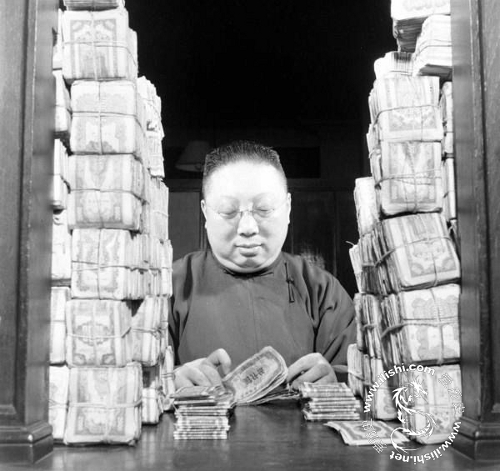
The Chinese hyperinflation was the extreme inflation that emerged in China during the late 1930s, extended to Taiwan after the Japanese surrender in 1945, and concluded in the early 1950s.
After a significant speculative outflow of China's physical silver to the United States of America due to the Roosevelt administration's Silver Purchase Act of 1934 resulted in insufficient silver reserves relative to notes issued, in the 1935 currency reform, the Nationalist government of China abandoned the traditional silver standard and introduced its own paper currency, the Chinese National Currency (CNC). However, this currency was issued without sufficient credit or reserve backing. The Nationalist government's reliance on deficit spending led to unchecked monetary expansion, resulting in rapid currency depreciation. This situation was aggravated by the financial burden of the Second Sino-Japanese War and the subsequent Chinese Civil War. To control the price hike, the government tried to introduce a new currency, namely the Chinese gold yuan (GY) in 1948, along with price and wage controls, which proved infeasible due to extensive corruption and administrative failures.
The hyperinflation eroded popular support for Nationalists across China, contributing to the collapse of the Republic of China on Mainland. In contrast, the Communists' ability to control it, aided their rise to power on Mainland China. On Taiwan, the Nationalists eventually restored financial stability using the Chinese gold they took to the island during their retreat from the mainland and American financial support.
In 1905, the Imperial Chinese government founded the Hubu Bank, granting it the authority to issue banknotes. At the time, Chinese leaders, whether conservative or revolutionary, believed that increasing the issuance of banknotes would allow them to outspend their revenues. Although subsequent republican governments sought to unify the national currency, progress was slow by 1937 due to internal conflicts and concerns about foreign intervention, as the plan potentially required substantial foreign loans. As a result, silver bullion still dominated the market, circulated and exchanged in various forms and weights without fixed ratios.
In 1933, China was the only major country to use a silver standard. The use of silver protected China from the initial impact of the Great Depression in 1929, as it primarily traded with gold-standard countries, which saw a reduced silver price, effectively debasing the Chinese currency. The Roosevelt administration enacted Executive Order 6814 and the Silver Purchase Act of 1934. The resulting US silver purchase program, authorised by the Thomas Amendment in 1933 significantly impacted China's silver-based currency by raising silver prices and increasing the global price of silver. This caused a massive speculative outflow of China's physical silver reserves to the United States, facilitated in large measure by the semi-colonial foreign owned and managed banks and trading houses that constituted a sizeable part of the financial sector. These foreign banks in China had until 1935 also possessed the right to issue currency..
Now with insufficient physical silver reserves to back up their note issues, foreign-owned and Chinese banks and financial institutions reduced extension of credit, curtailed their loan programs and called-in existing loans. This reduced economic activity and had a highly deflationary effect on the Chinese currency. This further discouraged Chinese exports and resulted in a continuous trade deficit. Cheap agricultural produces flooded into China while silver flowed out.
In 1935, the Nationalist government imposed a reform to replace the silver standard with the foreign exchange standard, in which a new paper currency, namely Chinese National Currency (CNC), was created. The government pledged to establish an independent Central Bank to act as the reserve bank and to create a supervisory committee with responsible members from the business community to oversee the money supply. However, none of these promises was fulfilled. Instead it paved ways for the government to expand money supply without constraints.
The initial inflation after abandoning the silver standard was moderate. In Shanghai, wholesale prices dropped 23% from 1931 to 1934, then fell another 1% by 1935, but rose 24% over the following two years. However, in 1937, with the outbreak of the Second Sino-Japanese War, government spending surged for war efforts. The paper standard and inflation weakened the Chinese as they had to deplete silver reserves, which could have been used for war financing, for maintaining the currency.
Hub AI
Chinese hyperinflation AI simulator
(@Chinese hyperinflation_simulator)
Chinese hyperinflation
The Chinese hyperinflation was the extreme inflation that emerged in China during the late 1930s, extended to Taiwan after the Japanese surrender in 1945, and concluded in the early 1950s.
After a significant speculative outflow of China's physical silver to the United States of America due to the Roosevelt administration's Silver Purchase Act of 1934 resulted in insufficient silver reserves relative to notes issued, in the 1935 currency reform, the Nationalist government of China abandoned the traditional silver standard and introduced its own paper currency, the Chinese National Currency (CNC). However, this currency was issued without sufficient credit or reserve backing. The Nationalist government's reliance on deficit spending led to unchecked monetary expansion, resulting in rapid currency depreciation. This situation was aggravated by the financial burden of the Second Sino-Japanese War and the subsequent Chinese Civil War. To control the price hike, the government tried to introduce a new currency, namely the Chinese gold yuan (GY) in 1948, along with price and wage controls, which proved infeasible due to extensive corruption and administrative failures.
The hyperinflation eroded popular support for Nationalists across China, contributing to the collapse of the Republic of China on Mainland. In contrast, the Communists' ability to control it, aided their rise to power on Mainland China. On Taiwan, the Nationalists eventually restored financial stability using the Chinese gold they took to the island during their retreat from the mainland and American financial support.
In 1905, the Imperial Chinese government founded the Hubu Bank, granting it the authority to issue banknotes. At the time, Chinese leaders, whether conservative or revolutionary, believed that increasing the issuance of banknotes would allow them to outspend their revenues. Although subsequent republican governments sought to unify the national currency, progress was slow by 1937 due to internal conflicts and concerns about foreign intervention, as the plan potentially required substantial foreign loans. As a result, silver bullion still dominated the market, circulated and exchanged in various forms and weights without fixed ratios.
In 1933, China was the only major country to use a silver standard. The use of silver protected China from the initial impact of the Great Depression in 1929, as it primarily traded with gold-standard countries, which saw a reduced silver price, effectively debasing the Chinese currency. The Roosevelt administration enacted Executive Order 6814 and the Silver Purchase Act of 1934. The resulting US silver purchase program, authorised by the Thomas Amendment in 1933 significantly impacted China's silver-based currency by raising silver prices and increasing the global price of silver. This caused a massive speculative outflow of China's physical silver reserves to the United States, facilitated in large measure by the semi-colonial foreign owned and managed banks and trading houses that constituted a sizeable part of the financial sector. These foreign banks in China had until 1935 also possessed the right to issue currency..
Now with insufficient physical silver reserves to back up their note issues, foreign-owned and Chinese banks and financial institutions reduced extension of credit, curtailed their loan programs and called-in existing loans. This reduced economic activity and had a highly deflationary effect on the Chinese currency. This further discouraged Chinese exports and resulted in a continuous trade deficit. Cheap agricultural produces flooded into China while silver flowed out.
In 1935, the Nationalist government imposed a reform to replace the silver standard with the foreign exchange standard, in which a new paper currency, namely Chinese National Currency (CNC), was created. The government pledged to establish an independent Central Bank to act as the reserve bank and to create a supervisory committee with responsible members from the business community to oversee the money supply. However, none of these promises was fulfilled. Instead it paved ways for the government to expand money supply without constraints.
The initial inflation after abandoning the silver standard was moderate. In Shanghai, wholesale prices dropped 23% from 1931 to 1934, then fell another 1% by 1935, but rose 24% over the following two years. However, in 1937, with the outbreak of the Second Sino-Japanese War, government spending surged for war efforts. The paper standard and inflation weakened the Chinese as they had to deplete silver reserves, which could have been used for war financing, for maintaining the currency.
Recent media