



Community hub
Recent from talks
Knowledge base stats:
Talk channels stats:
Members stats:
Chiselhampton
Chiselhampton is a village in the civil parish of Stadhampton, on the River Thame, in the South Oxfordshire district, in the county of Oxfordshire, England. It is about 6 miles (10 km) southeast of Oxford. In 1931 the parish named Chislehampton had a population of 136. On 1 April 1932 the parish was abolished and merged with Stadhampton.
"Chisel" is derived from the old English ceosel or cisel meaning "gravel" or "shingle", referring to the river gravel beside the Thame on which some of the village is built. In a document dated 1147 the toponym is spelt Chiselentona. Chislehampton came into use later in the same century and was still in use in 1974. A document dated 1517 calls the village Chessyllyngton. It has been colloquially called Chisleton.
The Domesday Book of 1086 does not mention Chiselhampton by name, but it ascribes a fee of land here to William Fitz-Ansculf of Dudley Castle. For some time thereafter, as Dudley passed to successive families, Chiselhampton remained with the Honour of Dudley. In 1536 the principal manor of Chiselhampton passed to Thomas Doyley of Hambleden in Buckinghamshire. The Doyley family built a substantial house in Chiselhampton, possibly towards the end of the 16th century. Maps of 1628 and 1743 record it as a four-gabled mansion with a large dovecote and an orchard, and an estate plan of 1741–42 shows the house's west front as having eight bays.
Chiselhampton's oldest building is Camoys or Camoise Court, a moated stone-built farmhouse of the 14th century. It was in existence by 1318 when its owner, Sir Richard de Louches of Great Milton, was licensed to crenellate it. The house's name comes from Thomas de Camoys, who acquired it when he married Elizabeth de Louches. Part of the 14th-century building and traces of its moat survive, along with a wing that was added in the 17th century and altered in 1880. At some point the Doyley family, who had bought the main manor in 1748, also acquired the Camoys manor and Camoys Court. Camoys Court is a Grade II* listed building. Several cottages and houses with timber frames and brick infill were built in the 17th century and survive today. They include Chiselhampton's only public house, the 17th-century Coach and Horses Inn.
In the 18th century the Doyley family's wealth declined, so in 1748 Sir Thomas Doyley sold the Chiselhampton and Camoys manors to Charles Peers of Olney, Buckinghamshire, Son of Sir Charles Peers. The combined manor was still with the Peers family in 1958. In the 1740s a surveyor for the Doyleys reported that the late-16th-century mansion was "a very old inconvenient building part brick, part stone" whose outbuildings were ruinous, and concluded that they and the house would "scarce pay for pulling down and yet were not good enough to keep up". Only the dovecote and the walls of the kitchen garden were fit to retain. The Doyleys seem to have lacked the means to rebuild the house, but in 1766 the new owner Charles Peers had a new house designed. In 1768 it was completed on a new site overlooking the River Thame and the old Doyley mansion was demolished.
Peers' Chistleton or Chiselhampton House is a brick Georgian country house of five bays. The exterior is plain but the entrance hall has a fine, curved, cantilevered staircase, galleries at the first and second floors and is lit by a glass umbrella dome. An orangery was added in either 1790 or 1820. In 1820 the house was enhanced with the addition of a number of marble fireplaces and a pilastered entrance porch that the Victoria County History states is Doric but Pevsner and Sherwood state is Ionic. Chiselhampton House is a Grade II* listed building.
By 1146 Chiselhampton had a chapel dedicated to Saint Mary. It was a Royal Peculiar of Dorchester Abbey and seems not to have been an independent parish. St Mary's had no graveyard: villagers buried their dead at Stadhampton, which was another of Dorchester Abbey's chapels and Peculiers. St Mary's chapel remained under Dorchester Abbey until the dissolution of the monasteries in 1536, when Stadhampton became a parish separate from Dorchester. Chiselhampton seems then to have become a chapelry of Stadhampton. Despite this new status, until about 1835 clergy for both Chiselhampton and Stadhampton were licensed not by the Bishop of Oxford but by the peculier of Dorchester. After the English Reformation Chiselhampton and Stadhampton always shared the same parish clergy.
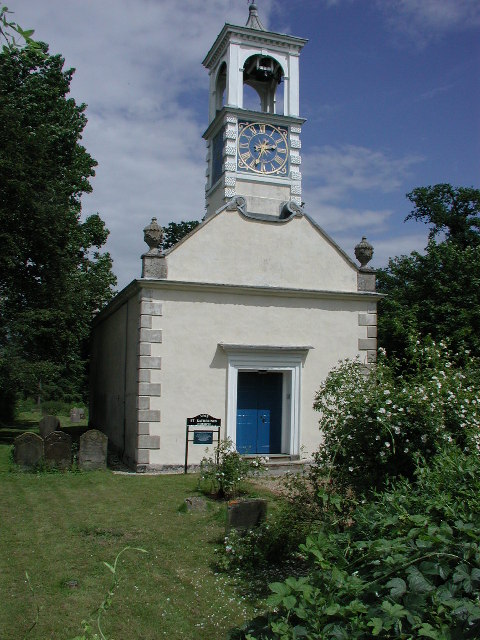
Until 1706 St Mary's chapel was reported to be in a good state of repair, but by 1717 the parish curate had taken the villagers to the peculiar court in Dorchester for failing to pay the church rate for the building's upkeep. In 1763 Charles Peers told the court that St Mary's was in "so ruinous and decayed a condition that the inhabitants cannot assemble for worship without manifest hazard [to] their lives", and so he requested permission to demolish the chapel and build a new one. In 1763 Charles Peers had the Medieval chapel demolished and the materials re-used to build a Georgian church on a new site beside the main Oxford - Stadhampton road. That same year it was completed and John Hume, Bishop of Oxford consecrated it. Peers provided the new church with a graveyard to spare villagers from having to bury their dead at Stadhampton. He dispensed with the Norman chapel's dedication to Saint Mary and had the new church dedicated to Saint Katherine. With the new church Chiselhampton was made a parish in its own right, but it continued to share the same parish clergy as Stadhampton.
Hub AI
Chiselhampton AI simulator
(@Chiselhampton_simulator)
Chiselhampton
Chiselhampton is a village in the civil parish of Stadhampton, on the River Thame, in the South Oxfordshire district, in the county of Oxfordshire, England. It is about 6 miles (10 km) southeast of Oxford. In 1931 the parish named Chislehampton had a population of 136. On 1 April 1932 the parish was abolished and merged with Stadhampton.
"Chisel" is derived from the old English ceosel or cisel meaning "gravel" or "shingle", referring to the river gravel beside the Thame on which some of the village is built. In a document dated 1147 the toponym is spelt Chiselentona. Chislehampton came into use later in the same century and was still in use in 1974. A document dated 1517 calls the village Chessyllyngton. It has been colloquially called Chisleton.
The Domesday Book of 1086 does not mention Chiselhampton by name, but it ascribes a fee of land here to William Fitz-Ansculf of Dudley Castle. For some time thereafter, as Dudley passed to successive families, Chiselhampton remained with the Honour of Dudley. In 1536 the principal manor of Chiselhampton passed to Thomas Doyley of Hambleden in Buckinghamshire. The Doyley family built a substantial house in Chiselhampton, possibly towards the end of the 16th century. Maps of 1628 and 1743 record it as a four-gabled mansion with a large dovecote and an orchard, and an estate plan of 1741–42 shows the house's west front as having eight bays.
Chiselhampton's oldest building is Camoys or Camoise Court, a moated stone-built farmhouse of the 14th century. It was in existence by 1318 when its owner, Sir Richard de Louches of Great Milton, was licensed to crenellate it. The house's name comes from Thomas de Camoys, who acquired it when he married Elizabeth de Louches. Part of the 14th-century building and traces of its moat survive, along with a wing that was added in the 17th century and altered in 1880. At some point the Doyley family, who had bought the main manor in 1748, also acquired the Camoys manor and Camoys Court. Camoys Court is a Grade II* listed building. Several cottages and houses with timber frames and brick infill were built in the 17th century and survive today. They include Chiselhampton's only public house, the 17th-century Coach and Horses Inn.
In the 18th century the Doyley family's wealth declined, so in 1748 Sir Thomas Doyley sold the Chiselhampton and Camoys manors to Charles Peers of Olney, Buckinghamshire, Son of Sir Charles Peers. The combined manor was still with the Peers family in 1958. In the 1740s a surveyor for the Doyleys reported that the late-16th-century mansion was "a very old inconvenient building part brick, part stone" whose outbuildings were ruinous, and concluded that they and the house would "scarce pay for pulling down and yet were not good enough to keep up". Only the dovecote and the walls of the kitchen garden were fit to retain. The Doyleys seem to have lacked the means to rebuild the house, but in 1766 the new owner Charles Peers had a new house designed. In 1768 it was completed on a new site overlooking the River Thame and the old Doyley mansion was demolished.
Peers' Chistleton or Chiselhampton House is a brick Georgian country house of five bays. The exterior is plain but the entrance hall has a fine, curved, cantilevered staircase, galleries at the first and second floors and is lit by a glass umbrella dome. An orangery was added in either 1790 or 1820. In 1820 the house was enhanced with the addition of a number of marble fireplaces and a pilastered entrance porch that the Victoria County History states is Doric but Pevsner and Sherwood state is Ionic. Chiselhampton House is a Grade II* listed building.
By 1146 Chiselhampton had a chapel dedicated to Saint Mary. It was a Royal Peculiar of Dorchester Abbey and seems not to have been an independent parish. St Mary's had no graveyard: villagers buried their dead at Stadhampton, which was another of Dorchester Abbey's chapels and Peculiers. St Mary's chapel remained under Dorchester Abbey until the dissolution of the monasteries in 1536, when Stadhampton became a parish separate from Dorchester. Chiselhampton seems then to have become a chapelry of Stadhampton. Despite this new status, until about 1835 clergy for both Chiselhampton and Stadhampton were licensed not by the Bishop of Oxford but by the peculier of Dorchester. After the English Reformation Chiselhampton and Stadhampton always shared the same parish clergy.
Until 1706 St Mary's chapel was reported to be in a good state of repair, but by 1717 the parish curate had taken the villagers to the peculiar court in Dorchester for failing to pay the church rate for the building's upkeep. In 1763 Charles Peers told the court that St Mary's was in "so ruinous and decayed a condition that the inhabitants cannot assemble for worship without manifest hazard [to] their lives", and so he requested permission to demolish the chapel and build a new one. In 1763 Charles Peers had the Medieval chapel demolished and the materials re-used to build a Georgian church on a new site beside the main Oxford - Stadhampton road. That same year it was completed and John Hume, Bishop of Oxford consecrated it. Peers provided the new church with a graveyard to spare villagers from having to bury their dead at Stadhampton. He dispensed with the Norman chapel's dedication to Saint Mary and had the new church dedicated to Saint Katherine. With the new church Chiselhampton was made a parish in its own right, but it continued to share the same parish clergy as Stadhampton.