
Recent from talks
Cisplatine War
Knowledge base stats:
Talk channels stats:
Members stats:
Cisplatine War
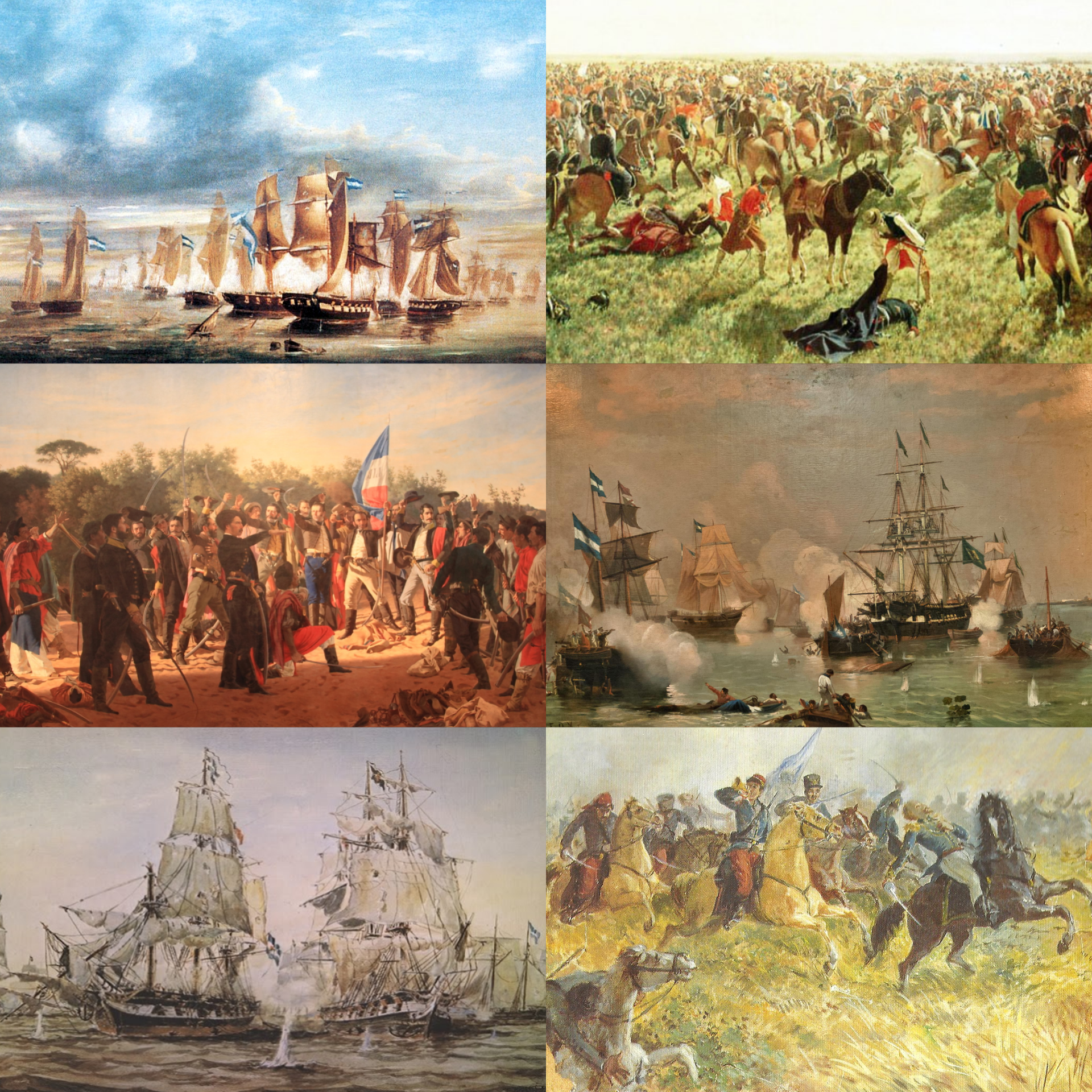
The Cisplatine War was an armed conflict fought in the 1820s between the Empire of Brazil and the United Provinces of the Río de la Plata over control of the Banda Oriental following its annexation by Brazil as the Cisplatina province. It was fought in the aftermath of the United Provinces' and Brazil's independence from Spain and Portugal, respectively, and resulted in the independence of Cisplatina as the Oriental Republic of Uruguay.
In 1816, the United Kingdom of Portugal, Brazil and the Algarves carried out an invasion of the Banda Oriental and, after defeating the local resistance led by José Gervasio Artigas, annexed it under the name of Cisplatina. After Brazil's independence in 1822, Cisplatina remained as part of Brazil. Wishing to gain control of the region, the United Provinces sent a diplomatic mission to Brazil in 1823 to negotiate a peaceful Brazilian withdrawal, but it failed. In 1825, a group of patriots known as the Thirty-Three Orientals, supported by the Argentine government and led by Juan Antonio Lavalleja, launched a rebellion against Brazil. On 25 August of that year, in the Congress of Florida, they declared Cisplatina's independence from Brazil and its unification with the United Provinces. After a series of initial skirmishes, they defeated the Brazilians at the battles of Rincón and Sarandí, prompting the Argentine Congress to proclaim Cisplatina reintegrated into the United Provinces on 25 October. In response, Brazil declared war on the United Provinces on 10 December 1825 and imposed a naval blockade on the River Plate.
The United Provinces managed to occupy the Uruguayan countryside with the help of the local insurgents, however, its forces never managed to capture Montevideo and Colonia del Sacramento or penetrate deeply into Brazilian territory. Likewise, the Brazilians did not manage to regain control of the countryside or achieve a decisive victory in order to repel the Argentines, with both armies clashing at the battle of Ituzaingó, the largest battle of the conflict. Thus, the war on land reached an impasse. At sea, however, the Brazilian Navy obtained better results, despite the Argentine resistance, whose small fleet, led by Irish-born admiral William Brown, was mostly destroyed.
The economic burden and internal political disputes caused by the war in both states, especially the Brazilian naval blockade and the impasse on land, led both countries to start peace negotiations. In 1827, the Argentine minister plenipotentiary Manuel José García signed a peace treaty with Brazilian representatives, recognizing Brazil's sovereignty over Cisplatina and agreeing to pay Brazil a war indemnity. The treaty was rejected by Argentine president Bernardino Rivadavia, but its terms generated enormous backlash forcing the president to present his resignation. Manuel Dorrego was then elected to succeed him and continue the war. The conflict continued until 27 August 1828, when Argentine and Brazilian representatives, under British mediation, signed the Preliminary Peace Convention, by which Cisplatina would become an independent state and hostilities would cease.
After the war, tensions in Argentina between the Federalists and the Unitarians increased. Manuel Dorrego, a Federalist, was deposed and executed by Juan Lavalle and the country fell into a civil war. In Brazil, the war's financial cost, aggravated by the damage done to Brazilian trade by Argentine corsairs, and the loss of Cisplatina, added to the internal political disputes surrounding emperor Pedro I, which ultimately led him to abdicate the throne in favour of his 5-year-old son Pedro II in 1831, ushering the regency period.
Following the South American wars of independence, the region known as the Banda Oriental became a point of contention between the Empire of Brazil and the United Provinces after Brazil's independence in 1822. This dispute was inherited from the Portuguese and Spanish colonial empires, whose borders in the River Plate basin had never been settled. It began in 1679, when the Portuguese crown, which had always considered the River Plate as Brazil's natural southern border, ordered Manuel Lobo, the governor of the Captaincy of Rio de Janeiro, to found the fortress town of Colônia do Sacramento, in an easily defensible peninsula with a natural harbour, on the right bank of the river, right in front of Buenos Aires, which he effectively did in 1680. By expanding into the River Plate basin, the Portuguese wanted to secure access to the continent's interior and also divert the smuggling of silver from Upper Peru away from Buenos Aires.
The Spaniards, wishing to solidify their control over the region, also founded a colony on the opposite bank of the river in 1724, when Bruno Mauricio de Zabala founded the town of Montevideo. Finally, Spain created the Viceroyalty of the Río de la Plata in 1776, with its capital in Buenos Aires. After centuries of wars and settling attempts between the two empires, Colônia do Sacramento finally became a Spanish possession by the 1801 Treaty of Badajoz.
With the outbreak of the 1810 May Revolution in Buenos Aires and the Argentine struggle for independence that ensued, Montevideo, under the command of viceroy Francisco Javier de Elío, remained loyal to Spain. The Primera Junta of Buenos Aires then set out to subdue Montevideo and Elío, who, finding himself without support from Europe, requested assistance from Carlota Joaquina, the Spanish wife of Portuguese prince regent John of Braganza. The Portuguese crown, which had fled to Brazil in 1808 after the French invasion of Portugal, then took the opportunity to invade the Banda Oriental in 1811. An army named "Peacekeeping Army of the Banda Oriental" was assembled and command was given to Diogo de Sousa, who had orders to help Elío. Diogo de Sousa then led the troops into the Banda Oriental, but a few months later, on 20 October 1811, Elío signed the Treaty of Pacification with the First Triumvirate, which had succeeded the Primera Junta, and so the Argentines, led by José Rondeau, lifted the siege on Montevideo and left the Banda Oriental. Likewise, the Portuguese signed an armistice with Buenos Aires on 26 May 1812 and also left the region.
Hub AI
Cisplatine War AI simulator
(@Cisplatine War_simulator)
Cisplatine War
The Cisplatine War was an armed conflict fought in the 1820s between the Empire of Brazil and the United Provinces of the Río de la Plata over control of the Banda Oriental following its annexation by Brazil as the Cisplatina province. It was fought in the aftermath of the United Provinces' and Brazil's independence from Spain and Portugal, respectively, and resulted in the independence of Cisplatina as the Oriental Republic of Uruguay.
In 1816, the United Kingdom of Portugal, Brazil and the Algarves carried out an invasion of the Banda Oriental and, after defeating the local resistance led by José Gervasio Artigas, annexed it under the name of Cisplatina. After Brazil's independence in 1822, Cisplatina remained as part of Brazil. Wishing to gain control of the region, the United Provinces sent a diplomatic mission to Brazil in 1823 to negotiate a peaceful Brazilian withdrawal, but it failed. In 1825, a group of patriots known as the Thirty-Three Orientals, supported by the Argentine government and led by Juan Antonio Lavalleja, launched a rebellion against Brazil. On 25 August of that year, in the Congress of Florida, they declared Cisplatina's independence from Brazil and its unification with the United Provinces. After a series of initial skirmishes, they defeated the Brazilians at the battles of Rincón and Sarandí, prompting the Argentine Congress to proclaim Cisplatina reintegrated into the United Provinces on 25 October. In response, Brazil declared war on the United Provinces on 10 December 1825 and imposed a naval blockade on the River Plate.
The United Provinces managed to occupy the Uruguayan countryside with the help of the local insurgents, however, its forces never managed to capture Montevideo and Colonia del Sacramento or penetrate deeply into Brazilian territory. Likewise, the Brazilians did not manage to regain control of the countryside or achieve a decisive victory in order to repel the Argentines, with both armies clashing at the battle of Ituzaingó, the largest battle of the conflict. Thus, the war on land reached an impasse. At sea, however, the Brazilian Navy obtained better results, despite the Argentine resistance, whose small fleet, led by Irish-born admiral William Brown, was mostly destroyed.
The economic burden and internal political disputes caused by the war in both states, especially the Brazilian naval blockade and the impasse on land, led both countries to start peace negotiations. In 1827, the Argentine minister plenipotentiary Manuel José García signed a peace treaty with Brazilian representatives, recognizing Brazil's sovereignty over Cisplatina and agreeing to pay Brazil a war indemnity. The treaty was rejected by Argentine president Bernardino Rivadavia, but its terms generated enormous backlash forcing the president to present his resignation. Manuel Dorrego was then elected to succeed him and continue the war. The conflict continued until 27 August 1828, when Argentine and Brazilian representatives, under British mediation, signed the Preliminary Peace Convention, by which Cisplatina would become an independent state and hostilities would cease.
After the war, tensions in Argentina between the Federalists and the Unitarians increased. Manuel Dorrego, a Federalist, was deposed and executed by Juan Lavalle and the country fell into a civil war. In Brazil, the war's financial cost, aggravated by the damage done to Brazilian trade by Argentine corsairs, and the loss of Cisplatina, added to the internal political disputes surrounding emperor Pedro I, which ultimately led him to abdicate the throne in favour of his 5-year-old son Pedro II in 1831, ushering the regency period.
Following the South American wars of independence, the region known as the Banda Oriental became a point of contention between the Empire of Brazil and the United Provinces after Brazil's independence in 1822. This dispute was inherited from the Portuguese and Spanish colonial empires, whose borders in the River Plate basin had never been settled. It began in 1679, when the Portuguese crown, which had always considered the River Plate as Brazil's natural southern border, ordered Manuel Lobo, the governor of the Captaincy of Rio de Janeiro, to found the fortress town of Colônia do Sacramento, in an easily defensible peninsula with a natural harbour, on the right bank of the river, right in front of Buenos Aires, which he effectively did in 1680. By expanding into the River Plate basin, the Portuguese wanted to secure access to the continent's interior and also divert the smuggling of silver from Upper Peru away from Buenos Aires.
The Spaniards, wishing to solidify their control over the region, also founded a colony on the opposite bank of the river in 1724, when Bruno Mauricio de Zabala founded the town of Montevideo. Finally, Spain created the Viceroyalty of the Río de la Plata in 1776, with its capital in Buenos Aires. After centuries of wars and settling attempts between the two empires, Colônia do Sacramento finally became a Spanish possession by the 1801 Treaty of Badajoz.
With the outbreak of the 1810 May Revolution in Buenos Aires and the Argentine struggle for independence that ensued, Montevideo, under the command of viceroy Francisco Javier de Elío, remained loyal to Spain. The Primera Junta of Buenos Aires then set out to subdue Montevideo and Elío, who, finding himself without support from Europe, requested assistance from Carlota Joaquina, the Spanish wife of Portuguese prince regent John of Braganza. The Portuguese crown, which had fled to Brazil in 1808 after the French invasion of Portugal, then took the opportunity to invade the Banda Oriental in 1811. An army named "Peacekeeping Army of the Banda Oriental" was assembled and command was given to Diogo de Sousa, who had orders to help Elío. Diogo de Sousa then led the troops into the Banda Oriental, but a few months later, on 20 October 1811, Elío signed the Treaty of Pacification with the First Triumvirate, which had succeeded the Primera Junta, and so the Argentines, led by José Rondeau, lifted the siege on Montevideo and left the Banda Oriental. Likewise, the Portuguese signed an armistice with Buenos Aires on 26 May 1812 and also left the region.
Recent media