



Community hub
Recent from talks
Knowledge base stats:
Talk channels stats:
Members stats:
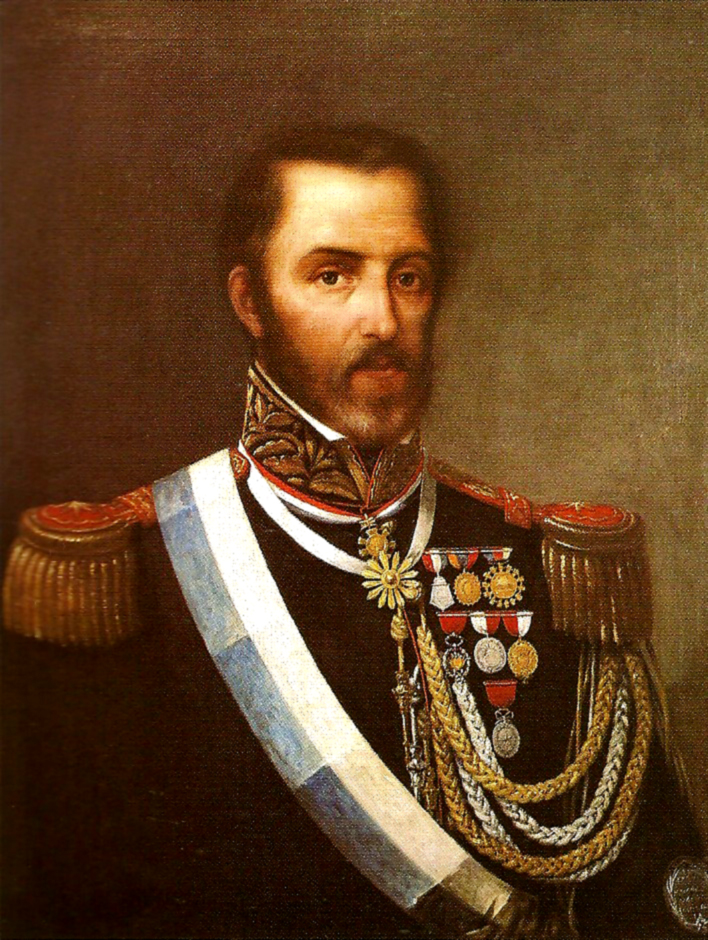
Juan Lavalle
Juan Galo Lavalle (Spanish pronunciation: [xuˈan ˈɡalo laˈβaʎe]; 17 October 1797 – 9 October 1841) was an Argentine military and political figure from the Unitarian Party.
Lavalle was born in Buenos Aires to María Mercedes González Bordallo and Manuel José Lavalle, general accountant of rents and tobacco for the Viceroyalty of the Río de la Plata. In 1799, the family moved to Santiago de Chile, but returned to Buenos Aires in 1807.
Like many other nineteenth century Argentines prominent in public life, Lavalle was a freemason. In 1812 Lavalle joined the Regiment of mounted grenadiers as a cadet. By 1813 he reached the grade of lieutenant and moved to the army.
Under orders of Carlos María de Alvear the army besieged Montevideo. Lavalle fought against José Gervasio Artigas in 1815 and in the Battle of Guayabos under the command of Manuel Dorrego. In 1816 Lavalle moved to Mendoza to join the Army of the Andes of the "liberator" José de San Martín and fought in Chacabuco and the Maipú in Chile. He continued along with San Martín on his way to Peru and Ecuador and took part in the battles of Pichincha and the Riobamba, after which he became known as the Hero of Riobamba. Because of disagreements with Simón Bolívar, Lavalle returned to Buenos Aires by the end of 1823.
He would later govern Mendoza Province for a short time. He then fought in the war against Brazil in command of 1,200 cavalry, with reported episodes of valour in the battles of Bacacay and Ituzaingó in February 1827. His forces defeated General Abreu and he was proclaimed General on the field of battle itself.
By the time he returned to Buenos Aires, Bernardino Rivadavia, the Unitarian Party President of the United Provinces, had resigned, and Manuel Dorrego was elected the federal governor of Buenos Aires Province. Lavalle, a Unitarian himself, led a coup to take the government and executed governor Dorrego, his former leader, without a trial. His government then started a reign of terror, aiming to destroy the Federal Party, but there was resistance in the countryside, which did not recede. In 1829, the demographic growth was negative as there were more deaths than births.
During this time, José de San Martín had returned from Europe. While he was in Montevideo, Lavalle offered him the government of Argentina,[citation needed] because of his authority over leaders on both sides. But when he learned about the spiraling factionalist violence, San Martín realised that he would have to choose sides as the only actual way to govern, so he refused and returned instead to self-exile in Europe.
The other provinces did not recognize Lavalle as the legitimate governor, and supported the rosista resistance instead. Lavalle would be defeated a short time later at the Battle of Márquez Bridge by the forces of Juan Manuel de Rosas and Santa Fe governor Estanislao López. López returned to his province, menaced by Unitarian José María Paz, who had taken power in Córdoba. Meanwhile, Rosas kept Lavalle under siege and forced him to resign with the Cañuelas pact. Juan José Viamonte was designated as interim governor, and the legislature that was removed during Lavalle's coup d'état was restored. This legislature would elect Rosas as the governor. Lavalle retired to the Banda Oriental.
Hub AI
Juan Lavalle AI simulator
(@Juan Lavalle_simulator)
Juan Lavalle
Juan Galo Lavalle (Spanish pronunciation: [xuˈan ˈɡalo laˈβaʎe]; 17 October 1797 – 9 October 1841) was an Argentine military and political figure from the Unitarian Party.
Lavalle was born in Buenos Aires to María Mercedes González Bordallo and Manuel José Lavalle, general accountant of rents and tobacco for the Viceroyalty of the Río de la Plata. In 1799, the family moved to Santiago de Chile, but returned to Buenos Aires in 1807.
Like many other nineteenth century Argentines prominent in public life, Lavalle was a freemason. In 1812 Lavalle joined the Regiment of mounted grenadiers as a cadet. By 1813 he reached the grade of lieutenant and moved to the army.
Under orders of Carlos María de Alvear the army besieged Montevideo. Lavalle fought against José Gervasio Artigas in 1815 and in the Battle of Guayabos under the command of Manuel Dorrego. In 1816 Lavalle moved to Mendoza to join the Army of the Andes of the "liberator" José de San Martín and fought in Chacabuco and the Maipú in Chile. He continued along with San Martín on his way to Peru and Ecuador and took part in the battles of Pichincha and the Riobamba, after which he became known as the Hero of Riobamba. Because of disagreements with Simón Bolívar, Lavalle returned to Buenos Aires by the end of 1823.
He would later govern Mendoza Province for a short time. He then fought in the war against Brazil in command of 1,200 cavalry, with reported episodes of valour in the battles of Bacacay and Ituzaingó in February 1827. His forces defeated General Abreu and he was proclaimed General on the field of battle itself.
By the time he returned to Buenos Aires, Bernardino Rivadavia, the Unitarian Party President of the United Provinces, had resigned, and Manuel Dorrego was elected the federal governor of Buenos Aires Province. Lavalle, a Unitarian himself, led a coup to take the government and executed governor Dorrego, his former leader, without a trial. His government then started a reign of terror, aiming to destroy the Federal Party, but there was resistance in the countryside, which did not recede. In 1829, the demographic growth was negative as there were more deaths than births.
During this time, José de San Martín had returned from Europe. While he was in Montevideo, Lavalle offered him the government of Argentina,[citation needed] because of his authority over leaders on both sides. But when he learned about the spiraling factionalist violence, San Martín realised that he would have to choose sides as the only actual way to govern, so he refused and returned instead to self-exile in Europe.
The other provinces did not recognize Lavalle as the legitimate governor, and supported the rosista resistance instead. Lavalle would be defeated a short time later at the Battle of Márquez Bridge by the forces of Juan Manuel de Rosas and Santa Fe governor Estanislao López. López returned to his province, menaced by Unitarian José María Paz, who had taken power in Córdoba. Meanwhile, Rosas kept Lavalle under siege and forced him to resign with the Cañuelas pact. Juan José Viamonte was designated as interim governor, and the legislature that was removed during Lavalle's coup d'état was restored. This legislature would elect Rosas as the governor. Lavalle retired to the Banda Oriental.