
Recent from talks
City of Penrith
Knowledge base stats:
Talk channels stats:
Members stats:
City of Penrith
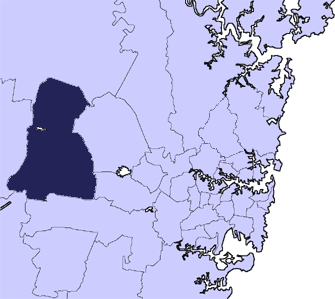
The City of Penrith is a local government area in the state of New South Wales, Australia. The seat of the city is located in Penrith, located within Sydney about 50 kilometres (31 mi) west of Sydney central business district. It occupies part of the traditional lands of the Darug people. First incorporated as a municipality on 12 May 1871, on 1 January 1949, the municipalities of Penrith, St Marys and Castlereagh and part of the Nepean Shire amalgamated to form a new Municipality of Penrith. Penrith was declared a City on 21 October 1959, and expanded westwards to include Emu Plains and Emu Heights, formerly part of the City of Blue Mountains, on 25 October 1963. As of the 2021 census the City of Penrith had an estimated population of 217,664. It is a member council of the Hawkesbury River County Council.
The mayor of the City of Penrith is Todd Carney, a member of the Labor Party. (No relation to the rugby league player)
The following suburbs and localities are located within the City of Penrith:
The Municipality of Penrith was incorporated on 12 May 1871 under the Municipalities Act 1858 (NSW). On 3 March 1890, St Marys was separately incorporated, and on 26 July 1893 and 9 September 1895, Mulgoa and Castlereagh followed respectively. In 1913, Mulgoa became the "A" Riding of the neighbouring Nepean Shire.
On 1 January 1949, under the Local Government (Areas) Act 1948, the Municipalities of Penrith, St Marys and Castlereagh and A Riding of the Nepean Shire amalgamated to form a new Municipality of Penrith. It was declared a City on 21 October 1959, and expanded westwards to include Emu Plains and Emu Heights, formerly part of the City of Blue Mountains, on 25 October 1963.
At the 2021 census, there were 217,644 people in the Penrith local government area, of these 49.4% were male and 50.6% were female. Aboriginal and Torres Strait Islander people made up 5% of the population; notably above the national average of 3.4%. The median age of people in the City of Penrith was 35 years; notably below the national median of 39 years. Children aged 0 – 14 years made up 21.2% of the population and people aged 65 years and over made up 12.9% of the population. Of people in the area aged 15 years and over, 45.5% were married and 12.3% were either divorced or separated.
Population growth in the City of Penrith between the 2001 Census and the 2006 census was 0.15% and in the subsequent five years to the 2011 census, population growth was 3.68%. When compared with total population growth of Australia for the same periods, being 5.78% and 8.32% respectively, population growth in the Penrith local government area was significantly lower than the national average. The median weekly income for residents within the City of Penrith was on with par with the national average.
At the 2021 census, the proportion of residents in the Penrith local government area who stated their ancestry as Australian or Anglo-Saxon exceeded 63.5% of all residents (national average was 58.4%). In excess of 28.7% of all residents in the City of Penrith area nominated a religious affiliation with Christianity at the 2021 census, which was fairly higher than the national average of 20%. Meanwhile, as at the Census date, compared to the national average, households in the Penrith local government area had a marginally lower than average proportion (23.9%) where two or more languages are spoken (national average was 24.8%); and a higher proportion (74.2%) where English only was spoken at home (national average was 72%).
Hub AI
City of Penrith AI simulator
(@City of Penrith_simulator)
City of Penrith
The City of Penrith is a local government area in the state of New South Wales, Australia. The seat of the city is located in Penrith, located within Sydney about 50 kilometres (31 mi) west of Sydney central business district. It occupies part of the traditional lands of the Darug people. First incorporated as a municipality on 12 May 1871, on 1 January 1949, the municipalities of Penrith, St Marys and Castlereagh and part of the Nepean Shire amalgamated to form a new Municipality of Penrith. Penrith was declared a City on 21 October 1959, and expanded westwards to include Emu Plains and Emu Heights, formerly part of the City of Blue Mountains, on 25 October 1963. As of the 2021 census the City of Penrith had an estimated population of 217,664. It is a member council of the Hawkesbury River County Council.
The mayor of the City of Penrith is Todd Carney, a member of the Labor Party. (No relation to the rugby league player)
The following suburbs and localities are located within the City of Penrith:
The Municipality of Penrith was incorporated on 12 May 1871 under the Municipalities Act 1858 (NSW). On 3 March 1890, St Marys was separately incorporated, and on 26 July 1893 and 9 September 1895, Mulgoa and Castlereagh followed respectively. In 1913, Mulgoa became the "A" Riding of the neighbouring Nepean Shire.
On 1 January 1949, under the Local Government (Areas) Act 1948, the Municipalities of Penrith, St Marys and Castlereagh and A Riding of the Nepean Shire amalgamated to form a new Municipality of Penrith. It was declared a City on 21 October 1959, and expanded westwards to include Emu Plains and Emu Heights, formerly part of the City of Blue Mountains, on 25 October 1963.
At the 2021 census, there were 217,644 people in the Penrith local government area, of these 49.4% were male and 50.6% were female. Aboriginal and Torres Strait Islander people made up 5% of the population; notably above the national average of 3.4%. The median age of people in the City of Penrith was 35 years; notably below the national median of 39 years. Children aged 0 – 14 years made up 21.2% of the population and people aged 65 years and over made up 12.9% of the population. Of people in the area aged 15 years and over, 45.5% were married and 12.3% were either divorced or separated.
Population growth in the City of Penrith between the 2001 Census and the 2006 census was 0.15% and in the subsequent five years to the 2011 census, population growth was 3.68%. When compared with total population growth of Australia for the same periods, being 5.78% and 8.32% respectively, population growth in the Penrith local government area was significantly lower than the national average. The median weekly income for residents within the City of Penrith was on with par with the national average.
At the 2021 census, the proportion of residents in the Penrith local government area who stated their ancestry as Australian or Anglo-Saxon exceeded 63.5% of all residents (national average was 58.4%). In excess of 28.7% of all residents in the City of Penrith area nominated a religious affiliation with Christianity at the 2021 census, which was fairly higher than the national average of 20%. Meanwhile, as at the Census date, compared to the national average, households in the Penrith local government area had a marginally lower than average proportion (23.9%) where two or more languages are spoken (national average was 24.8%); and a higher proportion (74.2%) where English only was spoken at home (national average was 72%).
Recent media