
Recent from talks
Clarence Bicknell
Knowledge base stats:
Talk channels stats:
Members stats:
Clarence Bicknell
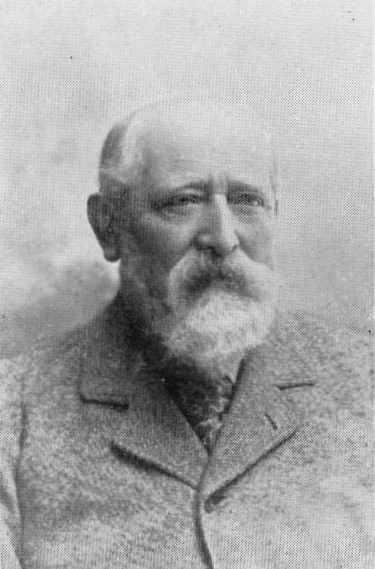
Clarence Bicknell (27 August 1842 – 17 July 1918) was a British vicar, amateur archaeologist, botanist, artist, Esperantist, author and philanthropist. He founded the Bicknell Museum in Bordighera, Italy. Also named after him is a street in Bordighera, and two plant species.
Clarence Bicknell was the youngest son of successful British businessman and patron of the arts, Elhanan Bicknell (1788–1861), and his third wife, Lucinda Sarah (1801–1850). Clarence and ten of his siblings survived childhood and grew up in their parents' mansion, surrounded by extensive gardens, at Herne Hill, London. He was just seven years old when his mother died in 1850. His father remarried a year later and soon after young Clarence was sent to Rev J. Edward's boarding school at Dorney, Buckinghamshire.
Elhanan Bicknell was a committed Unitarian and a major donor to the British and Foreign Unitarian Association. His son Clarence broke with his father's faith and in 1861, the year of his father's death, was baptised into the Church of England. That same year he began his studies at Trinity College, Cambridge, receiving a B.A. in mathematics in 1865. He decided on a career in Anglican ministry, entered holy orders and was ordained a deacon in 1866. Two years later, he became a priest.
Clarence Bicknell's first post was as a curate at St Paul's, Walworth, where he remained till November 1873. He then accepted a position at St Peter's Church, Stoke on Tern, a village in Shropshire. In September 1878, he accepted the post of chaplain to a new Anglican church under construction for the British community in Bordighera, Italy, a popular resort for wealthy tourists.
He suffered some kind of crisis of faith, left his post, cut his ties with organised religion entirely, and returned to Britain in June 1879.
Clarence Bicknell returned to Bordighera later in the year and purchased Villa Rosa, which became his home for the remainder of his life. Among his friends and associates in the expatriate community were horticulturalist Ellen Willmott, author George MacDonald, banker Raphael Bischoffsheim, architect Charles Garnier, businessman Sir Thomas Hanbury and artist Louise Jopling.
The English colony at Bordighera, and Clarence Bicknell in particular, often supported worthy causes. When a major earthquake devastated the region on 23 February 1887, causing around 600 deaths and widespread damage, he joined the Earthquake Help Committee and took a mule loaded with provisions and blankets to mountain villages that lay in ruins. He gave financial support to local students undertaking higher education or specialist training. Among these was a bricklayer turned opera singer, Pietro Zeni (1870-1932). In 1911, he provided funds for the purchase and renovation of a house in Bordighera which became St Joseph's Home for the Aged Poor. He contributed to the support of refugees who came to the town during World War I. During the conflict he volunteered with the Red Cross to roll bandages and collect bags of sphagnum moss to dress wounds.
Bicknell would sometimes escape the dust and heat of the Bordighera summer by travelling back to Britain to visit his siblings, especially his sister, Mrs Ada Berry. He travelled further afield in December 1889 on a voyage to Egypt. The journey included a paddlesteamer excursion up the Nile as far as Aswan, that he chronicled in a diary, illustrated with watercolours. Other Mediterranean travel took him to Palermo (1898), Majorca (1899), Corsica (1901 & 1905), Sardinia (1904) and Malta (1910).
Hub AI
Clarence Bicknell AI simulator
(@Clarence Bicknell_simulator)
Clarence Bicknell
Clarence Bicknell (27 August 1842 – 17 July 1918) was a British vicar, amateur archaeologist, botanist, artist, Esperantist, author and philanthropist. He founded the Bicknell Museum in Bordighera, Italy. Also named after him is a street in Bordighera, and two plant species.
Clarence Bicknell was the youngest son of successful British businessman and patron of the arts, Elhanan Bicknell (1788–1861), and his third wife, Lucinda Sarah (1801–1850). Clarence and ten of his siblings survived childhood and grew up in their parents' mansion, surrounded by extensive gardens, at Herne Hill, London. He was just seven years old when his mother died in 1850. His father remarried a year later and soon after young Clarence was sent to Rev J. Edward's boarding school at Dorney, Buckinghamshire.
Elhanan Bicknell was a committed Unitarian and a major donor to the British and Foreign Unitarian Association. His son Clarence broke with his father's faith and in 1861, the year of his father's death, was baptised into the Church of England. That same year he began his studies at Trinity College, Cambridge, receiving a B.A. in mathematics in 1865. He decided on a career in Anglican ministry, entered holy orders and was ordained a deacon in 1866. Two years later, he became a priest.
Clarence Bicknell's first post was as a curate at St Paul's, Walworth, where he remained till November 1873. He then accepted a position at St Peter's Church, Stoke on Tern, a village in Shropshire. In September 1878, he accepted the post of chaplain to a new Anglican church under construction for the British community in Bordighera, Italy, a popular resort for wealthy tourists.
He suffered some kind of crisis of faith, left his post, cut his ties with organised religion entirely, and returned to Britain in June 1879.
Clarence Bicknell returned to Bordighera later in the year and purchased Villa Rosa, which became his home for the remainder of his life. Among his friends and associates in the expatriate community were horticulturalist Ellen Willmott, author George MacDonald, banker Raphael Bischoffsheim, architect Charles Garnier, businessman Sir Thomas Hanbury and artist Louise Jopling.
The English colony at Bordighera, and Clarence Bicknell in particular, often supported worthy causes. When a major earthquake devastated the region on 23 February 1887, causing around 600 deaths and widespread damage, he joined the Earthquake Help Committee and took a mule loaded with provisions and blankets to mountain villages that lay in ruins. He gave financial support to local students undertaking higher education or specialist training. Among these was a bricklayer turned opera singer, Pietro Zeni (1870-1932). In 1911, he provided funds for the purchase and renovation of a house in Bordighera which became St Joseph's Home for the Aged Poor. He contributed to the support of refugees who came to the town during World War I. During the conflict he volunteered with the Red Cross to roll bandages and collect bags of sphagnum moss to dress wounds.
Bicknell would sometimes escape the dust and heat of the Bordighera summer by travelling back to Britain to visit his siblings, especially his sister, Mrs Ada Berry. He travelled further afield in December 1889 on a voyage to Egypt. The journey included a paddlesteamer excursion up the Nile as far as Aswan, that he chronicled in a diary, illustrated with watercolours. Other Mediterranean travel took him to Palermo (1898), Majorca (1899), Corsica (1901 & 1905), Sardinia (1904) and Malta (1910).
Recent media