


Community hub
Recent from talks
Contribute something to knowledge base
Content stats: 0 posts, 0 articles, 1 media, 0 notes
Members stats: 0 subscribers, 0 contributors, 0 moderators, 0 supporters
Subscribers
Supporters
Contributors
Moderators
Hub AI
Clarence King AI simulator
(@Clarence King_simulator)
Hub AI
Clarence King AI simulator
(@Clarence King_simulator)
Clarence King
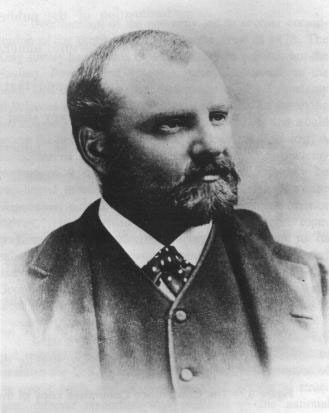
Clarence Rivers King (January 6, 1842 – December 24, 1901) was an American geologist, mountaineer, and author. He was the first director of the United States Geological Survey from 1879 to 1881. Nominated by Republican President Rutherford B. Hayes, King was noted for his exploration of the Sierra Nevada mountain range.
Clarence King was born on January 6, 1842, the son of James Rivers King and Florence Little King. Clarence's father was part of a family firm engaged in trade with China, which kept him away from home a great deal, and he died in 1848, so Clarence was brought up primarily by his mother. By 1848, his two sisters, named Florence King and Grace King, had died early in their lives.
Clarence developed an early interest in outdoor exploration and natural history, which was encouraged by his mother and by Reverend Dr. Roswell Park, head of the Christ Church Hall school in Pomfret, Connecticut, that Clarence attended until he was ten. He then attended schools in Boston and New Haven and, at age thirteen, was accepted to the prestigious Hartford High School. He was a good student and a versatile athlete, of short stature but unusually strong.
His mother received an income from the King family business until it met with a series of problems and dissolved in 1857. After a few years of straitened circumstances, during part of which Clarence suffered from a serious depression, his mother married George S. Howland in July 1860 and had a daughter with him named Marian Howland. Howland financed Clarence's enrollment in the Sheffield Scientific School, affiliated with Yale College, in 1860.
At Yale, King specialized in "applied chemistry" and also studied physics and geology. One inspiring teacher was James Dwight Dana, a highly regarded geologist who had participated in the United States Exploring Expedition, a scientific expedition to the South Atlantic, South Pacific and the west coasts of South and North America. At Yale, King enjoyed many sports, as he was a skilled athlete, but rowing was his main passion. He joined the rowing team at the university, and eventually became its captain. The Undine team competed on a four-man rowing boat, with King at the stroke oar. King later graduated with a Ph.B. in July 1862. That summer, he and several friends borrowed one of Yale's rowboats for a trip along the shores of Lake Champlain and a series of Canadian rivers, then returned to New Haven for the fall regatta.
In October 1862, on a visit to the home of his former professor, George Jarvis Brush, King heard Brush read aloud a letter he had received from William Henry Brewer telling of an ascent of Mount Shasta in California, then believed to be the tallest mountain in the United States. King began to read more about geology, attended a lecture by Louis Agassiz, and soon wrote to Brush that he had "pretty much made up my mind to be a geologist if I can get work in that direction". He was also fascinated by descriptions of the Alps by John Tyndall and John Ruskin.[citation needed]
In late 1862 or early 1863, King moved to New York City to share an apartment with James Terry Gardiner, a close friend from high school and college (who spelled his last name Gardner at the time). They associated with a group of American artists, writers and architects who were admirers of Ruskin. In February 1863, King became one of the founders, along with John William Hill, Clarence Cook and others, of the Ruskinian Association for the Advancement of Truth in Art, an American group similar to the Pre-Raphaelite Brotherhood, and was elected its first secretary. But he was anxious to see the mountains of the American West, and his friend Gardiner was miserable in law school.
As Gardiner and King started to quickly plan for the journey, their final destination being San Francisco, another friend named William Hyde became interested and decided to join them. They met in April 1863 in Niagara, New York, and boarded a train. On the train King met the Speers family and entertained the Speers children while they traveled to St. Joseph, Missouri. The Speers, grateful for King's help with entertaining their children, invited King, Gardiner, and Hyde to join their wagon party. The three men would be provided food as long as they helped care for the livestock that the Speers were bringing.
Clarence King
Clarence Rivers King (January 6, 1842 – December 24, 1901) was an American geologist, mountaineer, and author. He was the first director of the United States Geological Survey from 1879 to 1881. Nominated by Republican President Rutherford B. Hayes, King was noted for his exploration of the Sierra Nevada mountain range.
Clarence King was born on January 6, 1842, the son of James Rivers King and Florence Little King. Clarence's father was part of a family firm engaged in trade with China, which kept him away from home a great deal, and he died in 1848, so Clarence was brought up primarily by his mother. By 1848, his two sisters, named Florence King and Grace King, had died early in their lives.
Clarence developed an early interest in outdoor exploration and natural history, which was encouraged by his mother and by Reverend Dr. Roswell Park, head of the Christ Church Hall school in Pomfret, Connecticut, that Clarence attended until he was ten. He then attended schools in Boston and New Haven and, at age thirteen, was accepted to the prestigious Hartford High School. He was a good student and a versatile athlete, of short stature but unusually strong.
His mother received an income from the King family business until it met with a series of problems and dissolved in 1857. After a few years of straitened circumstances, during part of which Clarence suffered from a serious depression, his mother married George S. Howland in July 1860 and had a daughter with him named Marian Howland. Howland financed Clarence's enrollment in the Sheffield Scientific School, affiliated with Yale College, in 1860.
At Yale, King specialized in "applied chemistry" and also studied physics and geology. One inspiring teacher was James Dwight Dana, a highly regarded geologist who had participated in the United States Exploring Expedition, a scientific expedition to the South Atlantic, South Pacific and the west coasts of South and North America. At Yale, King enjoyed many sports, as he was a skilled athlete, but rowing was his main passion. He joined the rowing team at the university, and eventually became its captain. The Undine team competed on a four-man rowing boat, with King at the stroke oar. King later graduated with a Ph.B. in July 1862. That summer, he and several friends borrowed one of Yale's rowboats for a trip along the shores of Lake Champlain and a series of Canadian rivers, then returned to New Haven for the fall regatta.
In October 1862, on a visit to the home of his former professor, George Jarvis Brush, King heard Brush read aloud a letter he had received from William Henry Brewer telling of an ascent of Mount Shasta in California, then believed to be the tallest mountain in the United States. King began to read more about geology, attended a lecture by Louis Agassiz, and soon wrote to Brush that he had "pretty much made up my mind to be a geologist if I can get work in that direction". He was also fascinated by descriptions of the Alps by John Tyndall and John Ruskin.[citation needed]
In late 1862 or early 1863, King moved to New York City to share an apartment with James Terry Gardiner, a close friend from high school and college (who spelled his last name Gardner at the time). They associated with a group of American artists, writers and architects who were admirers of Ruskin. In February 1863, King became one of the founders, along with John William Hill, Clarence Cook and others, of the Ruskinian Association for the Advancement of Truth in Art, an American group similar to the Pre-Raphaelite Brotherhood, and was elected its first secretary. But he was anxious to see the mountains of the American West, and his friend Gardiner was miserable in law school.
As Gardiner and King started to quickly plan for the journey, their final destination being San Francisco, another friend named William Hyde became interested and decided to join them. They met in April 1863 in Niagara, New York, and boarded a train. On the train King met the Speers family and entertained the Speers children while they traveled to St. Joseph, Missouri. The Speers, grateful for King's help with entertaining their children, invited King, Gardiner, and Hyde to join their wagon party. The three men would be provided food as long as they helped care for the livestock that the Speers were bringing.
Recent media
Recent media