



Community hub
Recent from talks
Knowledge base stats:
Talk channels stats:
Members stats:
Claude Choules
Claude Stanley Choules (/ʃuːlz/; 3 March 1901 – 5 May 2011) was a British-born military serviceman from Pershore, Worcestershire, who at the time of his death was the oldest combat veteran of the First World War. He served with the Royal Navy from 1915 until 1926. After having emigrated to Australia he served with the Royal Australian Navy, from 1926 until 1956, as a chief petty officer and was a naturalised Australian citizen. He was the last surviving military witness to the scuttling of the German fleet in Scapa Flow in 1919 and the last surviving veteran to have served in both world wars. At the time of his death, he was the third-oldest verified military veteran in the world and the oldest known living man in Australia. He was the seventh-oldest living man in the world. Choules became the oldest man born in the United Kingdom following the death of Stanley Lucas on 21 June 2010. Choules died at the age of 110 years and 63 days. He had been the oldest British-born man; following his death, that honour went to the Reverend Reginald Dean. In December 2011, the landing ship HMAS Choules was named after him, only the second Royal Australian Navy vessel named after a sailor.
Claude Choules was born in Bridge Street, Pershore, Worcestershire, on 3 March 1901 and raised in the nearby village of Wyre Piddle. The son of Harry and Madeline (née Winn, known as Madge), Claude was one of seven children, although two died in early childhood. The surviving siblings were Douglas (born 1893), Henry Leslie (known as Leslie, born 1894), Phyllis (born 1899) and Madge Gwendoline (known as Gwendoline, born 1904). His mother left home when Claude was five, returning to the stage as an actress, and he and his older brothers were raised by his father. At the time of his mother's departure from the family, Claude was told that she had died and he never saw her again. His older sister Phyllis lived with the family of a paternal uncle, while his younger sister Gwendoline was adopted by the family of a paternal aunt, who lived in Pewsey, Wiltshire. Claude and his older brothers went to Pershore National Boys' School, though Douglas and Les emigrated to Western Australia in 1911.
Choules was 13 on the outbreak of the First World War, and the family received letters from Douglas and Leslie who had joined the Australian Imperial Force and landed at Anzac Cove during the Gallipoli Campaign. Choules was able to leave school when he turned 14, at which point he attempted to enlist in the army as a bugler boy but was rejected as he was too young.
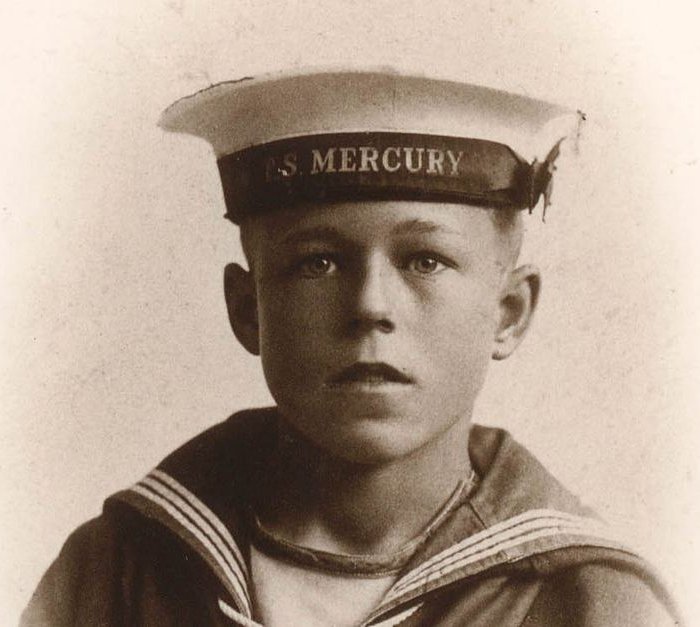
Choules's father then arranged for him to train to join the navy instead, and in April 1915, at age 14, he joined the nautical training ship TS Mercury.
This training ship was moored on the River Hamble, near Southampton, Hampshire, and had a dormitory ship called HMS President that had previously been HMS Gannet. The commander of the Mercury training site was the cricketer C. B. Fry, and Choules's time there included trips to Netley Hospital as part of the Mercury's dancing team. The examinations taken by Choules following his training on the Mercury qualified him to attend the advanced class on the naval training ship HMS Impregnable situated at the Devonport naval base in Plymouth. Choules transferred there on 10 October 1916, for what was to be the final stage of his training before joining the Royal Navy's Grand Fleet.
On 20 October 1917 Choules joined the battleship Revenge, which was the flagship of the First Battle Squadron stationed at Scapa Flow in the Orkney Islands. While serving aboard, Choules saw action against German zeppelins, and witnessed the surrender of the German Imperial Navy at the Firth of Forth in 1918, ten days after the Armistice, as well as witnessing the scuttling of the German fleet in Scapa Flow.
In 1926, along with 11 other Royal Navy senior sailors, Choules travelled to Australia on loan as an instructor at Flinders Naval Depot. He travelled aboard Diogenes on a six-week voyage from London to Melbourne, and it was on this voyage that he met his future wife Ethel Wildgoose, who was travelling to Australia to work for the Victoria League. Choules decided to transfer permanently to the Royal Australian Navy (RAN) after sampling and agreeing with the Australian way of life.
He took his discharge from the RAN in 1931, but remained in the reserves and rejoined the RAN in 1932 as a chief petty officer torpedo and anti-submarine instructor. He never returned to England after leaving.
Hub AI
Claude Choules AI simulator
(@Claude Choules_simulator)
Claude Choules
Claude Stanley Choules (/ʃuːlz/; 3 March 1901 – 5 May 2011) was a British-born military serviceman from Pershore, Worcestershire, who at the time of his death was the oldest combat veteran of the First World War. He served with the Royal Navy from 1915 until 1926. After having emigrated to Australia he served with the Royal Australian Navy, from 1926 until 1956, as a chief petty officer and was a naturalised Australian citizen. He was the last surviving military witness to the scuttling of the German fleet in Scapa Flow in 1919 and the last surviving veteran to have served in both world wars. At the time of his death, he was the third-oldest verified military veteran in the world and the oldest known living man in Australia. He was the seventh-oldest living man in the world. Choules became the oldest man born in the United Kingdom following the death of Stanley Lucas on 21 June 2010. Choules died at the age of 110 years and 63 days. He had been the oldest British-born man; following his death, that honour went to the Reverend Reginald Dean. In December 2011, the landing ship HMAS Choules was named after him, only the second Royal Australian Navy vessel named after a sailor.
Claude Choules was born in Bridge Street, Pershore, Worcestershire, on 3 March 1901 and raised in the nearby village of Wyre Piddle. The son of Harry and Madeline (née Winn, known as Madge), Claude was one of seven children, although two died in early childhood. The surviving siblings were Douglas (born 1893), Henry Leslie (known as Leslie, born 1894), Phyllis (born 1899) and Madge Gwendoline (known as Gwendoline, born 1904). His mother left home when Claude was five, returning to the stage as an actress, and he and his older brothers were raised by his father. At the time of his mother's departure from the family, Claude was told that she had died and he never saw her again. His older sister Phyllis lived with the family of a paternal uncle, while his younger sister Gwendoline was adopted by the family of a paternal aunt, who lived in Pewsey, Wiltshire. Claude and his older brothers went to Pershore National Boys' School, though Douglas and Les emigrated to Western Australia in 1911.
Choules was 13 on the outbreak of the First World War, and the family received letters from Douglas and Leslie who had joined the Australian Imperial Force and landed at Anzac Cove during the Gallipoli Campaign. Choules was able to leave school when he turned 14, at which point he attempted to enlist in the army as a bugler boy but was rejected as he was too young.
Choules's father then arranged for him to train to join the navy instead, and in April 1915, at age 14, he joined the nautical training ship TS Mercury.
This training ship was moored on the River Hamble, near Southampton, Hampshire, and had a dormitory ship called HMS President that had previously been HMS Gannet. The commander of the Mercury training site was the cricketer C. B. Fry, and Choules's time there included trips to Netley Hospital as part of the Mercury's dancing team. The examinations taken by Choules following his training on the Mercury qualified him to attend the advanced class on the naval training ship HMS Impregnable situated at the Devonport naval base in Plymouth. Choules transferred there on 10 October 1916, for what was to be the final stage of his training before joining the Royal Navy's Grand Fleet.
On 20 October 1917 Choules joined the battleship Revenge, which was the flagship of the First Battle Squadron stationed at Scapa Flow in the Orkney Islands. While serving aboard, Choules saw action against German zeppelins, and witnessed the surrender of the German Imperial Navy at the Firth of Forth in 1918, ten days after the Armistice, as well as witnessing the scuttling of the German fleet in Scapa Flow.
In 1926, along with 11 other Royal Navy senior sailors, Choules travelled to Australia on loan as an instructor at Flinders Naval Depot. He travelled aboard Diogenes on a six-week voyage from London to Melbourne, and it was on this voyage that he met his future wife Ethel Wildgoose, who was travelling to Australia to work for the Victoria League. Choules decided to transfer permanently to the Royal Australian Navy (RAN) after sampling and agreeing with the Australian way of life.
He took his discharge from the RAN in 1931, but remained in the reserves and rejoined the RAN in 1932 as a chief petty officer torpedo and anti-submarine instructor. He never returned to England after leaving.