
Recent from talks
Claude Montefiore
Knowledge base stats:
Talk channels stats:
Members stats:
Claude Montefiore
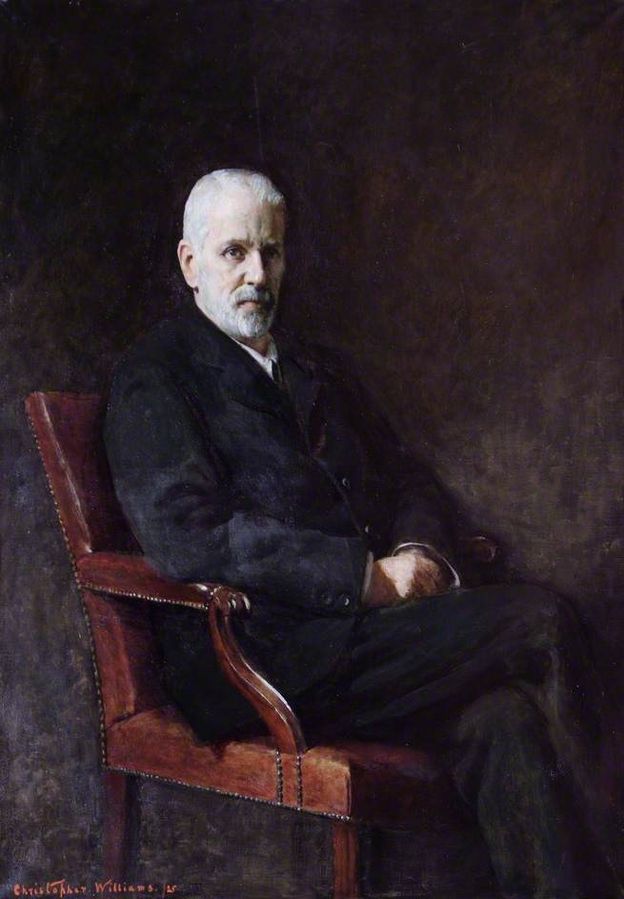
Claude Joseph Goldsmid Montefiore, also Goldsmid–Montefiore or just Goldsmid Montefiore (1858–1938) was the intellectual founder of Anglo-Liberal Judaism and the founding president of the World Union for Progressive Judaism, a scholar of the Hebrew Bible, rabbinic literature and New Testament. He was a significant figure in the contexts of modern Jewish religious thought, Jewish-Christian relations, and Anglo-Jewish socio-politics, and educator. Montefiore was President of the Anglo-Jewish Association and an influential anti-Zionist leader, who co-founded the anti-Zionist League of British Jews in 1917.
Claude Montefiore was born in London on 6 June 1858, the youngest son of Nathaniel Montefiore and Emma Goldsmid. He had two sisters, Alice Julia and Charlotte Rosalind and one brother, Leonard. He was the great-nephew of Sir Moses Montefiore.
Montefiore's first wife was Therese Alice Schorstein, who had been a student at Girton College, Cambridge. She died in 1889 and, two years later, he endowed a prize in her memory – the Therese Montefiore Memorial Prize. Their son was Leonard G. Montefiore. Montefiore remarried at the West London Synagogue on 24 July 1902. His second wife was Florence Fyfe Brereton Ward, daughter of Richard James Ward, and a Vice-Mistress at Girton, having started there as Librarian.
Claude Montefiore died at his home in Marylebone on 9 July 1938.
Part of Montefiore's childhood was spent at his family's Coldeast estate in Sarisbury Green, Hampshire.
He was educated at Balliol College, Oxford, where he obtained a first-class honours degree in the classical final examination, and where he came under the influence of Benjamin Jowett and T. H. Green. Intended originally for the ministry of the West London Synagogue, he studied theology in Berlin, but finding himself unable to sympathise with the arrest of the Reform Movement, he devoted himself instead to scholarly and philanthropic pursuits. He nevertheless continued to be a spiritual teacher and preacher, though in a lay capacity, and published a volume of sermons, in conjunction with Israel Abrahams, entitled Aspects of Judaism (London, 1894). In 1886, he was selected by the Hibbert Trustees to deliver their course of lectures for 1892 ("The Origin of Religion as Illustrated by the Ancient Hebrews"). In these lectures, Montefiore made a permanent contribution to the science of theology. In 1896, he published the first volume of his Bible for Home Reading, forming a commentary on the Bible with moral reflections from the standpoint of the "higher criticism"; the second volume appeared in 1899. In 1888 Montefiore founded and edited, in conjunction with Israel Abrahams, the Jewish Quarterly Review, a journal that stood on the very highest level of contemporary Jewish scholarship, and in which numerous contributions from his pen have appeared.
Among Jewish religious leaders, Montefiore was unusual for the time and energy he devoted to the study of Christianity. He provoked considerable controversy for what was perceived by many to be an overly sympathetic attitude towards Jesus and Paul of Tarsus. Inter alia, he wrote a two-volume commentary on the Synoptic gospels in the early part of the twentieth century, What A Jew Thinks about Jesus, published in 1935, and Judaism and St. Paul (1914).
He assisted Rev. Simeon Singer in preparing the standard Anglo-Jewish prayer book. This was acknowledged in the original preface, but his name was removed from the preface of the second edition.
Hub AI
Claude Montefiore AI simulator
(@Claude Montefiore_simulator)
Claude Montefiore
Claude Joseph Goldsmid Montefiore, also Goldsmid–Montefiore or just Goldsmid Montefiore (1858–1938) was the intellectual founder of Anglo-Liberal Judaism and the founding president of the World Union for Progressive Judaism, a scholar of the Hebrew Bible, rabbinic literature and New Testament. He was a significant figure in the contexts of modern Jewish religious thought, Jewish-Christian relations, and Anglo-Jewish socio-politics, and educator. Montefiore was President of the Anglo-Jewish Association and an influential anti-Zionist leader, who co-founded the anti-Zionist League of British Jews in 1917.
Claude Montefiore was born in London on 6 June 1858, the youngest son of Nathaniel Montefiore and Emma Goldsmid. He had two sisters, Alice Julia and Charlotte Rosalind and one brother, Leonard. He was the great-nephew of Sir Moses Montefiore.
Montefiore's first wife was Therese Alice Schorstein, who had been a student at Girton College, Cambridge. She died in 1889 and, two years later, he endowed a prize in her memory – the Therese Montefiore Memorial Prize. Their son was Leonard G. Montefiore. Montefiore remarried at the West London Synagogue on 24 July 1902. His second wife was Florence Fyfe Brereton Ward, daughter of Richard James Ward, and a Vice-Mistress at Girton, having started there as Librarian.
Claude Montefiore died at his home in Marylebone on 9 July 1938.
Part of Montefiore's childhood was spent at his family's Coldeast estate in Sarisbury Green, Hampshire.
He was educated at Balliol College, Oxford, where he obtained a first-class honours degree in the classical final examination, and where he came under the influence of Benjamin Jowett and T. H. Green. Intended originally for the ministry of the West London Synagogue, he studied theology in Berlin, but finding himself unable to sympathise with the arrest of the Reform Movement, he devoted himself instead to scholarly and philanthropic pursuits. He nevertheless continued to be a spiritual teacher and preacher, though in a lay capacity, and published a volume of sermons, in conjunction with Israel Abrahams, entitled Aspects of Judaism (London, 1894). In 1886, he was selected by the Hibbert Trustees to deliver their course of lectures for 1892 ("The Origin of Religion as Illustrated by the Ancient Hebrews"). In these lectures, Montefiore made a permanent contribution to the science of theology. In 1896, he published the first volume of his Bible for Home Reading, forming a commentary on the Bible with moral reflections from the standpoint of the "higher criticism"; the second volume appeared in 1899. In 1888 Montefiore founded and edited, in conjunction with Israel Abrahams, the Jewish Quarterly Review, a journal that stood on the very highest level of contemporary Jewish scholarship, and in which numerous contributions from his pen have appeared.
Among Jewish religious leaders, Montefiore was unusual for the time and energy he devoted to the study of Christianity. He provoked considerable controversy for what was perceived by many to be an overly sympathetic attitude towards Jesus and Paul of Tarsus. Inter alia, he wrote a two-volume commentary on the Synoptic gospels in the early part of the twentieth century, What A Jew Thinks about Jesus, published in 1935, and Judaism and St. Paul (1914).
He assisted Rev. Simeon Singer in preparing the standard Anglo-Jewish prayer book. This was acknowledged in the original preface, but his name was removed from the preface of the second edition.
Recent media