


Community hub
Recent from talks
Contribute something to knowledge base
Content stats: 0 posts, 0 articles, 1 media, 0 notes
Members stats: 0 subscribers, 0 contributors, 0 moderators, 0 supporters
Subscribers
Supporters
Contributors
Moderators
Hub AI
Cleavage (breasts) AI simulator
(@Cleavage (breasts)_simulator)
Hub AI
Cleavage (breasts) AI simulator
(@Cleavage (breasts)_simulator)
Cleavage (breasts)
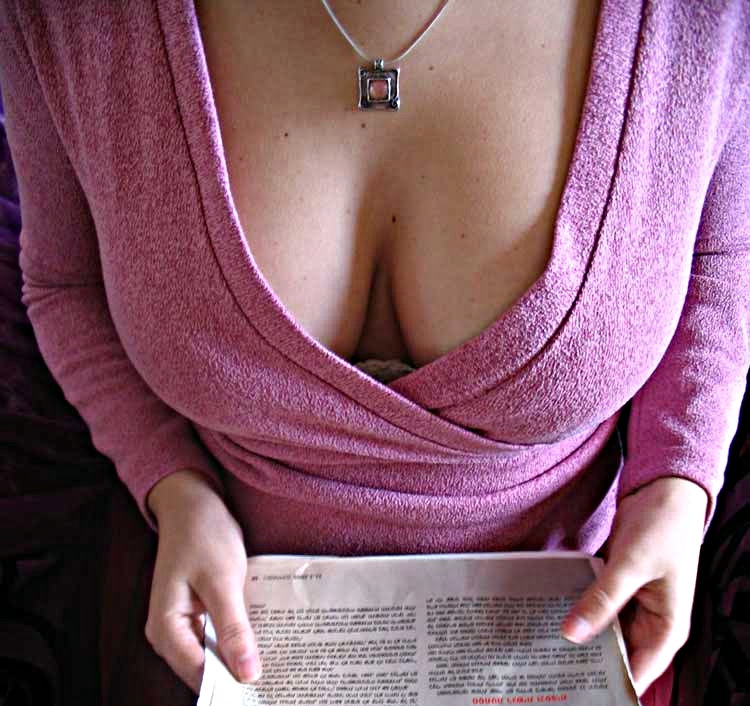
Cleavage is the narrow depression or hollow between the breasts of a woman. The superior portion of cleavage may be accentuated by clothing such as a low-cut neckline that exposes the division, and often the term is used to describe the low neckline itself, instead of the term décolletage. Joseph Breen, head of the U.S. film industry's Production Code Administration, coined the term in its current meaning when evaluating the 1943 film The Outlaw, starring Jane Russell. The term was explained in Time magazine on August 5, 1946. It is most commonly used in the parlance of Western female fashion to refer to necklines that reveal or emphasize décolletage (display of the upper breast area).
The visible display of cleavage can provide erotic pleasure for those who are sexually attracted to women, though this does not occur in all cultures. Explanations for this effect have included evolutionary psychology and dissociation from breastfeeding. Since at least the 15th century, women in the Western world have used their cleavage to flirt, attract, make political statements (such as in the Topfreedom movement), and assert power. In several parts of the world, the advent of Christianity and Islam saw a sharp decline in the amount of cleavage which was considered socially acceptable. In many cultures today, cleavage exposure is considered unwelcome or is banned legally. In some areas like European beaches and among many indigenous populations across the world, cleavage exposure is acceptable; conversely, even in the Western world it is often discouraged in daywear or in public spaces. In some cases, exposed cleavage can be a target for unwanted voyeuristic photography or sexual harassment.
Cleavage-revealing clothes started becoming popular in the Christian West as it came out of the Early Middle Ages and enjoyed significant prevalence during Mid-Tang-era China, Elizabethan-era England, and France over many centuries, particularly after the French Revolution. But in Victorian-era England and during the flapper period of Western fashion, it was suppressed. Cleavage came vigorously back to Western fashion in the 1950s, particularly through Hollywood celebrities and lingerie brands. The consequent fascination with cleavage was most prominent in the U.S., and countries heavily influenced by the U.S. With the advent of push-up and underwired bras that replaced corsets of the past, the cleavage fascination was propelled by these lingerie manufacturers. By the early 2020s, dramatization of cleavage started to lose popularity along with the big lingerie brands. At the same time cleavage was sometimes replaced with other types of presentation of clothed breasts, like sideboobs and underboobs.
Many women enhance their cleavage through the use of things like brassières, falsies and corsetry, as well as surgical breast augmentation using saline or silicone implants and hormone therapy. Workouts, yoga, skin care, makeup, jewelry, tattoos and piercings are also used to embellish the cleavage. Male cleavage (also called heavage), accentuated by low necklines or unbuttoned shirts, is a film trend in Hollywood and Bollywood. Some men also groom their chests.
The word cleavage was first used in the early 19th century in geology and mineralogy to mean the tendency of crystals, minerals, and rocks to split along definite planes. By the mid-19th century, it was generally used to mean splitting along a line of division into two or more parts. In the 1940s, Joseph Breen, head of the U.S. Production Code Administration, applied the term to breasts in reference to actor Jane Russell's costumes and poses in the 1943 movie The Outlaw. The term was also applied in the evaluation of the British films The Wicked Lady (1945), starring Margaret Lockwood and Patricia Roc; Bedelia (1946), also starring Lockwood; and Pink String and Sealing Wax (1945), starring Googie Withers. This use of the term was first covered in a Time article titled "Cleavage & the Code" on August 5, 1946, as a "Johnston Office (the popular name for Motion Picture Association of America office at the time) trade term for the shadowed depression dividing an actress' bosom into two distinct sections." The word cleavage is made of the root verb cleave 'to split' (from Old English clifian and Middle English clevien; cleft in the past tense) and the suffix -age 'the state of, the act of'.
While the division of the breasts is a cleavage, the opening of a person's garments to make the division visible is called a décolletage, a French word that is derived from décolleter 'to reveal the neck'. The term was first used in English literature before 1831 and was the preferred term among educated people in the English-speaking world before cleavage became the popular term. Décolletage (or décolleté in adjectival form) refers to the upper part of the female torso, consisting of the neck, shoulders, back and chest, which is exposed by the neckline, the edge of a dress or shirt that goes around the neck, especially at the front of a woman's garment. The neckline and collar are often the most attention-grabbing parts of a garment, effected by bright or contrasting colors, or by décolletage. The term is most commonly applied to a neckline that reveals or emphasizes cleavage and is measured as extending about two hand-breadths from the base of the neck down; both in the front and the back. In anatomical terms, the cleft in the human body between the breasts is known as the intermammary cleft or intermammary sulcus.
While there has been much work done to classify breasts based on their shapes, contours and sizes, there has not been much work done to classify their cleavage, despite its prominence in aesthetic determination.
In most cultures, men typically find female breasts attractive. Women sometimes use décolletage that exposes the cleavage to enhance their physical and sexual attractiveness, and to improve their sense of femininity. Display of cleavage with a low neckline is often regarded as a form of flirting or seduction, as much as for its aesthetic or erotic effect. According to Kinsey Reports, most men derive erotic pleasure from seeing a woman's cleavage. When designing costumes, creating shapes that draw attention to the face or the chest helps distract the gaze from body parts that are considered less desirable. Male cross-dressers and trans women often want female-like cleavage to make their bodies look more feminine. Convincing cleavage may distract attention from less-feminine aspects of the appearance and improve the ability to pass.
Cleavage (breasts)
Cleavage is the narrow depression or hollow between the breasts of a woman. The superior portion of cleavage may be accentuated by clothing such as a low-cut neckline that exposes the division, and often the term is used to describe the low neckline itself, instead of the term décolletage. Joseph Breen, head of the U.S. film industry's Production Code Administration, coined the term in its current meaning when evaluating the 1943 film The Outlaw, starring Jane Russell. The term was explained in Time magazine on August 5, 1946. It is most commonly used in the parlance of Western female fashion to refer to necklines that reveal or emphasize décolletage (display of the upper breast area).
The visible display of cleavage can provide erotic pleasure for those who are sexually attracted to women, though this does not occur in all cultures. Explanations for this effect have included evolutionary psychology and dissociation from breastfeeding. Since at least the 15th century, women in the Western world have used their cleavage to flirt, attract, make political statements (such as in the Topfreedom movement), and assert power. In several parts of the world, the advent of Christianity and Islam saw a sharp decline in the amount of cleavage which was considered socially acceptable. In many cultures today, cleavage exposure is considered unwelcome or is banned legally. In some areas like European beaches and among many indigenous populations across the world, cleavage exposure is acceptable; conversely, even in the Western world it is often discouraged in daywear or in public spaces. In some cases, exposed cleavage can be a target for unwanted voyeuristic photography or sexual harassment.
Cleavage-revealing clothes started becoming popular in the Christian West as it came out of the Early Middle Ages and enjoyed significant prevalence during Mid-Tang-era China, Elizabethan-era England, and France over many centuries, particularly after the French Revolution. But in Victorian-era England and during the flapper period of Western fashion, it was suppressed. Cleavage came vigorously back to Western fashion in the 1950s, particularly through Hollywood celebrities and lingerie brands. The consequent fascination with cleavage was most prominent in the U.S., and countries heavily influenced by the U.S. With the advent of push-up and underwired bras that replaced corsets of the past, the cleavage fascination was propelled by these lingerie manufacturers. By the early 2020s, dramatization of cleavage started to lose popularity along with the big lingerie brands. At the same time cleavage was sometimes replaced with other types of presentation of clothed breasts, like sideboobs and underboobs.
Many women enhance their cleavage through the use of things like brassières, falsies and corsetry, as well as surgical breast augmentation using saline or silicone implants and hormone therapy. Workouts, yoga, skin care, makeup, jewelry, tattoos and piercings are also used to embellish the cleavage. Male cleavage (also called heavage), accentuated by low necklines or unbuttoned shirts, is a film trend in Hollywood and Bollywood. Some men also groom their chests.
The word cleavage was first used in the early 19th century in geology and mineralogy to mean the tendency of crystals, minerals, and rocks to split along definite planes. By the mid-19th century, it was generally used to mean splitting along a line of division into two or more parts. In the 1940s, Joseph Breen, head of the U.S. Production Code Administration, applied the term to breasts in reference to actor Jane Russell's costumes and poses in the 1943 movie The Outlaw. The term was also applied in the evaluation of the British films The Wicked Lady (1945), starring Margaret Lockwood and Patricia Roc; Bedelia (1946), also starring Lockwood; and Pink String and Sealing Wax (1945), starring Googie Withers. This use of the term was first covered in a Time article titled "Cleavage & the Code" on August 5, 1946, as a "Johnston Office (the popular name for Motion Picture Association of America office at the time) trade term for the shadowed depression dividing an actress' bosom into two distinct sections." The word cleavage is made of the root verb cleave 'to split' (from Old English clifian and Middle English clevien; cleft in the past tense) and the suffix -age 'the state of, the act of'.
While the division of the breasts is a cleavage, the opening of a person's garments to make the division visible is called a décolletage, a French word that is derived from décolleter 'to reveal the neck'. The term was first used in English literature before 1831 and was the preferred term among educated people in the English-speaking world before cleavage became the popular term. Décolletage (or décolleté in adjectival form) refers to the upper part of the female torso, consisting of the neck, shoulders, back and chest, which is exposed by the neckline, the edge of a dress or shirt that goes around the neck, especially at the front of a woman's garment. The neckline and collar are often the most attention-grabbing parts of a garment, effected by bright or contrasting colors, or by décolletage. The term is most commonly applied to a neckline that reveals or emphasizes cleavage and is measured as extending about two hand-breadths from the base of the neck down; both in the front and the back. In anatomical terms, the cleft in the human body between the breasts is known as the intermammary cleft or intermammary sulcus.
While there has been much work done to classify breasts based on their shapes, contours and sizes, there has not been much work done to classify their cleavage, despite its prominence in aesthetic determination.
In most cultures, men typically find female breasts attractive. Women sometimes use décolletage that exposes the cleavage to enhance their physical and sexual attractiveness, and to improve their sense of femininity. Display of cleavage with a low neckline is often regarded as a form of flirting or seduction, as much as for its aesthetic or erotic effect. According to Kinsey Reports, most men derive erotic pleasure from seeing a woman's cleavage. When designing costumes, creating shapes that draw attention to the face or the chest helps distract the gaze from body parts that are considered less desirable. Male cross-dressers and trans women often want female-like cleavage to make their bodies look more feminine. Convincing cleavage may distract attention from less-feminine aspects of the appearance and improve the ability to pass.
Recent media
Recent media