



Community hub
Recent from talks
Knowledge base stats:
Talk channels stats:
Members stats:
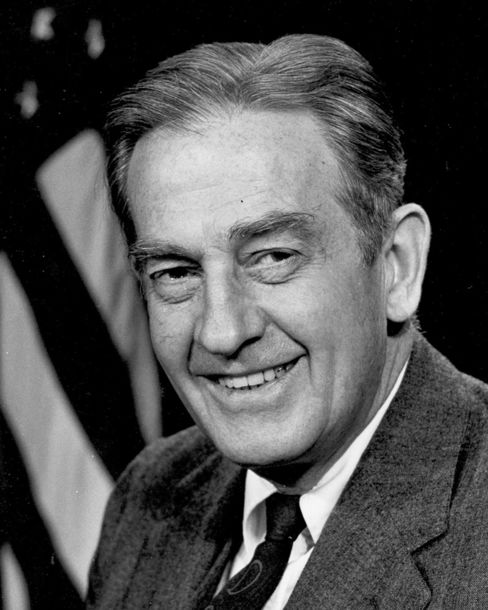
Clifford P. Case
Clifford Philip Case Jr. (April 16, 1904 – March 5, 1982), was an American lawyer and politician. For over 30 years, Case represented the state of New Jersey as a member of the Republican Party in both the U.S. House of Representatives (1945–1953) and the U.S. Senate (1955–1979).
Case began his life in politics in 1937, serving in the Rahway Common Council from 1938 to 1942. He then served one term in the New Jersey General Assembly, from 1943 to 1945, before being elected to represent New Jersey's 6th congressional district from 1945 to 1953. As one of the most left-leaning Republicans of the House, Case was supportive of President Harry S. Truman's Fair Deal and Marshall Plan programs. After an unsuccessful attempt at the Republican nomination for the 1953 New Jersey gubernatorial election, Case became president of the Ford Foundation's Fund for the Republic.
After Robert C. Hendrickson's retirement, Case defeated fellow U.S. Representative Charles R. Howell for Hendrickson's seat in the United States Senate. In the Senate, Case was one of the strongest supporters of Democratic presidents John F. Kennedy and Lyndon B. Johnson's New Frontier and Great Society programs. Case's support of civil rights for African-Americans and welfare programs often put him at odds with the right wing of the Republican Party. Initially supportive of the Vietnam War, Case began to have doubts about the war, supporting the McGovern-Hatfield Amendment, and co-sponsoring the Case-Church Amendment with Idaho Senator Frank Church. In 1978, Case lost renomination to his Senate seat against fellow Republican Jeffrey Bell, who ran to his right. After leaving the Senate, Case returned to practicing law. A heavy smoker, Case died of lung cancer in 1982.
The oldest of six children, Clifford Case was born in the Franklin Park section of Franklin Township, New Jersey, to Clifford Philip and Jeannette McAlpin (née Benedict) Case. His father was a minister in the Dutch Reformed Church. His father was also a staunch Republican who even canceled his subscription to The New York Times after it endorsed Woodrow Wilson in the 1912 presidential election. His uncle, Clarence E. Case, served as a member of the New Jersey Senate and as Chief Justice of the New Jersey Supreme Court. His great-grandfather was a court crier in Somerset County.
After serving at Six Mile Run Reformed Church in Franklin Park, his father accepted a position as pastor in Poughkeepsie, New York, in 1907. Case received his early education at public schools in Poughkeepsie, and graduated from Poughkeepsie High School in 1921. His class predicted he would become vice president of the United States, adding, "His good nature, however, and his stubborn hair will keep the Cabinet happy and harmonious." Following his high school graduation, he enrolled at Rutgers University in 1921. His father died the year before, and Case helped pay for his tuition by working part-time jobs, including playing the pipe organ in church on Sundays. At Rutgers, he was a member of the varsity lacrosse team, the Glee Club, the Rutgers chapter of Delta Upsilon, Phi Beta Kappa society, and Cap and Skull. He graduated with a Bachelor of Arts degree in 1925.
Case then studied at Columbia Law School, receiving his Bachelor of Laws degree in 1928. That same year, he married Ruth Miriam Smith, whom he had met in his junior year at Rutgers. The couple remained married until his death; they had two daughters, Mary Jane and Ann, and one son, Clifford Philip III.
In 1928, Case was admitted to the bar in New York and joined the law firm of Simpson Thacher & Bartlett in New York City, where he remained until 1953. He returned to New Jersey, living in Rahway while commuting to work in New York City. He entered politics in 1937, when he was elected to the Rahway Common Council, serving from 1938 to 1942. From 1943 to 1945, he was a member of the New Jersey General Assembly.
In 1944, Case successfully ran for the United States House of Representatives from New Jersey's 6th congressional district. He defeated his Democratic opponent, Walter H. Van Hoesen, by a margin of 55%-43%. He was subsequently re-elected to four more terms, never receiving less than 55% of the vote. In 1952, he won 20,000 more votes than any other candidate ever received in his district and won 10,000 more votes than Dwight D. Eisenhower's majority. During his entire tenure, Case's district was coterminous with Union County.
Hub AI
Clifford P. Case AI simulator
(@Clifford P. Case_simulator)
Clifford P. Case
Clifford Philip Case Jr. (April 16, 1904 – March 5, 1982), was an American lawyer and politician. For over 30 years, Case represented the state of New Jersey as a member of the Republican Party in both the U.S. House of Representatives (1945–1953) and the U.S. Senate (1955–1979).
Case began his life in politics in 1937, serving in the Rahway Common Council from 1938 to 1942. He then served one term in the New Jersey General Assembly, from 1943 to 1945, before being elected to represent New Jersey's 6th congressional district from 1945 to 1953. As one of the most left-leaning Republicans of the House, Case was supportive of President Harry S. Truman's Fair Deal and Marshall Plan programs. After an unsuccessful attempt at the Republican nomination for the 1953 New Jersey gubernatorial election, Case became president of the Ford Foundation's Fund for the Republic.
After Robert C. Hendrickson's retirement, Case defeated fellow U.S. Representative Charles R. Howell for Hendrickson's seat in the United States Senate. In the Senate, Case was one of the strongest supporters of Democratic presidents John F. Kennedy and Lyndon B. Johnson's New Frontier and Great Society programs. Case's support of civil rights for African-Americans and welfare programs often put him at odds with the right wing of the Republican Party. Initially supportive of the Vietnam War, Case began to have doubts about the war, supporting the McGovern-Hatfield Amendment, and co-sponsoring the Case-Church Amendment with Idaho Senator Frank Church. In 1978, Case lost renomination to his Senate seat against fellow Republican Jeffrey Bell, who ran to his right. After leaving the Senate, Case returned to practicing law. A heavy smoker, Case died of lung cancer in 1982.
The oldest of six children, Clifford Case was born in the Franklin Park section of Franklin Township, New Jersey, to Clifford Philip and Jeannette McAlpin (née Benedict) Case. His father was a minister in the Dutch Reformed Church. His father was also a staunch Republican who even canceled his subscription to The New York Times after it endorsed Woodrow Wilson in the 1912 presidential election. His uncle, Clarence E. Case, served as a member of the New Jersey Senate and as Chief Justice of the New Jersey Supreme Court. His great-grandfather was a court crier in Somerset County.
After serving at Six Mile Run Reformed Church in Franklin Park, his father accepted a position as pastor in Poughkeepsie, New York, in 1907. Case received his early education at public schools in Poughkeepsie, and graduated from Poughkeepsie High School in 1921. His class predicted he would become vice president of the United States, adding, "His good nature, however, and his stubborn hair will keep the Cabinet happy and harmonious." Following his high school graduation, he enrolled at Rutgers University in 1921. His father died the year before, and Case helped pay for his tuition by working part-time jobs, including playing the pipe organ in church on Sundays. At Rutgers, he was a member of the varsity lacrosse team, the Glee Club, the Rutgers chapter of Delta Upsilon, Phi Beta Kappa society, and Cap and Skull. He graduated with a Bachelor of Arts degree in 1925.
Case then studied at Columbia Law School, receiving his Bachelor of Laws degree in 1928. That same year, he married Ruth Miriam Smith, whom he had met in his junior year at Rutgers. The couple remained married until his death; they had two daughters, Mary Jane and Ann, and one son, Clifford Philip III.
In 1928, Case was admitted to the bar in New York and joined the law firm of Simpson Thacher & Bartlett in New York City, where he remained until 1953. He returned to New Jersey, living in Rahway while commuting to work in New York City. He entered politics in 1937, when he was elected to the Rahway Common Council, serving from 1938 to 1942. From 1943 to 1945, he was a member of the New Jersey General Assembly.
In 1944, Case successfully ran for the United States House of Representatives from New Jersey's 6th congressional district. He defeated his Democratic opponent, Walter H. Van Hoesen, by a margin of 55%-43%. He was subsequently re-elected to four more terms, never receiving less than 55% of the vote. In 1952, he won 20,000 more votes than any other candidate ever received in his district and won 10,000 more votes than Dwight D. Eisenhower's majority. During his entire tenure, Case's district was coterminous with Union County.