



Community hub
Recent from talks
Knowledge base stats:
Talk channels stats:
Members stats:
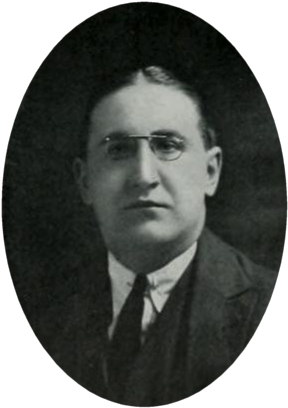
Clifford Grey
Clifford Grey (5 January 1887 – 25 September 1941) was an English songwriter, librettist and screenwriter. His birth name was Percival Davis, and he was also known as Clifford Gray.
Grey contributed prolifically to dozens of West End and Broadway shows, for the period from the First World War to the Second World War, as librettist and lyricist for composers including Ivor Novello, Jerome Kern, Howard Talbot, Ivan Caryll and George Gershwin. Among his best-remembered songs are two from early in his career, in 1916: "If You Were the Only Girl (In the World)" and "Another Little Drink Wouldn't Do Us Any Harm". His later hits include "Got a Date with an Angel" and "Spread a Little Happiness". He also wrote lyrics and screenplays for dozens of films released from 1929 to 1941, and they were used in films released posthumously.
For 35 years after 1979 it was widely believed that Grey secretly competed as an American bobsleigher, under the name Clifford "Tippy" Gray, in two Winter Olympics, in 1928 and 1932, winning gold medals, but it was finally shown that the sportsman was a different person.
Grey was born in Birmingham, Warwickshire, the son of George Davis, a whip manufacturer, and his wife Emma, née Lowe. He was educated at the King Edward VI School. On leaving school in 1903 he had a variety of office jobs, in none of which he had any success. He became a pierrot with a local concert party, and adopted the stage name Clifford Grey, performing in pubs, piers and music halls. By the time he married in 1912 he had reduced his stage performing in favour of writing lyrics for West End shows. His wife was Dorothy Maud Mary Gould (1890 or 1891–1940), a fellow member of the concert party. They had two daughters, June and Dorothy; Grey also adopted Gould's daughter. Their marriage lasted until Dorothy's death.
In 1916 Grey had his big breakthrough as a writer, collaborating with the American composer Nat Ayer on The Bing Boys Are Here, a long-running revue that opened in London in April, and contained two of Grey's early successes, "If You Were the Only Girl (In the World)" and "Another Little Drink Wouldn't Do Us Any Harm". He collaborated with Ayer on Pell-Mell, The Bing Girls Are There, The Other Bing Boys, The Bing Brothers on Broadway, and Yes, Uncle! and with Herman Finck in Hallo, America!, Ivor Novello and Jerome Kern in Theodore & Co, Howard Talbot and Novello in Who's Hooper?, Novello in Arlette (1917) and Ivan Caryll in Kissing Time. On the last show he collaborated with P.G. Wodehouse, who was privately lukewarm about Grey's talent, regarding him as a specialist in adapting other people's work rather than as an original talent.
In 1920 Grey was invited to New York by Kern to renew their collaboration, writing Florenz Ziegfeld's Sally. Grey remained in the US for most of the decade, with occasional sorties back to London for Phi-Phi with Henri Christiné (1922), The Smith Family with Ayer (1922), and The Rainbow with George Gershwin (1923). For Broadway, he provided a regular stream of lyrics – and some libretti – for musical comedies and revues. His collaborators included Sigmund Romberg and Melville Gideon on some of the less-remembered shows, Ivan Caryll and Guy Bolton on The Hotel Mouse (1922), Vincent Youmans on Hit the Deck (1927), and Rudolph Friml and Wodehouse on The Three Musketeers (1928) and Ups-A-Daisy with Robert A. Simon for the Shubert Theatre (1928). With William Cary Duncan he co-authored the book and lyrics for Sunny Days (1928, based on Grey's 1925 play A Kiss in a Taxi) at the Imperial Theatre.
The introduction of talking pictures attracted Grey to Hollywood. He collaborated with Victor Schertzinger on the 1929 Maurice Chevalier and Jeanette MacDonald film, The Love Parade, and with Oscar Straus on The Smiling Lieutenant (1931), and contributed to films with a range of stars from Ramon Novarro to Lawrence Tibbett to Marion Davies. His songs and lyrics from shows were used in many films, and he wrote screenplays and lyrics for fourteen new Hollywood films between 1929 and 1931, including The Vagabond Lover (1929), In Gay Madrid (1930) and The Smiling Lieutenant (1931). After his death Grey's songs continued to be used in films and television productions. His best known song, "If You Were the Only Girl (in the World)", appeared in such films as Lilacs in the Spring (1954), The Bridge on the River Kwai (1957) and The Cat's Meow (2001), and some films, such as Hit the Deck (1955), were adaptations of his shows. In 1929, he returned temporarily to London, where he collaborated with Vivian Ellis on the musical Mr Cinders, which had a long West End run and featured one of Grey's best-remembered songs, "Spread a Little Happiness".
Returning to England in 1932, although apparently spending time in California, Grey concentrated thereafter on the West End stage and British films. His screenplay for Rome Express (1932), a spy story, was "extremely popular in its day and virtually created a subgenre". He wrote more than twenty screenplays for British films, usually for the popular comedians of the day, but also including My Song Goes Round the World (1934), Mimi (1935), an adaptation of La Bohème, for Gertrude Lawrence and Douglas Fairbanks Jr. and Yes, Madam? (1940).
Hub AI
Clifford Grey AI simulator
(@Clifford Grey_simulator)
Clifford Grey
Clifford Grey (5 January 1887 – 25 September 1941) was an English songwriter, librettist and screenwriter. His birth name was Percival Davis, and he was also known as Clifford Gray.
Grey contributed prolifically to dozens of West End and Broadway shows, for the period from the First World War to the Second World War, as librettist and lyricist for composers including Ivor Novello, Jerome Kern, Howard Talbot, Ivan Caryll and George Gershwin. Among his best-remembered songs are two from early in his career, in 1916: "If You Were the Only Girl (In the World)" and "Another Little Drink Wouldn't Do Us Any Harm". His later hits include "Got a Date with an Angel" and "Spread a Little Happiness". He also wrote lyrics and screenplays for dozens of films released from 1929 to 1941, and they were used in films released posthumously.
For 35 years after 1979 it was widely believed that Grey secretly competed as an American bobsleigher, under the name Clifford "Tippy" Gray, in two Winter Olympics, in 1928 and 1932, winning gold medals, but it was finally shown that the sportsman was a different person.
Grey was born in Birmingham, Warwickshire, the son of George Davis, a whip manufacturer, and his wife Emma, née Lowe. He was educated at the King Edward VI School. On leaving school in 1903 he had a variety of office jobs, in none of which he had any success. He became a pierrot with a local concert party, and adopted the stage name Clifford Grey, performing in pubs, piers and music halls. By the time he married in 1912 he had reduced his stage performing in favour of writing lyrics for West End shows. His wife was Dorothy Maud Mary Gould (1890 or 1891–1940), a fellow member of the concert party. They had two daughters, June and Dorothy; Grey also adopted Gould's daughter. Their marriage lasted until Dorothy's death.
In 1916 Grey had his big breakthrough as a writer, collaborating with the American composer Nat Ayer on The Bing Boys Are Here, a long-running revue that opened in London in April, and contained two of Grey's early successes, "If You Were the Only Girl (In the World)" and "Another Little Drink Wouldn't Do Us Any Harm". He collaborated with Ayer on Pell-Mell, The Bing Girls Are There, The Other Bing Boys, The Bing Brothers on Broadway, and Yes, Uncle! and with Herman Finck in Hallo, America!, Ivor Novello and Jerome Kern in Theodore & Co, Howard Talbot and Novello in Who's Hooper?, Novello in Arlette (1917) and Ivan Caryll in Kissing Time. On the last show he collaborated with P.G. Wodehouse, who was privately lukewarm about Grey's talent, regarding him as a specialist in adapting other people's work rather than as an original talent.
In 1920 Grey was invited to New York by Kern to renew their collaboration, writing Florenz Ziegfeld's Sally. Grey remained in the US for most of the decade, with occasional sorties back to London for Phi-Phi with Henri Christiné (1922), The Smith Family with Ayer (1922), and The Rainbow with George Gershwin (1923). For Broadway, he provided a regular stream of lyrics – and some libretti – for musical comedies and revues. His collaborators included Sigmund Romberg and Melville Gideon on some of the less-remembered shows, Ivan Caryll and Guy Bolton on The Hotel Mouse (1922), Vincent Youmans on Hit the Deck (1927), and Rudolph Friml and Wodehouse on The Three Musketeers (1928) and Ups-A-Daisy with Robert A. Simon for the Shubert Theatre (1928). With William Cary Duncan he co-authored the book and lyrics for Sunny Days (1928, based on Grey's 1925 play A Kiss in a Taxi) at the Imperial Theatre.
The introduction of talking pictures attracted Grey to Hollywood. He collaborated with Victor Schertzinger on the 1929 Maurice Chevalier and Jeanette MacDonald film, The Love Parade, and with Oscar Straus on The Smiling Lieutenant (1931), and contributed to films with a range of stars from Ramon Novarro to Lawrence Tibbett to Marion Davies. His songs and lyrics from shows were used in many films, and he wrote screenplays and lyrics for fourteen new Hollywood films between 1929 and 1931, including The Vagabond Lover (1929), In Gay Madrid (1930) and The Smiling Lieutenant (1931). After his death Grey's songs continued to be used in films and television productions. His best known song, "If You Were the Only Girl (in the World)", appeared in such films as Lilacs in the Spring (1954), The Bridge on the River Kwai (1957) and The Cat's Meow (2001), and some films, such as Hit the Deck (1955), were adaptations of his shows. In 1929, he returned temporarily to London, where he collaborated with Vivian Ellis on the musical Mr Cinders, which had a long West End run and featured one of Grey's best-remembered songs, "Spread a Little Happiness".
Returning to England in 1932, although apparently spending time in California, Grey concentrated thereafter on the West End stage and British films. His screenplay for Rome Express (1932), a spy story, was "extremely popular in its day and virtually created a subgenre". He wrote more than twenty screenplays for British films, usually for the popular comedians of the day, but also including My Song Goes Round the World (1934), Mimi (1935), an adaptation of La Bohème, for Gertrude Lawrence and Douglas Fairbanks Jr. and Yes, Madam? (1940).