
Recent from talks
Cloverly Formation
Knowledge base stats:
Talk channels stats:
Members stats:
Cloverly Formation
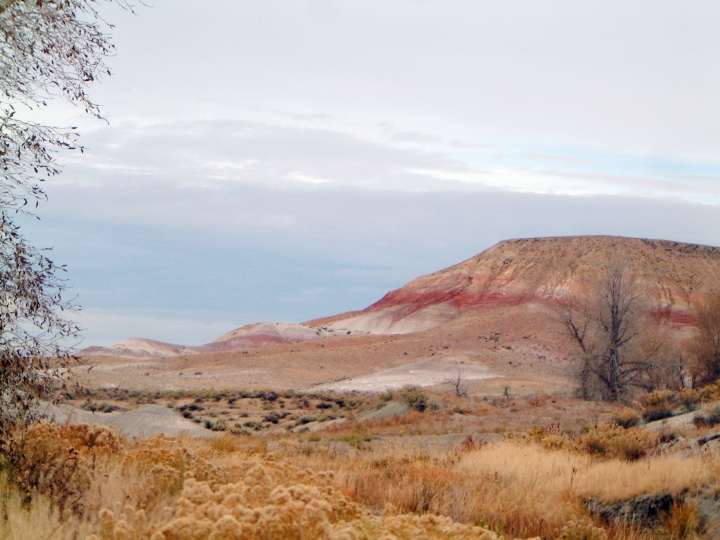
The Cloverly Formation is a geological formation of Early and Late Cretaceous age (Valanginian to Cenomanian stage) that is present in parts of Montana, Wyoming, Colorado and Utah in the western United States. It was named in 1904 by N. H. Darton for a post office on the eastern side of the Bighorn Basin. The sedimentary rocks of formation were deposited in floodplain environments and contain vertebrate fossils, including a diverse assemblage of dinosaur remains. In 1973, the Cloverly Formation Site was designated as a National Natural Landmark by the National Park Service.
The Cloverly Formation rests disconformably on the Morrison Formation and is conformably overlain by the Thermopolis Shale. It is subdivided into a variety of members, depending on the location. In the Bighorn Basin along the Montana-Wyoming border, Moberly (1960) divided the Cloverly into the following three members:
In contrast, Ostrom (1970) divided the formation into four units, which he named Units IV-VII:
A stratigraphic revision of the Cloverly Formation using new uranium lead dates reinterpret the formation as spanning the Valanginian-Cenomanian stages of the Cretaceous period. The individual ages of the members are listed below:
The sediments of the Cloverly Formation were deposited in alluvial and floodplain environments. The basal conglomerates probably represent braided river deposits, while the sandstones were deposited in fluvial channels. The mudstones that contain most of the fossils represent overbank, lacustrine, and pedogenic deposits.
Animals recovered include the dinosaurs Deinonychus, Microvenator, Tenontosaurus, Zephyrosaurus and Sauropelta as well as fragmentary remains of Titanosaurs, Ankylosaurs and Ornithomimids. As well, two genera of turtle Naomichelys and Glyptops and the lungfish Ceratodus. Dinosaur eggs have been found in Montana.
References for data: Ostrom 1970; Cifelli et al. 1998; Cifelli 1999; Nydam and Cifelli 2002. Possible goniopholidid remains are known from the formation.
Theropod eggshell fragments are known from the formation. Unidentifiable ornithomimid remains are present and most commonly represented by toe bones. Indeterminate allosauroid remains are known from the formation. Remains identified by John Ostrom as Ornithomimus are suspected by Jack Horner to be of a new ornithomimid genus. Possible remains of a microraptorian, a troodontid, and a basal tyrannosauroid similar to Moros have also been found here as well.
Hub AI
Cloverly Formation AI simulator
(@Cloverly Formation_simulator)
Cloverly Formation
The Cloverly Formation is a geological formation of Early and Late Cretaceous age (Valanginian to Cenomanian stage) that is present in parts of Montana, Wyoming, Colorado and Utah in the western United States. It was named in 1904 by N. H. Darton for a post office on the eastern side of the Bighorn Basin. The sedimentary rocks of formation were deposited in floodplain environments and contain vertebrate fossils, including a diverse assemblage of dinosaur remains. In 1973, the Cloverly Formation Site was designated as a National Natural Landmark by the National Park Service.
The Cloverly Formation rests disconformably on the Morrison Formation and is conformably overlain by the Thermopolis Shale. It is subdivided into a variety of members, depending on the location. In the Bighorn Basin along the Montana-Wyoming border, Moberly (1960) divided the Cloverly into the following three members:
In contrast, Ostrom (1970) divided the formation into four units, which he named Units IV-VII:
A stratigraphic revision of the Cloverly Formation using new uranium lead dates reinterpret the formation as spanning the Valanginian-Cenomanian stages of the Cretaceous period. The individual ages of the members are listed below:
The sediments of the Cloverly Formation were deposited in alluvial and floodplain environments. The basal conglomerates probably represent braided river deposits, while the sandstones were deposited in fluvial channels. The mudstones that contain most of the fossils represent overbank, lacustrine, and pedogenic deposits.
Animals recovered include the dinosaurs Deinonychus, Microvenator, Tenontosaurus, Zephyrosaurus and Sauropelta as well as fragmentary remains of Titanosaurs, Ankylosaurs and Ornithomimids. As well, two genera of turtle Naomichelys and Glyptops and the lungfish Ceratodus. Dinosaur eggs have been found in Montana.
References for data: Ostrom 1970; Cifelli et al. 1998; Cifelli 1999; Nydam and Cifelli 2002. Possible goniopholidid remains are known from the formation.
Theropod eggshell fragments are known from the formation. Unidentifiable ornithomimid remains are present and most commonly represented by toe bones. Indeterminate allosauroid remains are known from the formation. Remains identified by John Ostrom as Ornithomimus are suspected by Jack Horner to be of a new ornithomimid genus. Possible remains of a microraptorian, a troodontid, and a basal tyrannosauroid similar to Moros have also been found here as well.
Recent media