
Recent from talks
Coat of plates
Knowledge base stats:
Talk channels stats:
Members stats:
Coat of plates
A coat of plates is a form of segmented torso armour consisting of overlapping metal plates riveted inside a cloth or leather garment. The coat of plates is considered part of the era of transitional armour and was normally worn as part of a full knightly harness. The coat saw its introduction in Europe among the warring elite in the 1180s or 1220s and was well established by the 1250s. It was in very common usage by the 1290s. By the 1350s it was universal among infantry militias as well. After about 1340, the plates covering the chest were combined to form an early breastplate, replacing the coat of plates. After 1370, the breastplate covered the entire torso. Different forms of the coat of plates, known as the brigandine and jack of plates, remained in use until the late 16th century.
The plates number anywhere from eight or ten to the hundreds depending on their size. The plates overlap, usually enough to guarantee full coverage even when moving around and fighting. The coat of plates is similar to several other armours such as lamellar, scale and brigandine. Unlike scale armour which has plates on the outside or splint armour in which plates can be inside or outside, a coat of plates has the plates on the inside of the foundation garment. It is generally distinguished from a brigandine by having larger plates, though there may be no distinction in some examples.
In his 2013 PhD thesis, Mathias Goll suggests that this kind of armour made from several segments held together via leather or fabric only should be described as “segmented-armour”, in this case in the subtype "torso-front-and-back-segmented".
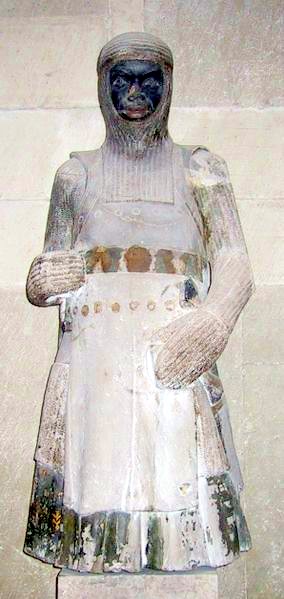
Goll suggests a later dating of the saint Maurice statue in Magdeburg, possibly moving its production from the second half of the 13th century to the first half of the 14th century. He interprets the backplates of his coat of arms as vertically arranged lames held in place beneath leather or fabric by horizontal rows of rivets, like on some of the Visby plates.
One of the best resources about coats of plates are the mass graves from the Battle of Visby. The Visby coats of plates display between 8 and some 600 separate plates fastened to their backings. The mass grave from a battle in 1361 has yielded a tremendous number of intact armour finds including 24 distinct patterns of coat of plates style armour. Many of these were older styles similar to the armoured surcoat discussed below.
The early coat of plates is often seen with trailing cloth in front and back, such as seen on the 1250 St. Maurice coat. These have been described as metal plates riveted to the inside of a surcoat. There is debate regarding whether the plates inside the armoured surcoat overlapped, but the armour is otherwise similar. Quantitatively speaking, however, most of the known evidence for coat of plates and brigandines dated from 14th and 15th centuries actually displays arrangements of overlapping plates; and although there are exceptions to this rule, they are not many.
Presumably, the development and the later popularization of this type of harness is directly linked to the knightly needs for better protection against cavalry lances, since the former protection of mail and aketon made the horseman vulnerable only to such strikes. In Mike Loades' military documentary called Weapons that Made Britain: Armor, the older set of mail harness and aketon proved itself unable to stop lance strikes at horseback charges. The addition of an authentic reproduction of coat of plates, however, provided sufficient protection against all the lance strikes, even the most powerful of them could not penetrate through the combination of padding, mail and plates, proving its effectiveness as the new cavalry protection.
The earliest use of iron plate reinforcements is recorded by Guillaume le Breton. In his Phillippidos, prince Richard - later King Richard I of England - is described wearing a ferro fabricata patena at a jousting tournament in 1188. Such iron breastplate, like later references of early developments of such harness, was described being worn under the hauberk, thus not being visible when all the armor was properly worn. The evidence that such new harness is first mentioned at jousting reinforces the assumption that such developments were designed to protect against lance strikes.
Hub AI
Coat of plates AI simulator
(@Coat of plates_simulator)
Coat of plates
A coat of plates is a form of segmented torso armour consisting of overlapping metal plates riveted inside a cloth or leather garment. The coat of plates is considered part of the era of transitional armour and was normally worn as part of a full knightly harness. The coat saw its introduction in Europe among the warring elite in the 1180s or 1220s and was well established by the 1250s. It was in very common usage by the 1290s. By the 1350s it was universal among infantry militias as well. After about 1340, the plates covering the chest were combined to form an early breastplate, replacing the coat of plates. After 1370, the breastplate covered the entire torso. Different forms of the coat of plates, known as the brigandine and jack of plates, remained in use until the late 16th century.
The plates number anywhere from eight or ten to the hundreds depending on their size. The plates overlap, usually enough to guarantee full coverage even when moving around and fighting. The coat of plates is similar to several other armours such as lamellar, scale and brigandine. Unlike scale armour which has plates on the outside or splint armour in which plates can be inside or outside, a coat of plates has the plates on the inside of the foundation garment. It is generally distinguished from a brigandine by having larger plates, though there may be no distinction in some examples.
In his 2013 PhD thesis, Mathias Goll suggests that this kind of armour made from several segments held together via leather or fabric only should be described as “segmented-armour”, in this case in the subtype "torso-front-and-back-segmented".
Goll suggests a later dating of the saint Maurice statue in Magdeburg, possibly moving its production from the second half of the 13th century to the first half of the 14th century. He interprets the backplates of his coat of arms as vertically arranged lames held in place beneath leather or fabric by horizontal rows of rivets, like on some of the Visby plates.
One of the best resources about coats of plates are the mass graves from the Battle of Visby. The Visby coats of plates display between 8 and some 600 separate plates fastened to their backings. The mass grave from a battle in 1361 has yielded a tremendous number of intact armour finds including 24 distinct patterns of coat of plates style armour. Many of these were older styles similar to the armoured surcoat discussed below.
The early coat of plates is often seen with trailing cloth in front and back, such as seen on the 1250 St. Maurice coat. These have been described as metal plates riveted to the inside of a surcoat. There is debate regarding whether the plates inside the armoured surcoat overlapped, but the armour is otherwise similar. Quantitatively speaking, however, most of the known evidence for coat of plates and brigandines dated from 14th and 15th centuries actually displays arrangements of overlapping plates; and although there are exceptions to this rule, they are not many.
Presumably, the development and the later popularization of this type of harness is directly linked to the knightly needs for better protection against cavalry lances, since the former protection of mail and aketon made the horseman vulnerable only to such strikes. In Mike Loades' military documentary called Weapons that Made Britain: Armor, the older set of mail harness and aketon proved itself unable to stop lance strikes at horseback charges. The addition of an authentic reproduction of coat of plates, however, provided sufficient protection against all the lance strikes, even the most powerful of them could not penetrate through the combination of padding, mail and plates, proving its effectiveness as the new cavalry protection.
The earliest use of iron plate reinforcements is recorded by Guillaume le Breton. In his Phillippidos, prince Richard - later King Richard I of England - is described wearing a ferro fabricata patena at a jousting tournament in 1188. Such iron breastplate, like later references of early developments of such harness, was described being worn under the hauberk, thus not being visible when all the armor was properly worn. The evidence that such new harness is first mentioned at jousting reinforces the assumption that such developments were designed to protect against lance strikes.
Recent media