
Recent from talks
Coil winding technology
Knowledge base stats:
Talk channels stats:
Members stats:
Coil winding technology
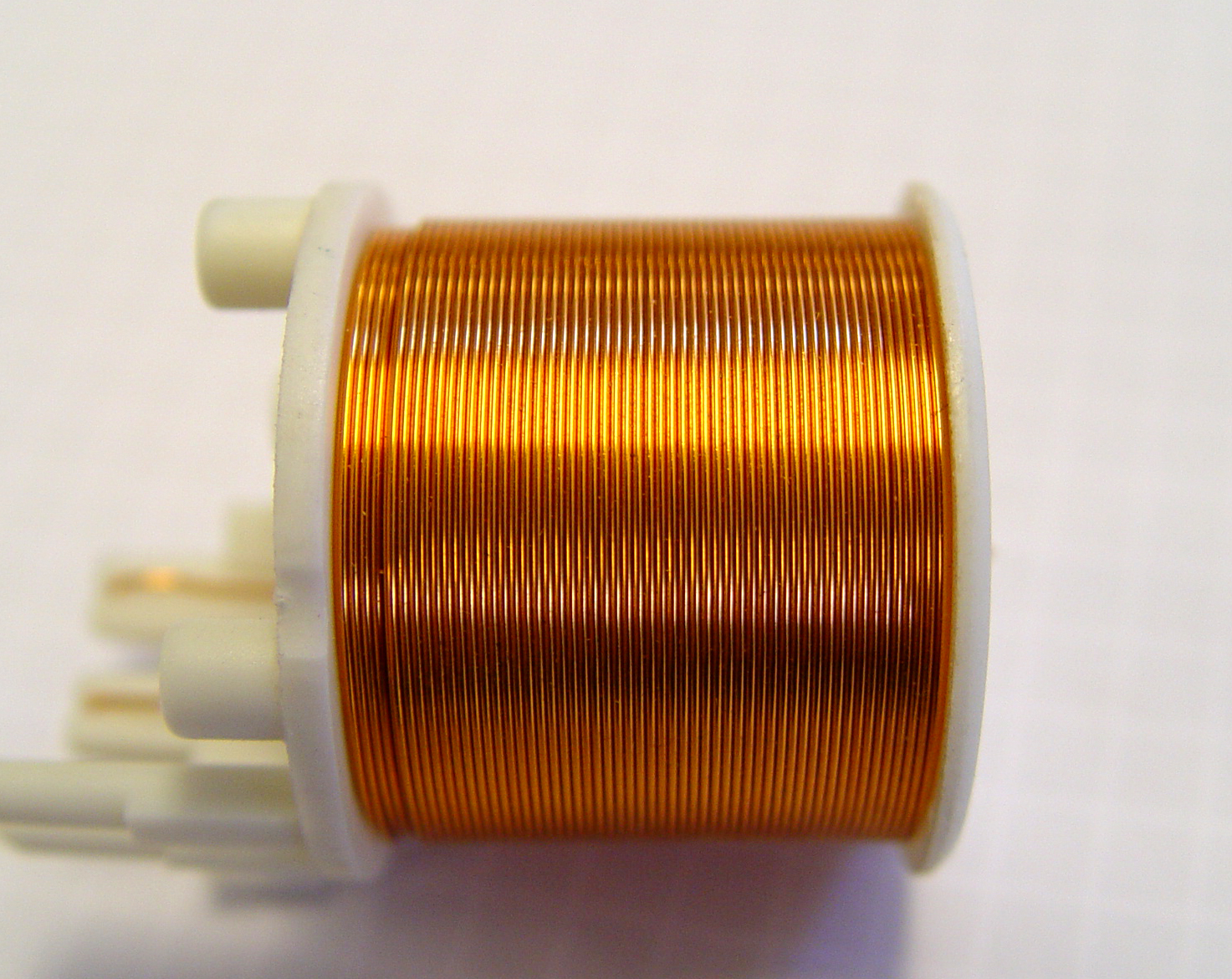
In electrical engineering, coil winding is the manufacture of electromagnetic coils. Coils are used as components of circuits, and to provide the magnetic field of motors, transformers, and generators, and in the manufacture of loudspeakers and microphones. The shape and dimensions of a winding are designed to fulfill the particular purpose. Parameters such as inductance, Q factor, insulation strength, and strength of the desired magnetic field greatly influence the design of coil windings. Coil winding can be structured into several groups regarding the type and geometry of the wound coil. Mass production of electromagnetic coils relies on automated machinery.
This article is about coil winding technology and much of the article is specific to electric machines. This section provides definitions of terms used later in the article.
An electric motor or generator consists of a cylinderical rotating part called the rotor and a stationary part called the stator. For maximum efficiency, a gap between the rotor and stator is kept as small as possible, typically 1–2 mm.
For most AC generators, the stator acts as the armature, and the rotor acts as the field magnet.
The rotor and stator are both assembled from a stack of laminations stamped from sheets of electrical steel, typically 1 mm thick. The laminations are designed to minimize eddy currents, which would otherwise waste energy and create heat.
Windings consist of insulated conductors, which pass through slots cut along the axis of the stator. The spaces between the slots are called teeth. The shape of the slots and teeth depends upon the design of the electric machine. Slots may be rectangular, they may taper, they may be circular, etc.
The wider part at the end of the tooth is called a tooth shoe.
Some authors use the term "groove" to mean the same thing as slot. In this article, the term groove refers to the indentations between parallel conductors in a layer of a winding.
Hub AI
Coil winding technology AI simulator
(@Coil winding technology_simulator)
Coil winding technology
In electrical engineering, coil winding is the manufacture of electromagnetic coils. Coils are used as components of circuits, and to provide the magnetic field of motors, transformers, and generators, and in the manufacture of loudspeakers and microphones. The shape and dimensions of a winding are designed to fulfill the particular purpose. Parameters such as inductance, Q factor, insulation strength, and strength of the desired magnetic field greatly influence the design of coil windings. Coil winding can be structured into several groups regarding the type and geometry of the wound coil. Mass production of electromagnetic coils relies on automated machinery.
This article is about coil winding technology and much of the article is specific to electric machines. This section provides definitions of terms used later in the article.
An electric motor or generator consists of a cylinderical rotating part called the rotor and a stationary part called the stator. For maximum efficiency, a gap between the rotor and stator is kept as small as possible, typically 1–2 mm.
For most AC generators, the stator acts as the armature, and the rotor acts as the field magnet.
The rotor and stator are both assembled from a stack of laminations stamped from sheets of electrical steel, typically 1 mm thick. The laminations are designed to minimize eddy currents, which would otherwise waste energy and create heat.
Windings consist of insulated conductors, which pass through slots cut along the axis of the stator. The spaces between the slots are called teeth. The shape of the slots and teeth depends upon the design of the electric machine. Slots may be rectangular, they may taper, they may be circular, etc.
The wider part at the end of the tooth is called a tooth shoe.
Some authors use the term "groove" to mean the same thing as slot. In this article, the term groove refers to the indentations between parallel conductors in a layer of a winding.
Recent media