



Community hub
Recent from talks
Knowledge base stats:
Talk channels stats:
Members stats:
Colchester Garrison
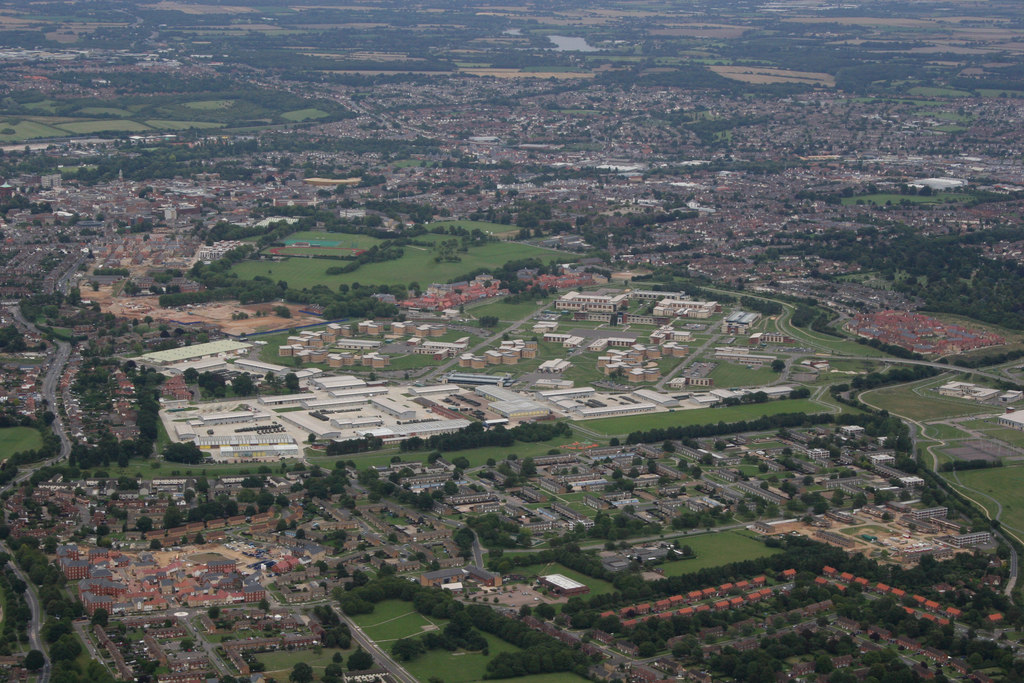
Colchester Garrison is a major garrison located in Colchester in the county of Essex, eastern England. It has been an important military base since the Roman era. The first permanent military garrison in Colchester was established by Legio XX Valeria Victrix in AD 43, following the Roman conquest of Britain. Colchester was an important garrison town during the Napoleonic Wars and throughout the Victorian era. During the First World War, several battalions of Kitchener's Army were trained there.
Today, Colchester Garrison is most known for being home to the Parachute Regiment, known as "The Paras".
Colchester Garrison played an eminent role during the Napoleonic Wars. The troops were originally billeted in local inns and houses. After petitioning from the borough council, new infantry barracks were built in 1794. By 1800 additional infantry, artillery, and cavalry barracks had been built in the area bounded by Barrack Street to the north, Wimpole Road to the west, and Port Lane to the east. In 1805 the barracks were home to 7,000 officers and men. After the Napoleonic Wars the barracks were reduced. The sale of the older barracks and the freehold site on which they stood started in 1817 and was completed in 1840. The Army retained 14 acres (57,000 m2) and an infantry barracks for 851 officers and men. Much of the old barracks land was developed as the "New Town" area of Colchester during the Victorian era. The south wing of the Military Hospital was purchased by Rev Jefferson and seven other subscribers and rebuilt on a plot of land on Lexden Road as the Essex and County Hospital.
Colchester Garrison experienced rapid expansion during the Crimean War. Between 1855 and 1856 wooden infantry barracks for 5,000 troops were erected on Ordnance Field. The government purchased 167-acre (0.68 km2) Middlewick Farm for use as a training area and a rifle range in 1857. Middlewick Ranges were still in use by the garrison until the land was sold in 2024.
In 1856 10,000 troops of the British German Legion were billeted in the infantry barracks and in tented encampments on Barrack Field. The British German Legion was raised in 1854 as a foreign corps in British service (similar to the Kings German Legion during the Napoleonic Wars). The Legion was raised for service in the Crimean War, under the provisions of the Enlistment of Foreigners Act 1854. The Legion did not see active service although a large number of legionaries went to the Crimea where they mostly died of fever without seeing the battlefields. The Legion was disbanded in Colchester in 1857, but the majority of the remaining personnel went to the Eastern Cape as part of the Kaffraria Settlement. Because preference was given to those who were married or had a fiancée, men without German wives or fiancees married, in great numbers, Colchester girls. There are dozens of marriages recorded in the Colchester Churches, mainly St Botolph's, and the remainder were married at the Garrison Church. This establishment was later found not to be registered for marriages, and so the affected couples were declared wed by Act of the Cape Parliament in 1858.
8th (Cyclist) Battalion, Essex Regiment, (TF) was based in Colchester at the outbreak of war in August 1914. It was redesignated 1/8th Battalion as additional "Terrier" battalions were raised from volunteers during the early months of the war. The 2/8th and 3/8th Battalions were formed in September 1914 and April 1915 respectively. All three Terrier battalions were allocated to home defence and remained in the United Kingdom throughout the war.
The Essex Yeomanry (EY), a cavalry regiment, was mobilised at the outbreak of war. The regiment joined the Royal Horse Guards and the 10th Royal Hussars in France in November 1914 as part of 8th Cavalry Brigade, 3rd Cavalry Division. During the war, 2nd and 3rd line regiments were raised in Colchester to reinforce the 1st line. 2 EY served as garrison troops in Ireland during the war, 3 EY was absorbed into the 4th Reserve Cavalry Regiment in 1917.
On 14 March 1918, Essex Yeomanry left 8th Cavalry Brigade to become a cyclist unit, then to form a machine gun battalion with the Bedfordshire Yeomanry. The German spring offensive forestalled this plan, and the regiment was remounted on 28 March and sent to the 1st Cavalry Division. From 4 April it was split up with a squadron joining each regiment in 1st Cavalry Brigade (2nd Dragoon Guards, 5th Dragoon Guards and 11th Hussars).
Hub AI
Colchester Garrison AI simulator
(@Colchester Garrison_simulator)
Colchester Garrison
Colchester Garrison is a major garrison located in Colchester in the county of Essex, eastern England. It has been an important military base since the Roman era. The first permanent military garrison in Colchester was established by Legio XX Valeria Victrix in AD 43, following the Roman conquest of Britain. Colchester was an important garrison town during the Napoleonic Wars and throughout the Victorian era. During the First World War, several battalions of Kitchener's Army were trained there.
Today, Colchester Garrison is most known for being home to the Parachute Regiment, known as "The Paras".
Colchester Garrison played an eminent role during the Napoleonic Wars. The troops were originally billeted in local inns and houses. After petitioning from the borough council, new infantry barracks were built in 1794. By 1800 additional infantry, artillery, and cavalry barracks had been built in the area bounded by Barrack Street to the north, Wimpole Road to the west, and Port Lane to the east. In 1805 the barracks were home to 7,000 officers and men. After the Napoleonic Wars the barracks were reduced. The sale of the older barracks and the freehold site on which they stood started in 1817 and was completed in 1840. The Army retained 14 acres (57,000 m2) and an infantry barracks for 851 officers and men. Much of the old barracks land was developed as the "New Town" area of Colchester during the Victorian era. The south wing of the Military Hospital was purchased by Rev Jefferson and seven other subscribers and rebuilt on a plot of land on Lexden Road as the Essex and County Hospital.
Colchester Garrison experienced rapid expansion during the Crimean War. Between 1855 and 1856 wooden infantry barracks for 5,000 troops were erected on Ordnance Field. The government purchased 167-acre (0.68 km2) Middlewick Farm for use as a training area and a rifle range in 1857. Middlewick Ranges were still in use by the garrison until the land was sold in 2024.
In 1856 10,000 troops of the British German Legion were billeted in the infantry barracks and in tented encampments on Barrack Field. The British German Legion was raised in 1854 as a foreign corps in British service (similar to the Kings German Legion during the Napoleonic Wars). The Legion was raised for service in the Crimean War, under the provisions of the Enlistment of Foreigners Act 1854. The Legion did not see active service although a large number of legionaries went to the Crimea where they mostly died of fever without seeing the battlefields. The Legion was disbanded in Colchester in 1857, but the majority of the remaining personnel went to the Eastern Cape as part of the Kaffraria Settlement. Because preference was given to those who were married or had a fiancée, men without German wives or fiancees married, in great numbers, Colchester girls. There are dozens of marriages recorded in the Colchester Churches, mainly St Botolph's, and the remainder were married at the Garrison Church. This establishment was later found not to be registered for marriages, and so the affected couples were declared wed by Act of the Cape Parliament in 1858.
8th (Cyclist) Battalion, Essex Regiment, (TF) was based in Colchester at the outbreak of war in August 1914. It was redesignated 1/8th Battalion as additional "Terrier" battalions were raised from volunteers during the early months of the war. The 2/8th and 3/8th Battalions were formed in September 1914 and April 1915 respectively. All three Terrier battalions were allocated to home defence and remained in the United Kingdom throughout the war.
The Essex Yeomanry (EY), a cavalry regiment, was mobilised at the outbreak of war. The regiment joined the Royal Horse Guards and the 10th Royal Hussars in France in November 1914 as part of 8th Cavalry Brigade, 3rd Cavalry Division. During the war, 2nd and 3rd line regiments were raised in Colchester to reinforce the 1st line. 2 EY served as garrison troops in Ireland during the war, 3 EY was absorbed into the 4th Reserve Cavalry Regiment in 1917.
On 14 March 1918, Essex Yeomanry left 8th Cavalry Brigade to become a cyclist unit, then to form a machine gun battalion with the Bedfordshire Yeomanry. The German spring offensive forestalled this plan, and the regiment was remounted on 28 March and sent to the 1st Cavalry Division. From 4 April it was split up with a squadron joining each regiment in 1st Cavalry Brigade (2nd Dragoon Guards, 5th Dragoon Guards and 11th Hussars).