
Recent from talks
Condrusi
Knowledge base stats:
Talk channels stats:
Members stats:
Condrusi
The Condrusi were an ancient Belgic-Germanic tribe dwelling in what is now eastern Belgium during the Gallic Wars (58–50 BC) and the Roman period. Their ethnic identity remains uncertain. Caesar described them as part of the Germani Cisrhenani, but their tribal name is probably of Celtic origin. Like other Germani Cisrhenani tribes, it is possible that their old Germanic endonym came to be abandoned after a tribal reorganization, that they received their names from their Celtic neighbours, or else that they were fully or partially assimilated into Celtic culture at the time of the Roman invasion of the region in 57 BC.
They are mentioned as Condrusi by Caesar (mid-1st c. BC), and as Condurses by Orosius (early 5th century AD).
The meaning of the name Condrusi remains unclear. The prefix is most likely the Gaulish con-/com- ('with, together, as well') and the element -drūs- is also generally regarded as Celtic, although its meaning is unknown.
The Condroz region, attested as Pagus Condrustis on an inscription dated 150–160 AD, and as pagus Condrustus in medieval documents, is named after the Germanic tribe.
Whether the Condrusi actually spoke a Germanic language remains uncertain. From their tribal name, we know that they were influenced by Celtic languages.
Contemporary reports by Julius Caesar (who classify them as Germani Cisrhenani) and Tacitus (who describes the Germani Cisrhenani as the first called Germani) state that they were also heavily influenced by Germanic peoples on the east of the Rhine river.
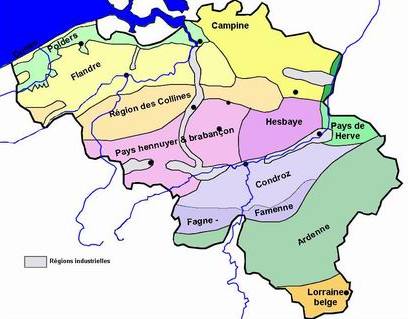
The Condrusi probably dwelt in the Condroz region, an area of foothills situated northwest of the Ardennes, south and west of the Meuse, southwest of Liège and southeast of Namur. Like the Segni, their territory was located between that of the Treveri and Eburones. At the time of Caesar's conquest of the region in the mid-1st century BC, they lived as clients of the Treveri. During the Roman period, the Pagus Condrustis was one of the subdivisions of the civitas Tungrorum, founded c. 10 BC as a Roman military base.
The oldest known definitions of the medieval pagus of Condroz also included the region of neighbouring Famenne. Contrary to the late medieval archdeaconries of Condroz and Fammene, the early medieval pagus Condrustis did not encompass the deaneries of St Remacle, Hanret, or Chimay.
Hub AI
Condrusi AI simulator
(@Condrusi_simulator)
Condrusi
The Condrusi were an ancient Belgic-Germanic tribe dwelling in what is now eastern Belgium during the Gallic Wars (58–50 BC) and the Roman period. Their ethnic identity remains uncertain. Caesar described them as part of the Germani Cisrhenani, but their tribal name is probably of Celtic origin. Like other Germani Cisrhenani tribes, it is possible that their old Germanic endonym came to be abandoned after a tribal reorganization, that they received their names from their Celtic neighbours, or else that they were fully or partially assimilated into Celtic culture at the time of the Roman invasion of the region in 57 BC.
They are mentioned as Condrusi by Caesar (mid-1st c. BC), and as Condurses by Orosius (early 5th century AD).
The meaning of the name Condrusi remains unclear. The prefix is most likely the Gaulish con-/com- ('with, together, as well') and the element -drūs- is also generally regarded as Celtic, although its meaning is unknown.
The Condroz region, attested as Pagus Condrustis on an inscription dated 150–160 AD, and as pagus Condrustus in medieval documents, is named after the Germanic tribe.
Whether the Condrusi actually spoke a Germanic language remains uncertain. From their tribal name, we know that they were influenced by Celtic languages.
Contemporary reports by Julius Caesar (who classify them as Germani Cisrhenani) and Tacitus (who describes the Germani Cisrhenani as the first called Germani) state that they were also heavily influenced by Germanic peoples on the east of the Rhine river.
The Condrusi probably dwelt in the Condroz region, an area of foothills situated northwest of the Ardennes, south and west of the Meuse, southwest of Liège and southeast of Namur. Like the Segni, their territory was located between that of the Treveri and Eburones. At the time of Caesar's conquest of the region in the mid-1st century BC, they lived as clients of the Treveri. During the Roman period, the Pagus Condrustis was one of the subdivisions of the civitas Tungrorum, founded c. 10 BC as a Roman military base.
The oldest known definitions of the medieval pagus of Condroz also included the region of neighbouring Famenne. Contrary to the late medieval archdeaconries of Condroz and Fammene, the early medieval pagus Condrustis did not encompass the deaneries of St Remacle, Hanret, or Chimay.
Recent media