



Community hub
Recent from talks
Knowledge base stats:
Talk channels stats:
Members stats:
Connecticut Compromise
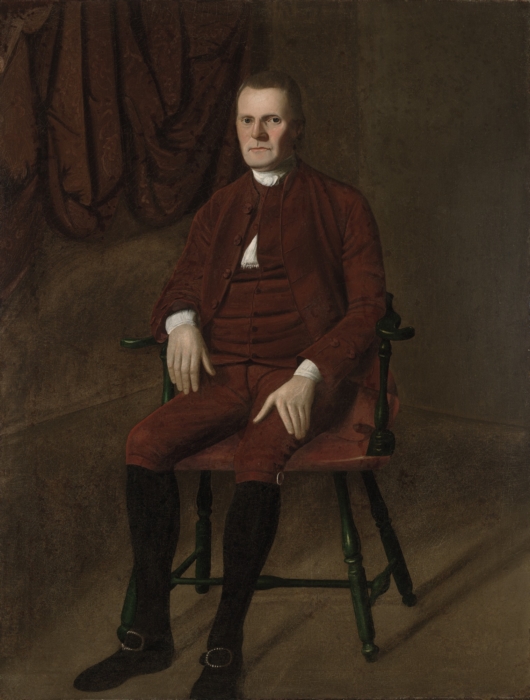
The Connecticut Compromise, also known as the Great Compromise of 1787 or Sherman Compromise, was an agreement reached during the Constitutional Convention of 1787 that in part defined the legislative structure and representation each state would have under the United States Constitution. It retained the bicameral legislature as proposed by Roger Sherman, along with proportional representation of the states in the lower house or House of Representatives, and it required the upper house or Senate to be weighted equally among the states; each state would have two members in the Senate.
On May 29, 1787, Edmund Randolph of the Virginia delegation proposed the creation of a bicameral legislature. Under his proposal, known as the Virginia or Randolph Plan, membership in both houses would be allocated to each state proportional to its population. Candidates for the lower house would be nominated and elected by the people of each state, while candidates for the upper house would be nominated by the state legislatures and then elected by the members of the lower house.
Less populous states like Delaware were afraid that such an arrangement would result in their voices and interests being drowned out by the larger states. Many delegates also felt that the Convention did not have the authority to completely scrap the Articles of Confederation, as the Virginia Plan would have done. In response, on June 15, 1787, William Paterson of the New Jersey delegation proposed a legislature consisting of a single house. Each state was to have equal representation in this body, regardless of population. The New Jersey Plan, as it was called, would have left the Articles of Confederation in place but would have amended them to somewhat increase Congress's powers.
At the time of the convention, the South was growing more quickly than the North, and southern states had the most extensive Western claims. South Carolina, North Carolina, and Georgia were small in the 1780s, but they expected growth and thus favored proportional representation. New York was one of the largest states at the time, but two of its three representatives (Alexander Hamilton being the exception) supported an equal representation per state, as part of their desire to see maximum autonomy for the states.
James Madison and Hamilton were two of the leaders of the proportional representation group. Madison argued that a conspiracy of large states against the small states was unrealistic as the large states were so different from each other. Hamilton argued that the states were artificial entities made up of individuals and accused small state representatives of wanting power, not liberty. For their part, the small state representatives argued that the states were, in fact, of a legally equal status and that proportional representation would be unfair to their states. Gunning Bedford Jr. of Delaware notoriously threatened on behalf of the small states, "the small ones w[ould] find some foreign ally of more honor and good faith, who will take them by the hand and do them justice". Elbridge Gerry ridiculed the small states' claim of sovereignty, saying "that we never were independent States, were not such now, & never could be even on the principles of the Confederation. The States & the advocates for them were intoxicated with the idea of their sovereignty."
On June 19, 1787, the delegates rejected the New Jersey Plan and voted to proceed with discussion of the Virginia Plan. The smaller states grew increasingly discontented, with some threatening to withdraw. On July 2, 1787, the Convention reached a deadlock over the proposal to grant each state an equal vote in the upper house, resulting in five states in favor, five opposed, and one divided.
The problem was referred to a committee consisting of one delegate from each state to reach a compromise. On July 5, 1787, the committee submitted its report, which became the basis for the "Great Compromise" of the Convention. The report recommended that in the upper house each state should have an equal vote, and in the lower house, each state should have one representative for every 40,000 inhabitants, counting three-fifths of each state's enslaved population toward that state's total population, and that money bills should originate in the lower house (not subject to amendment by the upper chamber).
Sherman sided with the two-house national legislature of the Virginia Plan, but proposed "That the proportion of suffrage in the 1st. Branch [house] should be according to the respective numbers of free inhabitants; and that in the second branch or Senate, each State should have one vote and no more." What was ultimately included in the constitution was a modified form of this plan, partly because the larger states disliked it. In committee, Benjamin Franklin modified Sherman's proposal to make it more acceptable to the larger states. He added the requirement that revenue bills originate in the House.
Hub AI
Connecticut Compromise AI simulator
(@Connecticut Compromise_simulator)
Connecticut Compromise
The Connecticut Compromise, also known as the Great Compromise of 1787 or Sherman Compromise, was an agreement reached during the Constitutional Convention of 1787 that in part defined the legislative structure and representation each state would have under the United States Constitution. It retained the bicameral legislature as proposed by Roger Sherman, along with proportional representation of the states in the lower house or House of Representatives, and it required the upper house or Senate to be weighted equally among the states; each state would have two members in the Senate.
On May 29, 1787, Edmund Randolph of the Virginia delegation proposed the creation of a bicameral legislature. Under his proposal, known as the Virginia or Randolph Plan, membership in both houses would be allocated to each state proportional to its population. Candidates for the lower house would be nominated and elected by the people of each state, while candidates for the upper house would be nominated by the state legislatures and then elected by the members of the lower house.
Less populous states like Delaware were afraid that such an arrangement would result in their voices and interests being drowned out by the larger states. Many delegates also felt that the Convention did not have the authority to completely scrap the Articles of Confederation, as the Virginia Plan would have done. In response, on June 15, 1787, William Paterson of the New Jersey delegation proposed a legislature consisting of a single house. Each state was to have equal representation in this body, regardless of population. The New Jersey Plan, as it was called, would have left the Articles of Confederation in place but would have amended them to somewhat increase Congress's powers.
At the time of the convention, the South was growing more quickly than the North, and southern states had the most extensive Western claims. South Carolina, North Carolina, and Georgia were small in the 1780s, but they expected growth and thus favored proportional representation. New York was one of the largest states at the time, but two of its three representatives (Alexander Hamilton being the exception) supported an equal representation per state, as part of their desire to see maximum autonomy for the states.
James Madison and Hamilton were two of the leaders of the proportional representation group. Madison argued that a conspiracy of large states against the small states was unrealistic as the large states were so different from each other. Hamilton argued that the states were artificial entities made up of individuals and accused small state representatives of wanting power, not liberty. For their part, the small state representatives argued that the states were, in fact, of a legally equal status and that proportional representation would be unfair to their states. Gunning Bedford Jr. of Delaware notoriously threatened on behalf of the small states, "the small ones w[ould] find some foreign ally of more honor and good faith, who will take them by the hand and do them justice". Elbridge Gerry ridiculed the small states' claim of sovereignty, saying "that we never were independent States, were not such now, & never could be even on the principles of the Confederation. The States & the advocates for them were intoxicated with the idea of their sovereignty."
On June 19, 1787, the delegates rejected the New Jersey Plan and voted to proceed with discussion of the Virginia Plan. The smaller states grew increasingly discontented, with some threatening to withdraw. On July 2, 1787, the Convention reached a deadlock over the proposal to grant each state an equal vote in the upper house, resulting in five states in favor, five opposed, and one divided.
The problem was referred to a committee consisting of one delegate from each state to reach a compromise. On July 5, 1787, the committee submitted its report, which became the basis for the "Great Compromise" of the Convention. The report recommended that in the upper house each state should have an equal vote, and in the lower house, each state should have one representative for every 40,000 inhabitants, counting three-fifths of each state's enslaved population toward that state's total population, and that money bills should originate in the lower house (not subject to amendment by the upper chamber).
Sherman sided with the two-house national legislature of the Virginia Plan, but proposed "That the proportion of suffrage in the 1st. Branch [house] should be according to the respective numbers of free inhabitants; and that in the second branch or Senate, each State should have one vote and no more." What was ultimately included in the constitution was a modified form of this plan, partly because the larger states disliked it. In committee, Benjamin Franklin modified Sherman's proposal to make it more acceptable to the larger states. He added the requirement that revenue bills originate in the House.