


Community hub
Recent from talks
Contribute something to knowledge base
Content stats: 0 posts, 0 articles, 1 media, 0 notes
Members stats: 0 subscribers, 0 contributors, 0 moderators, 0 supporters
Subscribers
Supporters
Contributors
Moderators
Hub AI
Constantin Gane AI simulator
(@Constantin Gane_simulator)
Hub AI
Constantin Gane AI simulator
(@Constantin Gane_simulator)
Constantin Gane
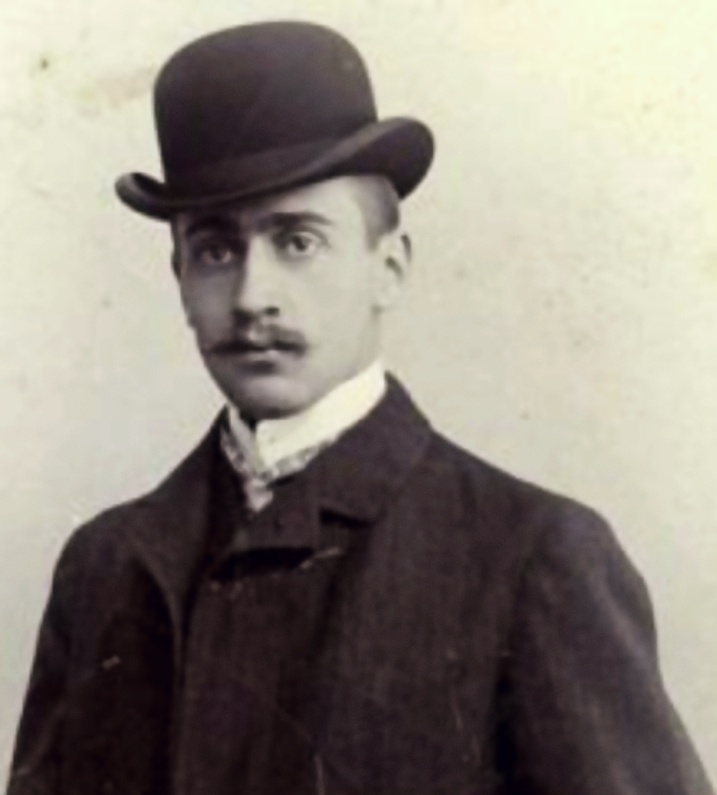
Constantin Gane (March 27, 1885 – May 13, 1962) was a Romanian novelist, amateur historian, biographer and memoirist. Born into the boyar aristocracy of Western Moldavia, he worked as a lawyer in Bucharest, achieving literary notoriety with his recollections from the Second Balkan War and the Romanian front of World War I. By the 1930s, he was primarily a writer on historical and genealogical topics, famous for his contribution to women's history. An apologist for Romanian conservatism and Junimism, Gane also completed in 1936 a biography of Petre P. Carp. He was editor at Convorbiri Literare and a columnist for Cuvântul, also putting out his own literary newspaper, Sânziana.
The late 1930s attracted Gane into fascist politics, leading him to join the Iron Guard. This in turn led to his marginalization and internment by the National Renaissance Front government, but he was allowed his freedom in 1940, when he and other Guardists joined the Front itself (restyled as "Party of the Nation"). Returning to prominence in 1940–1941, when the Guard produced its National Legionary State, Gane served as Romanian ambassador to the Kingdom of Greece. He retired from politics for the remainder of World War II, and resumed his work in literature. Again repressed following the establishment of a Romanian communist regime, he spent 13 years in confinement, ultimately dying at Aiud Prison in 1962. His work was banned by communist censors, then selectively recovered from 1969. It was revisited and republished in the post-communist decades, although interest in it remained marginal.
Born in Botoșani, Constantin was the son of Ștefan ("Ștefănică") Gane, and had an elder brother, Gheorghe or "Georges" (1883 or 1884 – August 1941), who trained as an engineer. The writer repeatedly claimed multiple descent from an old boyar family of Moldavia, the Gănești. According to genealogist Mihai Sorin Rădulescu, his only proven link to this clan was through his paternal grandmother. Through this connection, the family were related to Postelnic Matei Gane and writer-politician Nicolae Gane, and also, more distantly, to ethnographer Arthur Gorovei. The latter lived in Nicolae Gane's house at Fălticeni and assisted Constantin with genealogical research. Ștefan Gane was originally named "Gani". He also descended from boyardom, but had more recent Greek Romanian ancestry, traceable to the Phanariote period. In the 1860s, he had attended the Französisches Gymnasium in Berlin. As a minor Junimist (known to have been active in that movement's "small game" section, the caracudă), he had met and befriended the peasant raconteur Ion Creangă.
The writer's mother was Constanța née Canano, one of the last surviving members from a Moldavian family of notables. Constantin later claimed that she was a descendant of Byzantine aristocracy, a theory dismissed as self-aggrandizing by Rădulescu. He also believed that the Cananos had more distant Italian roots, against authors which suggest they were "Levantines". Genealogist Mihai Gicoveanu proposes that his take may be correct, linking Gane to another Canano family, attested at Ferrara in the 11th century; the Moldavian Cananos' patriarch was a Căminar Constantin, active in the late 17th century—though Gane claimed to have traced his maternal descent to Postelnic Constantin Ciobanul, attested around 1560. The family was attested as belonging to the rightful peerage in January 1742, following reviews by a boyar commission which included Ion Neculce. Historian Paul Cernovodeanu views the Cananos as Phanariotes—and, more specifically, as one of the 36 second-rate Phanariote boyar clans (directly below those of the Hospodars).
According to his own recollections, Constantin grew up passionate about storytelling, picking up accounts from the family cook, a senior Romani man (and former slave), and from his maternal grandmother, who was a Napoleon enthusiast. After mediocre and unruly beginnings in school, he improved himself to take first prizes, being largely motivated by books which were offered to the highest ranking graduate. He completed A. T. Laurian High School in 1903 and went on to study law in Germany, obtaining a doctorate from the University of Rostock in 1910. After returning home, he worked as a lawyer for some fifteen years, both in his native town and in the national capital Bucharest. In the early 1910s, his prose was hosted in Viața Romînească magazine.
At some point before 1915, Gane was secretary to Conservative Party politician Ioan Lahovary. In 1913, he took part as a volunteer in the Second Balkan War, destroying his literary notebooks before his departure for the front. Returning to Botoșani, in 1914 Gane was directing a literary festival honoring the national poet, Mihai Eminescu; as part of this effort, he collected memoirs from those who had been Eminescu's friends or acquaintances—including Dimitrie Anghel, Iacob Negruzzi, and A. D. Xenopol. Gane's combat experience was recorded in Amintirile unui fost holeric ("The Recollection of a Former Cholera Patient", 1914). It won Gane the Romanian Academy's Adamache Prize, which he shared with I. Dragoslav and Mihail Lungeanu. In a 1961 piece, scholar Liviu Leonte argued that all three were "outstandingly mediocre". According to Leonte, it was unjust that they won over a more gifted candidate, namely Calistrat Hogaș.
From 1916, Gane fought in the campaigns of World War I, part of the 8th Vânători Regiment stationed at Mănăstirea Cașin. In adulthood, he remained passionate about history, traveling domestically and abroad, rifling through archives and libraries, visiting museums and artistic monuments and researching oral tradition. He published prose (especially of a historical character), articles, notes and reviews, correspondence, travel accounts, plays and novel fragments in Epoca, Universul Literar, Curentul, Cele Trei Crișuri, Politica, Revista Fundațiilor Regale, Luceafărul and Flacăra, and Convorbiri Literare, serving for a while in 1926 as the latter's editor. Constantin's brother Gheorghe married the Bessarabian belle Elena Morariu-Andreevici. She was the niece of Silvestru Morariu Andrievici, Bishop of Bukovina, and the great-granddaughter of poet Constantin Stamati. This made Constantin the paternal uncle of an architect, Ștefan Radu Gane (1923–1988).
A new set of wartime memoirs appeared in 1922, as Prin viroage și coclauri ("Through Ravines and Boondocks", 1922). This was followed in 1923 by a family history, Pe aripa vremei ("On the Wing of Time"). Gane returned in 1927 with the notes of Întâmplarea cea mare ("Major Occurrence"), followed by a series of historical novels and tracts: Trecute vieți de doamne și domnițe ("Bygone Lives of Queens and Princesses", 3 volumes, 1932–1939); Farmece ("Charms", 1933); Acum o sută de ani ("One Hundred Years Ago", 2 volumes, 1935); P. P. Carp și locul său în istoria politică a țării ("P. P. Carp and His Place in the Country's Political History", 2 volumes, 1936); Domnița Alexandrina Ghica și contele D'Antraigues ("Princess Alexandrina Ghica and the Count D'Antraigues", 1937); Dincolo de zbuciumul veacului ("Beyond the Fretting of an Era", 1939).
Constantin Gane
Constantin Gane (March 27, 1885 – May 13, 1962) was a Romanian novelist, amateur historian, biographer and memoirist. Born into the boyar aristocracy of Western Moldavia, he worked as a lawyer in Bucharest, achieving literary notoriety with his recollections from the Second Balkan War and the Romanian front of World War I. By the 1930s, he was primarily a writer on historical and genealogical topics, famous for his contribution to women's history. An apologist for Romanian conservatism and Junimism, Gane also completed in 1936 a biography of Petre P. Carp. He was editor at Convorbiri Literare and a columnist for Cuvântul, also putting out his own literary newspaper, Sânziana.
The late 1930s attracted Gane into fascist politics, leading him to join the Iron Guard. This in turn led to his marginalization and internment by the National Renaissance Front government, but he was allowed his freedom in 1940, when he and other Guardists joined the Front itself (restyled as "Party of the Nation"). Returning to prominence in 1940–1941, when the Guard produced its National Legionary State, Gane served as Romanian ambassador to the Kingdom of Greece. He retired from politics for the remainder of World War II, and resumed his work in literature. Again repressed following the establishment of a Romanian communist regime, he spent 13 years in confinement, ultimately dying at Aiud Prison in 1962. His work was banned by communist censors, then selectively recovered from 1969. It was revisited and republished in the post-communist decades, although interest in it remained marginal.
Born in Botoșani, Constantin was the son of Ștefan ("Ștefănică") Gane, and had an elder brother, Gheorghe or "Georges" (1883 or 1884 – August 1941), who trained as an engineer. The writer repeatedly claimed multiple descent from an old boyar family of Moldavia, the Gănești. According to genealogist Mihai Sorin Rădulescu, his only proven link to this clan was through his paternal grandmother. Through this connection, the family were related to Postelnic Matei Gane and writer-politician Nicolae Gane, and also, more distantly, to ethnographer Arthur Gorovei. The latter lived in Nicolae Gane's house at Fălticeni and assisted Constantin with genealogical research. Ștefan Gane was originally named "Gani". He also descended from boyardom, but had more recent Greek Romanian ancestry, traceable to the Phanariote period. In the 1860s, he had attended the Französisches Gymnasium in Berlin. As a minor Junimist (known to have been active in that movement's "small game" section, the caracudă), he had met and befriended the peasant raconteur Ion Creangă.
The writer's mother was Constanța née Canano, one of the last surviving members from a Moldavian family of notables. Constantin later claimed that she was a descendant of Byzantine aristocracy, a theory dismissed as self-aggrandizing by Rădulescu. He also believed that the Cananos had more distant Italian roots, against authors which suggest they were "Levantines". Genealogist Mihai Gicoveanu proposes that his take may be correct, linking Gane to another Canano family, attested at Ferrara in the 11th century; the Moldavian Cananos' patriarch was a Căminar Constantin, active in the late 17th century—though Gane claimed to have traced his maternal descent to Postelnic Constantin Ciobanul, attested around 1560. The family was attested as belonging to the rightful peerage in January 1742, following reviews by a boyar commission which included Ion Neculce. Historian Paul Cernovodeanu views the Cananos as Phanariotes—and, more specifically, as one of the 36 second-rate Phanariote boyar clans (directly below those of the Hospodars).
According to his own recollections, Constantin grew up passionate about storytelling, picking up accounts from the family cook, a senior Romani man (and former slave), and from his maternal grandmother, who was a Napoleon enthusiast. After mediocre and unruly beginnings in school, he improved himself to take first prizes, being largely motivated by books which were offered to the highest ranking graduate. He completed A. T. Laurian High School in 1903 and went on to study law in Germany, obtaining a doctorate from the University of Rostock in 1910. After returning home, he worked as a lawyer for some fifteen years, both in his native town and in the national capital Bucharest. In the early 1910s, his prose was hosted in Viața Romînească magazine.
At some point before 1915, Gane was secretary to Conservative Party politician Ioan Lahovary. In 1913, he took part as a volunteer in the Second Balkan War, destroying his literary notebooks before his departure for the front. Returning to Botoșani, in 1914 Gane was directing a literary festival honoring the national poet, Mihai Eminescu; as part of this effort, he collected memoirs from those who had been Eminescu's friends or acquaintances—including Dimitrie Anghel, Iacob Negruzzi, and A. D. Xenopol. Gane's combat experience was recorded in Amintirile unui fost holeric ("The Recollection of a Former Cholera Patient", 1914). It won Gane the Romanian Academy's Adamache Prize, which he shared with I. Dragoslav and Mihail Lungeanu. In a 1961 piece, scholar Liviu Leonte argued that all three were "outstandingly mediocre". According to Leonte, it was unjust that they won over a more gifted candidate, namely Calistrat Hogaș.
From 1916, Gane fought in the campaigns of World War I, part of the 8th Vânători Regiment stationed at Mănăstirea Cașin. In adulthood, he remained passionate about history, traveling domestically and abroad, rifling through archives and libraries, visiting museums and artistic monuments and researching oral tradition. He published prose (especially of a historical character), articles, notes and reviews, correspondence, travel accounts, plays and novel fragments in Epoca, Universul Literar, Curentul, Cele Trei Crișuri, Politica, Revista Fundațiilor Regale, Luceafărul and Flacăra, and Convorbiri Literare, serving for a while in 1926 as the latter's editor. Constantin's brother Gheorghe married the Bessarabian belle Elena Morariu-Andreevici. She was the niece of Silvestru Morariu Andrievici, Bishop of Bukovina, and the great-granddaughter of poet Constantin Stamati. This made Constantin the paternal uncle of an architect, Ștefan Radu Gane (1923–1988).
A new set of wartime memoirs appeared in 1922, as Prin viroage și coclauri ("Through Ravines and Boondocks", 1922). This was followed in 1923 by a family history, Pe aripa vremei ("On the Wing of Time"). Gane returned in 1927 with the notes of Întâmplarea cea mare ("Major Occurrence"), followed by a series of historical novels and tracts: Trecute vieți de doamne și domnițe ("Bygone Lives of Queens and Princesses", 3 volumes, 1932–1939); Farmece ("Charms", 1933); Acum o sută de ani ("One Hundred Years Ago", 2 volumes, 1935); P. P. Carp și locul său în istoria politică a țării ("P. P. Carp and His Place in the Country's Political History", 2 volumes, 1936); Domnița Alexandrina Ghica și contele D'Antraigues ("Princess Alexandrina Ghica and the Count D'Antraigues", 1937); Dincolo de zbuciumul veacului ("Beyond the Fretting of an Era", 1939).
Recent media
Recent media