



Community hub
Recent from talks
Knowledge base stats:
Talk channels stats:
Members stats:
Constantine the African
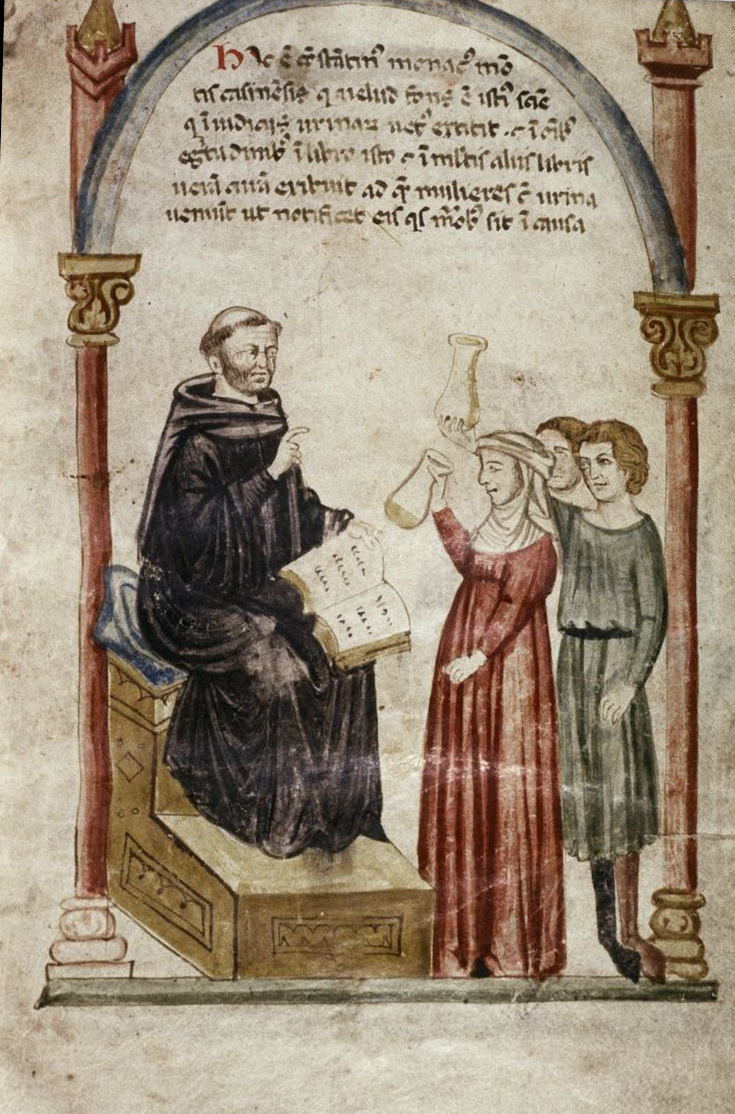
Constantine the African, O.S.B. (Latin: Constantinus Africanus; died before 1098/1099, Monte Cassino) was a physician who lived in the 11th century. The first part of his life was spent in Ifriqiya and the rest in Italy. He first arrived in Italy in the coastal town of Salerno, home of the Schola Medica Salernitana, where his work attracted attention from the local Lombard and Norman rulers. Constantine then became a Benedictine monk, living the last decades of his life at the abbey of Monte Cassino.
There is some debate about his birth and family religion, although it is well known that he ended his life as a monk at the Latin Christian Abbey of Monte Cassino, in southern Italy. This religious controversy suggested that he might have been born as a Muslim, and after migration converted to Catholic Christianity, or he might have been born as a Christian within an Arabic-speaking family. The native language of Constantine the African was Arabic. He was also fluent in Greek, Latin, and other languages, the skills he acquired during his extensive travels. His journey included Egypt, Syria, India, Ethiopia, and Persia. He was well-versed in medical knowledge before his arrival to Salerno in Italy where he joined the abbey of Monte Cassino south of Rome in 1077.
It was in Italy where Constantine compiled his vast opus, mostly composed of translations from Arabic sources. He translated into Latin, books of the great masters of Arabic medicine: Razes, Ibn Imran, Ibn Suleiman, and Ibn al-Jazzar; these translations are housed today in libraries in Italy, Germany, France, Belgium, and England. They were used as textbooks from the Middle Ages to the seventeenth century.
The 12th-century monk Peter the Deacon is the first historian to write a biography of Constantine. He noted that Constantine was a Saracen, the medieval Franco-Italian term for a Muslim from North Africa. According to Peter, Constantine traveled through Babylon, India, and Ethiopia, where he became versed in science, before coming to Monte Cassino as a refugee from peers in Carthage jealous of his knowledge. However, Peter's legendary portrayal of Constantine has been questioned by some historians. Still, later historians such as Salvatore de Renzi and Charles Daremberg, curator of the National Library in Paris, and Leclerc, author of History of Arab Medicine, relied on this account. The German Moritz Steinscheider wrote a book dedicated to Constantine, which was printed in Berlin in 1865. German medical historian Karl Sudhoff created his Berber-Islamic thesis after discovering new and important documents touching on Constantine's life and religion in the village of La Trinità della Cava [citation needed], which he published in the journal Archeion in 1922.
According to Karl Sudhoff, Constantine emigrated first to Italy as a merchant (mercator) in Sicily, moving to Salerno, where he was called Constantine Siculus. As Constantine spoke no Italian, a North African doctor named Abbas of Curiat, from an island lying off the city of Mahdia in Ifriqiya (modern-day Tunisia), became his interpreter. Suffering from an illness, he took refuge with the king's brother Gusulf, where he noted that Abbas did not ask for the usual bottle of urine, and the doctor who came to examine him was inexperienced. After asking in vain to see any good Italian books on medicine, he concluded that medicine in Italy was limited to simple practical knowledge. Already having an extensive general knowledge, Constantine discovered a mission in life. After recovering, Constantine returned to Carthage in Ifriqiya, and practiced medicine for three years, collecting many books of medicine, then returned to southern Italy with his treasure. En route to Salerno he passed by the coast of Lucania by boat, where north of the Gulf of Polycastro a storm damaged some manuscripts, including the first three parts of the books of Ali Ibn Abbas Al Majoussi, which were lost. Arriving in Salerno with what remained of the books, Constantine converted to Christianity, then moved to Cassino, where he worked as an interpreter. The Sudhoff story ends with this event.
These are the parts borrowed and translated word-for-word from the study of Karl Sudhoff, a scientist who had a thorough knowledge of history and was renowned for reliable research. Although a trader, Constantine was learned, which is not surprising because education in the great mosque of the Zaytuna in Tunis and the homes of scientists was open to all. Trade between North Africa and Italy was flourishing, and did not cease during difficult times. North Africa had offices in various locations of Christian Sicily and southern Italy itself, including Bari, Taranto, Agripolis, and Gaglione.
North Africa exported olive oil, wax, leather, wool and derivatives, and imported wheat in famine years, and Islam did not prohibit trade with Christian countries.
Constantine arrived at Cassino, bringing with him the manuscripts of medicine that he took from Tunis. They include works of the Kairouanese El Baghdadi:
Hub AI
Constantine the African AI simulator
(@Constantine the African_simulator)
Constantine the African
Constantine the African, O.S.B. (Latin: Constantinus Africanus; died before 1098/1099, Monte Cassino) was a physician who lived in the 11th century. The first part of his life was spent in Ifriqiya and the rest in Italy. He first arrived in Italy in the coastal town of Salerno, home of the Schola Medica Salernitana, where his work attracted attention from the local Lombard and Norman rulers. Constantine then became a Benedictine monk, living the last decades of his life at the abbey of Monte Cassino.
There is some debate about his birth and family religion, although it is well known that he ended his life as a monk at the Latin Christian Abbey of Monte Cassino, in southern Italy. This religious controversy suggested that he might have been born as a Muslim, and after migration converted to Catholic Christianity, or he might have been born as a Christian within an Arabic-speaking family. The native language of Constantine the African was Arabic. He was also fluent in Greek, Latin, and other languages, the skills he acquired during his extensive travels. His journey included Egypt, Syria, India, Ethiopia, and Persia. He was well-versed in medical knowledge before his arrival to Salerno in Italy where he joined the abbey of Monte Cassino south of Rome in 1077.
It was in Italy where Constantine compiled his vast opus, mostly composed of translations from Arabic sources. He translated into Latin, books of the great masters of Arabic medicine: Razes, Ibn Imran, Ibn Suleiman, and Ibn al-Jazzar; these translations are housed today in libraries in Italy, Germany, France, Belgium, and England. They were used as textbooks from the Middle Ages to the seventeenth century.
The 12th-century monk Peter the Deacon is the first historian to write a biography of Constantine. He noted that Constantine was a Saracen, the medieval Franco-Italian term for a Muslim from North Africa. According to Peter, Constantine traveled through Babylon, India, and Ethiopia, where he became versed in science, before coming to Monte Cassino as a refugee from peers in Carthage jealous of his knowledge. However, Peter's legendary portrayal of Constantine has been questioned by some historians. Still, later historians such as Salvatore de Renzi and Charles Daremberg, curator of the National Library in Paris, and Leclerc, author of History of Arab Medicine, relied on this account. The German Moritz Steinscheider wrote a book dedicated to Constantine, which was printed in Berlin in 1865. German medical historian Karl Sudhoff created his Berber-Islamic thesis after discovering new and important documents touching on Constantine's life and religion in the village of La Trinità della Cava [citation needed], which he published in the journal Archeion in 1922.
According to Karl Sudhoff, Constantine emigrated first to Italy as a merchant (mercator) in Sicily, moving to Salerno, where he was called Constantine Siculus. As Constantine spoke no Italian, a North African doctor named Abbas of Curiat, from an island lying off the city of Mahdia in Ifriqiya (modern-day Tunisia), became his interpreter. Suffering from an illness, he took refuge with the king's brother Gusulf, where he noted that Abbas did not ask for the usual bottle of urine, and the doctor who came to examine him was inexperienced. After asking in vain to see any good Italian books on medicine, he concluded that medicine in Italy was limited to simple practical knowledge. Already having an extensive general knowledge, Constantine discovered a mission in life. After recovering, Constantine returned to Carthage in Ifriqiya, and practiced medicine for three years, collecting many books of medicine, then returned to southern Italy with his treasure. En route to Salerno he passed by the coast of Lucania by boat, where north of the Gulf of Polycastro a storm damaged some manuscripts, including the first three parts of the books of Ali Ibn Abbas Al Majoussi, which were lost. Arriving in Salerno with what remained of the books, Constantine converted to Christianity, then moved to Cassino, where he worked as an interpreter. The Sudhoff story ends with this event.
These are the parts borrowed and translated word-for-word from the study of Karl Sudhoff, a scientist who had a thorough knowledge of history and was renowned for reliable research. Although a trader, Constantine was learned, which is not surprising because education in the great mosque of the Zaytuna in Tunis and the homes of scientists was open to all. Trade between North Africa and Italy was flourishing, and did not cease during difficult times. North Africa had offices in various locations of Christian Sicily and southern Italy itself, including Bari, Taranto, Agripolis, and Gaglione.
North Africa exported olive oil, wax, leather, wool and derivatives, and imported wheat in famine years, and Islam did not prohibit trade with Christian countries.
Constantine arrived at Cassino, bringing with him the manuscripts of medicine that he took from Tunis. They include works of the Kairouanese El Baghdadi: