



Community hub
Recent from talks
Knowledge base stats:
Talk channels stats:
Members stats:
Cooperation
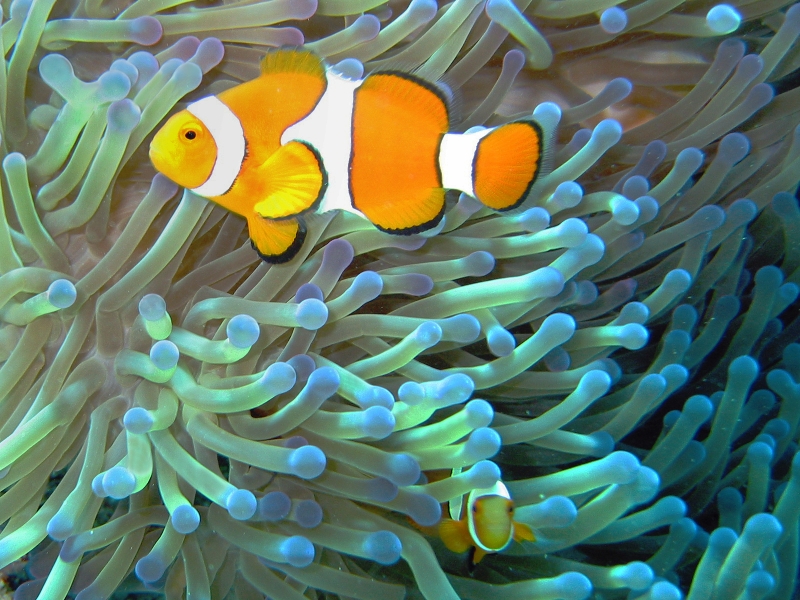
Cooperation (now much less often written as co-operation in British English and, with a varied usage along time, coöperation) takes place when a group of organisms works or acts together for a collective benefit to the group as opposed to working in competition for selfish individual benefit. In biology, many animal and plant species cooperate both with other members of their own species and with members of other species with whom they have (symbiotic or mutualistic) relationships.
Humans cooperate for the same reasons as other animals: immediate benefit, genetic relatedness, and reciprocity, but also for particularly human reasons, such as honesty signaling (indirect reciprocity), cultural group selection, and for reasons having to do with cultural evolution.
Language allows humans to cooperate on a very large scale. Certain studies have suggested that fairness affects human cooperation; individuals are willing to punish at their own cost (altruistic punishment) if they believe that they are being treated unfairly. Sanfey, et al. conducted an experiment where 19 individuals were scanned using MRI while playing an ultimatum game in the role of the responder. They received offers from other human partners and from a computer partner. Responders refused unfair offers from human partners at a significantly higher rate than those from a computer partner. The experiment also suggested that altruistic punishment is associated with negative emotions that are generated in unfair situations by the anterior insula of the brain.
It has been observed that image scoring, where a participant learns of their counterpart's prior behavior or reputation, promotes cooperative behavior in situations where direct reciprocity is unlikely. This implies that in situations where reputation and status are involved, humans tend to cooperate more.
Many organisms other than apes, such as fish, birds, and insects exhibit cooperative behavior: teaching, helping, and self-sacrifice, and can coordinate to solve problems. The author Nichola Raihani argues that Earth is a history of teamwork, collective action, and cooperation. Its a selfish behavior, working together towards solving a problem, because it yields success to engage cooperatively, typically this means work in effort towards solving a problem can often only ever be solved by a cooperative effort, for example for most individuals working cooperatively but especially within families has made cooperation behaviors be generally aggregated together to accomplish major problem solving for survival, like migration and success, particularly familial success. Democracy for instance was created because of three key traits; social comparison, engagement with collaboration, and wanting to be someone who shares, which all stems from the desire to not monopolize all resources but to gradually accept the divvying up of resources of collaboration (cliques, teams or greater communities).
When clients are watching and see the current interaction reacting badly, then sometimes everyone else who is waiting will stop watching or go elsewhere, thus they may provide a better service when a client can be made aware of their ability to exhibit cooperative behavior. This has been observed in generosity 'tournaments' or one-upmanship behavior among people, and among cleaner fish, and it's an example of costly behavior that engages in that is about a future underlying benefit that one can gain by gaining those clients, for human beings its particularly the case that unconditional generosity is a particular response which suggests perception of a sexual role advantage as underlining such behavioral choices amongst men when undergoing competitively this way in the presence of attractive females or online.
Every human achievements are actually reliant on the cooperation efforts that have been created by others, from the cursory to the truly magnificent, whether its a mundane achievement or the greatest achievements, it relies on cooperation. We're biologically geared to ensuring survival by social instincts like much of the food early human beings ate were hunted or gathered, these are aspects of cooperation that alone cannot be done. To avoid the problem of starvation we had to band together like our distant ancestors if we wish to continue existing. However primates largely lived on large salad bowls so they avoided such pressure, narrowing what they need as a evolutionary strategy. We had to not only cooperate to eat, we also readily need to learn other important life skills to be able continue this strategy and had to raise our children that couldn't survive without essential food.
Kin selection or related inclusive fitness theory is defined as a reproductive strategy that favors the success of an organism's relatives, even when it is not in an organism's own best interest, it's highly relevant to human social behavior, relationships and cooperation.
Hub AI
Cooperation AI simulator
(@Cooperation_simulator)
Cooperation
Cooperation (now much less often written as co-operation in British English and, with a varied usage along time, coöperation) takes place when a group of organisms works or acts together for a collective benefit to the group as opposed to working in competition for selfish individual benefit. In biology, many animal and plant species cooperate both with other members of their own species and with members of other species with whom they have (symbiotic or mutualistic) relationships.
Humans cooperate for the same reasons as other animals: immediate benefit, genetic relatedness, and reciprocity, but also for particularly human reasons, such as honesty signaling (indirect reciprocity), cultural group selection, and for reasons having to do with cultural evolution.
Language allows humans to cooperate on a very large scale. Certain studies have suggested that fairness affects human cooperation; individuals are willing to punish at their own cost (altruistic punishment) if they believe that they are being treated unfairly. Sanfey, et al. conducted an experiment where 19 individuals were scanned using MRI while playing an ultimatum game in the role of the responder. They received offers from other human partners and from a computer partner. Responders refused unfair offers from human partners at a significantly higher rate than those from a computer partner. The experiment also suggested that altruistic punishment is associated with negative emotions that are generated in unfair situations by the anterior insula of the brain.
It has been observed that image scoring, where a participant learns of their counterpart's prior behavior or reputation, promotes cooperative behavior in situations where direct reciprocity is unlikely. This implies that in situations where reputation and status are involved, humans tend to cooperate more.
Many organisms other than apes, such as fish, birds, and insects exhibit cooperative behavior: teaching, helping, and self-sacrifice, and can coordinate to solve problems. The author Nichola Raihani argues that Earth is a history of teamwork, collective action, and cooperation. Its a selfish behavior, working together towards solving a problem, because it yields success to engage cooperatively, typically this means work in effort towards solving a problem can often only ever be solved by a cooperative effort, for example for most individuals working cooperatively but especially within families has made cooperation behaviors be generally aggregated together to accomplish major problem solving for survival, like migration and success, particularly familial success. Democracy for instance was created because of three key traits; social comparison, engagement with collaboration, and wanting to be someone who shares, which all stems from the desire to not monopolize all resources but to gradually accept the divvying up of resources of collaboration (cliques, teams or greater communities).
When clients are watching and see the current interaction reacting badly, then sometimes everyone else who is waiting will stop watching or go elsewhere, thus they may provide a better service when a client can be made aware of their ability to exhibit cooperative behavior. This has been observed in generosity 'tournaments' or one-upmanship behavior among people, and among cleaner fish, and it's an example of costly behavior that engages in that is about a future underlying benefit that one can gain by gaining those clients, for human beings its particularly the case that unconditional generosity is a particular response which suggests perception of a sexual role advantage as underlining such behavioral choices amongst men when undergoing competitively this way in the presence of attractive females or online.
Every human achievements are actually reliant on the cooperation efforts that have been created by others, from the cursory to the truly magnificent, whether its a mundane achievement or the greatest achievements, it relies on cooperation. We're biologically geared to ensuring survival by social instincts like much of the food early human beings ate were hunted or gathered, these are aspects of cooperation that alone cannot be done. To avoid the problem of starvation we had to band together like our distant ancestors if we wish to continue existing. However primates largely lived on large salad bowls so they avoided such pressure, narrowing what they need as a evolutionary strategy. We had to not only cooperate to eat, we also readily need to learn other important life skills to be able continue this strategy and had to raise our children that couldn't survive without essential food.
Kin selection or related inclusive fitness theory is defined as a reproductive strategy that favors the success of an organism's relatives, even when it is not in an organism's own best interest, it's highly relevant to human social behavior, relationships and cooperation.