
Recent from talks
Copper deficiency
Knowledge base stats:
Talk channels stats:
Members stats:
Copper deficiency
Copper deficiency, or hypocupremia, is defined as insufficient copper to meet the body's needs, or as a serum copper level below the normal range. Symptoms may include fatigue, decreased red blood cells, early greying of the hair, and neurological problems presenting as numbness, tingling, muscle weakness, and ataxia. The neurodegenerative syndrome of copper deficiency has been recognized for some time in ruminant animals, in which it is commonly known as "swayback". Copper deficiency can manifest in parallel with vitamin B12 and other nutritional deficiencies.
The most common cause of copper deficiency is a remote gastrointestinal surgery, such as gastric bypass surgery, due to malabsorption of copper, or zinc toxicity. On the other hand, Menkes disease is a genetic disorder of copper deficiency involving a wide variety of symptoms that is often fatal.
Copper is required for the functioning of many enzymes, such as cytochrome c oxidase, which is complex IV in the mitochondrial electron transport chain, ceruloplasmin, Cu/Zn superoxide dismutase, and in amine oxidases. These enzymes catalyze reactions for oxidative phosphorylation, iron transportation, antioxidant and free radical scavenging and neutralization, and neurotransmitter synthesis, respectively. Diets vary in the amount of copper they contain, but may provide about 5 mg/day, of which only 20-50% is absorbed. The diet of the elderly may have a lower copper content than the recommended daily intake. Dietary copper can be found in whole grain cereals, legumes, oysters, organ meats (particularly liver), cherries, dark chocolate, fruits, leafy green vegetables, nuts, poultry, prunes, and soybean products like tofu.
Copper deficiency can have many hematological consequences, such as myelodysplasia, anemia, low white blood cell count, and low count of neutrophils (a type of white blood cell that is often called "the first line of defense" of the immune system).
The characteristic hematological (blood) effects of copper deficiency are anemia (which may be microcytic, normocytic or macrocytic) and neutropenia. Thrombocytopenia (low blood platelets) is unusual.
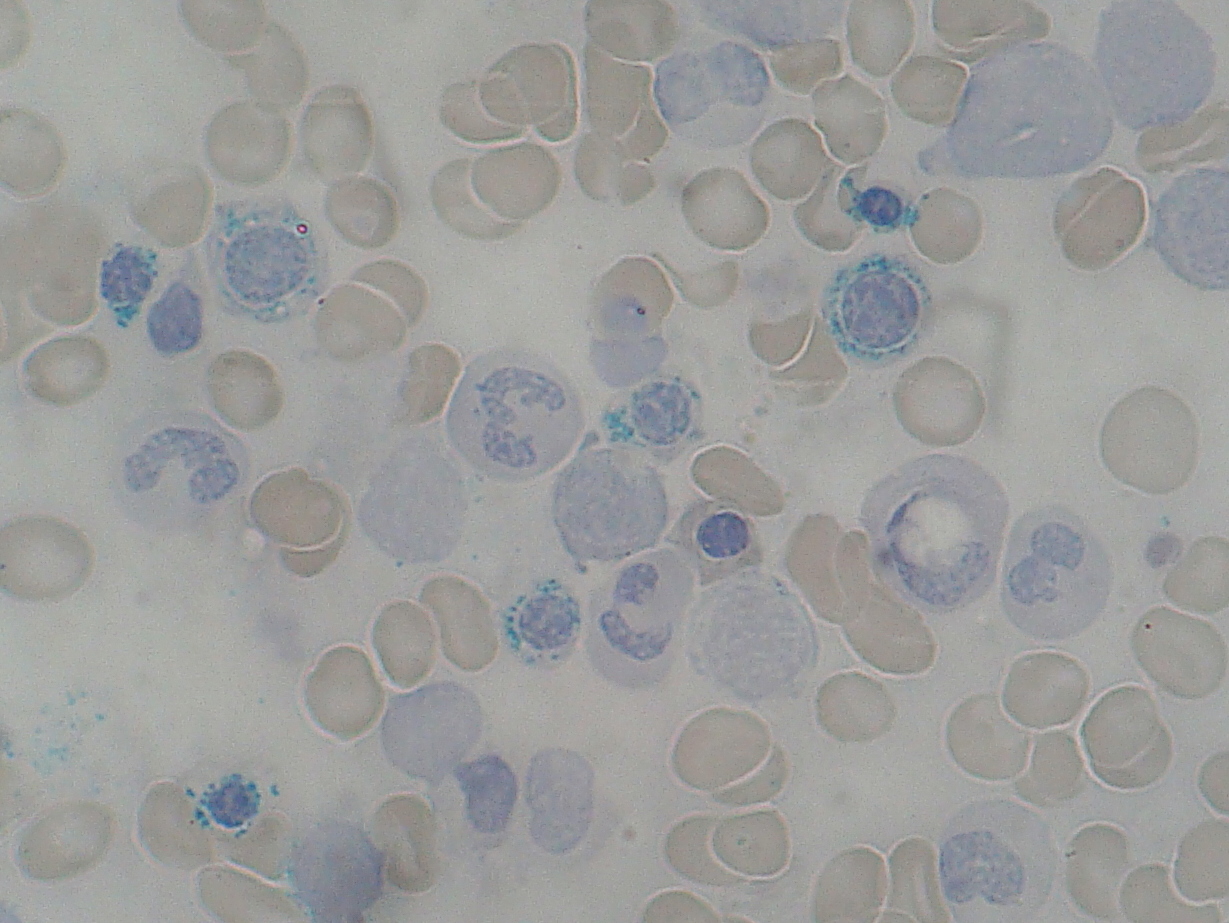
The peripheral blood and bone marrow aspirate findings in copper deficiency can mimic myelodysplastic syndrome. Bone marrow aspirate in both conditions may show dysplasia of blood cell precursors and the presence of ring sideroblasts (erythroblasts containing multiple iron granules around the nucleus). Unlike most cases of myelodysplastic syndrome, the bone marrow aspirate in copper deficiency characteristically shows cytoplasmic vacuoles within red and white cell precursors, and karyotyping in cases of copper deficiency does not reveal cytogenetic features characteristic of myelodysplastic syndrome.
Anemia and neutropenia typically resolve within six weeks of copper replacement.
Copper deficiency can cause a wide variety of neurological problems including myelopathy, peripheral neuropathy, and optic neuropathy.
Hub AI
Copper deficiency AI simulator
(@Copper deficiency_simulator)
Copper deficiency
Copper deficiency, or hypocupremia, is defined as insufficient copper to meet the body's needs, or as a serum copper level below the normal range. Symptoms may include fatigue, decreased red blood cells, early greying of the hair, and neurological problems presenting as numbness, tingling, muscle weakness, and ataxia. The neurodegenerative syndrome of copper deficiency has been recognized for some time in ruminant animals, in which it is commonly known as "swayback". Copper deficiency can manifest in parallel with vitamin B12 and other nutritional deficiencies.
The most common cause of copper deficiency is a remote gastrointestinal surgery, such as gastric bypass surgery, due to malabsorption of copper, or zinc toxicity. On the other hand, Menkes disease is a genetic disorder of copper deficiency involving a wide variety of symptoms that is often fatal.
Copper is required for the functioning of many enzymes, such as cytochrome c oxidase, which is complex IV in the mitochondrial electron transport chain, ceruloplasmin, Cu/Zn superoxide dismutase, and in amine oxidases. These enzymes catalyze reactions for oxidative phosphorylation, iron transportation, antioxidant and free radical scavenging and neutralization, and neurotransmitter synthesis, respectively. Diets vary in the amount of copper they contain, but may provide about 5 mg/day, of which only 20-50% is absorbed. The diet of the elderly may have a lower copper content than the recommended daily intake. Dietary copper can be found in whole grain cereals, legumes, oysters, organ meats (particularly liver), cherries, dark chocolate, fruits, leafy green vegetables, nuts, poultry, prunes, and soybean products like tofu.
Copper deficiency can have many hematological consequences, such as myelodysplasia, anemia, low white blood cell count, and low count of neutrophils (a type of white blood cell that is often called "the first line of defense" of the immune system).
The characteristic hematological (blood) effects of copper deficiency are anemia (which may be microcytic, normocytic or macrocytic) and neutropenia. Thrombocytopenia (low blood platelets) is unusual.
The peripheral blood and bone marrow aspirate findings in copper deficiency can mimic myelodysplastic syndrome. Bone marrow aspirate in both conditions may show dysplasia of blood cell precursors and the presence of ring sideroblasts (erythroblasts containing multiple iron granules around the nucleus). Unlike most cases of myelodysplastic syndrome, the bone marrow aspirate in copper deficiency characteristically shows cytoplasmic vacuoles within red and white cell precursors, and karyotyping in cases of copper deficiency does not reveal cytogenetic features characteristic of myelodysplastic syndrome.
Anemia and neutropenia typically resolve within six weeks of copper replacement.
Copper deficiency can cause a wide variety of neurological problems including myelopathy, peripheral neuropathy, and optic neuropathy.
Recent media