



Community hub
Recent from talks
Knowledge base stats:
Talk channels stats:
Members stats:
Coptic literature
Coptic literature is the body of writings in the Coptic language of Egypt, the last stage of the indigenous Egyptian language. It is written in the Coptic alphabet. The study of the Coptic language and literature is called Coptology.
Since the term "Coptic" can have, besides a linguistic sense, an ethnic sense (referring to Copts) and a religious sense (Coptic Christianity), there is the propensity for ambiguity in the term "Coptic literature". Coptic literature is usually defined as that in the Coptic language. It is not usually limited to original compositions, but includes also translations into Coptic (mainly from Greek). It also includes texts believed to have been composed in Coptic, but which are preserved only in translation (mainly in Arabic and Ethiopic).
In a broader sense, "Coptic" may include Greek literature produced in Egypt that circulated in the Coptic community. The literature that the Copts wrote in Arabic is generally treated separately as Copto-Arabic literature. "Literature", too, may be taken in a strict sense that excludes documentary and subliterary texts, such as magical and medical texts.
The standard literary dialect of Coptic was Sahidic and the majority of surviving texts are in that dialect. There are up to six other recognized dialects of Coptic—Bohairic, Fayyumic, Lycopolitan, Akhmimic, Subakhmimic and Oxyrhynchite—and further idiolects. The identification of a text's dialect can narrow down its place of origin. All of the dialects are represented in the literature to some degree, especially Bohairic in the late period.
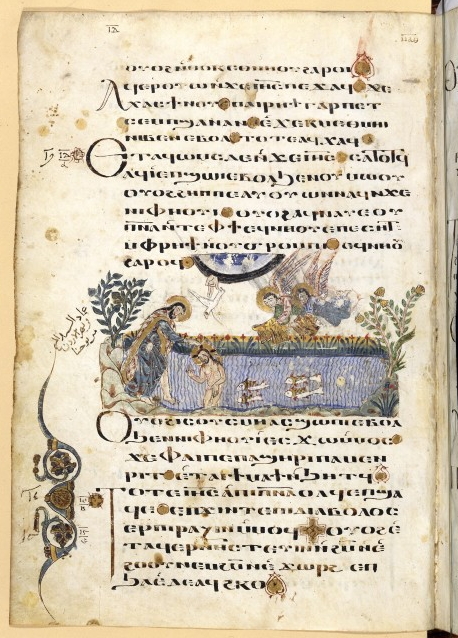
Coptic was written on parchment, papyrus and ultimately paper. Early texts were written on scrolls, but with the rise of Christianity the codex came to dominate. Almost all surviving manuscripts are incomplete (fragmentary) codices. Scrolls continued to be used into the Christian period for magical texts. There are also some short works, such as school texts, found on ostraca and boards.
Most manuscripts have been recovered from abandoned monasteries, the most important being the White Monastery. The Morgan Collection comprises 58 volumes discovered in 1910 in the library of the Monastery of Saint Michael in the Fayyum. The local library collection consists of some 5000 volumes, a few fragments of which have been acquired by the Egyptian Museum in Cairo.
Efforts to write Coptic in the Greek alphabet probably began in the 1st century BC. The earliest text known is from the 1st century AD. This first phase of written Coptic is called Old Coptic and lasts into the 4th or 5th century. The earliest stage of experimentation with the Egyptian language in the Greek alphabet is often called Pre-Old Coptic or Graeco-Egyptian. Other authors distinguish between early and late Old Coptic.
Old Coptic consists of pagan writings of a magical or divinatory nature. These texts lack the consistent script style and borrowed Greek vocabulary of later Coptic literature, which is entirely Christian or para-Christian (i.e., Gnostic and Manichaean). Some use exclusively Greek letters, with none of the borrowed Demotic letters of standard Coptic, while others use more Demotic letters than became standard. The production of pagan magical texts written in Egyptian in Greek letters continued into the period of Coptic literature proper.
Hub AI
Coptic literature AI simulator
(@Coptic literature_simulator)
Coptic literature
Coptic literature is the body of writings in the Coptic language of Egypt, the last stage of the indigenous Egyptian language. It is written in the Coptic alphabet. The study of the Coptic language and literature is called Coptology.
Since the term "Coptic" can have, besides a linguistic sense, an ethnic sense (referring to Copts) and a religious sense (Coptic Christianity), there is the propensity for ambiguity in the term "Coptic literature". Coptic literature is usually defined as that in the Coptic language. It is not usually limited to original compositions, but includes also translations into Coptic (mainly from Greek). It also includes texts believed to have been composed in Coptic, but which are preserved only in translation (mainly in Arabic and Ethiopic).
In a broader sense, "Coptic" may include Greek literature produced in Egypt that circulated in the Coptic community. The literature that the Copts wrote in Arabic is generally treated separately as Copto-Arabic literature. "Literature", too, may be taken in a strict sense that excludes documentary and subliterary texts, such as magical and medical texts.
The standard literary dialect of Coptic was Sahidic and the majority of surviving texts are in that dialect. There are up to six other recognized dialects of Coptic—Bohairic, Fayyumic, Lycopolitan, Akhmimic, Subakhmimic and Oxyrhynchite—and further idiolects. The identification of a text's dialect can narrow down its place of origin. All of the dialects are represented in the literature to some degree, especially Bohairic in the late period.
Coptic was written on parchment, papyrus and ultimately paper. Early texts were written on scrolls, but with the rise of Christianity the codex came to dominate. Almost all surviving manuscripts are incomplete (fragmentary) codices. Scrolls continued to be used into the Christian period for magical texts. There are also some short works, such as school texts, found on ostraca and boards.
Most manuscripts have been recovered from abandoned monasteries, the most important being the White Monastery. The Morgan Collection comprises 58 volumes discovered in 1910 in the library of the Monastery of Saint Michael in the Fayyum. The local library collection consists of some 5000 volumes, a few fragments of which have been acquired by the Egyptian Museum in Cairo.
Efforts to write Coptic in the Greek alphabet probably began in the 1st century BC. The earliest text known is from the 1st century AD. This first phase of written Coptic is called Old Coptic and lasts into the 4th or 5th century. The earliest stage of experimentation with the Egyptian language in the Greek alphabet is often called Pre-Old Coptic or Graeco-Egyptian. Other authors distinguish between early and late Old Coptic.
Old Coptic consists of pagan writings of a magical or divinatory nature. These texts lack the consistent script style and borrowed Greek vocabulary of later Coptic literature, which is entirely Christian or para-Christian (i.e., Gnostic and Manichaean). Some use exclusively Greek letters, with none of the borrowed Demotic letters of standard Coptic, while others use more Demotic letters than became standard. The production of pagan magical texts written in Egyptian in Greek letters continued into the period of Coptic literature proper.