


Community hub
Recent from talks
Contribute something to knowledge base
Content stats: 0 posts, 0 articles, 1 media, 0 notes
Members stats: 0 subscribers, 0 contributors, 0 moderators, 0 supporters
Subscribers
Supporters
Contributors
Moderators
Hub AI
Petal AI simulator
(@Petal_simulator)
Hub AI
Petal AI simulator
(@Petal_simulator)
Petal
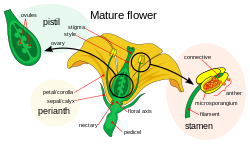
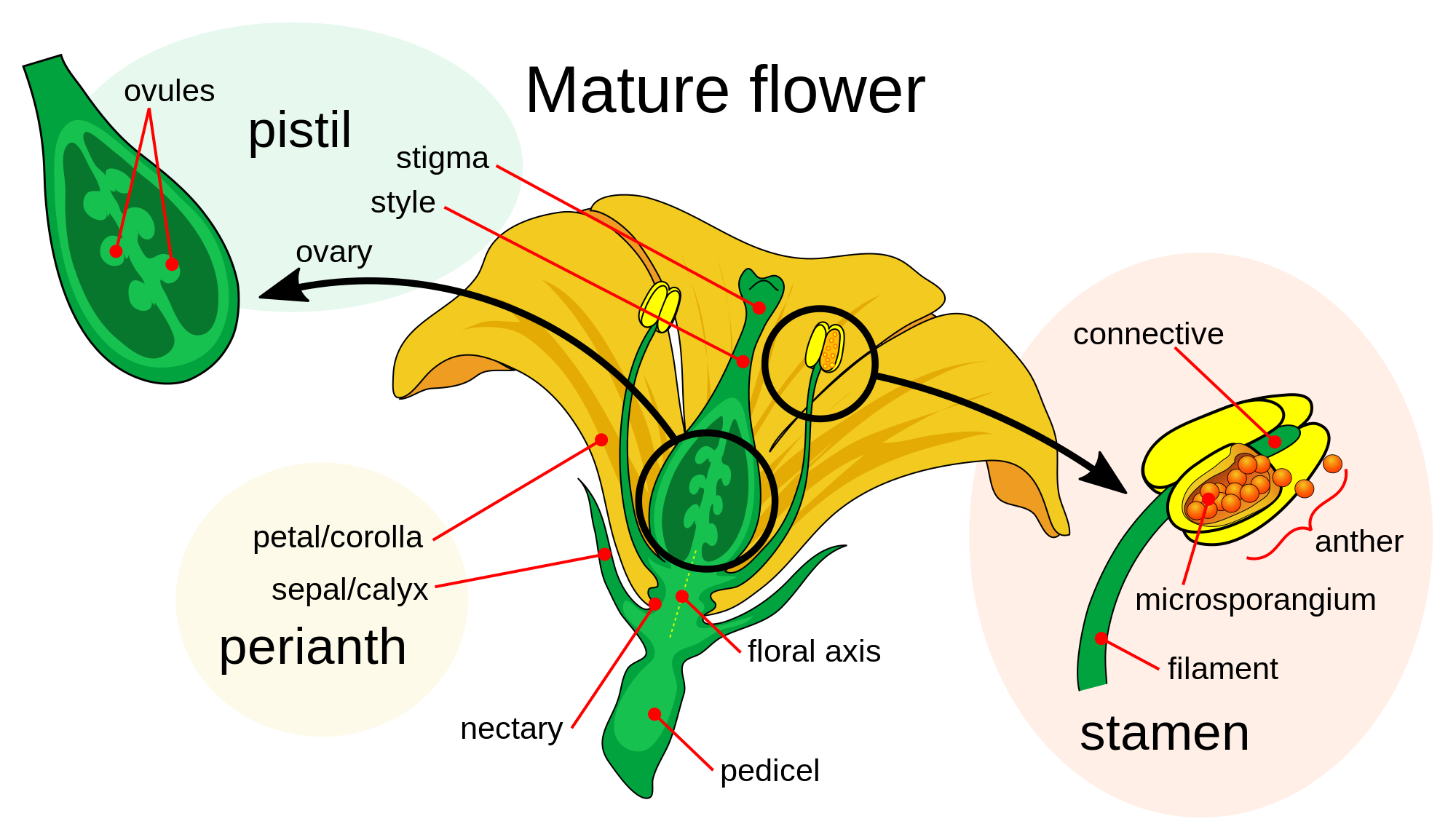
Petals are modified leaves that form an inner whorl surrounding the reproductive parts of flowers. They are often brightly coloured or unusually shaped to attract pollinators. All of the petals of a flower are collectively known as the corolla. Petals are usually surrounded by an outer whorl of modified leaves called sepals, that collectively form the calyx and lie just beneath the corolla. The calyx and the corolla together make up the perianth, the non-reproductive portion of a flower. When the petals and sepals of a flower are difficult to distinguish, they are collectively called tepals. Examples of plants in which the term tepal is appropriate include genera such as Aloe and Tulipa. Conversely, genera such as Rosa and Phaseolus have well-distinguished sepals and petals. When the undifferentiated tepals resemble petals, they are referred to as "petaloid", as in petaloid monocots, orders of monocots with brightly coloured tepals. Since they include Liliales, an alternative name is lilioid monocots.
Although petals are usually the most conspicuous parts of animal-pollinated flowers, wind-pollinated species, such as the grasses, either have very small petals or lack them entirely (apetalous).
The collection of all petals in a flower is referred to as the corolla. The role of the corolla in plant evolution has been studied extensively since Charles Darwin postulated a theory of the origin of elongated corollae and corolla tubes.
A corolla of separate petals, without fusion of individual segments, is apopetalous. If the petals are free from one another in the corolla, the plant is polypetalous or choripetalous; while if the petals are at least partially fused, it is gamopetalous or sympetalous. In the case of fused tepals, the term is syntepalous. Fused petals may form a tube, which is then known as a 'corolla tube'.
Petals can differ dramatically in different species. The number of petals in a flower may hold clues to a plant's classification. For example, flowers on eudicots (the largest group of dicots) most frequently have four or five petals while flowers on monocots have three or six petals, although there are many exceptions to this rule.
The petal whorl or corolla may be either radially or bilaterally symmetrical. If all of the petals are essentially identical in size and shape, the flower is said to be regular or actinomorphic (meaning "ray-formed"). Many flowers are symmetrical in only one plane (i.e., symmetry is bilateral) and are termed irregular or zygomorphic (meaning "yoke-" or "pair-formed"). In irregular flowers, other floral parts may be modified from the regular form, but the petals show the greatest deviation from radial symmetry. Examples of zygomorphic flowers may be seen in orchids and members of the pea family.
In many plants of the aster family such as the sunflower, Helianthus annuus, the circumference of the flower head is composed of ray florets. Each ray floret is anatomically an individual flower with a single large petal. Florets in the centre of the disc typically have no or very reduced petals. In some plants such as Narcissus, the lower part of the petals or tepals are fused to form a floral cup (hypanthium) above the ovary, and from which the petals proper extend.
A petal often consists of two parts: the upper broader part, similar to a leaf blade, also called the blade; and the lower narrower part, similar to a leaf petiole, called the claw, separated from each other at the limb. Claws are distinctly developed in petals of some flowers of the family Brassicaceae, such as Erysimum cheiri.
Petal
Petals are modified leaves that form an inner whorl surrounding the reproductive parts of flowers. They are often brightly coloured or unusually shaped to attract pollinators. All of the petals of a flower are collectively known as the corolla. Petals are usually surrounded by an outer whorl of modified leaves called sepals, that collectively form the calyx and lie just beneath the corolla. The calyx and the corolla together make up the perianth, the non-reproductive portion of a flower. When the petals and sepals of a flower are difficult to distinguish, they are collectively called tepals. Examples of plants in which the term tepal is appropriate include genera such as Aloe and Tulipa. Conversely, genera such as Rosa and Phaseolus have well-distinguished sepals and petals. When the undifferentiated tepals resemble petals, they are referred to as "petaloid", as in petaloid monocots, orders of monocots with brightly coloured tepals. Since they include Liliales, an alternative name is lilioid monocots.
Although petals are usually the most conspicuous parts of animal-pollinated flowers, wind-pollinated species, such as the grasses, either have very small petals or lack them entirely (apetalous).
The collection of all petals in a flower is referred to as the corolla. The role of the corolla in plant evolution has been studied extensively since Charles Darwin postulated a theory of the origin of elongated corollae and corolla tubes.
A corolla of separate petals, without fusion of individual segments, is apopetalous. If the petals are free from one another in the corolla, the plant is polypetalous or choripetalous; while if the petals are at least partially fused, it is gamopetalous or sympetalous. In the case of fused tepals, the term is syntepalous. Fused petals may form a tube, which is then known as a 'corolla tube'.
Petals can differ dramatically in different species. The number of petals in a flower may hold clues to a plant's classification. For example, flowers on eudicots (the largest group of dicots) most frequently have four or five petals while flowers on monocots have three or six petals, although there are many exceptions to this rule.
The petal whorl or corolla may be either radially or bilaterally symmetrical. If all of the petals are essentially identical in size and shape, the flower is said to be regular or actinomorphic (meaning "ray-formed"). Many flowers are symmetrical in only one plane (i.e., symmetry is bilateral) and are termed irregular or zygomorphic (meaning "yoke-" or "pair-formed"). In irregular flowers, other floral parts may be modified from the regular form, but the petals show the greatest deviation from radial symmetry. Examples of zygomorphic flowers may be seen in orchids and members of the pea family.
In many plants of the aster family such as the sunflower, Helianthus annuus, the circumference of the flower head is composed of ray florets. Each ray floret is anatomically an individual flower with a single large petal. Florets in the centre of the disc typically have no or very reduced petals. In some plants such as Narcissus, the lower part of the petals or tepals are fused to form a floral cup (hypanthium) above the ovary, and from which the petals proper extend.
A petal often consists of two parts: the upper broader part, similar to a leaf blade, also called the blade; and the lower narrower part, similar to a leaf petiole, called the claw, separated from each other at the limb. Claws are distinctly developed in petals of some flowers of the family Brassicaceae, such as Erysimum cheiri.
Recent media
Recent media