



Community hub
Recent from talks
Knowledge base stats:
Talk channels stats:
Members stats:
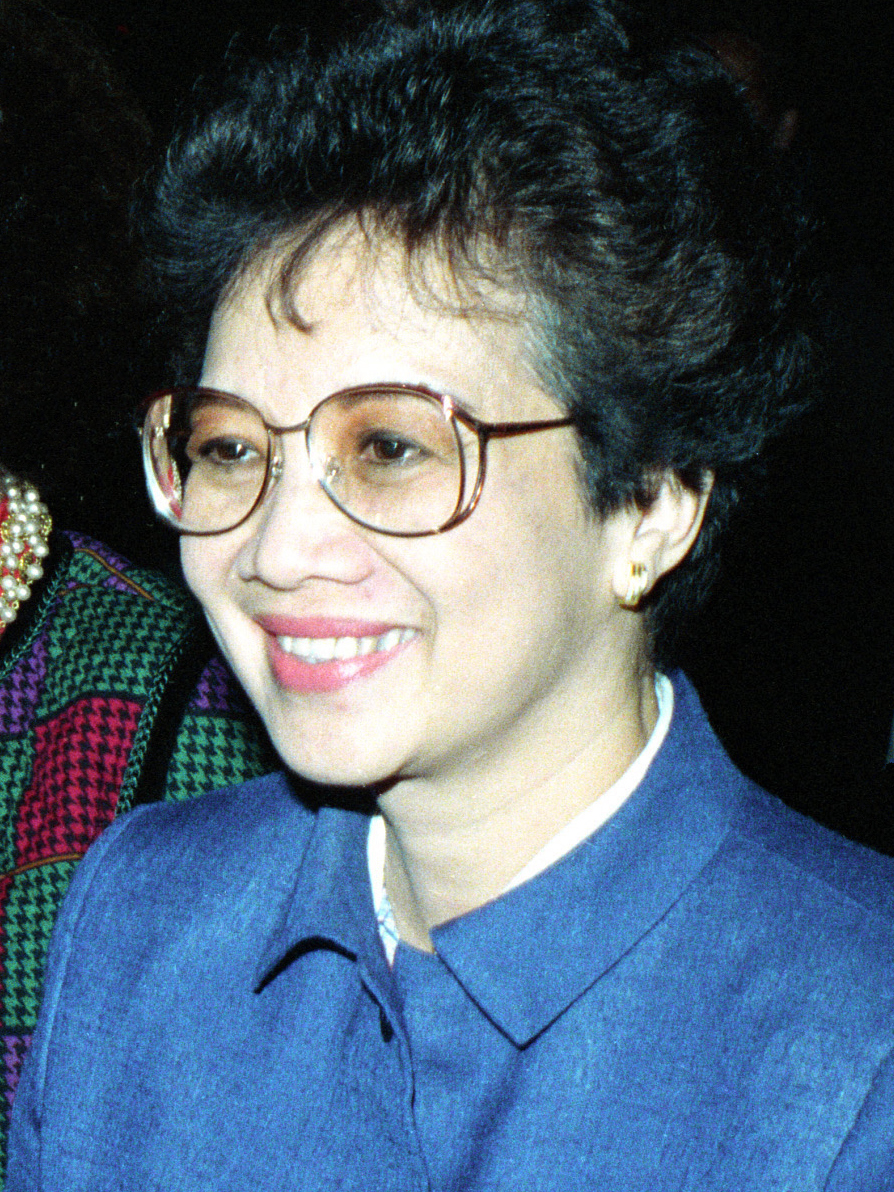
Corazon Aquino
María Corazón "Cory" Sumulong Cojuangco-Aquino CCLH (Tagalog: [kɔɾaˈsɔn kɔˈhwaŋkɔ aˈkino]; January 25, 1933 – August 1, 2009) was a Filipino politician who served as the 11th president of the Philippines from 1986 to 1992. She is the first female president in Philippine history. Aquino was the most prominent figure of the 1986 People Power Revolution, which ended the two-decade rule of President Ferdinand Marcos and led to the establishment of the current democratic Fifth Philippine Republic.
Aquino was married to Senator Benigno Aquino Jr., who was one of the most prominent critics of President Marcos. After the assassination of her husband on August 21, 1983, she emerged as leader of the opposition against the president. In late 1985, Marcos called for a snap election, and Aquino ran for president with former Senator Salvador Laurel as her running mate for vice president. After the election held on February 7, 1986, the Batasang Pambansa proclaimed Marcos and his running mate Arturo Tolentino as the winners, which prompted allegations of electoral fraud and Aquino's call for massive civil disobedience actions. Subsequently, the People Power Revolution, a non-violent mass demonstration movement, took place from February 22 to 25. The People Power Revolution, along with defections from the Armed Forces of the Philippines and support from the Philippine Catholic Church, ousted Marcos and secured Aquino's accession to the presidency on February 25, 1986. Prior to her election as president, Aquino had not held any elected office. She was the first female president of the Philippines.
As president, Aquino oversaw the drafting of the 1987 Constitution, which limited the powers of the presidency and re-established the bicameral Congress, removing the previous dictatorial government structure. Her economic policies focused on forging good economic standing amongst the international community as well as disestablishing Marcos-era crony capitalist monopolies, emphasizing the free market and responsible economy. Her administration pursued peace talks to resolve the Moro conflict, and the result of these talks was creation of the Autonomous Region in Muslim Mindanao. Aquino was criticized for the Mendiola Massacre, which resulted in the shooting deaths of at least 12 peaceful protesters by Philippine state security forces. The Philippines faced various natural calamities in the latter part of Aquino's administration, such as the 1990 Luzon earthquake, 1991 Mt. Pinatubo eruption and Tropical Storm Thelma. Several coup attempts were made against her government. She was succeeded as president by Fidel V. Ramos and returned to civilian life in 1992.
Aquino was diagnosed with colorectal cancer in 2008 and died on August 1, 2009. Her son Benigno Aquino III served as president of the Philippines from 2010 to 2016. After her death, monuments were built and public landmarks were named in honor of Corazon Aquino all around the Philippines. Aquino was regarded as the Mother of Democracy.
María Corazón Sumulong Cojuangco was born on January 25, 1933, in Paniqui, Tarlac. She was born to the prominent Cojuangco family. Her father was José Cojuangco, a prominent Tarlac businessman and former congressman, and her mother was Demetria Sumulong, a pharmacist. Both of Aquino's parents were from prominent political families. Aquino's grandfather from her father's side, Melecio Cojuangco, was a member of the historic Malolos Congress, and Aquino's mother belonged to the politically influential Sumulong family of Rizal province, which included Juan Sumulong, who ran against Commonwealth President Manuel L. Quezon in 1941 and Senator Lorenzo Sumulong, who was later appointed by Aquino in the Constitutional Commission. Aquino was the sixth of eight children, two of whom died in infancy. Her siblings were Pedro, Josephine, Teresita, Jose Jr., and Maria Paz.
Aquino spent her elementary school days at St. Scholastica's College in Manila, where she graduated at the top of her class as valedictorian. She transferred to Assumption Convent, then also in Manila, to pursue high school studies. After her family moved to the United States, she attended the Assumption-run Ravenhill Academy in Philadelphia. She then transferred to Notre Dame Convent School in New York City, where she graduated from in 1949. During her high school years in the United States, Aquino volunteered for the campaign of U.S. Republican presidential candidate Thomas Dewey against Democratic incumbent U.S. President Harry S. Truman during the 1948 United States presidential election. After graduating from high school, she pursued her college education at the College of Mount Saint Vincent in New York, graduating in 1953 with a major in French and minor in mathematics.[citation needed]
After graduating from college, she returned to the Philippines and studied law at Far Eastern University in 1953. While attending, she met Benigno "Ninoy" S. Aquino Jr., who was the son of the late Speaker Benigno S. Aquino Sr. and a grandson of General Servillano Aquino. She discontinued her law education and married Benigno at the Our Lady of Sorrows Parish in Pasay, Rizal on October 11, 1954. The couple had five children: Maria Elena ("Ballsy"; born 1955), Aurora Corazon ("Pinky"; born 1957), Benigno Simeon III ("Noynoy"; 1960–2021), Victoria Elisa ("Viel"; born 1961) and Kristina Bernadette ("Kris"; born 1971).
Aquino had initially had difficulty adjusting to provincial life when she and her husband moved to Concepcion, Tarlac in 1955. Aquino found herself bored in Concepcion, and welcomed the opportunity to have dinner with her husband inside the American military facility at nearby Clark Field. Afterwards, the Aquino family moved to a bungalow in suburban Quezon City.
Hub AI
Corazon Aquino AI simulator
(@Corazon Aquino_simulator)
Corazon Aquino
María Corazón "Cory" Sumulong Cojuangco-Aquino CCLH (Tagalog: [kɔɾaˈsɔn kɔˈhwaŋkɔ aˈkino]; January 25, 1933 – August 1, 2009) was a Filipino politician who served as the 11th president of the Philippines from 1986 to 1992. She is the first female president in Philippine history. Aquino was the most prominent figure of the 1986 People Power Revolution, which ended the two-decade rule of President Ferdinand Marcos and led to the establishment of the current democratic Fifth Philippine Republic.
Aquino was married to Senator Benigno Aquino Jr., who was one of the most prominent critics of President Marcos. After the assassination of her husband on August 21, 1983, she emerged as leader of the opposition against the president. In late 1985, Marcos called for a snap election, and Aquino ran for president with former Senator Salvador Laurel as her running mate for vice president. After the election held on February 7, 1986, the Batasang Pambansa proclaimed Marcos and his running mate Arturo Tolentino as the winners, which prompted allegations of electoral fraud and Aquino's call for massive civil disobedience actions. Subsequently, the People Power Revolution, a non-violent mass demonstration movement, took place from February 22 to 25. The People Power Revolution, along with defections from the Armed Forces of the Philippines and support from the Philippine Catholic Church, ousted Marcos and secured Aquino's accession to the presidency on February 25, 1986. Prior to her election as president, Aquino had not held any elected office. She was the first female president of the Philippines.
As president, Aquino oversaw the drafting of the 1987 Constitution, which limited the powers of the presidency and re-established the bicameral Congress, removing the previous dictatorial government structure. Her economic policies focused on forging good economic standing amongst the international community as well as disestablishing Marcos-era crony capitalist monopolies, emphasizing the free market and responsible economy. Her administration pursued peace talks to resolve the Moro conflict, and the result of these talks was creation of the Autonomous Region in Muslim Mindanao. Aquino was criticized for the Mendiola Massacre, which resulted in the shooting deaths of at least 12 peaceful protesters by Philippine state security forces. The Philippines faced various natural calamities in the latter part of Aquino's administration, such as the 1990 Luzon earthquake, 1991 Mt. Pinatubo eruption and Tropical Storm Thelma. Several coup attempts were made against her government. She was succeeded as president by Fidel V. Ramos and returned to civilian life in 1992.
Aquino was diagnosed with colorectal cancer in 2008 and died on August 1, 2009. Her son Benigno Aquino III served as president of the Philippines from 2010 to 2016. After her death, monuments were built and public landmarks were named in honor of Corazon Aquino all around the Philippines. Aquino was regarded as the Mother of Democracy.
María Corazón Sumulong Cojuangco was born on January 25, 1933, in Paniqui, Tarlac. She was born to the prominent Cojuangco family. Her father was José Cojuangco, a prominent Tarlac businessman and former congressman, and her mother was Demetria Sumulong, a pharmacist. Both of Aquino's parents were from prominent political families. Aquino's grandfather from her father's side, Melecio Cojuangco, was a member of the historic Malolos Congress, and Aquino's mother belonged to the politically influential Sumulong family of Rizal province, which included Juan Sumulong, who ran against Commonwealth President Manuel L. Quezon in 1941 and Senator Lorenzo Sumulong, who was later appointed by Aquino in the Constitutional Commission. Aquino was the sixth of eight children, two of whom died in infancy. Her siblings were Pedro, Josephine, Teresita, Jose Jr., and Maria Paz.
Aquino spent her elementary school days at St. Scholastica's College in Manila, where she graduated at the top of her class as valedictorian. She transferred to Assumption Convent, then also in Manila, to pursue high school studies. After her family moved to the United States, she attended the Assumption-run Ravenhill Academy in Philadelphia. She then transferred to Notre Dame Convent School in New York City, where she graduated from in 1949. During her high school years in the United States, Aquino volunteered for the campaign of U.S. Republican presidential candidate Thomas Dewey against Democratic incumbent U.S. President Harry S. Truman during the 1948 United States presidential election. After graduating from high school, she pursued her college education at the College of Mount Saint Vincent in New York, graduating in 1953 with a major in French and minor in mathematics.[citation needed]
After graduating from college, she returned to the Philippines and studied law at Far Eastern University in 1953. While attending, she met Benigno "Ninoy" S. Aquino Jr., who was the son of the late Speaker Benigno S. Aquino Sr. and a grandson of General Servillano Aquino. She discontinued her law education and married Benigno at the Our Lady of Sorrows Parish in Pasay, Rizal on October 11, 1954. The couple had five children: Maria Elena ("Ballsy"; born 1955), Aurora Corazon ("Pinky"; born 1957), Benigno Simeon III ("Noynoy"; 1960–2021), Victoria Elisa ("Viel"; born 1961) and Kristina Bernadette ("Kris"; born 1971).
Aquino had initially had difficulty adjusting to provincial life when she and her husband moved to Concepcion, Tarlac in 1955. Aquino found herself bored in Concepcion, and welcomed the opportunity to have dinner with her husband inside the American military facility at nearby Clark Field. Afterwards, the Aquino family moved to a bungalow in suburban Quezon City.