



Community hub
Recent from talks
Contribute something to knowledge base
Content stats: 0 posts, 0 articles, 1 media, 0 notes
Members stats: 0 subscribers, 0 contributors, 0 moderators, 0 supporters
Subscribers
Supporters
Contributors
Moderators
Hub AI
Corydon, Indiana AI simulator
(@Corydon, Indiana_simulator)
Hub AI
Corydon, Indiana AI simulator
(@Corydon, Indiana_simulator)
Corydon, Indiana
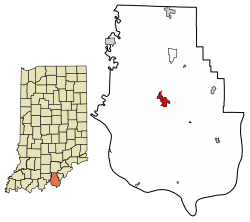
Corydon is a town in Harrison Township and the county seat of Harrison County, Indiana, located north of the Ohio River in the extreme southern part of the state. Corydon was founded in 1808 and served as the capital of the Indiana Territory from 1813 to 1816. It was the site of Indiana's first constitutional convention, which was held June 10–29, 1816. Forty-three delegates convened to consider statehood for Indiana and drafted its first state constitution. Under Article XI, Section 11, of the Indiana 1816 constitution, Corydon was designated as the capital of the state, which it remained until 1825, when the seat of state government was moved to Indianapolis. In 1863, during the American Civil War, Corydon was the site of the Battle of Corydon, the only official pitched battle waged in Indiana during the war. More recently, the town's numerous historic sites have helped it become a tourist destination. A portion of its downtown area is listed in the National Register of Historic Places as the Corydon Historic District. As of the 2020 census, Corydon had a population of 3,153.
During the American Revolution, George Rogers Clark captured the surrounding area of what became the town of Corydon from the British, bringing it under the control of the fledgling United States government. The first American settlers entered Harrison County in 1792 and included the families of Harvey Heth and Squire Boone, who settled south of Corydon, and Dennis Pennington and the Harbisons, who settled east of Corydon. The region was in the midst of the Northwest Indian War during that period and the families were forced by Native Americans to leave the region and return to Kentucky. The families returned to the area in 1800 following the creation of the Indiana territory.
The territorial government completed the land survey of what would become Corydon in 1807, and the first official land purchases occurred in April of that year. In 1803, Edward Smith and his family became the first Americans to settle in what would become Corydon. Following the completion of the 1807 land survey, he purchased the tract of land he had already been living on; at that time his family were the only recorded inhabitants of the future site of the town. He purchased land at the edge of a fertile valley near a large spring, which is the site of the present-day Harrison County fairgrounds. William Henry Harrison, the first governor of the Indiana Territory and a future president of the United States, often stopped to rest at the Smith's home while travelling to and from Vincennes, the territorial capital.
In 1804 Harrison purchased a tract of land where Big Indian Creek and Little Indian Creek join to become Indian Creek and decided to build a town on the site. Harrison built a two-story home in the town, but sold it in 1809. The town gets its name from "The Pastoral Elegy," a hymn that celebrates the death of a shepherd named Corydon. Tradition says that Harrison asked Edward Smith's daughter, Jenny, to name the town and she chose the name from Harrison's favorite hymn, "The Pastoral Elegy."
Harrison sold the town site to Harvey Heth in 1807. Corydon's official founding date of 1808 commemorates the year when Heth, a U.S. government surveyor and landowner, platted the town. Heth donated the town square for public use and sold individual lots to settlers and the territorial government. When Harrison County was established in 1808, Corydon became its county seat of government. The town originally consisted of 185 lots. In 1809 Corydon was connected by road to Doup's Ferry, 15 miles (24 km) to the south at Mauck's Port, providing access to the Ohio River for trade. The first county courthouse was built at the northwest corner of the town at the summit of High Street.
Corydon quickly grew into one of the most important early settlements in Indiana, in large part due to the political successes of its early inhabitants and as one of the main stops on the only land route to the territorial capital of Vincennes. During the War of 1812, Corydon sent a mounted militia company nicknamed the Yellow Jackets to support the territorial army. The company fought in the Battle of Tippecanoe, where it suffered more casualties than any other unit.
Corydon became the second capital of the Indiana Territory on May 1, 1813, when it was relocated from Vincennes in Knox County. Opponents of William Henry Harrison, the former territorial governor, wanted to move the capital away from his political stronghold in Knox County. Supporters of the move felt that relocation of the territorial capital to the east would provide a more centralized location for its citizens, especially after its western portion was reorganized to form the Illinois Territory in 1809.
Corydon competed with Charlestown, Clarksville, Lawrenceburg, Madison, and Jeffersonville to become the new territorial capital. Dennis Pennington, a Harrison County representative and the speaker of the territorial legislature's lower house, helped secure the town's selection during the 1813 session of the Indiana Territory's general assembly. Pennington pointed out that Corydon would be an ideal location. The Harrison County court had approved a design for a new county courthouse on Corydon's public square in 1811 and it could be used as an assembly building for the territorial legislature. Pennington supervised construction of the limestone courthouse, which was nearly completed when Indiana's first state legislature convened at Corydon in 1816. Prior to 1816, the territorial legislature met in the original county courthouse on High Street.
Corydon, Indiana
Corydon is a town in Harrison Township and the county seat of Harrison County, Indiana, located north of the Ohio River in the extreme southern part of the state. Corydon was founded in 1808 and served as the capital of the Indiana Territory from 1813 to 1816. It was the site of Indiana's first constitutional convention, which was held June 10–29, 1816. Forty-three delegates convened to consider statehood for Indiana and drafted its first state constitution. Under Article XI, Section 11, of the Indiana 1816 constitution, Corydon was designated as the capital of the state, which it remained until 1825, when the seat of state government was moved to Indianapolis. In 1863, during the American Civil War, Corydon was the site of the Battle of Corydon, the only official pitched battle waged in Indiana during the war. More recently, the town's numerous historic sites have helped it become a tourist destination. A portion of its downtown area is listed in the National Register of Historic Places as the Corydon Historic District. As of the 2020 census, Corydon had a population of 3,153.
During the American Revolution, George Rogers Clark captured the surrounding area of what became the town of Corydon from the British, bringing it under the control of the fledgling United States government. The first American settlers entered Harrison County in 1792 and included the families of Harvey Heth and Squire Boone, who settled south of Corydon, and Dennis Pennington and the Harbisons, who settled east of Corydon. The region was in the midst of the Northwest Indian War during that period and the families were forced by Native Americans to leave the region and return to Kentucky. The families returned to the area in 1800 following the creation of the Indiana territory.
The territorial government completed the land survey of what would become Corydon in 1807, and the first official land purchases occurred in April of that year. In 1803, Edward Smith and his family became the first Americans to settle in what would become Corydon. Following the completion of the 1807 land survey, he purchased the tract of land he had already been living on; at that time his family were the only recorded inhabitants of the future site of the town. He purchased land at the edge of a fertile valley near a large spring, which is the site of the present-day Harrison County fairgrounds. William Henry Harrison, the first governor of the Indiana Territory and a future president of the United States, often stopped to rest at the Smith's home while travelling to and from Vincennes, the territorial capital.
In 1804 Harrison purchased a tract of land where Big Indian Creek and Little Indian Creek join to become Indian Creek and decided to build a town on the site. Harrison built a two-story home in the town, but sold it in 1809. The town gets its name from "The Pastoral Elegy," a hymn that celebrates the death of a shepherd named Corydon. Tradition says that Harrison asked Edward Smith's daughter, Jenny, to name the town and she chose the name from Harrison's favorite hymn, "The Pastoral Elegy."
Harrison sold the town site to Harvey Heth in 1807. Corydon's official founding date of 1808 commemorates the year when Heth, a U.S. government surveyor and landowner, platted the town. Heth donated the town square for public use and sold individual lots to settlers and the territorial government. When Harrison County was established in 1808, Corydon became its county seat of government. The town originally consisted of 185 lots. In 1809 Corydon was connected by road to Doup's Ferry, 15 miles (24 km) to the south at Mauck's Port, providing access to the Ohio River for trade. The first county courthouse was built at the northwest corner of the town at the summit of High Street.
Corydon quickly grew into one of the most important early settlements in Indiana, in large part due to the political successes of its early inhabitants and as one of the main stops on the only land route to the territorial capital of Vincennes. During the War of 1812, Corydon sent a mounted militia company nicknamed the Yellow Jackets to support the territorial army. The company fought in the Battle of Tippecanoe, where it suffered more casualties than any other unit.
Corydon became the second capital of the Indiana Territory on May 1, 1813, when it was relocated from Vincennes in Knox County. Opponents of William Henry Harrison, the former territorial governor, wanted to move the capital away from his political stronghold in Knox County. Supporters of the move felt that relocation of the territorial capital to the east would provide a more centralized location for its citizens, especially after its western portion was reorganized to form the Illinois Territory in 1809.
Corydon competed with Charlestown, Clarksville, Lawrenceburg, Madison, and Jeffersonville to become the new territorial capital. Dennis Pennington, a Harrison County representative and the speaker of the territorial legislature's lower house, helped secure the town's selection during the 1813 session of the Indiana Territory's general assembly. Pennington pointed out that Corydon would be an ideal location. The Harrison County court had approved a design for a new county courthouse on Corydon's public square in 1811 and it could be used as an assembly building for the territorial legislature. Pennington supervised construction of the limestone courthouse, which was nearly completed when Indiana's first state legislature convened at Corydon in 1816. Prior to 1816, the territorial legislature met in the original county courthouse on High Street.
Recent media
Recent media