
Recent from talks
Course (music)
Knowledge base stats:
Talk channels stats:
Members stats:
Course (music)
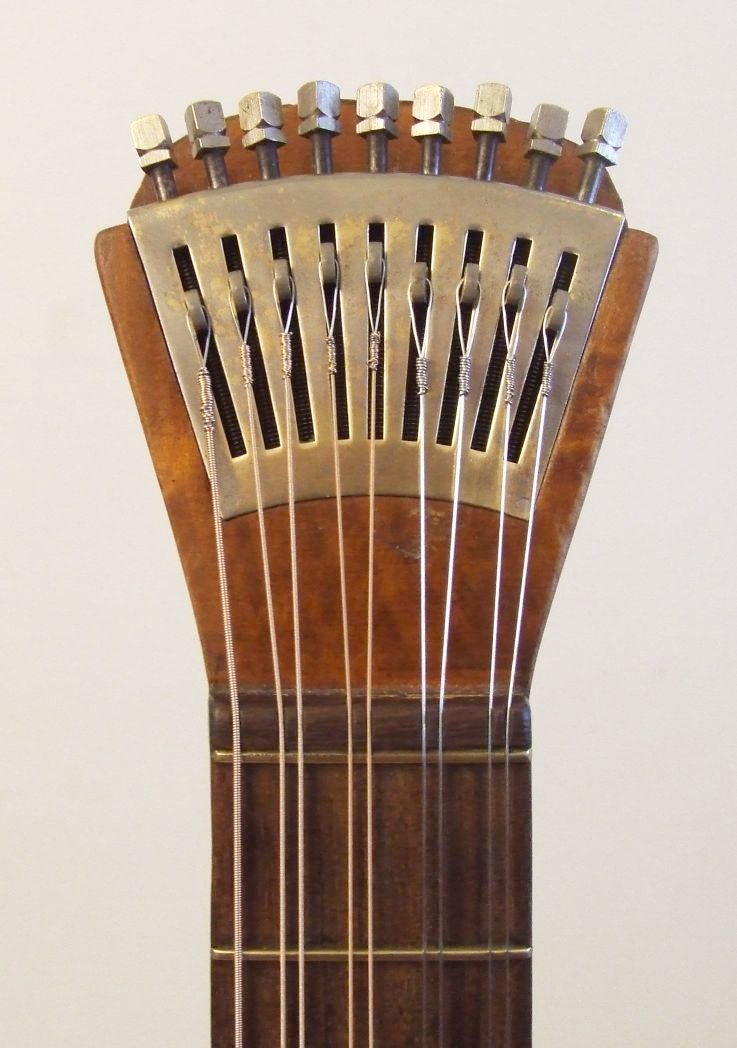
In organology, a course is either one string or two or more adjacent strings that are closely spaced relative to the other strings, and typically played as a single string. The strings in each multiple-string course are typically tuned in unison or an octave.
Normally, the term course is used to refer to a single string only on an instrument that also has multi-string courses. For example, a nine-string baroque guitar has five courses: most are two-string courses but sometimes the lowest or the highest consists of a single string.
An instrument with at least one multiple-string course is referred to as coursed, while one whose strings are all played individually is uncoursed.[citation needed]
Multiple string courses were probably originally employed to increase the volume of instruments, in eras in which electrical amplification did not exist, and stringed instruments might be expected to accompany louder instruments (such as woodwinds or brass). Eventually, however, they came to be employed to alter the timbral characteristics (the "tone") of instruments as well.
Strings within a multi-string course may both/all be tuned to the same pitch (e.g. mandolins); they may be tuned to the same pitch class but in different octaves (e.g. Tiple); or the strings may be tuned to different pitches, usually for special effect.
Examples of instruments that use two-string courses include:
Examples of instruments that use three-string courses include:
Examples of instruments that use four- (or more) string courses include:
Hub AI
Course (music) AI simulator
(@Course (music)_simulator)
Course (music)
In organology, a course is either one string or two or more adjacent strings that are closely spaced relative to the other strings, and typically played as a single string. The strings in each multiple-string course are typically tuned in unison or an octave.
Normally, the term course is used to refer to a single string only on an instrument that also has multi-string courses. For example, a nine-string baroque guitar has five courses: most are two-string courses but sometimes the lowest or the highest consists of a single string.
An instrument with at least one multiple-string course is referred to as coursed, while one whose strings are all played individually is uncoursed.[citation needed]
Multiple string courses were probably originally employed to increase the volume of instruments, in eras in which electrical amplification did not exist, and stringed instruments might be expected to accompany louder instruments (such as woodwinds or brass). Eventually, however, they came to be employed to alter the timbral characteristics (the "tone") of instruments as well.
Strings within a multi-string course may both/all be tuned to the same pitch (e.g. mandolins); they may be tuned to the same pitch class but in different octaves (e.g. Tiple); or the strings may be tuned to different pitches, usually for special effect.
Examples of instruments that use two-string courses include:
Examples of instruments that use three-string courses include:
Examples of instruments that use four- (or more) string courses include:
Recent media