



Community hub
Recent from talks
Knowledge base stats:
Talk channels stats:
Members stats:
Jester
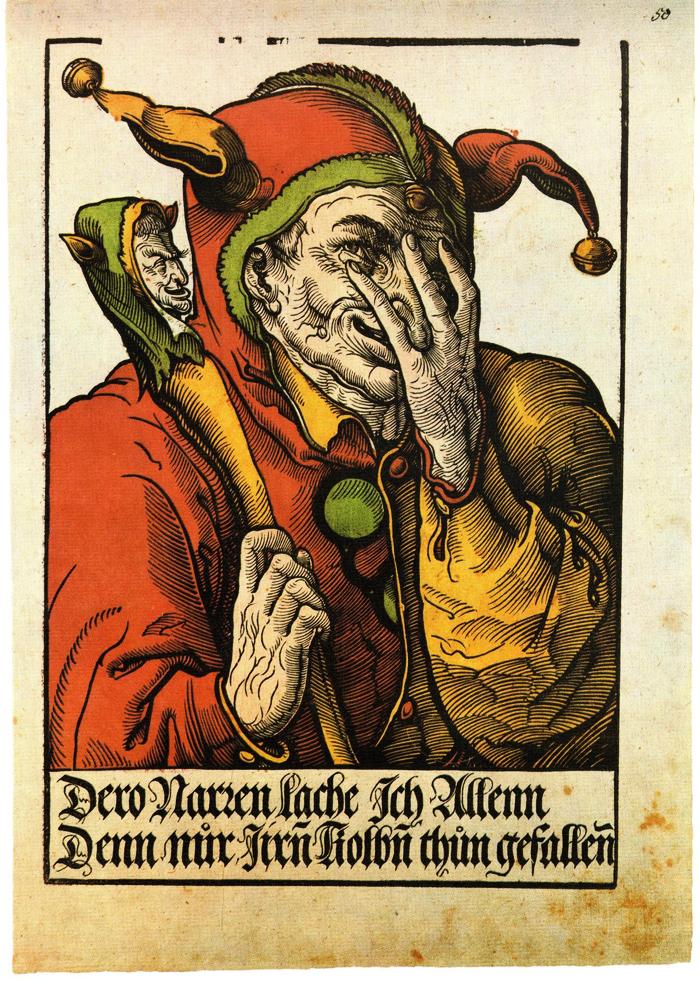
A jester, also known as joker, court jester, or fool, was a member of the household of a nobleman or a monarch kept to entertain guests at the royal court. Jesters were also travelling performers who entertained common folk at fairs and town markets, and the discipline continues into the modern day, where jesters perform at historical-themed events. Jester-like figures were common throughout the world, including Ancient Rome, China, Persia, and the Aztec Empire.
During the post-classical and Renaissance eras, jesters are often thought to have worn brightly coloured clothes and eccentric hats in a motley pattern. Jesters entertained with a wide variety of skills: principal among them were song, music, and storytelling, but many also employed acrobatics, juggling, telling jokes (such as puns and imitation), and performing magic tricks. Much of the entertainment was performed in a comic style. Many jesters made contemporary jokes in word or song about people or events well known to their audiences.
The modern use of the English word jester did not come into use until the mid-16th century, during Tudor times. This modern term derives from the older form gestour, or jestour, originally from French meaning 'storyteller' or 'minstrel'. Other earlier terms included fol, disour, buffoon, and bourder. These terms described entertainers who differed in their skills and performances but who all shared many similarities in their role as comedic performers for their audiences.
In ancient Rome, a balatro ([ˈba.la.troː]) was a professional jester or buffoon. Balatrones were paid for their jests, and the tables of the wealthy were generally open to them for the sake of the amusement they afforded.
There are various theories about the origin of the term. In Horace, Balatro is used as a proper name: Servilius Balatro. An old scholiast derives the common word balatro from the proper name, suggesting that buffoons were called balatrones because Servilius Balatro was a buffoon, though others have since objected to this account. Festus derives the word from blatea, and supposes buffoons to have been called balatrones because they were dirty fellows, covered with spots of mud (blateae) from walking. Another writer suggests a derivation from barathrum, because they, so to speak, carried their jesting to market, even into the very depth (barathrum) of the shambles (barathrum macelli) Balatro may be connected with balare, "to bleat like a sheep", and hence, to speak sillily. Others have suggested a connection with blatero, a busy-body.
Jester-like figures have been common throughout the world. They were known in China, Persia, and the Aztec empire.
Many royal courts throughout English royal history employed entertainers and most had professional fools, sometimes called "licensed fools". Fool Societies, or groups of nomadic entertainers, were often hired to perform acrobatics and juggling.
Jesters were also occasionally used as psychological warfare. Jesters would ride in front of their troops, provoke or mock the enemy, and even serve as messengers. They played an important part in raising their own army's spirits by singing songs and reciting stories.[unreliable source?]
Hub AI
Jester AI simulator
(@Jester_simulator)
Jester
A jester, also known as joker, court jester, or fool, was a member of the household of a nobleman or a monarch kept to entertain guests at the royal court. Jesters were also travelling performers who entertained common folk at fairs and town markets, and the discipline continues into the modern day, where jesters perform at historical-themed events. Jester-like figures were common throughout the world, including Ancient Rome, China, Persia, and the Aztec Empire.
During the post-classical and Renaissance eras, jesters are often thought to have worn brightly coloured clothes and eccentric hats in a motley pattern. Jesters entertained with a wide variety of skills: principal among them were song, music, and storytelling, but many also employed acrobatics, juggling, telling jokes (such as puns and imitation), and performing magic tricks. Much of the entertainment was performed in a comic style. Many jesters made contemporary jokes in word or song about people or events well known to their audiences.
The modern use of the English word jester did not come into use until the mid-16th century, during Tudor times. This modern term derives from the older form gestour, or jestour, originally from French meaning 'storyteller' or 'minstrel'. Other earlier terms included fol, disour, buffoon, and bourder. These terms described entertainers who differed in their skills and performances but who all shared many similarities in their role as comedic performers for their audiences.
In ancient Rome, a balatro ([ˈba.la.troː]) was a professional jester or buffoon. Balatrones were paid for their jests, and the tables of the wealthy were generally open to them for the sake of the amusement they afforded.
There are various theories about the origin of the term. In Horace, Balatro is used as a proper name: Servilius Balatro. An old scholiast derives the common word balatro from the proper name, suggesting that buffoons were called balatrones because Servilius Balatro was a buffoon, though others have since objected to this account. Festus derives the word from blatea, and supposes buffoons to have been called balatrones because they were dirty fellows, covered with spots of mud (blateae) from walking. Another writer suggests a derivation from barathrum, because they, so to speak, carried their jesting to market, even into the very depth (barathrum) of the shambles (barathrum macelli) Balatro may be connected with balare, "to bleat like a sheep", and hence, to speak sillily. Others have suggested a connection with blatero, a busy-body.
Jester-like figures have been common throughout the world. They were known in China, Persia, and the Aztec empire.
Many royal courts throughout English royal history employed entertainers and most had professional fools, sometimes called "licensed fools". Fool Societies, or groups of nomadic entertainers, were often hired to perform acrobatics and juggling.
Jesters were also occasionally used as psychological warfare. Jesters would ride in front of their troops, provoke or mock the enemy, and even serve as messengers. They played an important part in raising their own army's spirits by singing songs and reciting stories.[unreliable source?]