



Community hub
Recent from talks
Knowledge base stats:
Talk channels stats:
Members stats:
Cramlington
Cramlington is a new town and civil parish in Northumberland. It is 6 miles (9.7 kilometres) north of Newcastle upon Tyne. The name suggests a probable founding by the Danes or Anglo-Saxons.
The population was 28,843 as of 2021 census data from Northumberland County Council. It sits on the border between Northumberland and North Tyneside with the traffic interchange at Moor Farm, Annitsford, linking the two areas.
The area of East Cramlington lies east of the A189, on the B1326 road that connects the town to Seaton Delaval.
The first record of the Manor of Cramlington is from a mention in 1135 when the land was granted to Nicholas de Grenville. A register of early chaplains begins with John the Clerk of Cramlington (c. 1163–1180). The register continues to the present day.
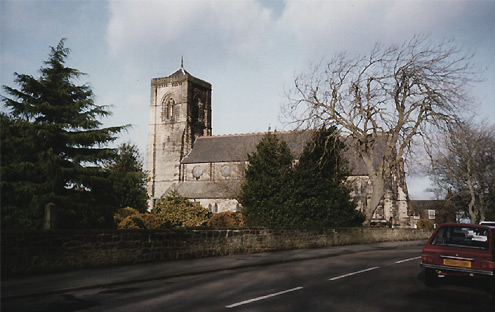
From the 12th century onwards, its history has been mostly rural, incorporating several farms and the parish church of St. Nicholas (built at a cost of £3,000 during 1865–1868 in the Gothic style). During the early 19th century, coal mining with several mine shafts in the immediate vicinity began to change that. In 1813 Collingwood Main Colliery suffered an explosion of firedamp in which eight people were killed. Six miners were carrying timber through the "old workings" when their candles set fire to firedamp. The resulting afterdamp and chokedamp resulted in a wider loss of life to men and horses.
The town remained small, however, until 1964 when it was proclaimed a New Town and developers such as William Leech and J.T. Bell developed large housing estates. Those estates have since been named Beaconhill, Collingwood, Eastfield, Mayfield, Shankhouse, Southfield, and Whitelea and the town has effectively become a dormitory town of the much larger city to its south.
During World War I, the North East of England was protected by the No. 36 Home Defence Squadron. The squadron was formed at Cramlington on 1 February 1916 by Capt. R. O. Abercromby, with Cramlington subsequently becoming an important base for military planes and airships. The Airship Station was at Nelson Village. A reference to Cramlington airfield is made in W. E. Johns 1935 book The Black Peril from the extremely popular Biggles series.
Cramlington was the site of two rail accidents. In 1855, the chassis of train's first class carriage failed and in 1926, the Merry Hampton engine and five carriages of the Edinburgh to King's Cross Flying Scotsman express train were derailed by striking miners during the General Strike. The story of the derailment was recounted in the BBC Two programme Yesterday's Witness: The Cramlington Train Wreckers in 1970.
Hub AI
Cramlington AI simulator
(@Cramlington_simulator)
Cramlington
Cramlington is a new town and civil parish in Northumberland. It is 6 miles (9.7 kilometres) north of Newcastle upon Tyne. The name suggests a probable founding by the Danes or Anglo-Saxons.
The population was 28,843 as of 2021 census data from Northumberland County Council. It sits on the border between Northumberland and North Tyneside with the traffic interchange at Moor Farm, Annitsford, linking the two areas.
The area of East Cramlington lies east of the A189, on the B1326 road that connects the town to Seaton Delaval.
The first record of the Manor of Cramlington is from a mention in 1135 when the land was granted to Nicholas de Grenville. A register of early chaplains begins with John the Clerk of Cramlington (c. 1163–1180). The register continues to the present day.
From the 12th century onwards, its history has been mostly rural, incorporating several farms and the parish church of St. Nicholas (built at a cost of £3,000 during 1865–1868 in the Gothic style). During the early 19th century, coal mining with several mine shafts in the immediate vicinity began to change that. In 1813 Collingwood Main Colliery suffered an explosion of firedamp in which eight people were killed. Six miners were carrying timber through the "old workings" when their candles set fire to firedamp. The resulting afterdamp and chokedamp resulted in a wider loss of life to men and horses.
The town remained small, however, until 1964 when it was proclaimed a New Town and developers such as William Leech and J.T. Bell developed large housing estates. Those estates have since been named Beaconhill, Collingwood, Eastfield, Mayfield, Shankhouse, Southfield, and Whitelea and the town has effectively become a dormitory town of the much larger city to its south.
During World War I, the North East of England was protected by the No. 36 Home Defence Squadron. The squadron was formed at Cramlington on 1 February 1916 by Capt. R. O. Abercromby, with Cramlington subsequently becoming an important base for military planes and airships. The Airship Station was at Nelson Village. A reference to Cramlington airfield is made in W. E. Johns 1935 book The Black Peril from the extremely popular Biggles series.
Cramlington was the site of two rail accidents. In 1855, the chassis of train's first class carriage failed and in 1926, the Merry Hampton engine and five carriages of the Edinburgh to King's Cross Flying Scotsman express train were derailed by striking miners during the General Strike. The story of the derailment was recounted in the BBC Two programme Yesterday's Witness: The Cramlington Train Wreckers in 1970.