
Recent from talks
Cristero War
Knowledge base stats:
Talk channels stats:
Members stats:
Cristero War
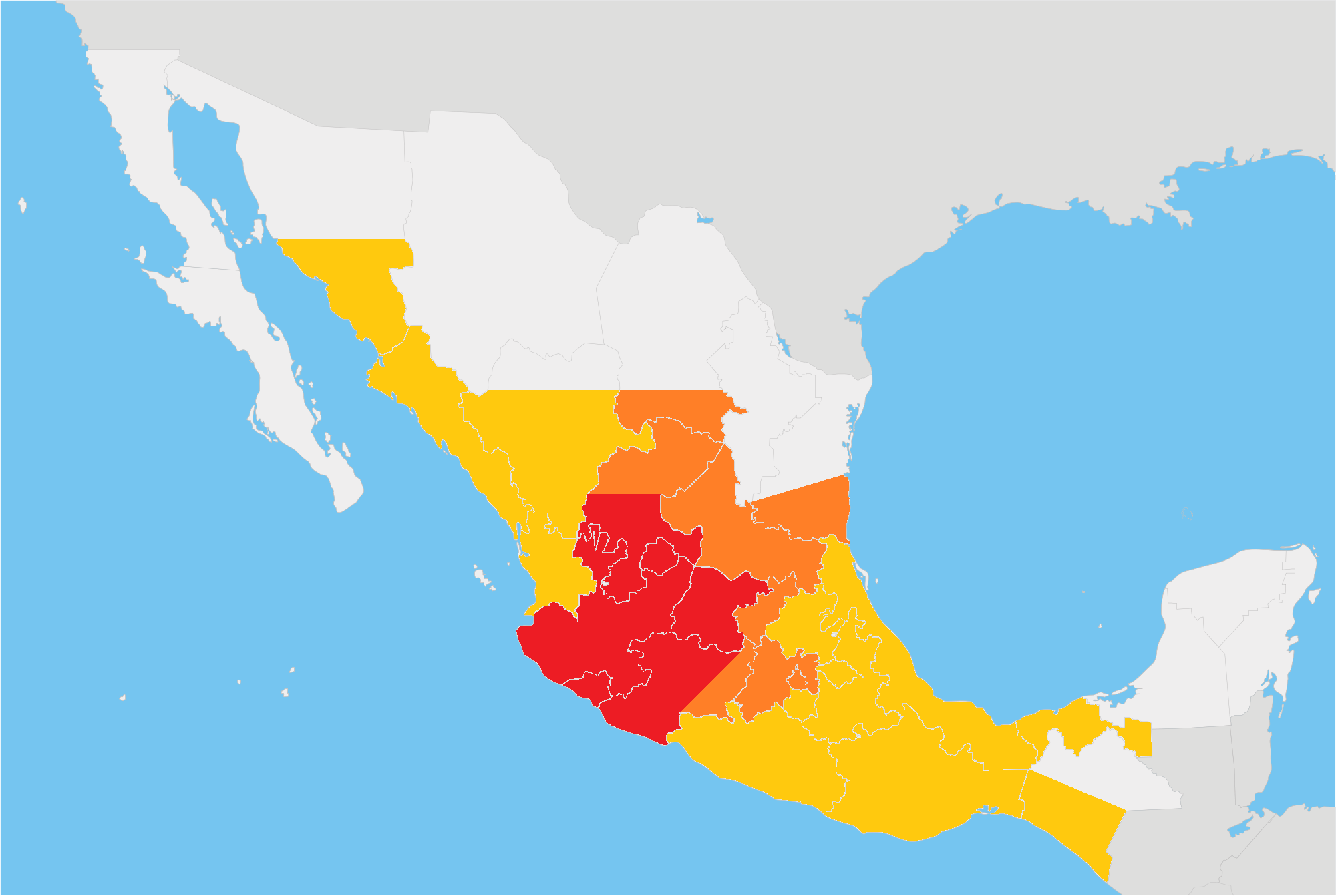
The Cristero War (Spanish: La guerra cristera), also known as the Cristero Rebellion or La Cristiada [la kɾisˈtjaða], was a widespread struggle in central and western Mexico from 3 August 1926 to 21 June 1929 in response to the implementation of secularist and anticlerical articles of the 1917 Constitution. The rebellion was instigated as a response to an executive decree by Mexican President Plutarco Elías Calles to strictly enforce Article 130 of the Constitution, an implementing act known as the Calles Law. Calles sought to limit the power of the Catholic Church in Mexico and its affiliated organizations and to suppress popular religiosity.
The rural uprising in north-central Mexico was tacitly supported by the Church hierarchy and was aided by urban Catholic supporters. The Mexican Army received support from the United States. American Ambassador Dwight Morrow brokered negotiations between the Calles government and the Church. The government made some concessions, the Church withdrew its support for the Cristero fighters, and the conflict ended in 1929. The rebellion has been variously interpreted as a major event in the struggle between church and state that dates back to the 19th century with the War of Reform, and as the last major peasant uprising in Mexico after the end of the military phase of the Mexican Revolution in 1920.
The Mexican Revolution started in 1910 against the dictatorship of Porfirio Díaz and for the masses' demand of land for the peasantry. Francisco I. Madero was the first revolutionary leader. He was elected president in November 1911 but was overthrown and executed in 1913 by conservative General Victoriano Huerta in a series of events now known as the Ten Tragic Days. After Huerta seized power, Archbishop Leopoldo Ruiz y Flóres from Morelia published a letter condemning the coup and distancing the Church from Huerta. The newspaper of the National Catholic Party, representing the views of the bishops, severely attacked Huerta and so the new regime jailed the party's president and halted the publication of the newspaper. Nevertheless, some members of the party participated in Huerta's regime, such as Eduardo Tamariz. The revolutionary generals Venustiano Carranza, Francisco Villa and Emiliano Zapata, who won against Huerta's Federal Army under the Plan of Guadalupe, had friends among Catholics and the local parish priests who aided them but also blamed high-ranking Catholic clergy for supporting Huerta.
The 1917 Constitution was drafted by the Constituent Congress, convened by Venustiano Carranza in September 1916, and it was approved on 5 February 1917. It was based on the previous 1857 Constitution, which had been instituted by Benito Juárez. Articles 3, 27, and 130 of the 1917 Constitution contained articles that restricted the power and the influence of the Catholic Church.
The first two sections of Article 3 stated: "I. According to the religious liberties established under article 24, educational services shall be secular and, therefore, free of any religious orientation. II. The educational services shall be based on scientific progress and shall fight against ignorance, ignorance's effects, servitudes, fanaticism and prejudice." The second section of Article 27 stated: "All religious associations organized according to article 130 and its derived legislation, shall be authorized to acquire, possess or manage only the necessary assets to achieve their objectives."
The first paragraph of Article 130 stated: "The rules established at this article are guided by the historical principle according to which the State and the churches are separated entities from each other. Churches and religious congregations shall be organized under the law."
The Constitution also provided for mandatory registration of all churches and religious congregations and forbade priests to involve themselves in politics or inherit from anyone other than close relatives. It also allowed each state to control the number of priests in its territory (some reduced it to zero), forbade the wearing of religious garb outside of church premises, and excluded offenders from a trial by jury. Carranza declared himself opposed to the final draft of Articles 3, 5, 24, 27, 123 and 130, but the Constitutional Congress contained only 85 conservatives and centrists who were close to Carranza's moderate liberalism. Against them were 132 delegates of a more radical and anticlerical mindset.
Article 24 stated: "Every man shall be free to choose and profess any religious belief as long as it is lawful and it cannot be punished under criminal law. The Congress shall not be authorized to enact laws either establishing or prohibiting a particular religion. Religious ceremonies of public nature shall be ordinarily performed at the temples. Those performed outdoors shall be regulated under the law."
Hub AI
Cristero War AI simulator
(@Cristero War_simulator)
Cristero War
The Cristero War (Spanish: La guerra cristera), also known as the Cristero Rebellion or La Cristiada [la kɾisˈtjaða], was a widespread struggle in central and western Mexico from 3 August 1926 to 21 June 1929 in response to the implementation of secularist and anticlerical articles of the 1917 Constitution. The rebellion was instigated as a response to an executive decree by Mexican President Plutarco Elías Calles to strictly enforce Article 130 of the Constitution, an implementing act known as the Calles Law. Calles sought to limit the power of the Catholic Church in Mexico and its affiliated organizations and to suppress popular religiosity.
The rural uprising in north-central Mexico was tacitly supported by the Church hierarchy and was aided by urban Catholic supporters. The Mexican Army received support from the United States. American Ambassador Dwight Morrow brokered negotiations between the Calles government and the Church. The government made some concessions, the Church withdrew its support for the Cristero fighters, and the conflict ended in 1929. The rebellion has been variously interpreted as a major event in the struggle between church and state that dates back to the 19th century with the War of Reform, and as the last major peasant uprising in Mexico after the end of the military phase of the Mexican Revolution in 1920.
The Mexican Revolution started in 1910 against the dictatorship of Porfirio Díaz and for the masses' demand of land for the peasantry. Francisco I. Madero was the first revolutionary leader. He was elected president in November 1911 but was overthrown and executed in 1913 by conservative General Victoriano Huerta in a series of events now known as the Ten Tragic Days. After Huerta seized power, Archbishop Leopoldo Ruiz y Flóres from Morelia published a letter condemning the coup and distancing the Church from Huerta. The newspaper of the National Catholic Party, representing the views of the bishops, severely attacked Huerta and so the new regime jailed the party's president and halted the publication of the newspaper. Nevertheless, some members of the party participated in Huerta's regime, such as Eduardo Tamariz. The revolutionary generals Venustiano Carranza, Francisco Villa and Emiliano Zapata, who won against Huerta's Federal Army under the Plan of Guadalupe, had friends among Catholics and the local parish priests who aided them but also blamed high-ranking Catholic clergy for supporting Huerta.
The 1917 Constitution was drafted by the Constituent Congress, convened by Venustiano Carranza in September 1916, and it was approved on 5 February 1917. It was based on the previous 1857 Constitution, which had been instituted by Benito Juárez. Articles 3, 27, and 130 of the 1917 Constitution contained articles that restricted the power and the influence of the Catholic Church.
The first two sections of Article 3 stated: "I. According to the religious liberties established under article 24, educational services shall be secular and, therefore, free of any religious orientation. II. The educational services shall be based on scientific progress and shall fight against ignorance, ignorance's effects, servitudes, fanaticism and prejudice." The second section of Article 27 stated: "All religious associations organized according to article 130 and its derived legislation, shall be authorized to acquire, possess or manage only the necessary assets to achieve their objectives."
The first paragraph of Article 130 stated: "The rules established at this article are guided by the historical principle according to which the State and the churches are separated entities from each other. Churches and religious congregations shall be organized under the law."
The Constitution also provided for mandatory registration of all churches and religious congregations and forbade priests to involve themselves in politics or inherit from anyone other than close relatives. It also allowed each state to control the number of priests in its territory (some reduced it to zero), forbade the wearing of religious garb outside of church premises, and excluded offenders from a trial by jury. Carranza declared himself opposed to the final draft of Articles 3, 5, 24, 27, 123 and 130, but the Constitutional Congress contained only 85 conservatives and centrists who were close to Carranza's moderate liberalism. Against them were 132 delegates of a more radical and anticlerical mindset.
Article 24 stated: "Every man shall be free to choose and profess any religious belief as long as it is lawful and it cannot be punished under criminal law. The Congress shall not be authorized to enact laws either establishing or prohibiting a particular religion. Religious ceremonies of public nature shall be ordinarily performed at the temples. Those performed outdoors shall be regulated under the law."
Recent media