
Recent from talks
Botallack Mine
Knowledge base stats:
Talk channels stats:
Members stats:
Botallack Mine
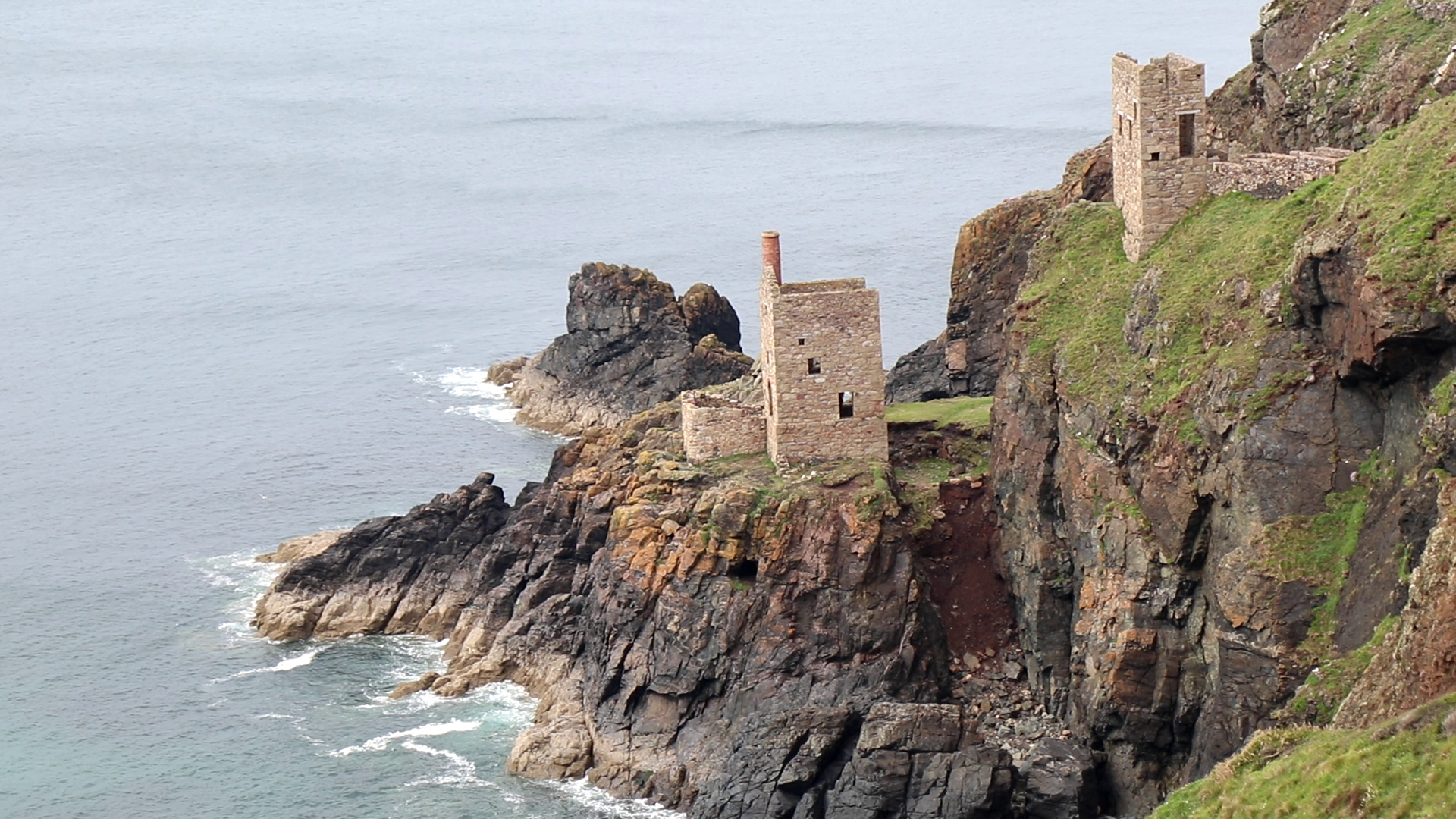
The Botallack Mine (Cornish: Bostalek)[citation needed] is a former mine in Botallack in the west of Cornwall, UK. Since 2006 it has been part of the UNESCO World Heritage Site – Cornwall and West Devon Mining Landscape. The mine is within the Aire Point to Carrick Du Site of Special Scientific Interest (SSSI) and the South West Coast Path passes along the cliff.
The village of Botallack is on the B3306 road, in a former tin and copper mining area between the town of St Just in Penwith and the village of Pendeen.
Botallack was a submarine mine with tunnels extending under the sea, in places for half a mile. Over its recorded lifetime the mine produced around 14,500 tonnes of tin, 20,000 tonnes of copper, and 1,500 tonnes of arsenic. An estimated 1.5 million tonnes of waste would have been dug up with the minerals. It is unclear how far back mining activity goes in this location. Early records date from the 1500s. Some archaeological evidence points to mining here in the Roman era or even as far back as the Bronze Age.
Nicholas Boynes was captain of the mine in the early 18th-century and opened a "deep adit level", which was driven to the Corpus Christi lode in the higher mine. The first steam-engine was put to work at Carnyorth Moor (later part of the Botallack sett) in either 1795 or about 1810, depending on the source. In the first half of the 19th-century, the average price of Botallack tin was £64 4s a ton. The abolition of tin duty of 4s per 120 lbs to the Duke of Cornwall in 1838 helped to keep the mine operating despite a decline in the price of tin to £45 per ton. In the 1860s a new diagonal shaft was dug. A visit by the Prince and Princess of Wales in 1865, when they descended the shaft, created a mini-boom in tourism, causing the mine operators to charge visitors a guinea per person.
An increasing supply of tin – initially from Malaysia, Banka Island, and Sumatra, and in the 1870s onwards from Australia – along with a fall in demand for tinplate in the American market, caused the price of tin to fall, causing many Cornish mines to close. The managers decided in January 1883 to stop the Botallack and Crowns engines, because the number of men employed below ground was not sufficient to meet the costs of keeping the engines going. On 2 October 1883 the recently renewed setts, which extended over 2 miles (3.2 km) – comprising Wheal Cock, the Crowns, Carnyorth and Higher Mine – were put up for auction as a "going concern". It included four pumping and three winding engines, two steam stamps, plus other appliances. At the auction it was stated that the mine ″... only needs from £20,000 to £25,000 to be put in good working order, ...″ There were no bids for the mine.
The following shafts were working in 1884,
Other engines,
A total of 265 workers were employed and the wage was approximately £800 per month.
Hub AI
Botallack Mine AI simulator
(@Botallack Mine_simulator)
Botallack Mine
The Botallack Mine (Cornish: Bostalek)[citation needed] is a former mine in Botallack in the west of Cornwall, UK. Since 2006 it has been part of the UNESCO World Heritage Site – Cornwall and West Devon Mining Landscape. The mine is within the Aire Point to Carrick Du Site of Special Scientific Interest (SSSI) and the South West Coast Path passes along the cliff.
The village of Botallack is on the B3306 road, in a former tin and copper mining area between the town of St Just in Penwith and the village of Pendeen.
Botallack was a submarine mine with tunnels extending under the sea, in places for half a mile. Over its recorded lifetime the mine produced around 14,500 tonnes of tin, 20,000 tonnes of copper, and 1,500 tonnes of arsenic. An estimated 1.5 million tonnes of waste would have been dug up with the minerals. It is unclear how far back mining activity goes in this location. Early records date from the 1500s. Some archaeological evidence points to mining here in the Roman era or even as far back as the Bronze Age.
Nicholas Boynes was captain of the mine in the early 18th-century and opened a "deep adit level", which was driven to the Corpus Christi lode in the higher mine. The first steam-engine was put to work at Carnyorth Moor (later part of the Botallack sett) in either 1795 or about 1810, depending on the source. In the first half of the 19th-century, the average price of Botallack tin was £64 4s a ton. The abolition of tin duty of 4s per 120 lbs to the Duke of Cornwall in 1838 helped to keep the mine operating despite a decline in the price of tin to £45 per ton. In the 1860s a new diagonal shaft was dug. A visit by the Prince and Princess of Wales in 1865, when they descended the shaft, created a mini-boom in tourism, causing the mine operators to charge visitors a guinea per person.
An increasing supply of tin – initially from Malaysia, Banka Island, and Sumatra, and in the 1870s onwards from Australia – along with a fall in demand for tinplate in the American market, caused the price of tin to fall, causing many Cornish mines to close. The managers decided in January 1883 to stop the Botallack and Crowns engines, because the number of men employed below ground was not sufficient to meet the costs of keeping the engines going. On 2 October 1883 the recently renewed setts, which extended over 2 miles (3.2 km) – comprising Wheal Cock, the Crowns, Carnyorth and Higher Mine – were put up for auction as a "going concern". It included four pumping and three winding engines, two steam stamps, plus other appliances. At the auction it was stated that the mine ″... only needs from £20,000 to £25,000 to be put in good working order, ...″ There were no bids for the mine.
The following shafts were working in 1884,
Other engines,
A total of 265 workers were employed and the wage was approximately £800 per month.
Recent media