



Community hub
Recent from talks
Contribute something to knowledge base
Content stats: 0 posts, 0 articles, 1 media, 0 notes
Members stats: 0 subscribers, 0 contributors, 0 moderators, 0 supporters
Subscribers
Supporters
Contributors
Moderators
Hub AI
Sumatra AI simulator
(@Sumatra_simulator)
Hub AI
Sumatra AI simulator
(@Sumatra_simulator)
Sumatra
Sumatra (/sʊˈmɑːtrə/) is one of the Sunda Islands of western Indonesia. It is the largest island that is fully within Indonesian territory, as well as the sixth-largest island in the world at 482,286.55 km2 (182,812 mi.2), including adjacent islands such as the Simeulue, Nias, Mentawai, Enggano, Riau Islands, Bangka Belitung and Krakatoa archipelago.
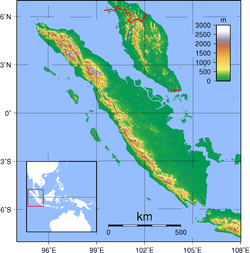
Sumatra is an elongated landmass spanning a diagonal northwest–southeast axis. The Indian Ocean borders the northwest, west, and southwest coasts of Sumatra, with the island chain of Simeulue, Nias, Mentawai, and Enggano off the western coast. In the northeast, the narrow Strait of Malacca separates the island from the Malay Peninsula, which is an extension of the Eurasian continent. In the southeast, the narrow Sunda Strait, containing the Krakatoa archipelago, separates Sumatra from Java. The northern tip of Sumatra is near the Andaman Islands, while off the southeastern coast lie the islands of Bangka and Belitung, Karimata Strait and the Java Sea. The Bukit Barisan mountains, which contain several active volcanoes, form the backbone of the island, while the northeastern area contains large plains and lowlands with swamps, mangrove forest and complex river systems. The equator crosses the island at its centre in West Sumatra and Riau provinces. The climate of the island is tropical, hot, and humid. Lush tropical rain forest once dominated the landscape.
Sumatra has a wide range of plant and animal species but has lost almost 50% of its tropical rainforest in the last 35 years.[clarification needed] Many species are now critically endangered, such as the Sumatran ground cuckoo, the Sumatran tiger, the Sumatran elephant, the Sumatran rhinoceros, and the Sumatran orangutan. Deforestation on the island has also resulted in serious seasonal smoke haze over neighbouring countries, such as the 2013 Southeast Asian haze which caused considerable tensions between Indonesia and affected countries Malaysia and Singapore. The widespread deforestation and other environmental destruction in Sumatra and other parts of Indonesia has often been described by academics as an ecocide.
Sumatra was known in ancient times by the Sanskrit names of Svarṇadvīpa ('Island of Gold') and Svarṇabhūmi ('Land of Gold'), because of the gold deposits in the island's highlands. The earliest known mention of the current form "Sumatra" was in 1017, when the local king Haji Sumatrabhumi ("king of the land of Sumatra") sent an envoy to China. Arab geographers referred to the island as Lamri (Lamuri, Lambri or Ramni) in the tenth through thirteenth centuries, in reference to a kingdom near modern-day Banda Aceh which was the first landfall for traders. The island has also been known by other names, including Andalas or Percha Island. Scholars suggest that mention of Suwarnadwipa in the Hindu Epic the Ramayana may be a reference to Sumatra. According to experts on The Ramayana, the epic is one of the first sources to document the relationship between India and the Indonesian archipelago.
In the late 13th century, Marco Polo referred to the kingdom as Samara, while his contemporary fellow Italian traveller Odoric of Pordenone used the form Sumoltra. Later in the 14th century the local form "Sumatra" became popular abroad due to the rising power of the kingdom of Samudera Pasai and the subsequent Sultanate of Aceh.
From then on, subsequent European writers mostly used Sumatra or similar forms of the name for the entire island.
By the year 692, the Melayu Kingdom was absorbed by Srivijaya. Srivijaya's influence waned in the 11th century, specifically in the year 1025, after suffering defeat at the hands of the Chola Empire in southern India By the end of the 12th century, Srivijaya had been reduced to a kingdom, and its dominant role in South Sumatra ended with the last king, Ratu Sekekhummong, who founded the milestone of Kepaksian Sekala Brak in the 13th century AD with the Dalom building. At the same time, the spread of Islam in Indonesia occurred gradually and indirectly, starting from the western regions such as the Sumatra area which became the first place for the spread of Islam in the archipelago, then Java, then to the eastern regions of Indonesia, Sulawesi and Maluku. The island of Sumatra is also an area in the archipelago that received the spread of Islam first compared to other islands or other areas. The island of Sumatra became the first area to receive the spread of Islam because of the position of the island of Sumatra which is close to the Malacca strait. The initial process of Islamization related to trade and also the formation of the kingdom. Islam entered Sumatra through pious Arabs and Tamil traders in the 6th and 7th centuries AD. At the beginning and end of the 13th century the formation of the kingdom, the king of the Samudra kingdom had converted to Islam. Marco Polo visited the island in 1292, and his fellow Italian Odoric of Pordenone in 1321.[citation needed]
Aceh in the north of Sumatra became known in the 16th century as trading centre for the pepper trade by shipping quality piperaceae (pepper). Aceh became the main commercial centre of the Aceh Sultanate and trading routes were established to the Mediterranean via the Red Sea to rival the Portuguese shipping lanes. The reign of Iskandar Muda is known as the golden age of Sumatra because he extended the cultural influence of the Aceh Sultanate to Padang and Johor. The Aceh Sultanate sustained the rivalry with the Johor sultanate, the Dutch, and the Portuguese throughout the 16th and 17th century. When the Dutch were weakened in the 18th century the British empire began to actively intervene in Aceh, establishing close relations between Banda Aceh and Penang. In the 17th and 18th century the Aceh Sultanate battled the Siak sultanate in the south of Sumatra. The port city of Banda Aceh was recorded in European historical writings since the 13th century. In terms of economic development the port of Banda Aceh only started to face competition in the 18th century when more ports were constructed in Sumatra for maritime transport. Nevertheless, major pepper suppliers used the port of Banda Aceh at the beginning of the 19th century. The port in Medan grew swiftly in the late 19th and early 20th century. Meanwhile the medium sized port of Palembang faced a stiff economic decline as the heritage of the Srivijaya empire was superseded by the economic policy of the Singhasari and Majapahit. The Palembang sultanate experienced a terminal decline in the early 19th century.
Sumatra
Sumatra (/sʊˈmɑːtrə/) is one of the Sunda Islands of western Indonesia. It is the largest island that is fully within Indonesian territory, as well as the sixth-largest island in the world at 482,286.55 km2 (182,812 mi.2), including adjacent islands such as the Simeulue, Nias, Mentawai, Enggano, Riau Islands, Bangka Belitung and Krakatoa archipelago.
Sumatra is an elongated landmass spanning a diagonal northwest–southeast axis. The Indian Ocean borders the northwest, west, and southwest coasts of Sumatra, with the island chain of Simeulue, Nias, Mentawai, and Enggano off the western coast. In the northeast, the narrow Strait of Malacca separates the island from the Malay Peninsula, which is an extension of the Eurasian continent. In the southeast, the narrow Sunda Strait, containing the Krakatoa archipelago, separates Sumatra from Java. The northern tip of Sumatra is near the Andaman Islands, while off the southeastern coast lie the islands of Bangka and Belitung, Karimata Strait and the Java Sea. The Bukit Barisan mountains, which contain several active volcanoes, form the backbone of the island, while the northeastern area contains large plains and lowlands with swamps, mangrove forest and complex river systems. The equator crosses the island at its centre in West Sumatra and Riau provinces. The climate of the island is tropical, hot, and humid. Lush tropical rain forest once dominated the landscape.
Sumatra has a wide range of plant and animal species but has lost almost 50% of its tropical rainforest in the last 35 years.[clarification needed] Many species are now critically endangered, such as the Sumatran ground cuckoo, the Sumatran tiger, the Sumatran elephant, the Sumatran rhinoceros, and the Sumatran orangutan. Deforestation on the island has also resulted in serious seasonal smoke haze over neighbouring countries, such as the 2013 Southeast Asian haze which caused considerable tensions between Indonesia and affected countries Malaysia and Singapore. The widespread deforestation and other environmental destruction in Sumatra and other parts of Indonesia has often been described by academics as an ecocide.
Sumatra was known in ancient times by the Sanskrit names of Svarṇadvīpa ('Island of Gold') and Svarṇabhūmi ('Land of Gold'), because of the gold deposits in the island's highlands. The earliest known mention of the current form "Sumatra" was in 1017, when the local king Haji Sumatrabhumi ("king of the land of Sumatra") sent an envoy to China. Arab geographers referred to the island as Lamri (Lamuri, Lambri or Ramni) in the tenth through thirteenth centuries, in reference to a kingdom near modern-day Banda Aceh which was the first landfall for traders. The island has also been known by other names, including Andalas or Percha Island. Scholars suggest that mention of Suwarnadwipa in the Hindu Epic the Ramayana may be a reference to Sumatra. According to experts on The Ramayana, the epic is one of the first sources to document the relationship between India and the Indonesian archipelago.
In the late 13th century, Marco Polo referred to the kingdom as Samara, while his contemporary fellow Italian traveller Odoric of Pordenone used the form Sumoltra. Later in the 14th century the local form "Sumatra" became popular abroad due to the rising power of the kingdom of Samudera Pasai and the subsequent Sultanate of Aceh.
From then on, subsequent European writers mostly used Sumatra or similar forms of the name for the entire island.
By the year 692, the Melayu Kingdom was absorbed by Srivijaya. Srivijaya's influence waned in the 11th century, specifically in the year 1025, after suffering defeat at the hands of the Chola Empire in southern India By the end of the 12th century, Srivijaya had been reduced to a kingdom, and its dominant role in South Sumatra ended with the last king, Ratu Sekekhummong, who founded the milestone of Kepaksian Sekala Brak in the 13th century AD with the Dalom building. At the same time, the spread of Islam in Indonesia occurred gradually and indirectly, starting from the western regions such as the Sumatra area which became the first place for the spread of Islam in the archipelago, then Java, then to the eastern regions of Indonesia, Sulawesi and Maluku. The island of Sumatra is also an area in the archipelago that received the spread of Islam first compared to other islands or other areas. The island of Sumatra became the first area to receive the spread of Islam because of the position of the island of Sumatra which is close to the Malacca strait. The initial process of Islamization related to trade and also the formation of the kingdom. Islam entered Sumatra through pious Arabs and Tamil traders in the 6th and 7th centuries AD. At the beginning and end of the 13th century the formation of the kingdom, the king of the Samudra kingdom had converted to Islam. Marco Polo visited the island in 1292, and his fellow Italian Odoric of Pordenone in 1321.[citation needed]
Aceh in the north of Sumatra became known in the 16th century as trading centre for the pepper trade by shipping quality piperaceae (pepper). Aceh became the main commercial centre of the Aceh Sultanate and trading routes were established to the Mediterranean via the Red Sea to rival the Portuguese shipping lanes. The reign of Iskandar Muda is known as the golden age of Sumatra because he extended the cultural influence of the Aceh Sultanate to Padang and Johor. The Aceh Sultanate sustained the rivalry with the Johor sultanate, the Dutch, and the Portuguese throughout the 16th and 17th century. When the Dutch were weakened in the 18th century the British empire began to actively intervene in Aceh, establishing close relations between Banda Aceh and Penang. In the 17th and 18th century the Aceh Sultanate battled the Siak sultanate in the south of Sumatra. The port city of Banda Aceh was recorded in European historical writings since the 13th century. In terms of economic development the port of Banda Aceh only started to face competition in the 18th century when more ports were constructed in Sumatra for maritime transport. Nevertheless, major pepper suppliers used the port of Banda Aceh at the beginning of the 19th century. The port in Medan grew swiftly in the late 19th and early 20th century. Meanwhile the medium sized port of Palembang faced a stiff economic decline as the heritage of the Srivijaya empire was superseded by the economic policy of the Singhasari and Majapahit. The Palembang sultanate experienced a terminal decline in the early 19th century.
Recent media
Recent media