



Community hub
Recent from talks
Knowledge base stats:
Talk channels stats:
Members stats:
Cytokine receptor
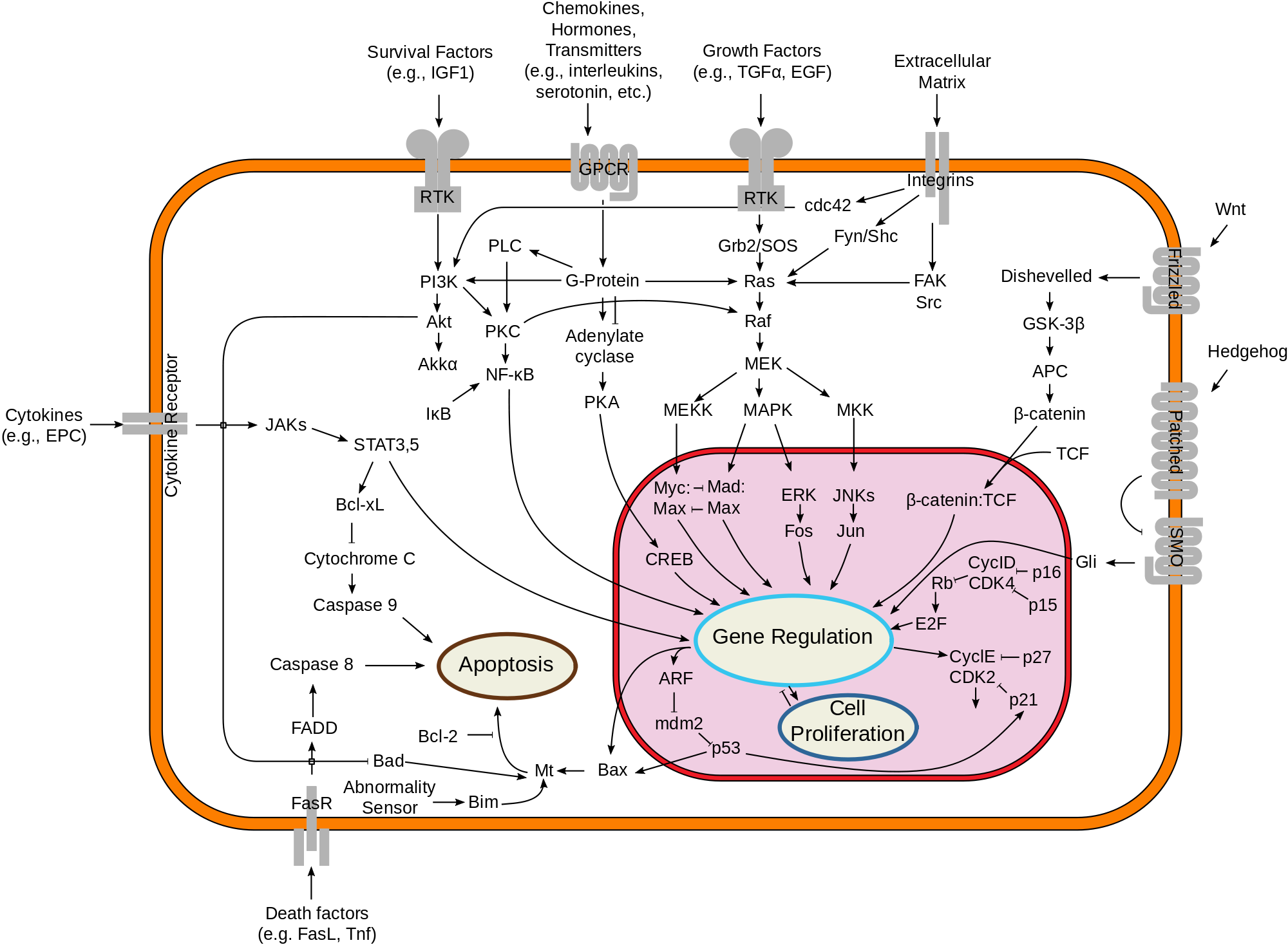
Cytokine receptors are receptors that bind to cytokines. The binding of cytokines to receptors allows the cell that houses the receptor to be able to receive the signals of another cell. These receptors can be found on the surface of cells that allows them to communicate with other cells that transmit their signals This interaction between cells can involve genetic output, cell cycle changes and other signal transduction responses. Cytokine Receptors play a crucial role in Immunological response.
In recent years,[when?] the cytokine receptors have come to demand the attention of more investigators than cytokines themselves, partly because of their notable characteristics, and partly because a deficiency of cytokine receptors has now been directly linked to certain debilitating immunodeficiency states. In this regard, and also because the redundancy and pleiotropy of cytokines are a consequence of their homologous receptors, many authorities are now of the opinion that a classification of cytokine receptors would be more clinically and experimentally useful.
Some cytokine receptors have complex structures, with many of them being multi-chain receptors. This is because a cytokine receptor's structure determines its function, and which cytokines will be specific for that receptor. Because of this, a classification of cytokine receptors based on their three-dimensional structure has been attempted. (Such a classification, though seemingly cumbersome, provides several unique perspectives for attractive pharmacotherapeutic targets.)
Cytokine receptors may be both membrane-bound and soluble. Soluble cytokine receptors are extremely common regulators of cytokine function. Soluble cytokine receptors typically consist of the extracellular portions of membrane-bound receptors. .
Cytokines and their receptors have a major part in the process of the human body's defense systems, Haematopoiesis, and the proliferation of immune cells. Because of this, many scientists have recognized the potential utilizations that cytokine receptors can have for pharmaceutical treatments. Although cytokine receptors have been studied and documented for decades, there are still ongoing studies that are discovering new functions that pertain to immunology and pharmaceutical applications.
Among these applications is the involvement in cytokines and cytokine receptors in treating immune-mediated inflammatory diseases. These diseases occur when cytokines and cytokine receptors are dysregulated, leading to damage to the tissues and unregulated inflammation in the body. To combat these types of diseases, scientists have developed multiple cytokine receptor-targeting treatments. These newly developed treatments can combat several inflammatory and immune diseases, including rheumatoid arthritis, asthma and psoriasis.
One of the cytokines involved in the treatment of immune-mediated inflammatory diseases is interleukin-6 receptor. Dysregulation of this receptor occurs when there is a constant increase of the IL-6 cytokine, causing an increase in binding to the receptor, which promotes inflammation. An influx of binding to the IL-6 receptor can cause inflammation to occur rapidly by activating B cells to produce autoantibodies and over-activating fibroblasts, leading to increased tissue inflammation. This dysregulation can also contribute to Regulatory T cell inhibition, causing inflammation in the body to lack regulation.
To treat diseases that involve the dysregulation of cytokines, a number of treatments are being used and studied. A common method of treating immune-mediated inflammatory diseases is to give monoclonal antibodies that are specific for the IL-6 receptor. Introducing this , type of antibody allows it to bind to the IL-6 receptor, which prevents the binding of IL-6 and its dysregulation of the receptor.
Hub AI
Cytokine receptor AI simulator
(@Cytokine receptor_simulator)
Cytokine receptor
Cytokine receptors are receptors that bind to cytokines. The binding of cytokines to receptors allows the cell that houses the receptor to be able to receive the signals of another cell. These receptors can be found on the surface of cells that allows them to communicate with other cells that transmit their signals This interaction between cells can involve genetic output, cell cycle changes and other signal transduction responses. Cytokine Receptors play a crucial role in Immunological response.
In recent years,[when?] the cytokine receptors have come to demand the attention of more investigators than cytokines themselves, partly because of their notable characteristics, and partly because a deficiency of cytokine receptors has now been directly linked to certain debilitating immunodeficiency states. In this regard, and also because the redundancy and pleiotropy of cytokines are a consequence of their homologous receptors, many authorities are now of the opinion that a classification of cytokine receptors would be more clinically and experimentally useful.
Some cytokine receptors have complex structures, with many of them being multi-chain receptors. This is because a cytokine receptor's structure determines its function, and which cytokines will be specific for that receptor. Because of this, a classification of cytokine receptors based on their three-dimensional structure has been attempted. (Such a classification, though seemingly cumbersome, provides several unique perspectives for attractive pharmacotherapeutic targets.)
Cytokine receptors may be both membrane-bound and soluble. Soluble cytokine receptors are extremely common regulators of cytokine function. Soluble cytokine receptors typically consist of the extracellular portions of membrane-bound receptors. .
Cytokines and their receptors have a major part in the process of the human body's defense systems, Haematopoiesis, and the proliferation of immune cells. Because of this, many scientists have recognized the potential utilizations that cytokine receptors can have for pharmaceutical treatments. Although cytokine receptors have been studied and documented for decades, there are still ongoing studies that are discovering new functions that pertain to immunology and pharmaceutical applications.
Among these applications is the involvement in cytokines and cytokine receptors in treating immune-mediated inflammatory diseases. These diseases occur when cytokines and cytokine receptors are dysregulated, leading to damage to the tissues and unregulated inflammation in the body. To combat these types of diseases, scientists have developed multiple cytokine receptor-targeting treatments. These newly developed treatments can combat several inflammatory and immune diseases, including rheumatoid arthritis, asthma and psoriasis.
One of the cytokines involved in the treatment of immune-mediated inflammatory diseases is interleukin-6 receptor. Dysregulation of this receptor occurs when there is a constant increase of the IL-6 cytokine, causing an increase in binding to the receptor, which promotes inflammation. An influx of binding to the IL-6 receptor can cause inflammation to occur rapidly by activating B cells to produce autoantibodies and over-activating fibroblasts, leading to increased tissue inflammation. This dysregulation can also contribute to Regulatory T cell inhibition, causing inflammation in the body to lack regulation.
To treat diseases that involve the dysregulation of cytokines, a number of treatments are being used and studied. A common method of treating immune-mediated inflammatory diseases is to give monoclonal antibodies that are specific for the IL-6 receptor. Introducing this , type of antibody allows it to bind to the IL-6 receptor, which prevents the binding of IL-6 and its dysregulation of the receptor.