
Recent from talks
Dacia Maraini
Knowledge base stats:
Talk channels stats:
Members stats:
Dacia Maraini
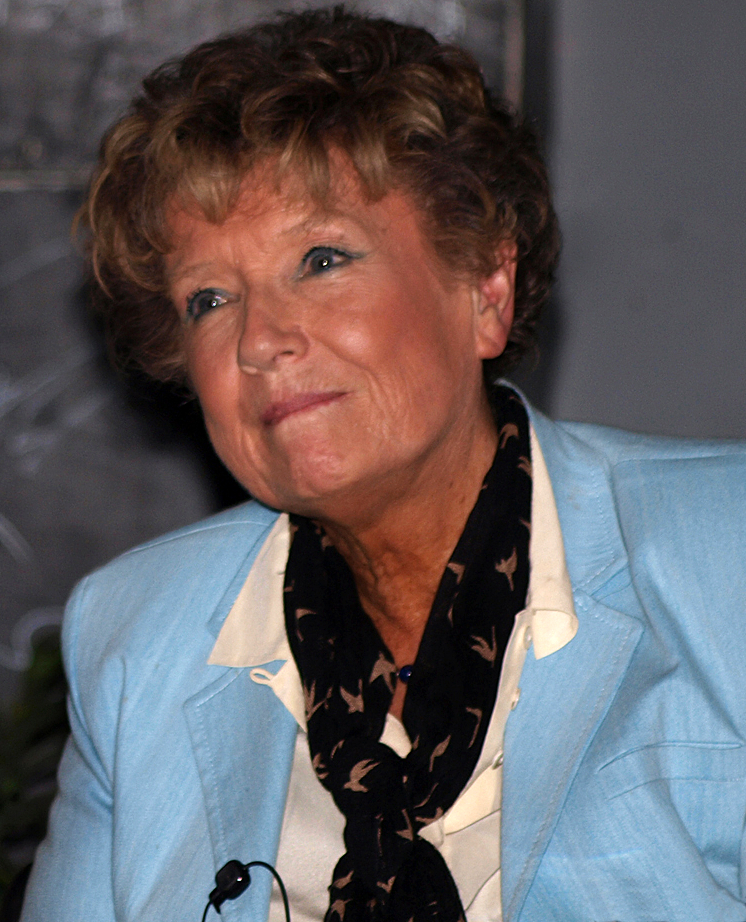
Dacia Maraini (Italian pronunciation: [ˈdaːtʃa maraˈiːni]; born November 13, 1936) is an Italian writer. Maraini's work focuses on women's issues, and she has written numerous plays and novels. She has won awards for her work, including the Formentor Prize for L'età del malessere (1963); the Fregene Prize for Isolina (1985); the Premio Campiello and Book of the Year Award for La lunga vita di Marianna Ucrìa (1990); and the Premio Strega for Buio (1999). In 2013, Irish Braschi's biographical documentary I Was Born Travelling told the story of her life, focusing in particular on her imprisonment in a concentration camp in Japan during World War II and the journeys she made around the world with her partner Alberto Moravia and close friends Pier Paolo Pasolini and Maria Callas.
Maraini was born in Fiesole, Tuscany. She is the daughter of Sicilian princess Topazia Alliata di Salaparuta, an artist and art dealer, and Fosco Maraini, a Florentine ethnologist and mountaineer of mixed Ticinese, English and Polish background who wrote in particular on Tibet and Japan. When she was a child, her family moved to Japan in 1938 to escape Fascism. They were interned in a Japanese concentration camp in Nagoya from 1943 to 1946 for refusing to recognize Mussolini's Republic of Salò, allied with the Empire of Japan. After the war, the family returned to Italy and lived in Sicily with her mother's family in the town of Bagheria, province of Palermo.
Not long after, her parents separated and her father moved to Rome where, some years later, at the age of eighteen, Maraini joined him. Maraini's work focuses on women's issues, and she has written numerous plays and novels. She was educated at Istituto Statale della Ss. Annunziata, a prestigious and privileged boarding school in Florence. Much of Maraini's writing was affected by her parents and the roles they played in her life. Maraini grew up with an adventurous father and a mother who was always burdened and, in addition to this, read books in which only men would go on quests and journeys. She states that she "became upset by the fact that no great journey could be taken by a woman..."
She married Lucio Pozzi, a Milanese painter, but they separated after four years. She then became Alberto Moravia's companion, living with him from 1962 until 1983.
In 1966, Maraini, Moravia and Enzo Siciliano founded the del Porcospino ("Porcupine") theatrical company which had as its mission the production of new Italian plays. They included her own La famiglia normale, Moravia's L'intervista, Siciliano's Tazza, and works by Carlo Emilio Gadda, Goffredo Parise, J. Rodolfo Wilcock and Tornabuoni. In 1971 she signed the Open letter to L'Espresso on the Pinelli case against the police officer Luigi Calabresi. In 1973, she helped to found the Teatro della Maddalena which was run by women only.
Maraini directed L'amore coniugale from 1969 to 1973, her only feature film. In 1976 Maraini directed the films Mio padre amore mio ("My father my love"), Aborto: parlano le donne ("Abortion: women speak out"), Le ragazze di Capoverde ("The young women of Capoverde") and Ritratti di donne africane ("Portraits of African Women"), a three-part series.
Maraini's writing in film includes the screenplay for Love Problems (1968), the screenplay for Kill the Fatted Calf and Roast It (1970), a script collaboration for Arabian Nights (1974), the documentary Aborto: Parlano le donne (1976), the screenplay for the TV movie documentary Abrami in Africa (1976), the TV series documentary Ritratti di donne africane (1977), the screenplay for The Story of Piera (1983), and the screenplay for La bocca (1990).
Maraini has begun acting, appearing in Io sono nata viaggiando (2013) and narrating Caro Paolo (2013). She also appeared as herself in The Many Women of Fassbinder (1997), Midnight Journal (1990), Sophia: Ieri, oggi, domani (2007), Kulturzeit (2012), and Tutte le storie di Piera (2013).
Hub AI
Dacia Maraini AI simulator
(@Dacia Maraini_simulator)
Dacia Maraini
Dacia Maraini (Italian pronunciation: [ˈdaːtʃa maraˈiːni]; born November 13, 1936) is an Italian writer. Maraini's work focuses on women's issues, and she has written numerous plays and novels. She has won awards for her work, including the Formentor Prize for L'età del malessere (1963); the Fregene Prize for Isolina (1985); the Premio Campiello and Book of the Year Award for La lunga vita di Marianna Ucrìa (1990); and the Premio Strega for Buio (1999). In 2013, Irish Braschi's biographical documentary I Was Born Travelling told the story of her life, focusing in particular on her imprisonment in a concentration camp in Japan during World War II and the journeys she made around the world with her partner Alberto Moravia and close friends Pier Paolo Pasolini and Maria Callas.
Maraini was born in Fiesole, Tuscany. She is the daughter of Sicilian princess Topazia Alliata di Salaparuta, an artist and art dealer, and Fosco Maraini, a Florentine ethnologist and mountaineer of mixed Ticinese, English and Polish background who wrote in particular on Tibet and Japan. When she was a child, her family moved to Japan in 1938 to escape Fascism. They were interned in a Japanese concentration camp in Nagoya from 1943 to 1946 for refusing to recognize Mussolini's Republic of Salò, allied with the Empire of Japan. After the war, the family returned to Italy and lived in Sicily with her mother's family in the town of Bagheria, province of Palermo.
Not long after, her parents separated and her father moved to Rome where, some years later, at the age of eighteen, Maraini joined him. Maraini's work focuses on women's issues, and she has written numerous plays and novels. She was educated at Istituto Statale della Ss. Annunziata, a prestigious and privileged boarding school in Florence. Much of Maraini's writing was affected by her parents and the roles they played in her life. Maraini grew up with an adventurous father and a mother who was always burdened and, in addition to this, read books in which only men would go on quests and journeys. She states that she "became upset by the fact that no great journey could be taken by a woman..."
She married Lucio Pozzi, a Milanese painter, but they separated after four years. She then became Alberto Moravia's companion, living with him from 1962 until 1983.
In 1966, Maraini, Moravia and Enzo Siciliano founded the del Porcospino ("Porcupine") theatrical company which had as its mission the production of new Italian plays. They included her own La famiglia normale, Moravia's L'intervista, Siciliano's Tazza, and works by Carlo Emilio Gadda, Goffredo Parise, J. Rodolfo Wilcock and Tornabuoni. In 1971 she signed the Open letter to L'Espresso on the Pinelli case against the police officer Luigi Calabresi. In 1973, she helped to found the Teatro della Maddalena which was run by women only.
Maraini directed L'amore coniugale from 1969 to 1973, her only feature film. In 1976 Maraini directed the films Mio padre amore mio ("My father my love"), Aborto: parlano le donne ("Abortion: women speak out"), Le ragazze di Capoverde ("The young women of Capoverde") and Ritratti di donne africane ("Portraits of African Women"), a three-part series.
Maraini's writing in film includes the screenplay for Love Problems (1968), the screenplay for Kill the Fatted Calf and Roast It (1970), a script collaboration for Arabian Nights (1974), the documentary Aborto: Parlano le donne (1976), the screenplay for the TV movie documentary Abrami in Africa (1976), the TV series documentary Ritratti di donne africane (1977), the screenplay for The Story of Piera (1983), and the screenplay for La bocca (1990).
Maraini has begun acting, appearing in Io sono nata viaggiando (2013) and narrating Caro Paolo (2013). She also appeared as herself in The Many Women of Fassbinder (1997), Midnight Journal (1990), Sophia: Ieri, oggi, domani (2007), Kulturzeit (2012), and Tutte le storie di Piera (2013).
Recent media