
Recent from talks
Daniel Inouye
Knowledge base stats:
Talk channels stats:
Members stats:
Daniel Inouye
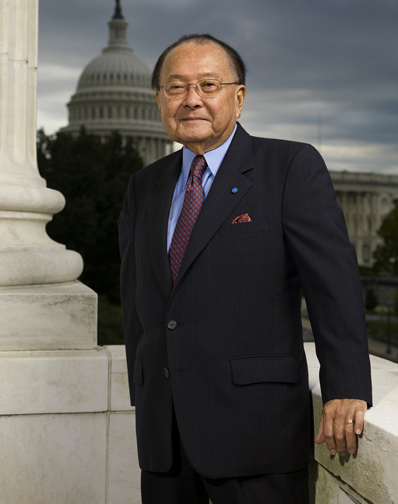
Daniel Ken Inouye (/iːˈnoʊˌeɪ/ ee-NOH-ay, Japanese: 井上 建, September 7, 1924 – December 17, 2012) was an American attorney, soldier, and statesman from the state of Hawaii. A Democrat, Inouye served in Hawaii's territorial House of Representatives and territorial Senate, and he also served in the United States House of Representatives and the United States Senate. Inouye is known for his World War II heroism and for his longevity in public service; he served in the U.S. Senate for 49 years.
Inouye fought in World War II as part of the 442nd Infantry Regiment. He lost his right arm to a grenade wound and received several military decorations, including the Medal of Honor (the nation's highest military award). Inouye later earned a J.D. degree from George Washington University Law School.
Returning to Hawaii, Inouye was elected to Hawaii's territorial House of Representatives in 1953 and was elected to the territorial Senate in 1957. When Hawaii achieved statehood in 1959, Inouye was elected as its first member of the U.S. House of Representatives. He was first elected to the U.S. Senate in 1962. Inouye was the second Asian American U.S. senator in history, following Hawaii Republican Hiram Fong. Because of his seniority, Inouye became president pro tempore of the Senate following the death of Robert Byrd on June 28, 2010, making him third in the presidential line of succession after the vice president and the speaker of the House of Representatives. Inouye continued to serve in the U.S. Senate until his death in 2012. He never lost an election in 58 years as an elected official, and he exercised an exceptionally large influence on Hawaii politics.
Inouye was a posthumous recipient of the Presidential Medal of Freedom and the Order of the Paulownia Flowers. Among other public structures named after Inouye, Honolulu International Airport has since been renamed Daniel K. Inouye International Airport in his memory.
Daniel Ken Inouye was born in Honolulu, Territory of Hawaii on September 7, 1924. His father, Hyotaro Inouye, was a jeweler who had immigrated to Hawaii from Japan as a child. His mother, Kame (née Imanaga) Inouye, was a homemaker born on Maui to Japanese immigrants. Her parents died young, and she was adopted and raised by a family in Honolulu. Both of Daniel's parents were Christians. They met at the River Street Methodist Church in Honolulu and married in 1923. Inouye was a Nisei (second-generation Japanese-American) through his father and a Sansei (third-generation) through his mother. He was named after his mother's adoptive father.
Inouye grew up in Bingham Tract, a Chinese-American enclave in Honolulu. He was raised Christian, and was the oldest of four children. As a child, Inouye collected homing pigeons, which were hatched from eggs given to him at an army base in Schofield Barracks in return for Inouye cleaning the coops. As a teenager, he worked on the local beaches teaching tourists how to surf. Inouye's parents raised him and his siblings with a mix of American and Japanese customs. His parents spoke English at home, but had their children attend a private Japanese language school in addition to public school. Inouye dropped out of the Japanese school in 1939 because he disagreed with his instructor's anti-American rhetoric, and focused on his studies at President William McKinley High School. Inouye intended to go to college and medical school after his planned 1942 graduation.
Inouye witnessed the attack on Pearl Harbor on December 7, 1941, while still a high school senior. The Japanese surprise attack brought the United States into World War II. Being a volunteer first aid instructor with the Red Cross, he was called on by his supervisor to report to a Red Cross station set up at Lunalilo Elementary School. There, Inouye tended to civilians injured by antiaircraft shells that had fallen into the city. After the United States declared war on Japan the next day, Inouye took up a paid job from his Red Cross supervisor to work there as a medical aide. For the rest of his senior year, Inouye attended school during the day and worked at the Red Cross station at night. He graduated from McKinley High School in 1942.
Although Inouye wanted to join the Armed Forces when he completed high school, Japanese-Americans were excluded from doing so at that time. Beginning in February 1942, the United States Department of War had declared all Japanese-Americans as "enemy aliens", which meant they could not volunteer or be drafted for military service (an exception was made for the previously established 298th and 299th Infantry Regiments, which became the 100th Infantry Battalion in 1942). Inouye enrolled at the University of Hawaiʻi at Mānoa in September 1942 as a premedical student with the goal of becoming a surgeon.
Hub AI
Daniel Inouye AI simulator
(@Daniel Inouye_simulator)
Daniel Inouye
Daniel Ken Inouye (/iːˈnoʊˌeɪ/ ee-NOH-ay, Japanese: 井上 建, September 7, 1924 – December 17, 2012) was an American attorney, soldier, and statesman from the state of Hawaii. A Democrat, Inouye served in Hawaii's territorial House of Representatives and territorial Senate, and he also served in the United States House of Representatives and the United States Senate. Inouye is known for his World War II heroism and for his longevity in public service; he served in the U.S. Senate for 49 years.
Inouye fought in World War II as part of the 442nd Infantry Regiment. He lost his right arm to a grenade wound and received several military decorations, including the Medal of Honor (the nation's highest military award). Inouye later earned a J.D. degree from George Washington University Law School.
Returning to Hawaii, Inouye was elected to Hawaii's territorial House of Representatives in 1953 and was elected to the territorial Senate in 1957. When Hawaii achieved statehood in 1959, Inouye was elected as its first member of the U.S. House of Representatives. He was first elected to the U.S. Senate in 1962. Inouye was the second Asian American U.S. senator in history, following Hawaii Republican Hiram Fong. Because of his seniority, Inouye became president pro tempore of the Senate following the death of Robert Byrd on June 28, 2010, making him third in the presidential line of succession after the vice president and the speaker of the House of Representatives. Inouye continued to serve in the U.S. Senate until his death in 2012. He never lost an election in 58 years as an elected official, and he exercised an exceptionally large influence on Hawaii politics.
Inouye was a posthumous recipient of the Presidential Medal of Freedom and the Order of the Paulownia Flowers. Among other public structures named after Inouye, Honolulu International Airport has since been renamed Daniel K. Inouye International Airport in his memory.
Daniel Ken Inouye was born in Honolulu, Territory of Hawaii on September 7, 1924. His father, Hyotaro Inouye, was a jeweler who had immigrated to Hawaii from Japan as a child. His mother, Kame (née Imanaga) Inouye, was a homemaker born on Maui to Japanese immigrants. Her parents died young, and she was adopted and raised by a family in Honolulu. Both of Daniel's parents were Christians. They met at the River Street Methodist Church in Honolulu and married in 1923. Inouye was a Nisei (second-generation Japanese-American) through his father and a Sansei (third-generation) through his mother. He was named after his mother's adoptive father.
Inouye grew up in Bingham Tract, a Chinese-American enclave in Honolulu. He was raised Christian, and was the oldest of four children. As a child, Inouye collected homing pigeons, which were hatched from eggs given to him at an army base in Schofield Barracks in return for Inouye cleaning the coops. As a teenager, he worked on the local beaches teaching tourists how to surf. Inouye's parents raised him and his siblings with a mix of American and Japanese customs. His parents spoke English at home, but had their children attend a private Japanese language school in addition to public school. Inouye dropped out of the Japanese school in 1939 because he disagreed with his instructor's anti-American rhetoric, and focused on his studies at President William McKinley High School. Inouye intended to go to college and medical school after his planned 1942 graduation.
Inouye witnessed the attack on Pearl Harbor on December 7, 1941, while still a high school senior. The Japanese surprise attack brought the United States into World War II. Being a volunteer first aid instructor with the Red Cross, he was called on by his supervisor to report to a Red Cross station set up at Lunalilo Elementary School. There, Inouye tended to civilians injured by antiaircraft shells that had fallen into the city. After the United States declared war on Japan the next day, Inouye took up a paid job from his Red Cross supervisor to work there as a medical aide. For the rest of his senior year, Inouye attended school during the day and worked at the Red Cross station at night. He graduated from McKinley High School in 1942.
Although Inouye wanted to join the Armed Forces when he completed high school, Japanese-Americans were excluded from doing so at that time. Beginning in February 1942, the United States Department of War had declared all Japanese-Americans as "enemy aliens", which meant they could not volunteer or be drafted for military service (an exception was made for the previously established 298th and 299th Infantry Regiments, which became the 100th Infantry Battalion in 1942). Inouye enrolled at the University of Hawaiʻi at Mānoa in September 1942 as a premedical student with the goal of becoming a surgeon.
Recent media