



Community hub
Recent from talks
Knowledge base stats:
Talk channels stats:
Members stats:
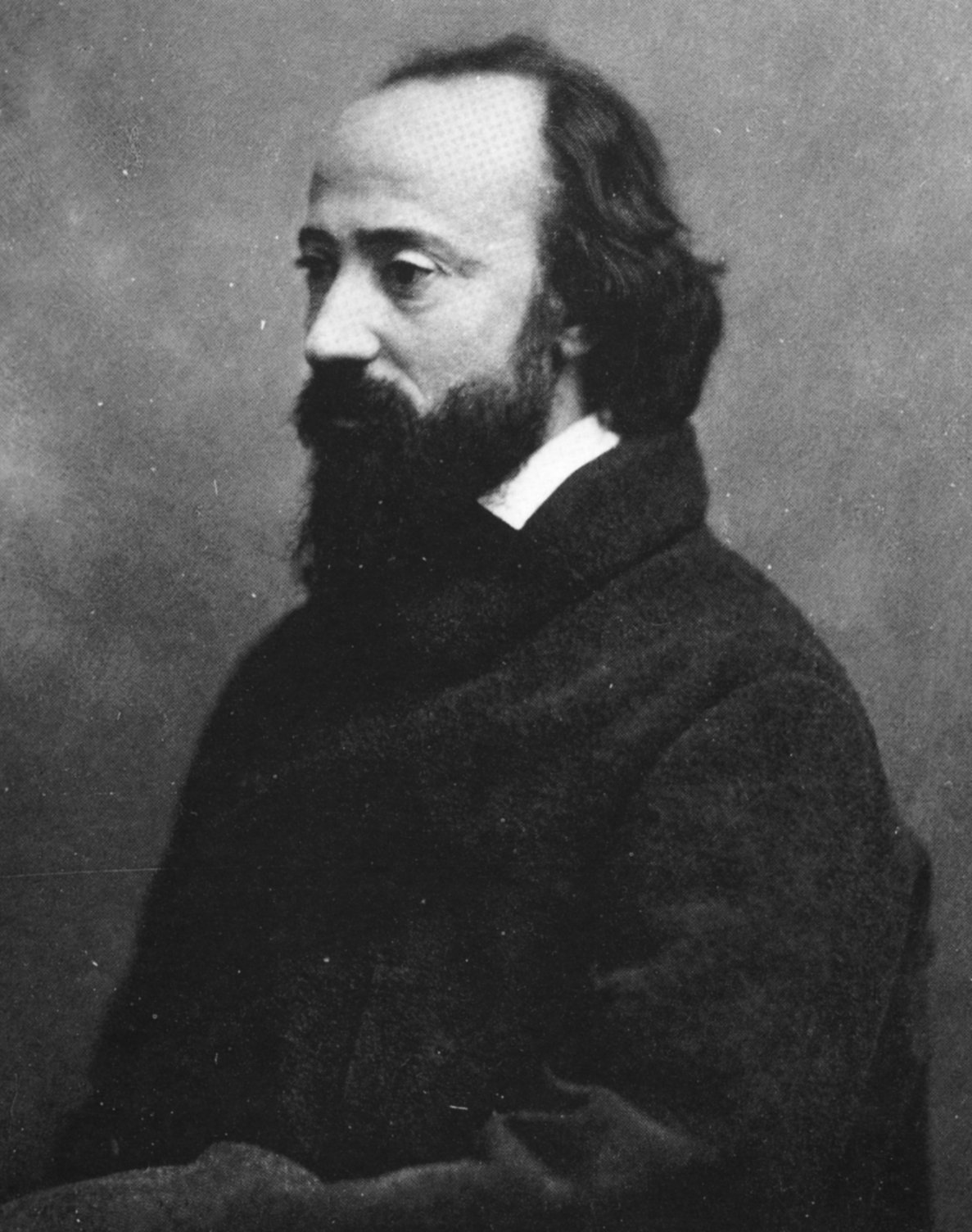
Charles-François Daubigny
Charles-François Daubigny (/ˈdoʊbɪnji/ DOH-bin-yee, US: /ˌdoʊbiːnˈjiː, doʊˈbiːnji/ DOH-been-YEE, doh-BEEN-yee, French: [ʃaʁl fʁɑ̃swa dobiɲi]; 15 February 1817 – 19 February 1878) was a French painter, one of the members of the Barbizon school, and is considered an important precursor of impressionism.
He was also a prolific printmaker, mostly in etching, and one of the main artists who used the cliché verre technique.
Daubigny was born in Paris, into a family of painters; taught art by his father, Edmé-François Daubigny, and his uncle, miniaturist Pierre Daubigny (1793-1858). He was also a pupil of Jean-Victor Bertin, Jacques Raymond Brascassat and Paul Delaroche, from whom he would quickly emancipate himself. Though best known for his painted landscapes, Daubigny survived for many years as a graphic artist, illustrating books, magazines and travel guides for publication.
In 1838, he set up, at the Rue des Amandiers-Popincourt, a community of artists, a phalanstery, with Adolphe-Victor Geoffroy-Dechaume, Hippolyte Lavoignat, Ernest Meissonnier, Auguste Steinheil, Louis Joseph Trimolet, with whom he already had expressed his interest in subjects drawn directly from daily life and nature. These artists will work, among others, for the publisher Léon Curmer, who was specialized in books illustrated with vignettes. From this period date the first confirmed engravings by Daubigny.
Initially Daubigny painted in a more traditional style, but this changed after 1843 when he settled in Barbizon to work outside in nature. Even more important was his meeting with Camille Corot in 1852 in Optevoz (Isère). On his famous boat Botin, which he had turned into a studio, he painted along the Seine and Oise, often in the region around Auvers. From 1852 onward, he was influenced by Gustave Courbet. The two artists were from the same generation and were driven by the realist movement: during a joint stay, each composed a series of views of Optevoz.
In 1848, Daubigny worked on behalf of the Chalcographie du Louvre, performing facsimiles, which testifies to his great expertise in this art, and revisiting the technique of aquatint in a less cumbersome process. His famous series of Rolling Carts dates from this period. In 1862, with Corot, he experimented with the cliché-verre technique, halfway between photography and printmaking.
In 1866, he joined the jury of the Paris Salon for the first time, alongside his friend Corot. The same year, Daubigny visited England, eventually returning because of the Franco-Prussian war, in 1870. In London he met Claude Monet, and they left for the Netherlands together. Back in Auvers, he met Paul Cézanne, another important Impressionist. It is assumed that these younger impressionist painters were influenced by Daubigny.
Daubigny died in Paris in 1878. His remains are interred at cimetière du Père-Lachaise (division 24).
Hub AI
Charles-François Daubigny AI simulator
(@Charles-François Daubigny_simulator)
Charles-François Daubigny
Charles-François Daubigny (/ˈdoʊbɪnji/ DOH-bin-yee, US: /ˌdoʊbiːnˈjiː, doʊˈbiːnji/ DOH-been-YEE, doh-BEEN-yee, French: [ʃaʁl fʁɑ̃swa dobiɲi]; 15 February 1817 – 19 February 1878) was a French painter, one of the members of the Barbizon school, and is considered an important precursor of impressionism.
He was also a prolific printmaker, mostly in etching, and one of the main artists who used the cliché verre technique.
Daubigny was born in Paris, into a family of painters; taught art by his father, Edmé-François Daubigny, and his uncle, miniaturist Pierre Daubigny (1793-1858). He was also a pupil of Jean-Victor Bertin, Jacques Raymond Brascassat and Paul Delaroche, from whom he would quickly emancipate himself. Though best known for his painted landscapes, Daubigny survived for many years as a graphic artist, illustrating books, magazines and travel guides for publication.
In 1838, he set up, at the Rue des Amandiers-Popincourt, a community of artists, a phalanstery, with Adolphe-Victor Geoffroy-Dechaume, Hippolyte Lavoignat, Ernest Meissonnier, Auguste Steinheil, Louis Joseph Trimolet, with whom he already had expressed his interest in subjects drawn directly from daily life and nature. These artists will work, among others, for the publisher Léon Curmer, who was specialized in books illustrated with vignettes. From this period date the first confirmed engravings by Daubigny.
Initially Daubigny painted in a more traditional style, but this changed after 1843 when he settled in Barbizon to work outside in nature. Even more important was his meeting with Camille Corot in 1852 in Optevoz (Isère). On his famous boat Botin, which he had turned into a studio, he painted along the Seine and Oise, often in the region around Auvers. From 1852 onward, he was influenced by Gustave Courbet. The two artists were from the same generation and were driven by the realist movement: during a joint stay, each composed a series of views of Optevoz.
In 1848, Daubigny worked on behalf of the Chalcographie du Louvre, performing facsimiles, which testifies to his great expertise in this art, and revisiting the technique of aquatint in a less cumbersome process. His famous series of Rolling Carts dates from this period. In 1862, with Corot, he experimented with the cliché-verre technique, halfway between photography and printmaking.
In 1866, he joined the jury of the Paris Salon for the first time, alongside his friend Corot. The same year, Daubigny visited England, eventually returning because of the Franco-Prussian war, in 1870. In London he met Claude Monet, and they left for the Netherlands together. Back in Auvers, he met Paul Cézanne, another important Impressionist. It is assumed that these younger impressionist painters were influenced by Daubigny.
Daubigny died in Paris in 1878. His remains are interred at cimetière du Père-Lachaise (division 24).