



Community hub
Recent from talks
Knowledge base stats:
Talk channels stats:
Members stats:
David Asante
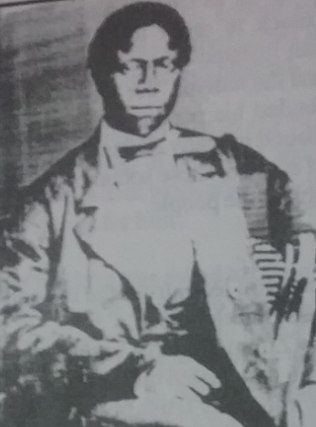
David Asante (23 December 1834 – 13 October 1892) was a philologist, linguist, translator and the first Akan native missionary of the Basel Evangelical Missionary Society. He was the second African to be educated in Europe by the Basel Mission after the Americo-Liberian pastor, George Peter Thompson. Asante worked closely with the German missionary and philologist, Johann Gottlieb Christaller and fellow native linguists, Theophilus Opoku, Jonathan Palmer Bekoe, and Paul Staudt Keteku in the translation of the Bible into the Twi language.
David Asante was born on 23 December 1834 at Akropong-Akuapem, capital of Akuapem, a state 30 miles (48 km) northeast of Accra. His father was Nana Owusu Akyem of the ruling Asona clan and direct cousin of the then Okuapehene, Nana Adum Tokori. Asante's father was a personal friend of Andreas Riis, the Danish minister and first Basel missionary-survivor on the Gold Coast. David Asante's cousin was his fellow linguist, Theophilus Opoku. As a child, he began his formal education when his father gave him to the Basel missionary, Johann G. Widmann as a houseboy and year later, he was sent to J. C. Dieterle to become a personal assistant in his household. He learnt English during his time with the two missionaries who described him as hardworking and bright.
On 25 December 1847, David Asante was baptised by a Basel missionary and became one of the first converts to Christianity in his hometown. By his own account, he had his conversion experience during a singing exercise at school when he sang the hymn, “Come ye sinners, poor and needy.” by the American composer, Ira D. Sankey. A few months earlier, he had witnessed the conversion of two labourers, Anum and Tettey at Osu on Pentecost Sunday. These two experiences had a profound effect on Asante, leading to his conversion, which ultimately created a rift between him and his mother who saw the whole episode as sacrilege.
In 1848 he was among five students in the pioneer class of the newly opened Basel Mission Seminary at Akropong, for a five-year course training as a teacher-catechist and becoming proficient in German, Greek, Latin, and Hebrew. Other members of the foundation class were John Powell Rochester, Paul Staudt Keteku, William Yirenkyi and Jonathan Palmer Bekoe. At the Akropong seminary, he was taught by the Jamaican Moravian missionary, Alexander Worthy Clerk who was an instructor in Biblical studies.
In August 1857, the church awarded him a bursary for further training as a priest at the Basel Mission Seminary in Basel, Switzerland. For five years, he received instruction in theology, philosophy, linguistics and philology. In 1860, while in Basel, his brother Oforikae joined him but died a year later from tuberculosis. He was ordained a pastor in the Basel Minister in 1862. He returned to his homeland in June of that year.
After his graduation from the Akropong seminary, he was posted to Larteh as a missionary, 8 km or 5 miles southeast of Akropong. Here, he encountered fetishism and paganist customs of the old traditional religion. He built a chapel, mission house and founded the first Christian congregation there. After two years at Larteh, he was transferred to Gyadam then the capital of Akyem Kotoku, on the Birim River, about 15 miles (24 km) north of Kyebi, as an assistant to the Basel missionary, Simon Süss. Notable among divinities he found in these towns were Akonedi, Ohyiawu, Konkom and Katawere. He was not able to win converts in Gyadam.
On his return home from Basel as an ordained minister, he worked with the Basel Mission at Akropong under the mentorship of J. G. Widmann. In 1864, he was transferred to Larteh for a second time. This time he encountered hostility and found out that the small group of Christians in the town was being persecuted. The traditional authorities hired the youth in Larteh to destroy the properties of Christian converts. By 1867, there were 200 congregants in the Basel Mission Church at Larteh.
He faced one of his greatest tests as a missionary in 1871 when he was sent to Begoro, north of Kyebi, one of the divisions of the Akyem Abuakwa state, on a fact-finding mission to gather details of two Basel missionaries, FrIedrich A. Ramseyer and J. Kühne, were being held in captivity by the Ashanti stool. That mission was fruitless. However, Ramseyer and Kühne were later freed during the British invasion of Kumasi in the heat of the Sagrenti war between 1873 and 1874.
Hub AI
David Asante AI simulator
(@David Asante_simulator)
David Asante
David Asante (23 December 1834 – 13 October 1892) was a philologist, linguist, translator and the first Akan native missionary of the Basel Evangelical Missionary Society. He was the second African to be educated in Europe by the Basel Mission after the Americo-Liberian pastor, George Peter Thompson. Asante worked closely with the German missionary and philologist, Johann Gottlieb Christaller and fellow native linguists, Theophilus Opoku, Jonathan Palmer Bekoe, and Paul Staudt Keteku in the translation of the Bible into the Twi language.
David Asante was born on 23 December 1834 at Akropong-Akuapem, capital of Akuapem, a state 30 miles (48 km) northeast of Accra. His father was Nana Owusu Akyem of the ruling Asona clan and direct cousin of the then Okuapehene, Nana Adum Tokori. Asante's father was a personal friend of Andreas Riis, the Danish minister and first Basel missionary-survivor on the Gold Coast. David Asante's cousin was his fellow linguist, Theophilus Opoku. As a child, he began his formal education when his father gave him to the Basel missionary, Johann G. Widmann as a houseboy and year later, he was sent to J. C. Dieterle to become a personal assistant in his household. He learnt English during his time with the two missionaries who described him as hardworking and bright.
On 25 December 1847, David Asante was baptised by a Basel missionary and became one of the first converts to Christianity in his hometown. By his own account, he had his conversion experience during a singing exercise at school when he sang the hymn, “Come ye sinners, poor and needy.” by the American composer, Ira D. Sankey. A few months earlier, he had witnessed the conversion of two labourers, Anum and Tettey at Osu on Pentecost Sunday. These two experiences had a profound effect on Asante, leading to his conversion, which ultimately created a rift between him and his mother who saw the whole episode as sacrilege.
In 1848 he was among five students in the pioneer class of the newly opened Basel Mission Seminary at Akropong, for a five-year course training as a teacher-catechist and becoming proficient in German, Greek, Latin, and Hebrew. Other members of the foundation class were John Powell Rochester, Paul Staudt Keteku, William Yirenkyi and Jonathan Palmer Bekoe. At the Akropong seminary, he was taught by the Jamaican Moravian missionary, Alexander Worthy Clerk who was an instructor in Biblical studies.
In August 1857, the church awarded him a bursary for further training as a priest at the Basel Mission Seminary in Basel, Switzerland. For five years, he received instruction in theology, philosophy, linguistics and philology. In 1860, while in Basel, his brother Oforikae joined him but died a year later from tuberculosis. He was ordained a pastor in the Basel Minister in 1862. He returned to his homeland in June of that year.
After his graduation from the Akropong seminary, he was posted to Larteh as a missionary, 8 km or 5 miles southeast of Akropong. Here, he encountered fetishism and paganist customs of the old traditional religion. He built a chapel, mission house and founded the first Christian congregation there. After two years at Larteh, he was transferred to Gyadam then the capital of Akyem Kotoku, on the Birim River, about 15 miles (24 km) north of Kyebi, as an assistant to the Basel missionary, Simon Süss. Notable among divinities he found in these towns were Akonedi, Ohyiawu, Konkom and Katawere. He was not able to win converts in Gyadam.
On his return home from Basel as an ordained minister, he worked with the Basel Mission at Akropong under the mentorship of J. G. Widmann. In 1864, he was transferred to Larteh for a second time. This time he encountered hostility and found out that the small group of Christians in the town was being persecuted. The traditional authorities hired the youth in Larteh to destroy the properties of Christian converts. By 1867, there were 200 congregants in the Basel Mission Church at Larteh.
He faced one of his greatest tests as a missionary in 1871 when he was sent to Begoro, north of Kyebi, one of the divisions of the Akyem Abuakwa state, on a fact-finding mission to gather details of two Basel missionaries, FrIedrich A. Ramseyer and J. Kühne, were being held in captivity by the Ashanti stool. That mission was fruitless. However, Ramseyer and Kühne were later freed during the British invasion of Kumasi in the heat of the Sagrenti war between 1873 and 1874.