


Community hub
Recent from talks
Contribute something to knowledge base
Content stats: 0 posts, 0 articles, 1 media, 0 notes
Members stats: 0 subscribers, 0 contributors, 0 moderators, 0 supporters
Subscribers
Supporters
Contributors
Moderators
Hub AI
David Freiberg AI simulator
(@David Freiberg_simulator)
Hub AI
David Freiberg AI simulator
(@David Freiberg_simulator)
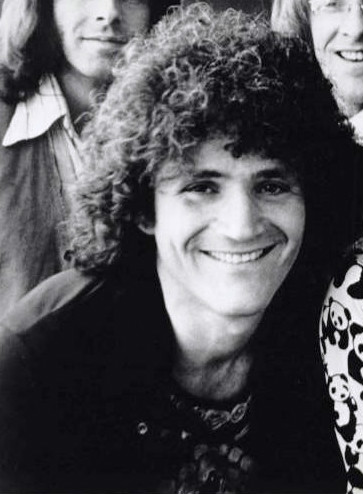
David Freiberg
David Freiberg (/ˈfraɪbərɡ/; born August 24, 1938) is an American musician best known for contributing vocals, keyboards, electric bass, rhythm guitar, viola and percussion as a member of Quicksilver Messenger Service, Jefferson Airplane, and Jefferson Starship. Among other tracks, he co-wrote "Jane", a hit for Jefferson Starship.
Classically trained in violin and viola, Freiberg began his career moonlighting as a coffeehouse singer-songwriter (playing acoustic guitar) during the American folk music revival while working for a railroad. For a while, he shared a house in Venice, California, with David Crosby and Paul Kantner before being briefly jailed for marijuana possession. Prior to being incarcerated, he also became acquainted with Dino Valenti, then Crosby's nominal roommate on a houseboat in Sausalito, California. During his time as a coffee house folk singer, he was part of the duo David & Michaela. David & Michaela made a demo at CBS studios, and "Elektra producer Paul Rothchild proposed fitting them into a bigger folk group. But the onset of the Beatles spelled the end of David & Michaela, and incentive for Freiberg to switch to rock and electric instruments."
Following his release, Freiberg co-founded Quicksilver Messenger Service with guitarists John Cipollina, Jim Murray and Gary Duncan and drummer Greg Elmore in 1965. The founding took place shortly after Valenti, who had recently hired the musicians for his backing band following the folk rock explosion, was imprisoned for drugs. Due to the surfeit of guitarists in the group, Freiberg (who was only tangentially acquainted with his bandmates through their mutual friendship with Valenti, with Cipollina remarking that they had been instructed to "take care" of him) was assigned to play electric bass.
Freiberg shared lead vocals with Gary Duncan for much of the band's history and regularly contributed additional guitar and keyboards to their studio recordings. As the "most folk-rooted member" of Quicksilver, he also reworked several songs from the folk revival and singer-songwriter repertoires (most notably Hamilton Camp's "Pride of Man") for the group. He would play on six of the eight Quicksilver albums.
Though not as commercially successful as contemporaries like Jefferson Airplane, Big Brother and the Holding Company and the Grateful Dead, Quicksilver was integral to the development of the San Francisco sound. In addition to earning three Billboard Top 100 hits, several of their albums ranked in the Top 30 of the magazine's album chart. He continued to serve as the group's bassist and contribute to the band's songwriting until September 1971, when he left the group to begin another prison sentence for marijuana possession. His most notable songwriting contributions include "The Fool" and "Light Your Windows", both co-written with Duncan.
Shortly after being released from his second stint in jail in 1972, Freiberg joined Jefferson Airplane at the behest of Kantner, belatedly replacing Marty Balin on vocals and tambourine for the tour that supported Long John Silver. He subsequently appeared on Thirty Seconds Over Winterland (1973), a live album culled from those performances. After the tour ended, Freiberg, Kantner, and Slick released Baron Von Tollbooth & the Chrome Nun as a trio in 1973.
After a long interregnum in which the fate of the band was in question (forcing Freiberg to briefly draw unemployment after RCA Records rescinded Jefferson Airplane's salaries), the final Jefferson Airplane lineup reformed as Jefferson Starship in early 1974 following the departure of lead guitarist Jorma Kaukonen and bassist Jack Casady. He remained with the group for nearly eleven years, departing shortly after the formation of Starship in early 1985 due to creative differences over the selection and recording of "We Built This City" with Grace Slick (who, according to longtime manager Bill Thompson, considered Freiberg to be "dead weight") and the atypically outsized role of producer Peter Wolf; during this period, Wolf had in effect superseded Freiberg as the band's principal keyboardist in the studio and select live performances. Freiberg would later say of the departure: "The only thing real on that song were the vocals and the guitar. I was useless, so I left." He also clarified that “it completely turned away from anything organic, and it wasn’t really what I did.”
Although Freiberg (who primarily played keyboards) and fellow multi-instrumentalist Pete Sears (who generally played bass) frequently alternated on both instruments throughout their respective tenures in the group, Ben Fong-Torres noted in a 1978 profile of the group that "Freiberg considers himself primarily a bass player." Freiberg himself elaborated upon this distinction in a 1997 interview with John Barthel: "I am not really a keyboard player. I use it for input to a computer now, and stuff like that, but it never was my instrument. I just did it for writing songs because it is a musical typewriter, basically, that is what it is."
David Freiberg
David Freiberg (/ˈfraɪbərɡ/; born August 24, 1938) is an American musician best known for contributing vocals, keyboards, electric bass, rhythm guitar, viola and percussion as a member of Quicksilver Messenger Service, Jefferson Airplane, and Jefferson Starship. Among other tracks, he co-wrote "Jane", a hit for Jefferson Starship.
Classically trained in violin and viola, Freiberg began his career moonlighting as a coffeehouse singer-songwriter (playing acoustic guitar) during the American folk music revival while working for a railroad. For a while, he shared a house in Venice, California, with David Crosby and Paul Kantner before being briefly jailed for marijuana possession. Prior to being incarcerated, he also became acquainted with Dino Valenti, then Crosby's nominal roommate on a houseboat in Sausalito, California. During his time as a coffee house folk singer, he was part of the duo David & Michaela. David & Michaela made a demo at CBS studios, and "Elektra producer Paul Rothchild proposed fitting them into a bigger folk group. But the onset of the Beatles spelled the end of David & Michaela, and incentive for Freiberg to switch to rock and electric instruments."
Following his release, Freiberg co-founded Quicksilver Messenger Service with guitarists John Cipollina, Jim Murray and Gary Duncan and drummer Greg Elmore in 1965. The founding took place shortly after Valenti, who had recently hired the musicians for his backing band following the folk rock explosion, was imprisoned for drugs. Due to the surfeit of guitarists in the group, Freiberg (who was only tangentially acquainted with his bandmates through their mutual friendship with Valenti, with Cipollina remarking that they had been instructed to "take care" of him) was assigned to play electric bass.
Freiberg shared lead vocals with Gary Duncan for much of the band's history and regularly contributed additional guitar and keyboards to their studio recordings. As the "most folk-rooted member" of Quicksilver, he also reworked several songs from the folk revival and singer-songwriter repertoires (most notably Hamilton Camp's "Pride of Man") for the group. He would play on six of the eight Quicksilver albums.
Though not as commercially successful as contemporaries like Jefferson Airplane, Big Brother and the Holding Company and the Grateful Dead, Quicksilver was integral to the development of the San Francisco sound. In addition to earning three Billboard Top 100 hits, several of their albums ranked in the Top 30 of the magazine's album chart. He continued to serve as the group's bassist and contribute to the band's songwriting until September 1971, when he left the group to begin another prison sentence for marijuana possession. His most notable songwriting contributions include "The Fool" and "Light Your Windows", both co-written with Duncan.
Shortly after being released from his second stint in jail in 1972, Freiberg joined Jefferson Airplane at the behest of Kantner, belatedly replacing Marty Balin on vocals and tambourine for the tour that supported Long John Silver. He subsequently appeared on Thirty Seconds Over Winterland (1973), a live album culled from those performances. After the tour ended, Freiberg, Kantner, and Slick released Baron Von Tollbooth & the Chrome Nun as a trio in 1973.
After a long interregnum in which the fate of the band was in question (forcing Freiberg to briefly draw unemployment after RCA Records rescinded Jefferson Airplane's salaries), the final Jefferson Airplane lineup reformed as Jefferson Starship in early 1974 following the departure of lead guitarist Jorma Kaukonen and bassist Jack Casady. He remained with the group for nearly eleven years, departing shortly after the formation of Starship in early 1985 due to creative differences over the selection and recording of "We Built This City" with Grace Slick (who, according to longtime manager Bill Thompson, considered Freiberg to be "dead weight") and the atypically outsized role of producer Peter Wolf; during this period, Wolf had in effect superseded Freiberg as the band's principal keyboardist in the studio and select live performances. Freiberg would later say of the departure: "The only thing real on that song were the vocals and the guitar. I was useless, so I left." He also clarified that “it completely turned away from anything organic, and it wasn’t really what I did.”
Although Freiberg (who primarily played keyboards) and fellow multi-instrumentalist Pete Sears (who generally played bass) frequently alternated on both instruments throughout their respective tenures in the group, Ben Fong-Torres noted in a 1978 profile of the group that "Freiberg considers himself primarily a bass player." Freiberg himself elaborated upon this distinction in a 1997 interview with John Barthel: "I am not really a keyboard player. I use it for input to a computer now, and stuff like that, but it never was my instrument. I just did it for writing songs because it is a musical typewriter, basically, that is what it is."
Recent media
Recent media